
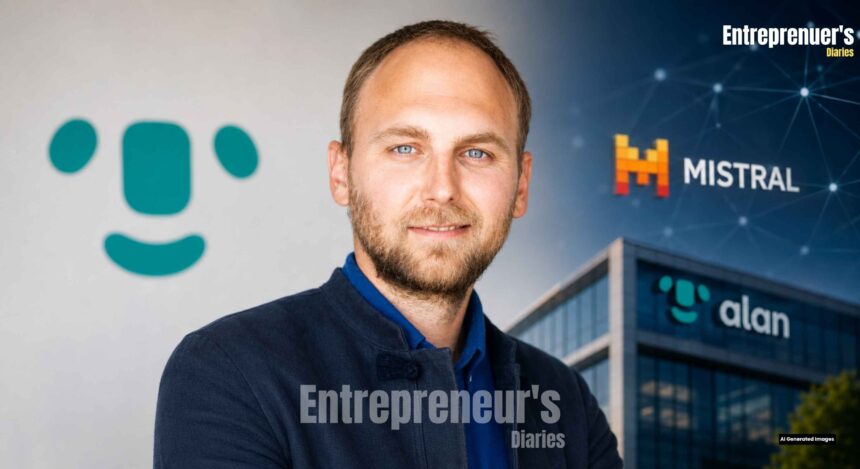
Jean Charles Samuelian Werve picked an odd second act. In his twenties he was building featherweight titanium airplane seats. By his thirties he was trying to break into French health insurance, an industry that hadn’t let a new independent player through the door since the 1980s. Ten years on, that second bet, a company called Alan, is worth north of €5 billion.
The number landed in March 2026, when Alan said it had raised more than €100 million in fresh funding led by its longtime backer Index Ventures, according to Bloomberg. The company also said it had crossed one million members and brought in €785 million in annual recurring revenue last year, a 53 percent jump from 2024, and that its French business, still its biggest, had finally turned a profit.
That’s the headline. The more interesting thread, the one that keeps coming up whenever people talk about Samuelian Werve, is what he’s been doing on the side: helping get Mistral AI off the ground, the French company much of Europe is counting on to keep pace with OpenAI. TechCrunch quotes him saying the new Alan funding gives the company “the means to invest ambitiously” in tech and AI. He’s been saying some version of that for years; this time the balance sheet backs it up.
Jean Charles Samuelian Werve: Where He Comes From
Samuelian Werve grew up in Marseille, the son of a doctor. On Alexandre Mars’s “Pause” podcast, he’s talked about how health and access to care fascinated him as a kid, then sat on a shelf for years while he did something else entirely. That early exposure to medicine still shows up in how Alan describes itself: not an insurer in the usual sense, but something closer to an ongoing health relationship built around catching problems early instead of treating them after the fact.
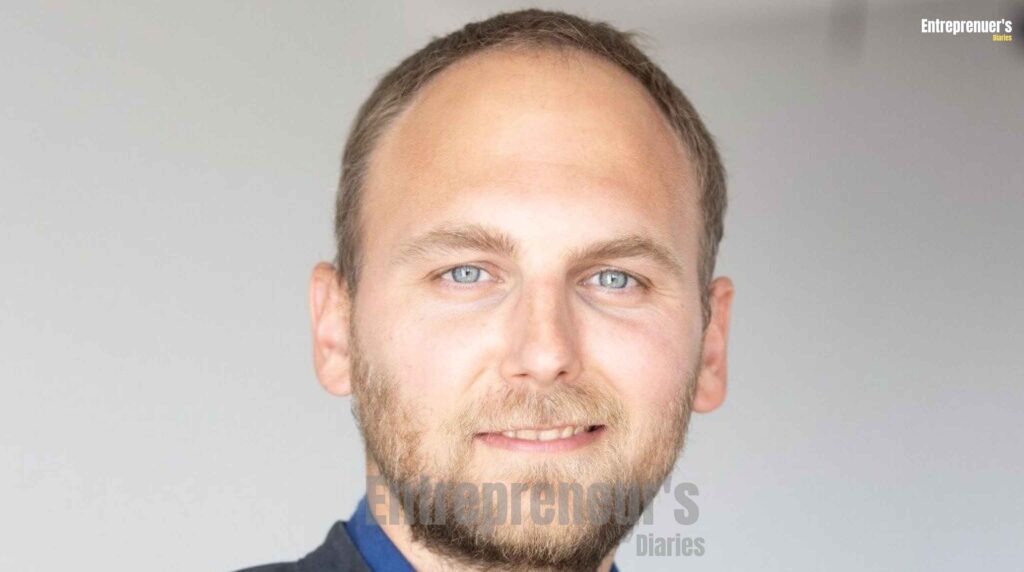
His credentials are fairly conventional for a French founder of his generation. According to Alan’s leadership page, he holds an engineering degree from École des Ponts ParisTech and an MBA from Collège des Ingénieurs, and he’s a member of the French Institute of Actuaries, useful when you’re about to spend years arguing with insurance regulators.
Expliseat came first
There were airplane seats before there was health insurance. Alan’s own bio credits him with transforming economy class aircraft seating through Expliseat, the company he launched in 2010 with co-founders Benjamin Saada and Vincent Tejedor: a titanium and composite seat that weighed a fraction of the standard economy model, the kind of weight saving that translates into real fuel savings once you multiply it across a fleet.
It wasn’t health, but it taught him how to build a heavily regulated, engineering heavy product from nothing, good practice for what came next.
Why Alan, and why it took so long
By 2016 he was back on the subject that had stuck with him since childhood. He co-founded Alan that year with Charles Gorintin, and the company became, per TechCrunch, the first new independent health insurer licensed in France since the 1980s. Samuelian Werve has written about the realities everyone eventually runs into: chronic illness, losing a parent, infertility. Health, he’s said, is what makes everything else possible in the first place, and that’s the case he makes for why he built the company.
Getting there as a licensed insurer rather than a broker meant years of capital and regulatory slog most startups never go near. Index Ventures led the Series A in 2018; Temasek led the Series C in 2020, according to Alan’s leadership page. Belgian bank Belfius led a €173 million Series F in 2024, per TechCrunch. None of it came cheap or fast: TechCrunch reported net losses of $61 million in 2023 and $56 million in 2024 before the company cut those losses in half as a share of revenue and reached profitability in France last year.
From seed round to a million members
Alan started small. It’s now serving more than a million members across France, Belgium, Spain and Canada, became a French unicorn in 2021, and counts HP and Volkswagen among its enterprise clients, according to Alan and TechCrunch. The company has also folded AI into the product itself, including a chatbot called Mo, introduced in 2024, that Alan says earns a 95 percent “good or excellent” rating on its medical chats from members. Whether that figure holds up to outside scrutiny is anyone’s guess, but it’s the number Alan is putting forward.
A side project that wasn’t small at all
According to Fortune, Samuelian Werve helped pull Mistral AI’s founding team together in 2023 and talked Lightspeed Venture Partners into leading its first funding round. He’s stayed on since as a non operating co-founder and board member, per Alan. He’s described holding weekly meetings with Mistral’s chief executive, Arthur Mensch, comparing notes on everything from financing strategy to hiring. Mistral, for its part, has credited him with playing a meaningful role in the company’s founding and has said he remains someone its leadership still leans on, a polite way of saying he’s still very much in the room.
How he actually runs things
The thing Samuelian Werve talks about more than almost anything else is transparency, and not the polite kind. Every decision at Alan, including individual salaries, lives on an internal dashboard anyone in the company can see, according to Fortune. He’s described the goal as killing off “the myth of secrecy” he thinks most tech companies hide behind, while acknowledging the approach doesn’t suit every employee. His 2020 book, “Healthy Business,” makes a longer version of the same case: that culture, not perks, decides whether a fast growing company can scale without grinding down the people inside it. Fewer managers, fewer meetings, more shared responsibility, according to the book’s own description of itself.
Why this goes beyond one company
Strip away the funding numbers and what’s left is fairly simple: an engineer who kept dragging discipline from one slow, regulated industry into another. Most founders pick speed. Samuelian Werve picked patience, in an industry built to punish anyone who doesn’t have it, and it took roughly a decade longer to pay off than it would for a typical software company. Insisting on French profitability before chasing scale elsewhere says something about how he thinks, at a moment when most venture backed founders are pushed the opposite way.
His other job, at Mistral, is easy to miss if you only look at Alan’s numbers: a health insurance CEO quietly shaping how Europe’s most closely watched AI company is funded and positioned against its American rivals. Put the two together and you get a fairly specific bet on healthcare’s future, prevention over treatment, transparency over secrecy, AI used where it earns its place rather than bolted on for the headline. Whether that bet keeps paying off is worth checking back on.
Frequently asked questions
Who is Jean Charles Samuelian Werve?
He co-founded and runs Alan, the French digital health insurer, and sits as a non operating co-founder and board member at Mistral AI.
What is Alan, exactly?
A digital health insurer that bundles insurance, prevention and care for over a million members across France, Belgium, Spain and Canada, according to the company.
Why did he start Alan in the first place?
The interest goes back to growing up in Marseille as a doctor’s son. He returned to it in 2016, after spending several years building airplane seats at Expliseat.
What does he actually do at Mistral AI?
A non operating co-founder, board member and early advisor who helped pull Mistral’s founding team and first investors together in 2023, according to Alan and Fortune’s reporting.
What’s his net worth?
Nobody credible has put a verified number on it. It isn’t publicly disclosed, so treat any figure floating around online with skepticism.
What should other founders take from his career?
Patience pays off in regulated industries that punish shortcuts, transparency can be a real asset rather than a liability, and expertise built in one industry can transfer somewhere you wouldn’t expect.
Connect With Us On Social Media [ Facebook | Instagram | Twitter | LinkedIn ] To Get Real-Time Updates On The Market. Entrepreneurs’ Diaries Is Now Available On Telegram. Join Our Telegram Channel To Get Instant Updates.

Isabella is a global business journalist and former McKinsey analyst from Brazil. She brings sharp insights on economic shifts, policies, and founder journeys from around the world.