
Santa Clara, May 5: There is something almost theatrical about Intel’s latest move. The company that spent the better part of five years watching Qualcomm erode its PC market dominance has now gone ahead and hired one of the men most responsible for doing the eroding.
Alex Katouzian, Qualcomm’s former Senior Vice President and General Manager for Mobile, Compute, and Infrastructure, is joining Intel to lead its PC and physical artificial intelligence business unit. The executive appointment was confirmed by Intel on May 4, according to reporting from Bloomberg, and it landed in the semiconductor industry the way a well-timed chess move lands: quietly, and then loudly, as people work out the implications.
This is not the kind of executive appointment a company makes when it is tinkering at the margins. It is the kind made when the old map no longer works and the Intel PC division needs a new architect entirely. And it raises a question worth sitting with: what does it say about a company when the most logical person to fix its competitive problem is the one who helped create it?
The Man Intel Went to Get
Spend any time in semiconductor circles and Katouzian’s name comes up in a specific context: he is the kind of executive who builds things that ship. Not prototypes. Not roadmap slides. Actual products, in actual devices, that actual people buy.
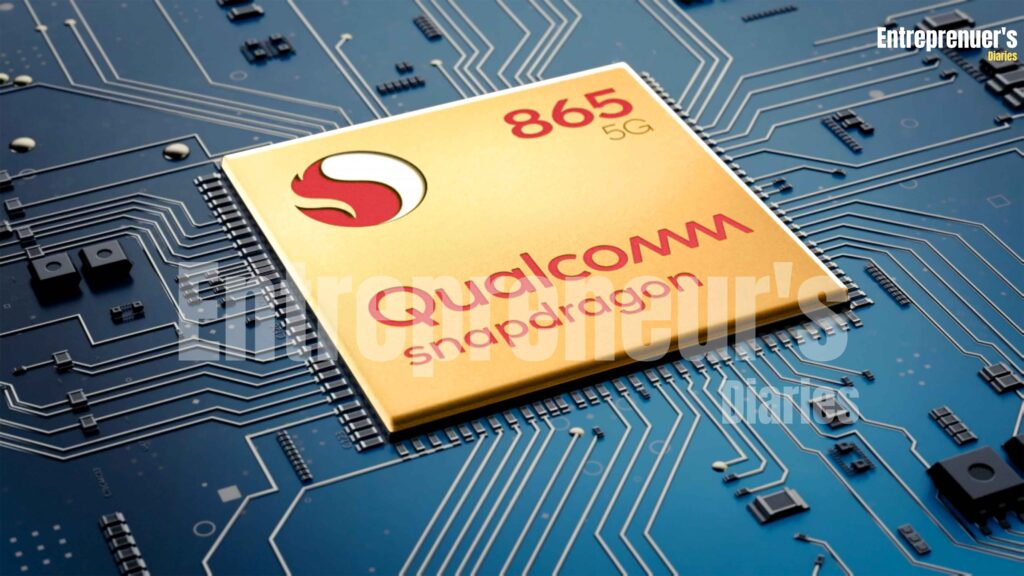
At Qualcomm, his fingerprints are on some of the most consequential chip work of the last decade. The Snapdragon X Elite and Snapdragon X Plus processors, which powered Microsoft’s Copilot Plus PC push and gave OEMs like Lenovo, Samsung, and HP a credible reason to consider Arm-based Windows hardware, came out of his organizational world. AnandTech’s head-to-head benchmarks and Tom’s Hardware reviews made uncomfortable reading for Intel at the time: Qualcomm’s chips were competitive on AI workloads and noticeably better on battery life.
Katouzian did not just watch Intel struggle from across town. He was part of the reason it was struggling.
That history is precisely why this executive appointment is being taken seriously by people who usually greet Silicon Valley personnel announcements with polite indifference. According to Reuters, he served at Qualcomm’s senior leadership level for years, overseeing not just mobile compute but infrastructure connectivity. That scope gave him a working understanding of where the AI business is actually being deployed versus where it is being theorized about in investor presentations. There is a meaningful difference between those two places, and executives who can navigate it are rarer than the job postings suggest.
It is also worth noting what Katouzian is walking away from. Qualcomm is not a company in distress. Its Snapdragon franchise is healthy, its AI PC momentum is real, and its relationship with Microsoft has never been more commercially valuable. Leaving that for Intel, a company mid-restructuring with an unresolved identity question at its center, is either a calculated bet on upside or a signal that he sees something in the roadmap that has not yet been made public. Neither possibility is uninteresting, and the semiconductor industry will be watching closely for what he says, and does not say, in his first few public appearances.
What the Intel Executive Appointment Actually Means
Intel PC and physical AI. The first half of Katouzian’s mandate is familiar enough. The second half is doing a lot of work.
Physical AI, in the way the company is using the term, is not a synonym for on-device processing, though that is part of it. The broader framing, as described in reporting by The Verge and semiconductor publication SemiAnalysis, covers ambitions for an AI business that runs locally, in real time, without a cloud dependency: inference embedded in client hardware, AI in industrial systems, ambient intelligence in devices that do not have a reliable internet connection at three in the morning on a factory floor.
The market behind that vision is not small. Goldman Sachs research published earlier in 2026 put the edge AI semiconductor opportunity at roughly 74 billion dollars by 2030, with compound annual growth rates in the mid-teens across industrial, automotive, and embedded applications. IDC’s projections, meanwhile, suggested that AI-enabled Intel PC devices would make up more than 60 percent of global PC shipments by 2027, driven by an upgrade cycle tied to dedicated neural processing hardware.
The NPU silicon already exists inside Core Ultra chips. What the company has not had, at least not convincingly, is a coherent story about what that silicon actually does for the person buying the laptop. Analysts at Morgan Stanley and Jefferies flagged this gap in notes from early 2026: the hardware was there, but the differentiation was not landing with consumers or with enterprise buyers who set the volume contracts that actually move the needle.
Katouzian’s job, in practical terms, is to fix that. To build the next chapter of the physical AI business as something more than a slide in a keynote, and to make the Intel PC feel like a deliberate platform choice rather than a default that nobody bothered to reconsider.
That is harder than it sounds. Platform narratives in semiconductors are built over years, not quarters. Apple spent the better part of a decade constructing the story that eventually made M1 feel inevitable. Qualcomm spent nearly as long earning the credibility that made Snapdragon X viable in enterprise procurement conversations. The company is not starting from zero, but it is starting from behind, and Katouzian will need to move faster than the normal industry timeline allows.
Tan Is Moving Intel Deliberately
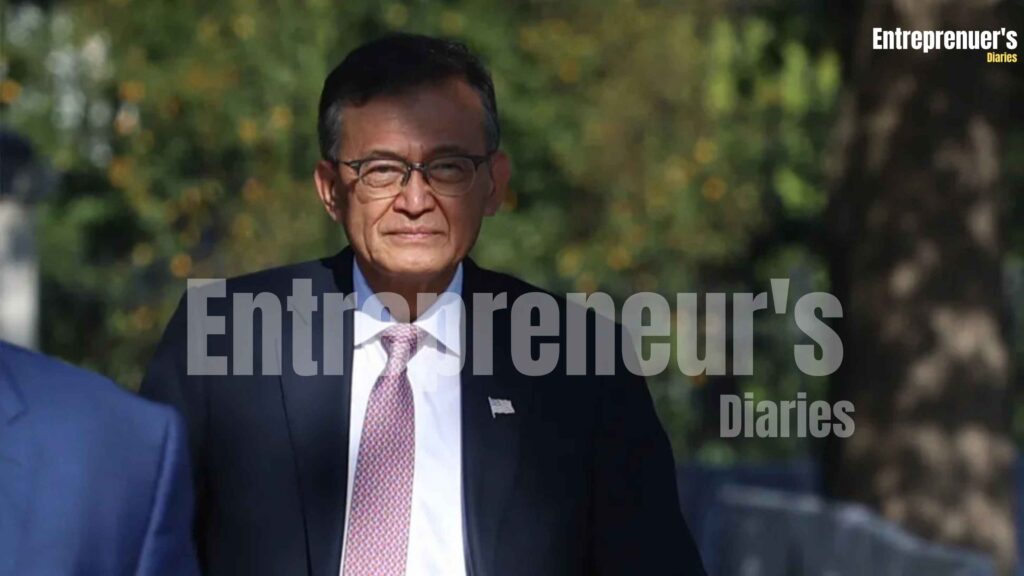
It is worth placing this executive appointment inside the larger arc of what Lip-Bu Tan has been doing since he took the Intel CEO role in March 2024.
Tan came in from Walden International, where he spent years making bets on semiconductor companies, and from the board, where he had watched the company’s structural problems from the inside. He arrived with a clear if uncomfortable diagnosis: the organization had grown too slow, too layered, and too comfortable with its own mythology. The Wall Street Journal reported on his systematic effort to flatten management layers and push decision authority down to the people actually building things.
The layoffs, roughly 15,000 jobs cut in 2024 according to CNBC, were the painful visible part of that process. The less visible part has been a cultural rewiring: replacing internal promotion loops that had calcified product thinking with outside perspectives from people who had not spent their careers inside the company’s particular way of seeing the world.
This executive appointment is the most prominent expression of that approach yet. Rather than elevating someone from within a chain of management that may still carry old habits, Tan is bringing in someone who built the competing playbook. Qualcomm, by the assessment of Bernstein Research, runs a leaner organization and has moved faster to market on AI PC silicon in the last two design cycles. Intel hiring from there is not coincidence. It is curriculum.
That said, hard questions remain underneath the optimism. Several former engineers, quoted anonymously by The Information earlier this year, have argued that the IDM 2.0 model, running a chip product business and a contract foundry simultaneously, creates structural tensions that resist resolution from above. The concern is not that Katouzian lacks capability. It is that the organizational gravity is strong enough to absorb even capable people without changing direction. One former senior executive described the dynamic as “the institution winning.”
Tan knows this. Whether this executive appointment marks the point where the institution stops winning is the question the next eighteen months will answer.
The Competitive Stakes for Intel PC, Plainly Stated
Here is the uncomfortable arithmetic Intel is working against.
Apple has owned the premium laptop performance narrative since M1 in 2020. Qualcomm spent the last two years building a credible Arm-based alternative for the Windows ecosystem. AMD has held competitive ground in mainstream PC silicon territory. And Nvidia, though not primarily a CPU company, is shaping the AI business conversation in ways that pull enterprise attention away from the established platform story.
The response has been Core Ultra, Meteor Lake, Lunar Lake, and the forthcoming Panther Lake generation. These are real products with real capabilities. But the competitive pressure is not primarily technical. It is perceptual. The narrative in the PC market has shifted, and narrative in this industry moves procurement decisions, OEM design wins, and developer enthusiasm in ways that benchmark sheets alone cannot reverse.
Turns out, one way to fight a perception problem is to hire the person who helped create it and ask them to solve it from the inside. It is either a stroke of ruthless pragmatism or an act of institutional humility. Probably both.
There is a broader pattern worth noting here. The entire Intel PC silicon industry is being stress-tested by the collision of two forces: a genuine hardware upgrade cycle driven by AI capability requirements, and a narrative war over which platform deserves to sit at the center of the next decade of computing. The manufacturing scale, the OEM relationships, and the developer ecosystem are all in place to compete seriously. What has been lacking is the kind of sharp, externally validated product leadership that makes those structural advantages cohere into something a customer actually wants to choose. That is what this executive appointment is designed to change.
What Katouzian Will Find When He Walks In
June is not far off, and the reality Katouzian steps into at Intel will be complicated in ways that press releases do not capture.
The product teams are not demoralized, but they have been through a restructuring that touched nearly every layer of the organization. The engineers building Panther Lake and its successors are capable and committed. What they have not had is a consistent product vision from the top that connects their technical work to a market story customers find compelling. That connective tissue is exactly what a strong business unit leader provides, and it has been visibly missing for the better part of three years.
Katouzian will also need to rebuild relationships with major OEM partners, several of whom have quietly diversified their platform strategies toward Qualcomm and AMD. Reversing that drift will require more than a strong keynote at a developer conference. It will require delivery: roadmap commitments that are kept, thermal envelopes that match what OEM industrial designers actually need, and AI business features that translate into differentiated end-user experiences showing up in real sales conversations.
For what it is worth, Katouzian has done all of that before, in a different company with its own set of constraints and politics. The question is whether the organizational structure will let him do it again, and whether Tan has genuinely cleared enough internal undergrowth to give him room to move.
What Happens at Intel Now
Katouzian is expected to formally begin his role in June 2026, according to Bloomberg’s sourcing, with his first significant public appearance likely at the developer event later this year. The immediate work, based on descriptions from people familiar with the executive appointment, will involve a structured review of the Core Ultra roadmap beyond Panther Lake, a deeper conversation with Intel PC OEM partners about what the AI business feature set needs to do to drive purchase decisions, and a foundational effort to define the physical AI platform strategy as a business with its own identity rather than a tag attached to existing product lines.
For Intel’s investors, the signal was readable. The stock moved up roughly 2.3 percent in after-hours trading on May 4, as reported by Yahoo Finance, suggesting markets read the executive appointment as intentional rather than reactive.
For competitors, the message lands differently. Hiring the executive who helped define the AI PC competitive threat to Intel is Tan saying plainly: the people who have been pressuring us know something we need to know, and rather than studying it from a distance, the company is going to put that knowledge on its own payroll.
Whether a single hire, however well-chosen, can accelerate the kind of cultural and organizational change Intel needs is a question with no clean answer. But this Intel executive appointment, and the AI business mandate behind it, has done one thing that has been in short supply at the company for a while: it has made the chip giant genuinely interesting to watch again.
Connect With Us On Social Media [ Facebook | Instagram | Twitter | LinkedIn ] To Get Real-Time Updates On The Market. Entrepreneurs’ Diaries Is Now Available On Telegram. Join Our Telegram Channel To Get Instant Updates.

Isabella is a global business journalist and former McKinsey analyst from Brazil. She brings sharp insights on economic shifts, policies, and founder journeys from around the world.