
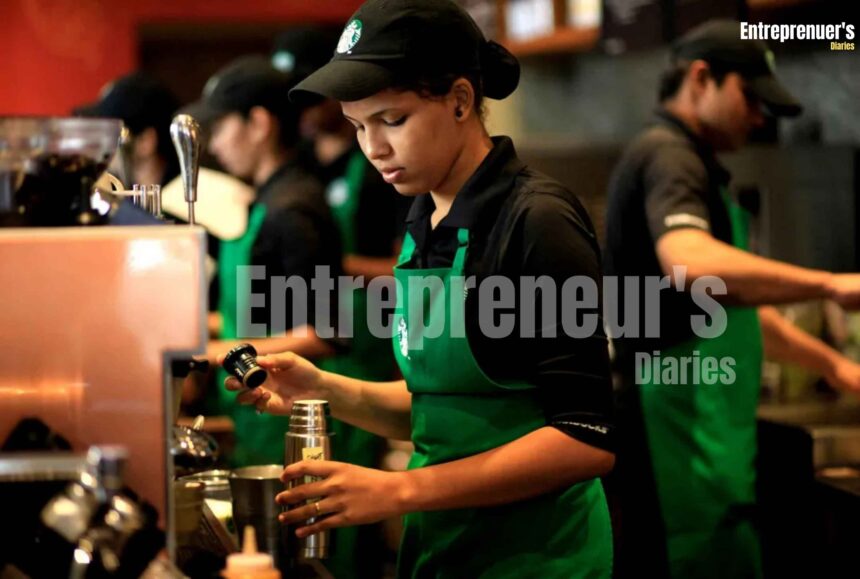
Seattle, May 1: There is a Starbucks on almost every block in America, and for a long stretch of recent years, something felt off inside them. The lines were longer. The staff looked exhausted. The person handing you a cup barely had a second to breathe, let alone write your name on it. You waited 14 minutes for a latte in a store that smelled right but felt completely wrong. Nobody seemed to be enjoying themselves on either side of the counter.
That quiet, creeping dysfunction is what Brian Niccol inherited when he walked through the door in September 2024. And unlike the two executives before him, he did not reach for the menu board or the mobile app as his first fix. He reached for the barista.
That choice, more than any single strategic announcement, is what defines what Starbucks is attempting right now. It is not a flashy turnaround. It is a slow, structural one, rooted in the belief that when the person making your drink feels good about their job, everything else has a chance of working again.
The Mess Brian Niccol Walked Into

To understand what Niccol is doing, you have to understand what he inherited. By the time the company’s board recruited him from Chipotle, where Bloomberg reported he oversaw stock appreciation of more than 800 percent during his tenure, the company had posted four consecutive quarters of falling comparable store sales. The fiscal third quarter of 2024 saw US same-store sales drop 6 percent, per the company’s own filings. Traffic was down even more sharply. China, Starbucks’ second-largest market, was deteriorating under competitive pressure from local chains offering similar products at a fraction of the price.
Laxman Narasimhan, the previous CEO, had lasted barely 17 months. Howard Schultz, the founder who never truly let go, had publicly aired his frustrations on LinkedIn in a post that industry veterans described as extraordinary in its candor. The message, essentially, was that Starbucks had drifted away from what made it worth caring about.
Niccol’s compensation package, reported by Reuters to be worth up to $113 million including equity, was the clearest possible signal that the board understood it was in serious trouble. You do not pay that kind of number for a light restructuring. You pay it when the house is on fire.
Why the Starbucks Worker Became the Strategy
In October 2024, Brian Niccol published what he called the “Back to Starbucks” plan. The Wall Street Journal covered its broad strokes: simplify the menu, fix the in-store environment, rebuild brand relevance, and empower the barista. That last point was not the most quoted in the financial press. It should have been.
Niccol’s view, laid out across earnings calls and stakeholder letters with a consistency that suggests genuine conviction rather than prepared talking points, is that the customer experience cannot be fixed in isolation from the employee experience. They are the same problem. The person behind the counter is not a variable in the efficiency equation. That person is the product.
It sounds obvious when you say it out loud. Most of the best business insights do. The harder question is why so many large chains forget it, and why it takes a genuine crisis to remember.
Part of the answer is scale. When you operate nearly 40,000 locations worldwide, the temptation to manage everything through systems and metrics rather than through culture and people becomes overwhelming. The chain had spent years layering digital ordering platforms, promotional complexity, and menu extensions onto stores that were fundamentally designed for a simpler operation. The result was a company that had optimized itself into incoherence.
Baristas were not making coffee. They were managing ticket queues, navigating an app-generated avalanche of orders, and fielding increasingly exotic customization requests through a production system that was never built to handle them. According to CNBC, some peak-hour Starbucks stores were processing mobile orders at a pace that left staff with no physical capacity to keep up, let alone pause and connect with a customer standing three feet away.
The Staffing Bet That Spooked Investors
One of Brian Niccol’s earliest moves was also his most expensive: he committed to increasing labor hours across the roughly 9,600 company-operated stores in the United States. Reuters reported on the phased rollout of higher staffing levels, an initiative that analysts at Morgan Stanley and JPMorgan openly flagged as a margin headwind.
He did not apologize for it. On the fiscal first quarter 2025 earnings call, covered by CNBC, Niccol was blunt about the math: under-staffing was not saving money. It was costing transactions, eroding loyalty, and accelerating the kind of slow brand decay that no promotional campaign could reverse. The cost of having too few people on the floor, measured in lost customers and wrecked morale, was considerably higher than the cost of actually staffing the shift properly.
For investors calibrated to the short term, this was not a comfortable message. For anyone who has ever watched a two-person team try to run a packed Starbucks at 8 a.m. on a Monday, it was obvious.
Cutting the Starbucks Menu, Giving Back the Job
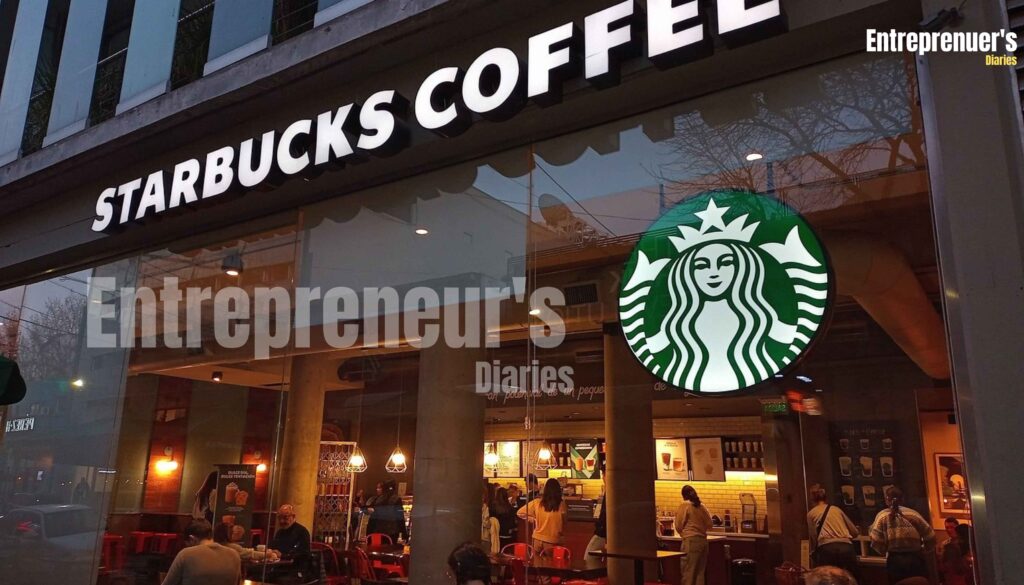
The most visible operational move of the Starbucks turnaround was the menu reduction. According to the Financial Times, the chain trimmed its active menu by approximately 30 percent in the first phase of the Back to Starbucks plan. Items that were rarely ordered, operationally intensive, or simply redundant were removed.
The reaction in some quarters was dramatic. A handful of beloved seasonal drinks generated social media protests. The company absorbed the noise and held the line.
The reasoning was sound. A simplified menu means faster prep times. Fewer errors. A barista who actually has the mental space to look up from the counter, notice that the regular is having a bad day, and say something real. That is not a sentimental argument. It is an operational one with direct implications for throughput, satisfaction scores, and repeat visits.
There is also the training dimension. High staff turnover, an industry-wide condition that Starbucks has been far from immune to, is substantially worsened when new hires must master an overwhelming menu on top of everything else. Reduce the complexity, and the learning curve compresses. Consistency improves.
Black Tops, Partner Promises, and the Culture of Small Things
In January 2025, Starbucks made headlines for requiring baristas to wear black tops paired with the iconic green apron. The Associated Press reported the change as part of a broader visual identity reset, and some commentators treated it as trivial. It was not.
The dress code update was accompanied by something that received considerably less coverage: a set of internal “Partner Promise” commitments that included clearer communication pathways between store-level staff and management, more transparent scheduling practices, and a policy reinstating dedicated rest areas in qualifying stores. None of that makes the business section. All of it makes a material difference to someone working a six-hour shift.
Brian Niccol understands something that a lot of executives talk about but rarely practice: organizational culture is built through the accumulation of small signals, not through mission statements or town halls. When Starbucks demonstrates that it will spend money and political capital on whether a barista has somewhere decent to sit on a break, it sends a message about priorities that filters through a workforce of hundreds of thousands faster than any internal memo can.
Bloomberg reported that internal partner satisfaction scores showed measurable improvement from the troughs of late 2023 and early 2024, citing references made during a 2025 earnings call. One data point is not a trend. But direction matters.
The Mobile Order Reckoning
Any honest look at the Starbucks turnaround has to deal with mobile ordering, because it is where the company’s ambitions and its operational reality collided most visibly.
Mobile orders now account for more than 30 percent of US Starbucks transactions, per the company’s investor presentations. That is not a problem in itself. The problem is that stores designed for one level of throughput were being used as fulfillment infrastructure for a significantly higher volume, without the physical layout changes, equipment upgrades, or staffing adjustments to support it.
Brian Niccol did not retreat from digital. He invested in it differently. Starbucks announced equipment upgrades including new espresso machines and cold beverage systems as part of its fiscal 2025 capital expenditure plan, and began piloting dedicated pickup sequencing in high-volume stores to separate the mobile flow from in-person ordering without sacrificing either.
The insight running through every piece of this turnaround is the same one. If the operational environment is broken, the barista cannot do their job. And if the barista cannot do their job, the customer cannot have the experience the brand promises. Technology and the human being are not separate tracks. They are the same track.
Where the Starbucks Numbers Stand
The financials remain honest about how early this is. Starbucks reported fiscal first quarter 2025 revenue of approximately $9.4 billion, down 4 percent year over year, per the company’s earnings release. US comparable store sales fell 4 percent, which was better than the 6 percent decline of the prior quarter but still a negative number. International comps were similarly down.
Niccol described Starbucks as being in the “early innings” of its turnaround on the earnings call. That phrase will age either extremely well or extremely poorly depending on what the next six quarters look like.
Analysts at Bernstein, per CNBC’s coverage, flagged the stabilization of transaction declines as a meaningful early indicator, noting that the direction of travel was more important than the pace at this stage. The question is whether Brian Niccol can maintain execution discipline at global scale without the strategy losing coherence as it travels down the chain.
That is the real test. Turning around a 40,000-location enterprise is not a plan. It is a thousand plans happening simultaneously across thousands of different markets, managed by district managers and store leads who may or may not have internalized the culture shift happening at the center. Getting the message from the CEO’s letter to the actual shift lineup at a Starbucks in Tulsa or Taipei is a different and harder challenge than writing the letter in the first place.
What Brian Niccol’s Starbucks Bet Tells the Rest of the Business World
Strip away the coffee and the green aprons and what Starbucks is working through is a case study that applies to every premium consumer brand operating at scale.
The company built its identity on a specific kind of human transaction: the slightly personal, slightly indulgent moment of someone knowing your name and your order and making you feel, briefly, seen. That is what justified the price premium. That is what the brand’s loyalty program was always a proxy for. And that is what got systematically hollowed out over years of digital optimization, menu bloat, and labor management practices that treated the barista as a throughput variable rather than a brand ambassador.
Brian Niccol is not doing anything mysterious. He is restoring the conditions under which people can do their best work. More staff. Simpler tasks. Better equipment. Clearer expectations. Small dignities. The kind of environment where it is actually possible to write something genuine on a cup.
It will take time. It will cost money before it makes money. Some investors will lose patience before the results compound. That is how real operational turnarounds work. They are not announced. They are earned, shift by shift, transaction by transaction, in Starbucks stores where someone finally has enough time to look up and mean it when they ask how your day is going.
The barista is the brand. Brian Niccol is the first Starbucks CEO in several years who appears to have genuinely internalized that fact. Whether the company gives him long enough to prove it is a separate question entirely.
Connect With Us On Social Media [ Facebook | Instagram | Twitter | LinkedIn ] To Get Real-Time Updates On The Market. Entrepreneurs’ Diaries Is Now Available On Telegram. Join Our Telegram Channel To Get Instant Updates.

Isabella is a global business journalist and former McKinsey analyst from Brazil. She brings sharp insights on economic shifts, policies, and founder journeys from around the world.

Freya is a digital nomad and writer from Sweden, curating business travel hacks and remote-work inspiration from her global adventures.