
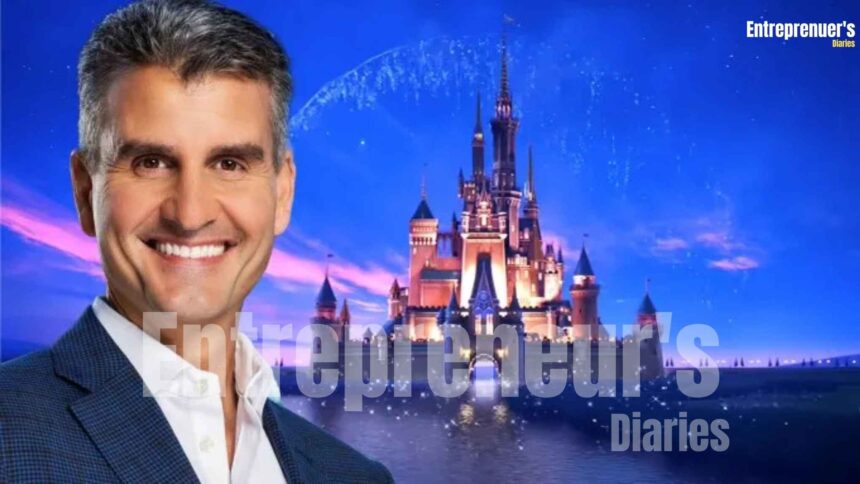
New York, May 7: Josh D’Amaro has been Disney’s CEO for seven weeks. Seven weeks. And in that time he has dealt with a late night comedian nearly getting his network’s licenses yanked, a federal regulator that seems to be taking instructions from Truth Social, and a parks business that posted record revenue while somehow also losing foreign visitors because the president keeps making enemies of allied nations.
Welcome to the job, Josh.
There is a version of this story where D’Amaro’s early tenure reads as a disaster. The FCC going after ABC. Trump demanding Kimmel’s head. International tourists quietly booking elsewhere. But then Wednesday’s earnings dropped and the stock jumped more than 4 percent before markets even opened, and suddenly the narrative shifted. Wall Street, it turns out, was more worried than it needed to be.
That tension, between what looks bad from the outside and what is actually happening inside the business, is probably the most honest way to understand what D’Amaro is dealing with right now.
The Kimmel Thing Defined Him Faster Than Anything Else Could Have
Nobody planned for this to be the first real test of D’Amaro’s character as CEO. But here we are.
Jimmy Kimmel does a mock roast of the White House Correspondents’ Dinner on his ABC show, cracks a joke about Melania Trump having “a glow like an expectant widow,” and then, less than 48 hours later, a gunman shows up at the actual dinner and injures a Secret Service agent. The timing could not have been worse if someone had scripted it as a corporate stress test.
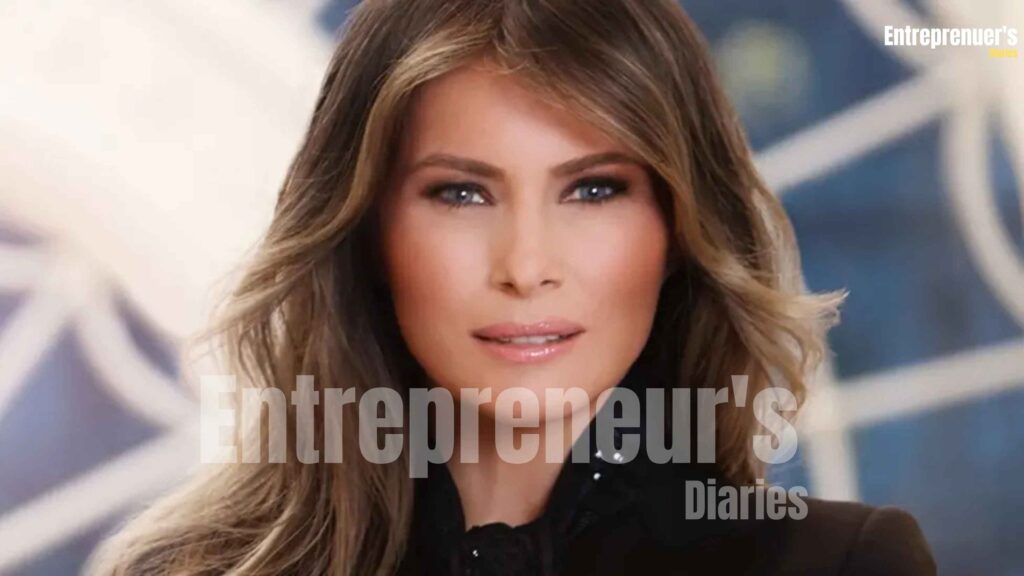
Melania Trump posted on X demanding ABC fire Kimmel. The White House Press Secretary called the joke “completely deranged.” Trump himself went on Truth Social and labeled it a “despicable call to violence.” And then the FCC, within 24 hours of the presidential criticism, ordered early license renewals for all eight ABC owned television stations. The official reason given was Disney’s DEI policies. Almost nobody outside the administration believed that.
D’Amaro had been CEO for six weeks at that point. Six weeks.
What made it genuinely complicated was the history. Back in September, when ABC suspended Kimmel after a Charlie Kirk comment triggered affiliate pressure, Disney lost billions in market value within days. More than 400 artists, Tom Hanks, Jennifer Aniston, Lin Manuel Miranda among them, signed an open letter organized through the ACLU calling out Disney and ABC. The backlash was severe enough that observers have since speculated it may have cost Dana Walden, who oversaw that decision, her shot at the CEO job over D’Amaro.
So D’Amaro walked into the Kimmel situation knowing exactly what caving looked like and exactly what it cost. He kept the show on. He assembled a legal team to fight the FCC. He said nothing publicly. And Kimmel stayed on air.
That is not passivity. That is a choice, made deliberately, by a man who had every reason to take the easier path and chose not to.
Parks Are Still the Heartbeat, But the Pulse Is a Little Off
Here is the thing about D’Amaro and the parks business. He ran it for years. He knows every lever, every seasonal pattern, every metric that matters. So when the Q2 numbers came out Wednesday and U.S. park attendance was down 1 percent from the same period last year, you have to figure that landed differently for him than it would for a CEO who came up through finance or studios.
The revenue was fine, more than fine actually. Disney Experiences posted $9.5 billion in quarterly revenue, up 7 percent, with operating income of $2.62 billion, also up 5 percent. Per capita spending climbed 5 percent. Records across the board for a fiscal second quarter. The parks are making more money per visitor than ever before.
But the visitor count dipped, and the reason is not hard to find. International tourists have been quietly staying away from the United States. Not because of anything Disney did. Because of tariffs, immigration crackdowns, diplomatic friction, and a general sense that America is not especially welcoming right now to people arriving from abroad. Canada, Europe, traditional sources of reliable park visitors, have all seen drops in outbound travel to the U.S., according to the company’s own earnings commentary.
D’Amaro acknowledged it plainly on the call. Domestic demand is healthy, he said, but the company is aware that customers are facing inflation and rising energy costs. He expects attendance at Disneyland and Walt Disney World to improve in Q3 compared to Q2. Whether that happens depends partly on factors he has zero control over.
That is a strange position for an operator of his caliber. The man who turned Disney’s parks into a $36 billion annual revenue machine is now watching geopolitics nibble at his attendance figures while he focuses on legal strategy for a broadcast licensing fight.
Streaming Did Something It Has Not Done in a Long Time
For years Disney Plus was the division that bled money while executives promised the bleeding would eventually stop. It stopped. Then it reversed. Streaming income jumped 88 percent in Q2, according to Disney’s earnings release. That number surprised people, including some who follow the company closely.
D’Amaro did not treat it as a moment to celebrate and move on. He made clear that reducing churn on Disney Plus is, in his words, “probably the single most significant opportunity that we have.” He is pushing the entire organization to treat it as the top priority. His language around Disney Plus is ambitious in a way that goes beyond subscriber counts. He wants it to be the central place where people experience the Disney brand, not just one of several streaming options on a smart TV.
He also talked about AI with more specificity than most entertainment CEOs manage. Not the usual vague gestures toward innovation, but a concrete breakdown: content creation, monetization, workforce productivity, guest experiences, enterprise operations. Five specific areas. For someone whose background is theme parks, that level of operational thinking applied to technology is actually telling. He approaches AI the way he approaches a park redesign. What problem does it solve, where does it go, how do you measure it.
The Fortnite numbers he cited were genuinely striking. The Simpsons on Fortnite, launched last November, drew 780 million hours of playtime from more than 80 million unique players, according to Disney’s earnings materials. That is not a vanity metric. That is evidence that Disney’s intellectual property still travels into spaces the company has not traditionally owned.
He Is Not Iger, Which Is Probably Fine
The comparison is inevitable but the more you look at it, the less useful it is. Bob Iger is one of the great acquisitive CEOs of the modern era. Pixar. Marvel. Lucasfilm. Fox. He spent two decades reshaping what Disney is. He is also, by every available account, a fundamentally different kind of person than D’Amaro. More polished, more comfortable in rooms where the conversation is about legacy and cultural weight rather than capacity planning and cast member satisfaction scores.
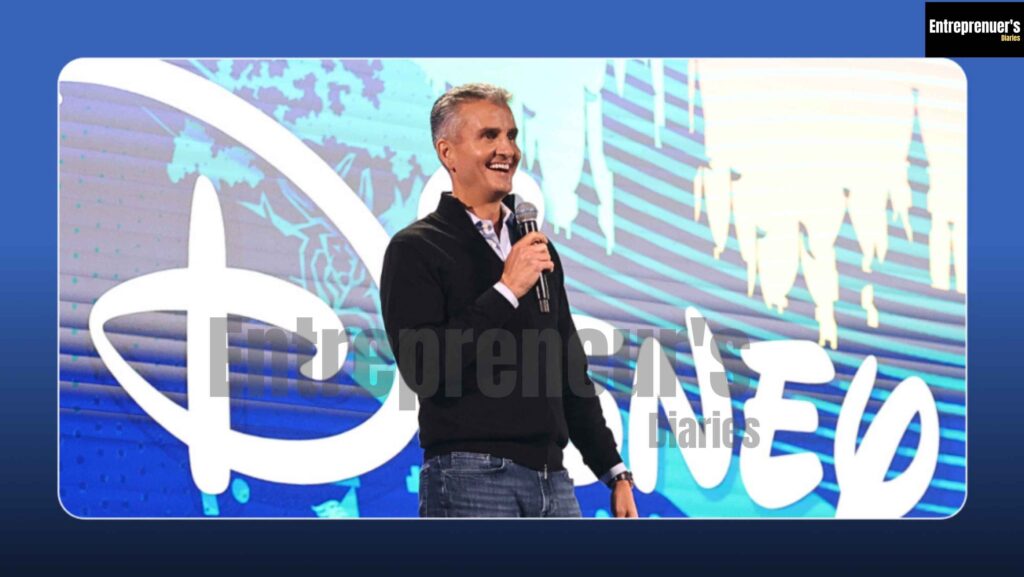
D’Amaro on his first earnings call said he was honored to lead the company. That he sees it as built over more than a century through powerful storytelling and a singular ability to forge emotional connections. Clean sentences, honest sentiment, nothing performed about it. The Disney board described him back in February as someone with a rare combination of inspiring leadership, strategic vision, and genuine passion for the brand. That reads like corporate language but people who have worked with him seem to mean it.
He is an operator. He walked park floors. He knows the cast members. He talks in specifics. What remains to be seen is whether those qualities, so well suited to running the largest division of a company, translate fully to running the whole thing during a period when the U.S. government is using broadcast licenses as leverage and tariff policy is redirecting tourism flows.
That is not a test anyone prepared him for specifically. It is not a test anyone prepared anyone for.
The Next Twelve Months Will Tell the Real Story
There is an Abu Dhabi park in the pipeline. ESPN’s streaming transition is still playing out, with subscriber numbers being watched carefully. The Epic Games collaboration is pulling tens of millions of young players into Disney IP through Fortnite. CFO Hugh Johnston told investors Wednesday that the company is not changing its earnings growth guidance for fiscal 2026 or 2027, while noting that further rises in fuel prices from current levels could eventually shift consumer behavior. Double digit earnings growth for 2027 remains the stated expectation.
That guidance, steady in the middle of real uncertainty, is D’Amaro making a statement. Not a dramatic one. Not the kind that gets replayed on cable news. Just a quiet signal that the business is holding and the people running it intend to keep it that way.
Seven weeks is not enough time to judge a CEO. But it is enough time to see whether someone has their footing. D’Amaro held the line on Kimmel when holding it was uncomfortable. He delivered honest numbers without spin. He kept his composure through the kind of opening stretch that would have rattled a less grounded executive.
The external pressures, the FCC fight, the tourist softness, the tariff drag, those are not going away next quarter. But they are also not the whole picture. The parks are making record money. Streaming is finally working. The IP pipeline is deeper than it has ever been. And the person running all of it has spent 28 years learning exactly how this company functions from the inside out.
Whether that is enough for this particular moment, nobody knows yet. But nothing in these first seven weeks suggests it will not be.
Why did the FCC threaten ABC’s broadcast licenses under Josh D’Amaro?
The FCC ordered early license renewals for all eight ABC owned television stations in late April 2026. The official explanation cited Disney’s DEI policies, but the order came within 24 hours of President Trump publicly demanding Jimmy Kimmel’s firing, and the timing was widely viewed as political retaliation rather than routine regulatory action. Disney retained constitutional attorneys to contest the challenge on First Amendment grounds, and Kimmel remained on air throughout.
How did Disney’s parks actually perform in D’Amaro’s first earnings report?
Strong on revenue, softer on attendance. The parks and experiences division posted $9.5 billion in quarterly revenue and $2.62 billion in operating income, both records for a fiscal second quarter. Per capita visitor spending rose 5 percent. The one weak number was U.S. attendance, down 1 percent year over year, which Disney attributed directly to a decline in international visitors tied to the current political and trade climate under the Trump administration.
What is D’Amaro’s actual strategy for Disney going forward?
Three pillars, as he laid out in his shareholder letter. First, invest in original intellectual property and creativity. Second, expand global consumer reach and engagement. Third, deploy AI with intent across content creation, monetization, workforce productivity, guest experiences, and enterprise operations. He has also been explicit that Disney Plus needs to become the core consumer touchpoint for the brand, well beyond its current identity as a streaming service.
How has Trump’s second term been affecting Disney’s business in concrete terms?
Two direct impacts are measurable. International park attendance is down, which Disney has linked publicly to the political climate, tariffs, and strained relations with allied nations. The FCC has also initiated a regulatory challenge against ABC’s broadcast licenses that Disney is now fighting in court. A third, earlier impact was the $15 million settlement Disney paid in December 2024 to resolve Trump’s defamation lawsuit against ABC News and anchor George Stephanopoulos, according to sources.
What happened with Jimmy Kimmel and how did D’Amaro handle it compared to what happened before?
Kimmel made a joke about the First Lady on April 23 that the White House characterized as a call to violence, particularly after a shooting incident near the White House Correspondents’ Dinner two days later. Trump and Melania Trump both publicly demanded ABC fire him. D’Amaro chose not to act against Kimmel, keeping the show on air while Disney fought the FCC challenge legally. This was a deliberate departure from September 2025, when ABC suspended Kimmel after affiliate pressure, triggering a market value drop and a mass backlash from the entertainment industry that by some accounts influenced which executive ultimately got the CEO job.
Connect With Us On Social Media [ Facebook | Instagram | Twitter | LinkedIn ] To Get Real-Time Updates On The Market. Entrepreneurs’ Diaries Is Now Available On Telegram. Join Our Telegram Channel To Get Instant Updates.

Isabella is a global business journalist and former McKinsey analyst from Brazil. She brings sharp insights on economic shifts, policies, and founder journeys from around the world.

Freya is a digital nomad and writer from Sweden, curating business travel hacks and remote-work inspiration from her global adventures.