

Maranello, Italy, June 30, 2026: Something quietly significant happened in car factories this year, and it has nothing to do with self-driving software or battery chemistry. It’s about wire.
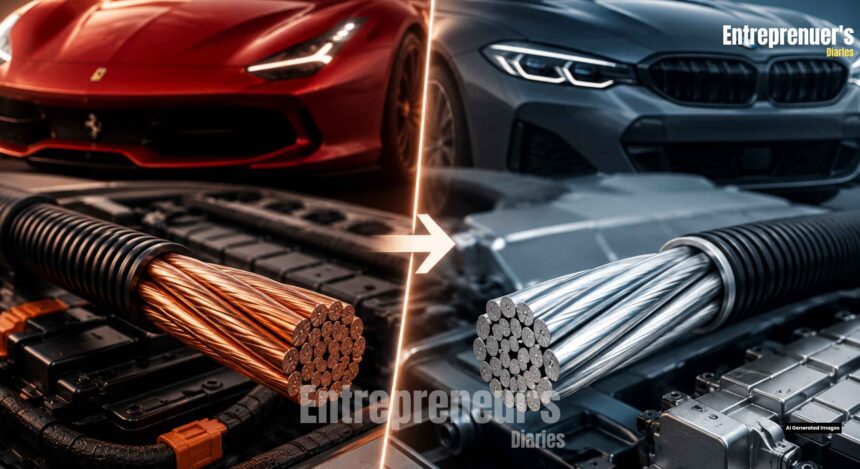
Ferrari and BMW have both started building cars with Aluminium Wiring power cables instead of copper ones, according to a Reuters analysis published today. That alone might sound like a footnote.
It isn’t. Copper has run electricity through cars, homes and factories since the electric battery was invented two centuries ago. When Ferrari and BMW start walking away from it, alongside Tesla and a wave of Chinese EV makers, that’s a signal worth paying attention to.
What Just Happened
Reuters spoke with 18 automakers, cable makers, air-conditioner manufacturers, metal producers and consultants for its analysis. The pattern they described was consistent: companies across several industries are migrating to aluminium because it’s significantly cheaper and performs comparably in many applications.
Ferrari and BMW both confirmed the move directly to Reuters. So this isn’t industry rumor. It’s on the record.
Tesla and Chinese EV makers got there first. Reuters reports the broader shift could affect roughly 2% of global copper demand this year alone, citing estimates from JPMorgan.
That number sounds small. Give it a few years, and it won’t be.
Why Copper Got Too Expensive
Here’s the part that actually explains the timing. Copper prices hit a record near $15,000 a metric ton in late January, according to the Reuters analysis.
That’s not a normal price spike. Global supply forecasts are expected to stay below demand for the next decade, Reuters notes, which means the pressure that triggered this year’s wave of automaker announcements isn’t going away.
Part of the reason is that automakers aren’t the only ones buying copper right now. Data centers and renewable energy grids have been pulling hard on the same global supply, and carmakers are increasingly competing with hyperscalers for the same shrinking pool of metal.
Aluminium, meanwhile, is doing something copper can’t: it’s both cheaper and lighter. For an industry obsessed with shaving grams off every component for the sake of EV range, that combination is hard to ignore.
Using the 4.2x price ratio Reuters reports between the two metals, and aluminium’s current price of roughly $3,100 a ton, copper today works out to somewhere around $13,000 a ton. That’s down from January’s peak, but still high enough to keep the substitution case alive.
Ferrari’s Aluminium Bet
Ferrari already builds its bodies, engines and chassis from aluminium. Wiring was the next logical step.
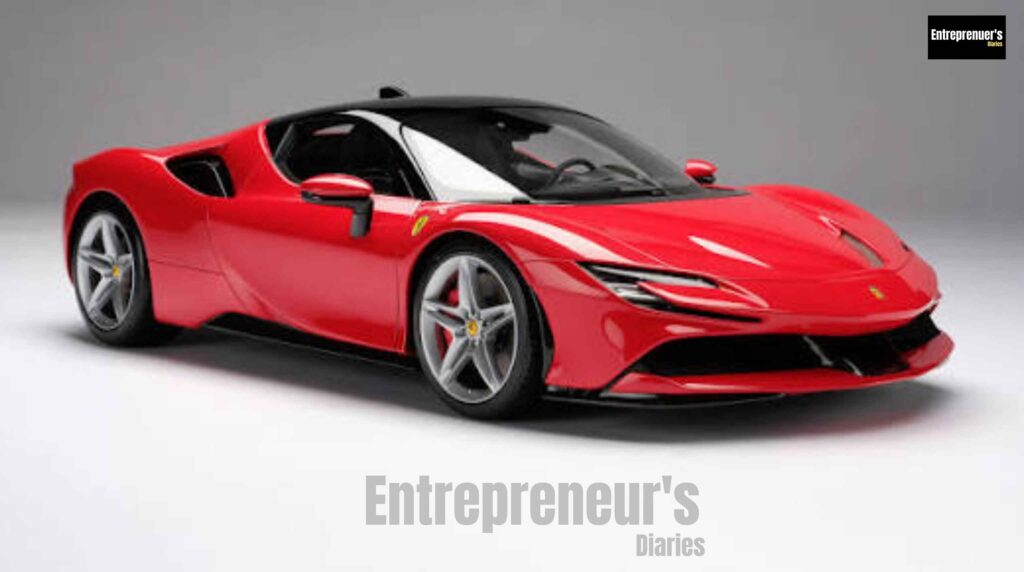
The company told Reuters it began using aluminium for power cables in its 296 hybrid sports car last year. It has since extended the material to other models, including the Luce, Ferrari’s first fully electric car, which launched last month.
Dario Esposito, Ferrari’s head of communications, told Reuters the switch saves up to 20% of total wiring weight. “We choose the material that offers the best performance,” he said, adding that cost isn’t the company’s main motivation.
That’s a fair point, but it’s worth noting the price gap is enormous anyway. Aluminium currently trades around $3,100 a ton, roughly a quarter of copper’s price, per the Reuters analysis.
The Luce itself leans hard into the same materials philosophy. According to Ferrari’s own announcement of the Elettrica platform technology, the car’s chassis and body are built from 75% recycled aluminium, with the battery pack integrated into the floor to keep the center of gravity low.
That technology sits inside a much bigger commitment. A Ferrari filing with the U.S. Securities and Exchange Commission, covering the company’s 2030 Capital Markets Day, shows Ferrari plans roughly four new car launches a year through 2030, with its lineup eventually split 40% combustion, 40% hybrid and 20% electric.
The same filing describes Ferrari designing and handcrafting strategic electric components in-house at Maranello, alongside its own stated decarbonisation targets.
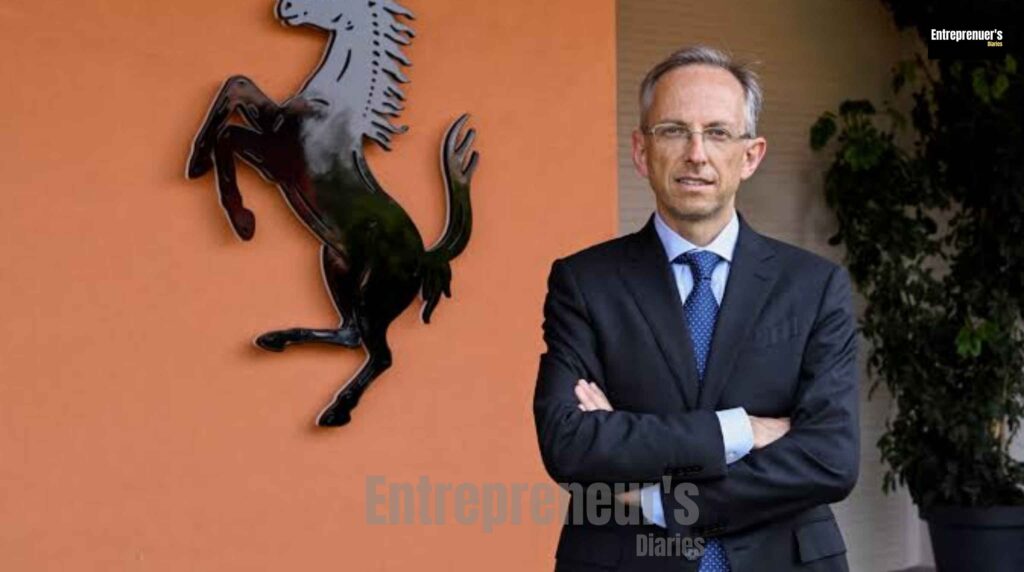
The Luce’s launch made headlines for a different reason too. Ferrari priced it at roughly 550,000 euros, about $640,000, and CEO Benedetto Vigna defended that figure, telling reporters at a round table in Modena, Italy, that the car had drawn strong interest, including from new ultra-wealthy buyers, according to CNBC’s reporting on his remarks.
BMW’s Fifteen-Year Head Start
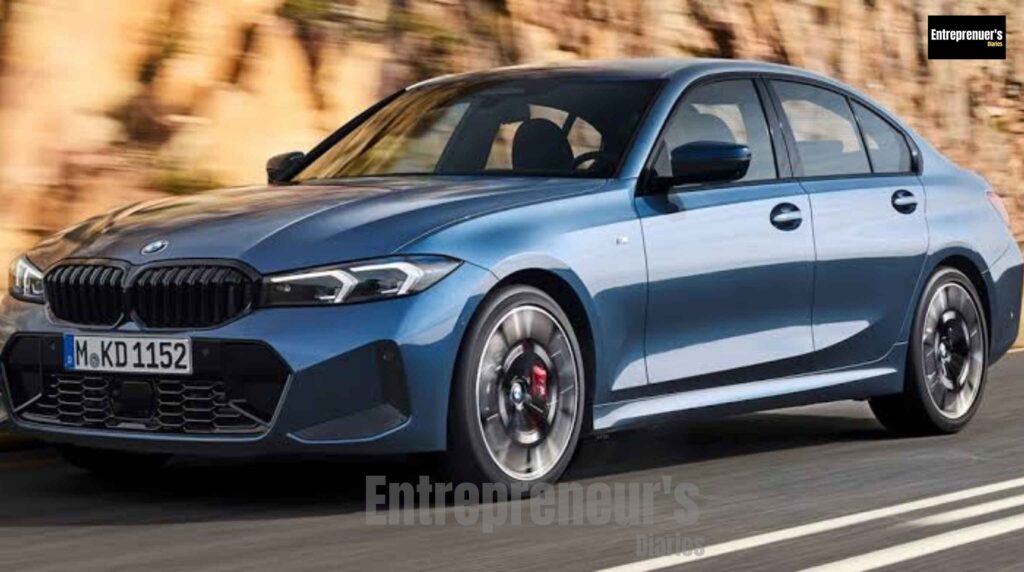
BMW’s version of this story started much earlier. The automaker told Reuters it first used aluminium conductors back in 2011, on its 1 Series city car.
From there, BMW gradually extended the material to hybrids and EVs. Today, a substantial share of the cabling in BMW’s newest eDrive EV technology, launched last year, runs through aluminium, Reuters reports.
That timeline matters more than it might seem. It tells you BMW isn’t reacting to this year’s copper spike. It built a fifteen-year engineering case for aluminium long before the price math got this dramatic.
For suppliers, that distinction matters too. A customer with a fifteen-year aluminium strategy behaves very differently than one making an opportunistic cost cut, and harness makers are watching closely which kind of customer they’re dealing with.
Stellantis Joins Quietly
Stellantis, the world’s fourth-largest automaker, has also started swapping copper wiring for aluminium, according to an industry source close to the matter cited by Reuters. The company declined to comment when Reuters asked directly.
That silence stands out next to Ferrari and BMW’s openness. It suggests the substitution trend may already be running ahead of what some automakers are comfortable confirming publicly, especially with cost-cutting narratives a sensitive topic in a brutally competitive EV market.
The Price Math Nexans Is Watching
Xavier Mathieu of Nexans, the world’s second-largest cable maker, gave Reuters a useful rule of thumb. Industrial buyers keep paying up for copper when it performs better, he said, but they start shifting to aluminium once copper costs roughly 3.5 times more than aluminium.
Copper is currently trading at more than 4.2 times the price of aluminium, according to the Reuters analysis. In other words, the switch threshold has already been blown past.
Several things complicate the decision, though. Reuters points to U.S. tariffs and the large amount of energy needed to produce aluminium, which adds to its greenhouse gas footprint.
Aluminium is also less efficient electrically. Nexans has separately noted that aluminium conductors need to be about 1.6 times thicker than copper just to match its conductivity, which adds bulk in tight spaces.
Even with those tradeoffs, JPMorgan has modeled a scenario where aluminium displaces about 6% of annual global copper demand by 2030, up from roughly 2% this year, Reuters reports.
China’s Government-Backed Push
China didn’t leave this to chance. The country’s government, the world’s largest consumer of metals, issued a policy document in March 2025 encouraging companies to switch to aluminium, and Reuters says many of them listened.
Consultancy Zhuochuang told Reuters that 25% to 30% of components currently made from copper, measured by metal volume, could shift to aluminium across China’s energy, automotive and home-appliance sectors by 2030.
Among Chinese EV makers already using aluminium wiring are AVATR, XPeng and Xiaomi, according to Terry Woychowski, president of engineering consultancy Caresoft Global, which disassembles vehicles to study their components. AVATR, XPeng, Xiaomi and Tesla all declined to respond when Reuters asked for comment.
The motivation is straightforward. China’s EV price war has crushed margins industry-wide, Reuters notes, and aluminium’s lower cost is an easy lever to pull.
There’s also a lot of room left to grow. About 85% of busbars, the components connecting an EV’s battery to its systems, are still made of copper, according to data from aluminium producer Hydro cited in the Reuters report.
Tesla’s Pioneering Role
China’s auto industry didn’t invent this idea. It borrowed it from Tesla.
Woychowski told Reuters that Tesla pioneered aluminium wiring when it launched the Model Y in 2019, and has since extended the approach to the Cybertruck. That makes Tesla the reference point the rest of the industry is now measuring itself against.
The supply chain is responding accordingly. Chinese EV parts supplier JONVER told Reuters its aluminium wiring sales have jumped to about 30% of revenue this year, up from roughly 20% in 2023, according to commercial director Feng Lu.
Norwegian aluminium producer Hydro is seeing the same pattern on the HVAC side. Sales of aluminium heating and air-conditioning tubes, replacing copper equivalents, have grown steadily, Hydro chief financial officer Trond Olaf Christophersen told Reuters, and the company expects to keep gaining share as the substitution accelerates.
Cable makers are putting real money behind the trend, not just commentary. Nexans announced in 2026 that it had acquired Republic Wire, a Cincinnati, Ohio-based maker of aluminium and copper wire, to expand its low- and medium-voltage manufacturing footprint in the United States.
Republic Wire generated $5,617.3 million in revenue in the year ended February 2026 and runs a heavily automated 32,500-square-meter facility, according to Nexans’ acquisition disclosure. Nexans said the deal should be immediately accretive to earnings before synergies, with roughly $25 million in run-rate synergies expected within three years.
Where Aluminium Still Falls Short
It would be easy to read all this as copper being finished. It isn’t.
Nexans was clear with Reuters that copper still wins on raw performance in plenty of applications, and industrial buyers keep paying for it where it matters. Aluminium’s lower conductivity, its thicker cable requirement, and the higher energy cost of producing it all keep copper relevant.
Tariff exposure adds another layer of complexity, particularly for companies sourcing aluminium across borders into the U.S. market. None of this is a simple, universal substitution story.
It’s a selective one, moving fastest wherever the price gap is largest and the performance trade-off is smallest. That’s also why Nexans, despite being one of the most bullish voices on aluminium’s growth, was careful to tell Reuters that copper isn’t going away.
The Bigger Picture
Strip away the individual company announcements, and what’s left is three very different automakers arriving at the same material decision for three very different reasons.
Ferrari says it’s about performance and weight, not cost. BMW built a fifteen-year engineering case before copper prices ever spiked. China’s EV makers are switching largely to survive a margin-crushing price war.
When companies with that little in common independently land on the same answer, that’s usually a stronger signal than any single press release. It suggests the copper-to-aluminium shift isn’t a reaction to one bad quarter of metal prices. It’s a structural repricing of how the auto industry builds cars, and it’s still in its early stages.
The automotive wiring harness market was worth roughly $99.43 billion in 2025 and could grow to about $154.41 billion by 2035, according to research firm Expert Market Research, while MarketsandMarkets separately projects the segment reaching close to $59.5 billion by 2030. Material costs, including copper and aluminium, show up repeatedly in that research as one of the biggest swing factors in manufacturer margins.
That’s the part worth bookmarking. Not the wiring itself, but what it represents: a quiet, multi-billion-dollar reallocation of industrial demand, happening company by company, with very little fanfare, right under the headlines about software and self-driving.
What Happens Next
JPMorgan’s own numbers suggest this story has years left to run, not months. Moving from 2% of global copper demand displaced this year to 6% by 2030 means most of the shift hasn’t happened yet.
Watch the automakers that haven’t said anything publicly. Stellantis stayed quiet for a reason, and there are almost certainly others making the same calculation behind closed doors.
Watch copper prices too. If they stay elevated, Nexans’ 3.5x threshold gets crossed by more buyers, in more industries, faster than anyone is currently forecasting.
And watch the cable makers. Nexans didn’t just talk about this trend, it bought a U.S. wire manufacturer because of it, which tends to say more than any quote ever could.
Frequently Asked Questions
Why are car companies switching from copper to aluminium wiring in 2026?
The main driver is price. Copper hit a record near $15,000 a metric ton in late January 2026, while aluminium has been trading around $3,100 a ton, putting copper at more than four times the cost of aluminium, according to Reuters.
Aluminium is also significantly lighter, which matters for EV range, and Ferrari has reported wiring weight savings of up to 20% from the switch. Global copper supply is expected to lag demand for the next decade, so the price pressure behind this shift is likely to continue rather than ease.
Which car brands currently use aluminium wiring instead of copper?
Reuters reports that Ferrari, BMW, Stellantis and Tesla have all adopted aluminium wiring to varying degrees, alongside Chinese EV makers AVATR, XPeng and Xiaomi. Tesla is considered the industry pioneer, having introduced aluminium wiring with the Model Y in 2019 and later extending it to the Cybertruck. Ferrari uses it in its 296 hybrid and its first electric car, the Luce, while BMW has used aluminium conductors since 2011 across multiple model generations.
Is aluminium wiring as reliable and safe as copper for cars?
Aluminium is less electrically efficient than copper, meaning more material is needed to carry the same current, and Nexans has noted aluminium conductors must be roughly 1.6 times thicker than copper to match its conductivity. That’s why industrial buyers, including major cable manufacturers, continue using copper in applications where performance outweighs cost. The switch to aluminium tends to happen once copper prices climb to roughly 3.5 times those of aluminium, a threshold Nexans says has already been exceeded, which is why the substitution is selective rather than universal.
How much of global copper demand could shift to aluminium by 2030?
JPMorgan estimates cited by Reuters suggest aluminium could displace about 6% of annual global copper demand by 2030, up from roughly 2% this year. In China specifically, consultancy Zhuochuang forecasts that 25% to 30% of components currently made from copper, measured by metal volume, could shift to aluminium across the energy, automotive and home-appliance sectors by the same year. Aluminium producer Hydro also notes that about 85% of EV busbars, which connect a vehicle’s battery to its systems, are still made of copper, leaving significant room for further substitution.
Why is China leading the copper-to-aluminium shift in the auto industry?
China’s government issued a policy document in March 2025 encouraging companies to switch from copper to aluminium, and Reuters reports many manufacturers responded. Cost pressure is the bigger driver on the ground: an intense EV price war in China has compressed automaker margins industry-wide, making aluminium’s lower cost especially attractive. Chinese EV makers AVATR, XPeng and Xiaomi have all adopted aluminium wiring, following a path Tesla first established with the Model Y in 2019, according to engineering consultancy Caresoft Global.
Connect With Us On Social Media [ Facebook | Instagram | Twitter | LinkedIn ] To Get Real-Time Updates On The Market. Entrepreneurs’ Diaries Is Now Available On Telegram. Join Our Telegram Channel To Get Instant Updates.

Isabella is a global business journalist and former McKinsey analyst from Brazil. She brings sharp insights on economic shifts, policies, and founder journeys from around the world.

Luca is a tech ethicist from Italy exploring disruptive innovation through a human lens—from AI to biotechnologies to decentralization.