
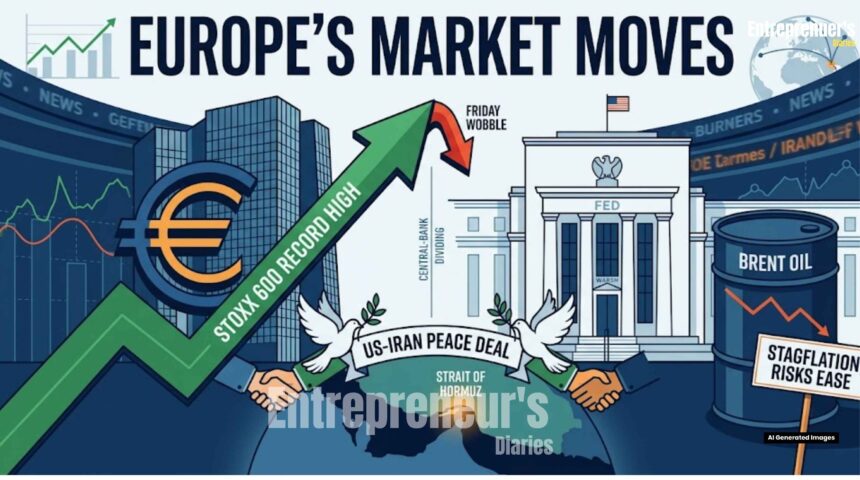
FRANKFURT, Friday, June 19, 2026: European equity markets capped a turbulent but ultimately bullish week, with the pan European STOXX 600 striking a record high before a late week wobble interrupted what had been a six day winning run. The catalyst was unmistakable: a preliminary peace agreement between the United States and Iran that pulled oil prices sharply lower and, with them, much of the stagflation anxiety that had gripped European markets since late February.
By Friday, that momentum had stalled. Reports of a canceled round of follow up talks in Geneva were enough to knock European indexes into the red and remind investors that this rally is built on a diplomatic process that is still, technically, unfinished.
This report walks through exactly what moved, how much, and according to which named source, while separating confirmed market data from figures that could not be fully reconciled across trackers.
European Stocks Rally: What Happened, by the Numbers
The STOXX 600 opened at a record high on Monday, June 15, 2026, according to Reuters. The index closed that session 0.2% higher, Reuters reported, a move that recouped all of the losses the benchmark had suffered since the Iran war began on February 28.
The Euro STOXX volatility index fell to its lowest level since late January the same day, Reuters added. A separate CNBC market blog described the STOXX 600 finishing Monday up 0.25%, a small variance from the Reuters figure likely tied to different intraday timestamps rather than a factual disagreement.
Energy stocks were the exception to the rally. TotalEnergies tumbled almost 5.8%, BP fell roughly 4.4%, Shell slipped 4.3%, and Norway’s Var Energi plunged 7.3%, all according to CNBC’s coverage of Monday’s session, as crude prices sank below $80 a barrel for the first time since the war began.
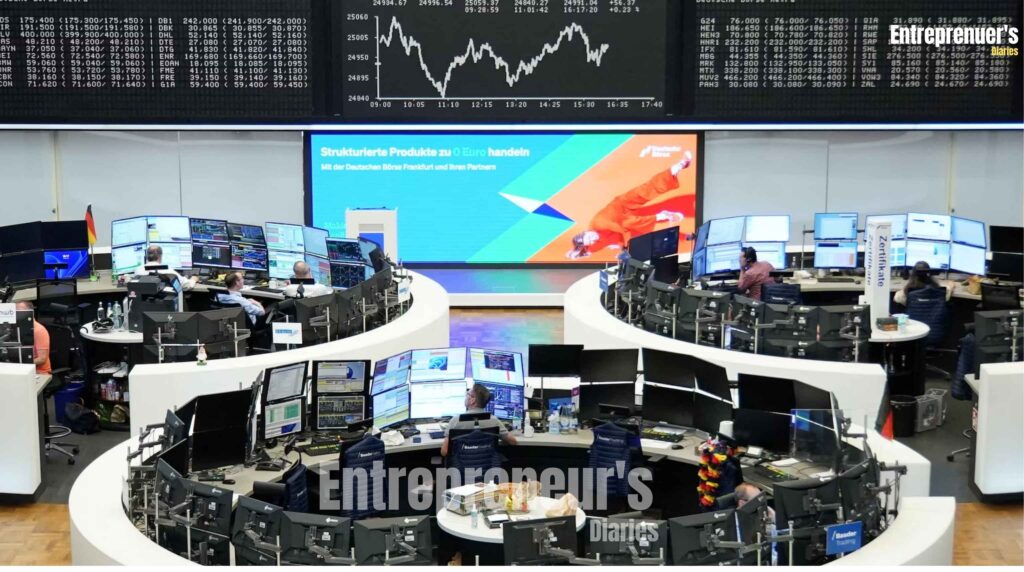
The rally continued into midweek. According to Reuters reporting carried by Investing.com, the STOXX 600 closed 0.5% higher on Wednesday, June 17, marking its fifth consecutive session of gains, the index’s longest winning streak since early January.
Banks were the standout sector that day. The STOXX 600 banking sub index advanced 1.9%, Reuters reported, with Santander, UniCredit, and BNP Paribas among the names cited as leaders.
Technology shares added 1.5% on June 17, per the same Reuters dispatch. Aixtron rose 6.7%, while BE Semiconductor Industries and ASML each gained roughly 4%.
Individual stock stories stood out further still. Dental implant maker Straumann jumped 10.8% to top the STOXX 600 that day after sharply raising its 2026 profit outlook, citing stronger execution, rising China earnings, and lower tariffs, Reuters reported.
Online used car platform Auto1 climbed 8.4% the same session after issuing new long term guidance, according to the same reporting. Telecoms operator Orange slipped 3.3% after Barclays reinstated coverage at “equal weight.”
Not every sector joined the party. Auto stocks were the worst performers on June 17, down 3.3% as a group in their steepest one day fall in nearly a month, Reuters reported, after BMW cut its annual profit outlook by 8.3% in share price terms, citing weakness in the Chinese market and the lingering impact of the Iran war.
The rally finally lost steam on Friday, June 19. According to data and commentary published by Trading Economics, both the STOXX 50 and the STOXX 600 fell 0.1%, pausing a six day winning streak after the cancellation of scheduled US-Iran talks in Geneva revived doubts about the durability of the ceasefire and the full reopening of the Strait of Hormuz.
The broader eurozone benchmark tracked by Trading Economics, the EU50 index, still closed the week at 6,334 points, up 5.99% over the trailing month and 21.03% higher year on year, according to the same source.
The US-Iran Peace Deal That Triggered the Rally
To understand why European markets moved the way they did, it helps to rewind to where the panic started. War between the United States and Iran broke out on February 28, 2026, according to Reuters, and the ensuing months saw repeated spikes in oil prices, several aborted ceasefire attempts, and direct strikes on energy infrastructure across the Persian Gulf.
The diplomatic breakthrough began on June 11. President Donald Trump said he had called off planned military strikes against Iran and suggested a peace deal was close, according to Yahoo Finance’s live markets coverage. US stocks surged that day: the Dow Jones Industrial Average rose roughly 930 points, or 1.9%, the S&P 500 gained about 1.8%, and the Nasdaq Composite climbed 2.5%, all according to Reuters.
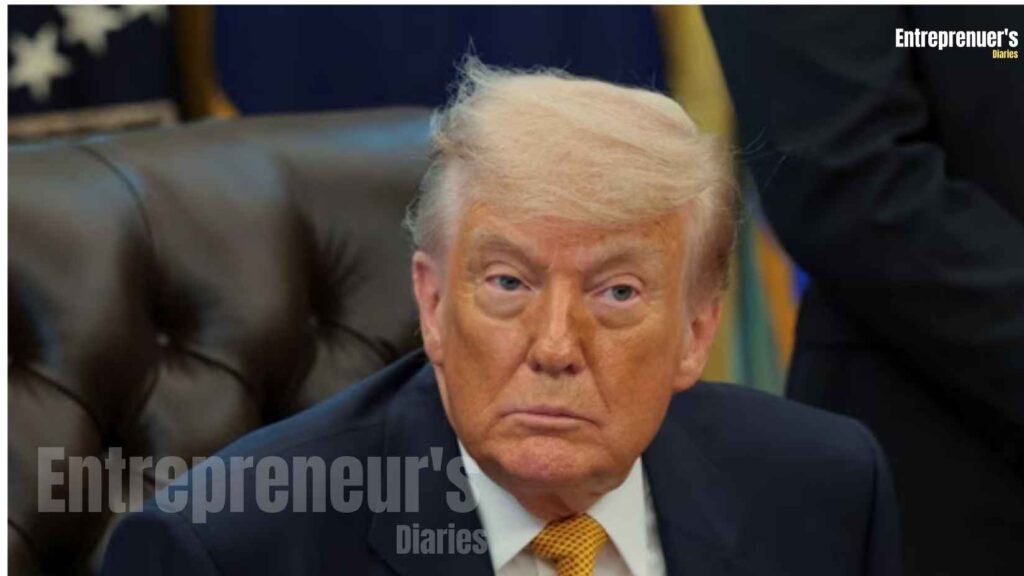
The agreement was finalized days later. A memorandum of understanding was signed electronically over the weekend of June 13-14 by President Trump, Vice President JD Vance, and Iranian parliament speaker Mohammad Bagher Qalibaf, Reuters reported, citing a senior US administration official.
Trump confirmed the deal himself on social media. “The Deal with the Islamic Republic of Iran is now complete,” he wrote on Truth Social, according to CNBC’s reporting. “I hereby fully authorize the toll free opening of the Strait of Hormuz… Let the oil flow!”
The terms, as reported by Yahoo Finance, called for the Strait of Hormuz to reopen to commercial shipping without tolls within days, though a full return to normal oil flows was described as a process likely to take months. Yahoo Finance also reported that formal talks to finalize the broader peace framework were expected to begin within 60 days of the signing.
US markets registered the news in real time. The Dow closed at a record 51,671.03 on June 15, up 468.77 points or 0.92%, the S&P 500 climbed 1.65% to 7,554.29, and the Nasdaq Composite jumped 3.07% to 26,683.94, according to CNBC.
Zacks Investment Management chief market strategist Brian Mulberry described the unwind of geopolitical risk as smoother than expected. “It seems to be much more orderly than what I expected, and that’s not a bad thing,” Mulberry told CNBC.
For Europe specifically, the direct transmission channel was energy. Brent crude fell below $80 a barrel for the first time since the conflict began, CNBC reported, easing the single biggest input cost pressure on the eurozone’s energy intensive industrial base.
Why Wall Street Strategists Are Turning Bullish on Europe
The rally was not just a function of headline relief. It was reinforced, in real time, by sell side strategists changing their published positioning.
Barclays closed its underweight stance on European equities this week and raised its year end target for the STOXX 600 to 670 points from 620, according to Investing.com’s report on the bank’s note. The bank explicitly cited “reduced stagflation risk” following the expected US-Iran deal and the subsequent drop in oil prices.
Barclays also upgraded the Luxury sector to Overweight, funding the move with a downgrade of Healthcare to Underweight, the same report said. The bank noted that European equities had lagged the US, Japan, and emerging markets for the duration of the war.
Barclays’s reasoning, as relayed by Investing.com, rested on two pillars: Brent crude trading roughly 50% below its wartime highs, and a deal expected to keep the Strait of Hormuz open for at least 60 days. Together, the bank argued, those conditions should let the stagflationary shock to Europe moderate into the second half of the year.
This week’s moves extend, rather than start, a broader trend. The STOXX 600 advanced 16% over 2025 and outperformed the S&P 500 in dollar terms, according to reporting carried by Yahoo Finance and GuruFocus, with the European banking sector up 65% for its strongest annual gain since 1997.
That run has not been cheap to buy into. The STOXX 600 now trades near 16 to 17 times forward earnings, against a 20 year average of roughly 13.3 times, according to strategist commentary on Bloomberg data reported by Yahoo Finance, a valuation level historically seen only outside of bubble or recession periods.
Goldman Sachs has been more cautious about the “Europe overtakes America” framing specifically. European portfolio strategist Sharon Bell told Goldman Sachs Research that the firm had recently raised its STOXX 600 forecast to 660 over the next 12 months, citing resilient earnings and a steadier eurozone economy, while still stopping short of predicting European stocks would outperform their US counterparts outright.
Central Banks Take Diverging Paths: ECB Hikes, Fed Holds
The rally landed in the middle of a packed central bank calendar, and the two sides of the Atlantic moved in opposite directions within days of each other.
The European Central Bank’s Governing Council raised its three key interest rates by 25 basis points on Thursday, June 11, 2026, according to the ECB’s own official press release. The deposit facility rate rose to 2.25%, the main refinancing rate to 2.40%, and the marginal lending rate to 2.65%, all effective June 17, 2026, the ECB confirmed.
It was the ECB’s first rate increase since its tightening cycle ended in September 2023, Euronews reported, reversing eight consecutive rate cuts delivered between June 2024 and June 2025.
The ECB’s own monetary policy statement was direct about the cause. “The war in the Middle East is generating inflation pressures,” the Governing Council said, adding that the decision to raise rates was judged robust across a range of scenarios for how the conflict might evolve.
Updated Eurosystem staff projections released the same day raised the inflation outlook and trimmed growth. Headline inflation is now expected to average 3.0% in 2026, 2.3% in 2027, and 2.0% in 2028, according to the ECB’s official statement, while inflation excluding energy and food is projected at 2.5% in both 2026 and 2027, before easing to 2.2% in 2028.
The Federal Reserve, by contrast, held its benchmark rate steady at a target range of 3.50% to 3.75% on Wednesday, June 17, 2026, in a unanimous 12-0 vote, according to the Federal Reserve’s official press release. It was the first meeting chaired by new Fed Chair Kevin Warsh.
The Fed’s own statement struck a measured tone. “Economic activity is expanding at a solid pace,” the Federal Open Market Committee said in its official release, noting separately that elevated uncertainty persisted “in part” because of the conflict in the Middle East.
The tone underneath the decision was notably more hawkish than the headline hold suggested. Of the 18 Fed officials who submit projections, 17 judged inflation risks to be tilted to the upside, according to reporting from Stocktitan on the Fed’s Summary of Economic Projections, and the median dot now points to a higher funds rate by year end rather than the rate cut previously signaled in March.
Specifically, the projections grid implied a median year end rate of roughly 3.8%, according to CNBC’s reporting, about 0.16 percentage points above the current target range’s midpoint. US Bank’s research desk noted that core Personal Consumption Expenditures inflation had already risen from 3.0% in December 2025 to 3.3% in April 2026, citing Federal Reserve and Bloomberg data.
Warsh used his first press conference to signal a stylistic break from his predecessor. He said the committee chose not to issue forward guidance this time because it “was not well suited to the current policy conjuncture,” according to CNN’s reporting, a departure from the proactive guidance Jerome Powell’s Fed had typically provided.
CNN also reported that Warsh has promised “regime change” at the central bank, a phrase he used after his first meeting concluded with the rate hold.
The Risk That Hasn’t Gone Away: The EU’s Own Stagflation Warning
Even as markets celebrated, the European Commission’s own economy chief had already gone on record with a more cautious diagnosis weeks before this rally began.
Speaking on the sidelines of a G7 finance ministers meeting in Paris in May, EU Economy Commissioner Valdis Dombrovskis told CNBC directly: “We are facing a stagflationary shock.” He said at the time that the Commission’s forthcoming spring forecast would revise growth figures down and inflation figures up because of the war’s effect on energy markets.
That forecast materialized shortly after. The European Commission cut its 2026 eurozone growth forecast to 0.9%, according to Investing.com’s report on the official release, while eurozone inflation held at 3.0% in April, per the same reporting, well above the ECB’s 2.0% target.
Dombrovskis also warned, per Investing.com, that under a more adverse scenario in which energy prices do not peak until late 2026, those growth forecasts would be roughly halved again.
Friday’s pullback is a live illustration of exactly the fragility Dombrovskis flagged. The cancellation of follow up US-Iran talks in Geneva, reported by Trading Economics, was enough on its own to end a six day rally and push European indexes back into negative territory, underscoring how much of this week’s optimism still depends on a diplomatic process that has not been finalized.
What Remains Unverified or Inconsistent
In the interest of strict accuracy, a few details in this week’s reporting could not be fully reconciled across sources.
The precise size of Monday’s STOXX 600 gain was reported slightly differently by different outlets: Reuters, via Investing.com, put the close at 0.2% higher, while a CNBC market news blog described the same session as finishing up 0.25%. This is most likely a function of different intraday or closing price snapshots rather than a factual conflict between the two wire services.
Exact index point levels for the STOXX 600’s record high were also inconsistent across real time data providers checked for this report, with separate Investing.com snapshots showing different point ranges depending on the date and time of capture. For that reason, this report relies on the percentage moves explicitly attributed to Reuters above rather than asserting a single, precise closing index level for the record high session.
Finally, Trading Economics described Friday’s pullback as ending a “six day winning streak” without itemizing each individual session by date. This report treats that streak as running approximately from the ECB’s rate decision on June 11 through June 18, based on the surrounding reporting, rather than asserting exact day by day figures for sessions not independently confirmed elsewhere.
Why This Matters for Entrepreneurs and Investors
Strip away the daily percentage moves, and three threads matter more than any single day’s close.
The first is that Europe’s central bank and America’s central bank are now telling two different stories about the same global shock. The ECB looked at war driven energy inflation and chose to tighten policy for the first time in nearly three years. The Fed looked at the same conflict and chose to hold, while quietly turning more hawkish underneath. For any business with euro denominated debt or dollar denominated revenue, that divergence is not academic. Euribor linked loans and corporate borrowing costs in the eurozone are now repricing upward at the same moment European equities are rallying, a combination that rewards equity holders while raising the cost of capital for the same companies’ own balance sheets.
The second is that this week’s rally was won, in large part, on the strength of one sector’s conviction. Banks, not technology or industrials, drove the STOXX 600’s longest winning streak since January, and Barclays’s decision to close its underweight position on European equities was explicitly tied to falling oil prices rather than to any change in Europe’s underlying growth story. That is a fragile foundation. A reversal in crude, or a stalled diplomatic process, can unwind the trade just as quickly as it built.
The third is the one most easily missed in a week full of record highs: the European Commission’s own economy commissioner used the word “stagflationary” on the record before this rally even started, and the Commission’s official forecasts already reflect a weaker growth, higher inflation eurozone for 2026. Friday’s Geneva talks cancellation is the first concrete evidence that the easier, deal driven phase of this story may already be behind markets, and that the next leg depends on diplomacy holding rather than oil prices simply staying low.
The businesses and investors who navigate this best will not be the ones reacting to Friday’s 0.1% dip. They will be the ones tracking three specific items over the coming weeks: whether the US-Iran talks resume and the 60 day finalization window stays on track, what the European Commission’s next official growth and inflation update shows, and whether the ECB’s June hike turns out to be, in its own words, the start of a sustained response to “inflation pressures” or a single, isolated move.
Frequently Asked Questions
1. Why are European stocks rising in June 2026?
European stocks rose after the United States and Iran signed a preliminary peace agreement on June 14-15, 2026, that included a plan to reopen the Strait of Hormuz, according to Reuters. The STOXX 600 hit a record high on June 15 and went on to post its longest winning streak since January, supported further when Barclays closed its underweight position on European equities and raised its STOXX 600 target, citing reduced stagflation risk, per Investing.com.
2. What caused the US-Iran deal that moved markets?
President Trump said on June 11, 2026, that he had called off planned military strikes against Iran and signaled a deal was close, according to Yahoo Finance. The agreement was formalized days later when a memorandum of understanding was signed by Trump, Vice President JD Vance, and Iranian parliament speaker Mohammad Bagher Qalibaf, Reuters reported, with terms aimed at reopening the Strait of Hormuz to oil shipping.
3. Did the European Central Bank raise interest rates in June 2026?
Yes. The ECB raised its three key interest rates by 25 basis points on June 11, 2026, lifting the deposit facility rate to 2.25%, the main refinancing rate to 2.40%, and the marginal lending rate to 2.65%, effective June 17, according to the ECB’s official press release. It was the ECB’s first rate hike since September 2023.
4. Did the US Federal Reserve raise or cut interest rates in June 2026?
The Federal Reserve held its benchmark rate steady at 3.50% to 3.75% on June 17, 2026, in a unanimous 12-0 vote, according to the Federal Reserve’s official press release. It was the first meeting chaired by new Fed Chair Kevin Warsh, and the Fed’s updated projections showed a majority of officials now expecting higher rates by year end rather than the rate cut previously signaled in March, per Stocktitan’s reporting on the Summary of Economic Projections.
5. What is stagflation, and is Europe still at risk of it?
Stagflation refers to an economy experiencing weak growth alongside persistently high inflation at the same time. European Commission Economy Commissioner Valdis Dombrovskis warned in May 2026 that the eurozone was facing a “stagflationary shock” tied to the Iran war’s effect on energy prices, according to CNBC, and the Commission has since cut its 2026 eurozone growth forecast to 0.9% while inflation has held around 3.0%, per Investing.com. The June peace deal has eased that risk but, per Trading Economics’ reporting on Friday’s pullback, has not fully resolved it.
6. Is the war between the US and Iran officially over?
Not formally. The agreement signed in mid June 2026 was a preliminary memorandum of understanding rather than a final peace treaty, and Yahoo Finance reported that formal talks to finalize the broader framework were expected to begin within 60 days of the signing. The cancellation of a scheduled round of those talks in Geneva on June 19, reported by Trading Economics, was enough to end European stocks’ six day winning streak, underscoring that the process remains unfinished.
Connect With Us On Social Media [ Facebook | Instagram | Twitter | LinkedIn ] To Get Real-Time Updates On The Market. Entrepreneurs’ Diaries Is Now Available On Telegram. Join Our Telegram Channel To Get Instant Updates.

Isabella is a global business journalist and former McKinsey analyst from Brazil. She brings sharp insights on economic shifts, policies, and founder journeys from around the world.