
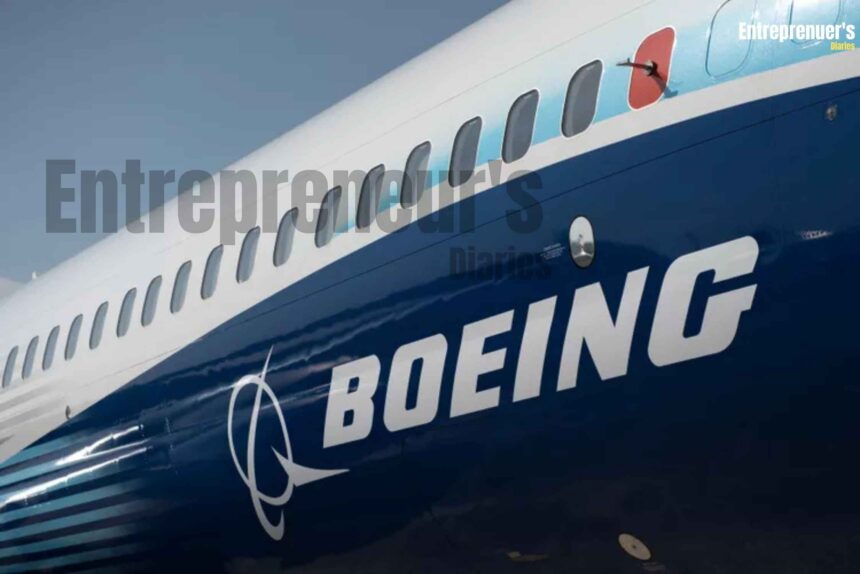
Washington D.C., May 8: The Boeing China deal 2026 observers have been waiting nearly a decade for may finally be close. Kelly Ortberg got on an earnings call late last month and said China could soon place an order for a big number of planes.
He chose those words carefully. Big number. Soon. Could. The caution was deliberate. The signal underneath it was not.
By Wednesday evening, the invitations were already going out. Sources confirmed to CNBC and Reuters that the White House was assembling a delegation for the presidential visit to Beijing on May 14 and 15. The names being pulled together read like a short list of American corporate power: Nvidia, Apple, Exxon, Qualcomm, Blackstone, Visa, and, confirmed by separate sources, the heads of two institutions with enormous skin in this game: Ortberg of the planemaker, and Jane Fraser of the banking giant.
Qualcomm CEO Cristiano Amon confirmed his attendance. Blackstone’s Steve Schwarzman, who has spent decades building relationships in Beijing that most American executives only read about, is planning to join, per Bloomberg sources. And then there is Jensen Huang, who answered a direct question from CNBC’s Jim Cramer about whether he would travel by saying it would be a privilege and a great honour to represent the United States if invited.
That sentence was written in a boardroom. Nobody says it that way off the cuff.
According to reporting from Semafor, the president has been stoking what multiple sources describe as corporate FOMO, making offhand comments to executives he has recently met and implying he will see them in Beijing. Whether that is dealmaking instinct or showmanship, the effect is identical. The list keeps growing.
Nine Years Is a Long Time to Wait
To understand what is riding on next week, you have to go back further than most headlines about this trip bother to do.
China has not placed a meaningful aircraft order with the American planemaker since 2017. Let that sit for a moment. That is before the MAX crashes that killed 346 people. Before the grounding. Before a pandemic shut down aviation for two years. Before tariff battles turned commercial relationships into diplomatic leverage. Before a door plug blew off an Alaska Airlines jet at altitude in January 2024 and sent executives back in front of Congress. Before a labour strike. Before a production crisis that followed.
Through all of it, Chinese carriers kept purchasing planes. From Airbus.
Just last week, China Southern agreed to buy 137 Airbus jets at a list price of $21.4 billion, per a filing on the Shanghai Stock Exchange. Total Airbus orders from Chinese carriers since 2025 now sit at roughly $55 billion at list prices. Airbus opened a manufacturing facility in Tianjin. It kept its relationships warm throughout every cycle of bilateral friction.
The American planemaker watched from the sidelines.
Then April 2025 arrived and things got considerably worse. At the peak of the tariff war, according to Bloomberg, Beijing directed the three biggest carriers, Air China, China Eastern, and China Southern, to stop accepting deliveries entirely. At least three jets at the delivery center in China were physically sent home. Trump posted about it on Truth Social. The stock fell. The relationship hit something close to zero.
What happened next matters as much as what happened before.
The two countries negotiated a tariff truce. The ban lifted. Planes started moving again. And quietly, the conversations about a much larger order resumed. Bloomberg reported in August 2025 that talks were underway for as many as 500 aircraft. By March 2026, the deal was reportedly close to being announced at a summit that was then postponed six weeks because the Iran war had reshuffled American foreign policy priorities.
According to multiple sources, the deal is still alive as of today.
What is being discussed is the most consequential Boeing China deal 2026 could produce, and both sides know it.
Five hundred 737 MAX jets. Separate conversations are also underway for roughly 100 widebody jets including 787 Dreamliners and 777X aircraft, though that portion is expected to be announced at a later date, per sources familiar with the talks. The narrowbody order alone runs well above $40 billion at list prices. Chinese carriers negotiate deep discounts on bulk purchases, so the final number would be lower. But the commercial significance would be enormous regardless.
Ortberg said something on that earnings call that deserves more attention than it received.
Any new deal with China is, in his own words, 100 percent dependent on the outcome of the presidential summit. He was not being diplomatic. He was being accurate. His company’s most important potential commercial transaction in nearly a decade depends on a meeting he has no control over. So he is going to Beijing to be in the room when it happens.
Under his leadership, which began in August 2024, the industrial reset has been real. He relocated the executive team back to Seattle, away from the Arlington corporate headquarters, to stay physically close to manufacturing. He adopted a fix first, produce later philosophy that prioritised quality over volume. He restructured leadership, oversaw a ten percent workforce reduction, and reintegrated Spirit AeroSystems. First quarter 2026 revenue hit $22.22 billion, up 14 percent year over year, ahead of analyst estimates.
The recovery is genuine. It is also incomplete. A deal of the scale being discussed in Beijing would close the most consequential gap remaining.
What a Century of Patience Buys
The banking story does not carry the same headline drama. It might be the more instructive one.

Citigroup has operated in China since 1902.
Two world wars. A revolution. The Cultural Revolution. Multiple diplomatic ruptures. Every conceivable form of bilateral strain. The bank kept its name on the door in Shanghai throughout all of it. While other Western financial institutions made loud public statements about de risking and reducing exposure to the market, it maintained its institutional relationships and kept building.
Fraser told Bloomberg in November that the bank was seeing renewed investor interest in China. That was not a press release. Her Q1 2026 earnings bore it out: services revenue up 17 percent, markets crossing $7 billion, M&A fees hitting a record first quarter, and the bank on track for its stated 10 to 11 percent return on tangible common equity target for the year.
Fraser has spent four years systematically simplifying the institution. She sold the China based consumer wealth portfolio in 2024 as part of that strategy. What she is doubling down on is the institutional layer: treasury and trade solutions, securities services, capital markets, investment banking. Businesses where the bank’s global network and depth of China relationships give it an edge that no competitor can replicate in a hurry.
What she brings to Beijing next week is not just a corporate agenda. It is a signal, delivered at the level of a state visit, that the commitment is permanent and not subject to revision every time geopolitical temperatures shift. In Chinese business culture, who shows up and how senior they are is a language of its own. A CEO in that room says something a managing director simply cannot.
There is a detail in the background arrangements worth noting. According to a US executive with direct knowledge of the planning, the White House declined a Chinese invitation to organize specific industry meetings between senior Beijing officials and American executives, concerned it might make US companies appear too close to Beijing.
Close enough to deal. Not so close it looks like anyone is being managed by the other side.
The Trip the Iran War Almost Stopped
The visit was originally scheduled for late March and early April. It was postponed, at the US government’s request, because the Iran war had shifted foreign policy attention and made the optics of a Beijing state visit genuinely complicated.
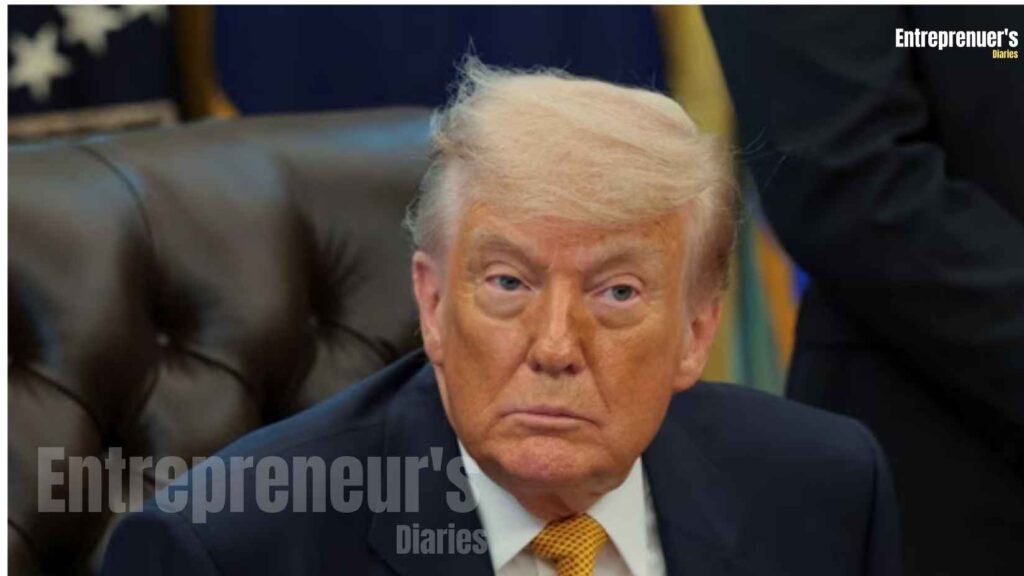
Trump then announced May 14 and 15. The Chinese side confirmed more cautiously.
The war is not a background detail here. It is central. China is the world’s largest buyer of Persian Gulf oil and gas. With the Strait of Hormuz still disrupted, the economic cost to Beijing of a conflict the United States initiated is real and measurable. It feeds into manufacturing costs, inflation, and the political calculations of officials across Chinese industrial provinces.
According to experts quoted by the World Economic Forum ahead of the summit, the Busan trade truce agreed in October 2025 expires in November 2026. That clock is the structural pressure underneath everything being built around next week. Both sides need the summit to extend what is working before that deadline arrives.
According to analysis from RealClearWorld and the Brookings Institution, neither side expects major breakthroughs on the hardest issues: Taiwan, export controls, rare earths, or the Iran conflict itself. The realistic bar is an extension of the truce framework, some commercially visible wins both leaders can point to domestically, and a stabilisation of the ambient environment governing how American businesses and Chinese officials interact at the working level.
Senator Steve Daines of Montana, leading a bipartisan congressional delegation currently in Beijing ahead of the summit, put it plainly when meeting with Foreign Minister Wang Yi. He said the goal is to de escalate, not decouple. His delegation specifically raised the proposed aircraft purchase in their meetings with Premier Li Qiang. The political groundwork is being laid from multiple directions simultaneously.
The Signal That Matters Most

Michael Hart, who runs the American Chamber of Commerce in China and has spent more time in Beijing boardrooms than most people who comment publicly on this relationship, told CNBC something that got less attention than it deserved.
He said the expected photographs of the two presidents together may signal inside China that engaging with American businesses is acceptable again. He added that since US military actions earlier this year, Chinese officials had become more hesitant to meet with the American business community.
That is significant. A senior US business voice based in Beijing is telling you plainly that the Iran conflict made mid level Chinese officials skittish about being seen alongside American counterparts. The visible summit, whatever its formal agenda, is partly about restoring social permission. It tells the provincial official in Shanghai who has been slow walking meetings with American companies that the political cover is back.
For every executive on this trip, that ambient shift may end up being as commercially durable as any specific agreement signed on the margins.
Of course, everyone also remembers San Francisco 2023.
The aircraft deal was nearly announced at that Biden Xi summit too. People in the room came away believing it would happen. It did not. The deal collapsed at the last moment, and the planemaker spent the following two years watching its European rival deepen its position with Chinese carriers.
Ceremony makes headlines. Signed contracts with delivery schedules actually pay invoices.
For now, the delegation is assembling. Invitations went out Wednesday evening. Calendars have been cleared. And sometime next week, some of the most consequential corporate figures in American business will sit in rooms in Beijing where the conversations will be considerably more specific than anything the official communiques will ever say out loud.
How Will Global CEOs Influence Market Trends After the China Visit?
When executives of this profile travel as part of a presidential delegation, markets react before the planes even land. Shares in the planemaker rose on the news of Ortberg’s inclusion alone, according to financial outlets covering the announcement. That reaction tells you what investors already believe: CEO presence at a diplomatic summit correlates with commercial outcomes.
If the 500 jet order is confirmed, analysts expect it to materially improve the company’s order backlog and create a production tailwind across the aerospace supply chain, touching engine manufacturers, aerostructures suppliers, avionics firms, and leasing companies.
For financial firms, the signal is different but equally real. A successful summit validates the China market access narrative and gives institutional investors more confidence in the Asia earnings projections those firms have been making. According to Fortune’s analysis of what global executives need from China in 2026, companies that show up at the highest level during periods of bilateral strain tend to capture disproportionate market share when the cycle turns.
How Might Citigroup Adjust Its Strategy After the Summit?
The bank has already made its strategic choices clear through Fraser’s four year restructuring program. Consumer operations in multiple international markets have been sold or wound down. The China consumer wealth portfolio was divested in 2024. What remains is the institutional business: treasury and trade solutions, capital markets, securities services, and investment banking.
A summit that extends the trade truce and improves the diplomatic climate directly supports the cross border transaction volumes and capital markets activity that drive those revenue lines. According to the bank’s Q1 2026 earnings, services revenue rose 17 percent year over year. The bank is not repositioning for China. It is doubling down on the parts of its China business that have been performing
What Does the Planemaker’s Market Position Look Like Going Into the Summit?
The Boeing China deal 2026 analysts have tracked since August 2025 now has a real deadline attached to it. The recovery under Ortberg is confirmed by the Q1 2026 numbers. Revenue of $22.22 billion, up 14 percent year over year, came in ahead of analyst estimates. The fix first philosophy has stabilised production. The Spirit AeroSystems reintegration is complete. The balance sheet is stabilising.
What remains unresolved is the China shaped hole in the order book. The market represents roughly 10 percent of the commercial backlog and a significant share of projected global aviation demand over the next two decades. The absence of a major order since 2017 is a competitive vulnerability that has allowed Airbus to entrench itself with Chinese carriers. A deal of the scale being discussed would change that calculus dramatically and provide long term revenue visibility the recovery still needs.
What Are the Investment Opportunities in Aviation Ahead of the Visit?
The potential order is generating attention well beyond the planemaker itself. If 500 narrowbody jets plus widebodies are confirmed, the production implications ripple through the entire aerospace supply chain. Engine manufacturers, parts suppliers, avionics companies, and leasing firms have been waiting on this relationship to recover.
Beyond the immediate order, Chinese carriers operate some of the oldest narrowbody fleets among major Asia Pacific operators. The replacement demand is structural, not cyclical. The order, if it closes, is not a one time event. It is the reopening of a procurement relationship that could produce follow on business for years. Investors watching the sector are pricing in exactly that possibility, which explains the share price reaction to this week’s delegation news.
What Is the Expected Impact of This Visit on Global Business Relations?
The World Economic Forum, in analysis published this week, described the summit as taking place against a particularly volatile global context, with the Iran conflict adding new complexity to a relationship navigating fundamental differences on trade, technology, and security.
According to analysis from RealClearWorld, the US tariff framework is scheduled to lapse on November 10, 2026. Both leaders are expected to address that deadline in Beijing. Until that negotiation concludes, markets will remain volatile.
What the summit can realistically produce, according to analysts from Brookings and the Center for Strategic and International Studies, is an extension of the existing truce framework, visible commercial wins, and a normalisation of the environment governing how American businesses and Chinese officials engage at the working level. That last outcome, the social permission to be in the room together again, tends to outlast the specific deals announced at press conferences. It is also, for the executives boarding those planes next week, arguably the most valuable thing they could bring home
Connect With Us On Social Media [ Facebook | Instagram | Twitter | LinkedIn ] To Get Real-Time Updates On The Market. Entrepreneurs’ Diaries Is Now Available On Telegram. Join Our Telegram Channel To Get Instant Updates.

Isabella is a global business journalist and former McKinsey analyst from Brazil. She brings sharp insights on economic shifts, policies, and founder journeys from around the world.

Tokyo-based CFA translating global markets into clear insights for modern entrepreneurs.