
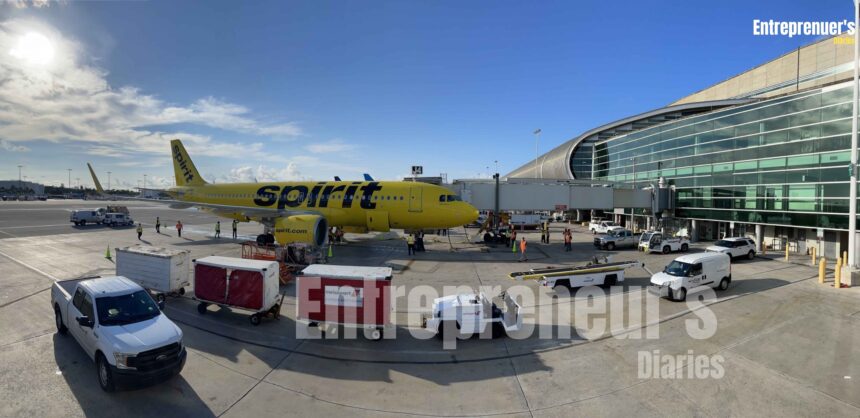
Fort Lauderdale, May 2: Nobody who has been paying attention is surprised. That does not make it any less ugly.
Spirit Airlines is dead. Not restructuring. Not pivoting. Not emerging from bankruptcy with a leaner balance sheet and a hopeful press release. Dead. Thirty-four years of cheap seats, yellow planes, and bare-bones flying came to a hard stop at 3:00 a.m. Eastern Time this Saturday, after a last-ditch government bailout collapsed under the weight of creditor politics, soaring jet fuel, and a White House that blinked at the final hour.
The flight attendants found out first. Around 1:00 a.m., the leadership of the Association of Flight Attendants sent word to its 5,000 Spirit members. “We are delivering the hardest news of our lives,” the message read, according to sources. “Spirit will permanently cease operations at 3:00 AM Eastern Time on May 2.” By the time most of America woke up Saturday morning, the Spirit website had replaced its booking engine with a shutdown notice. No flights. No customer service. No path forward. Just a brief, bleak statement and a link to an FAQ page that cannot possibly answer what 17,000 people are supposed to do with their lives now.
This is the first time a significant U.S. airline has simply ceased to exist since Midway went dark in the hours after September 11, 2001, according to multiple sources covering the industry. Twenty-five years. That is how long it has been since something like this happened. Let that sit for a moment.
How a Pioneer Ran Itself Into the Ground
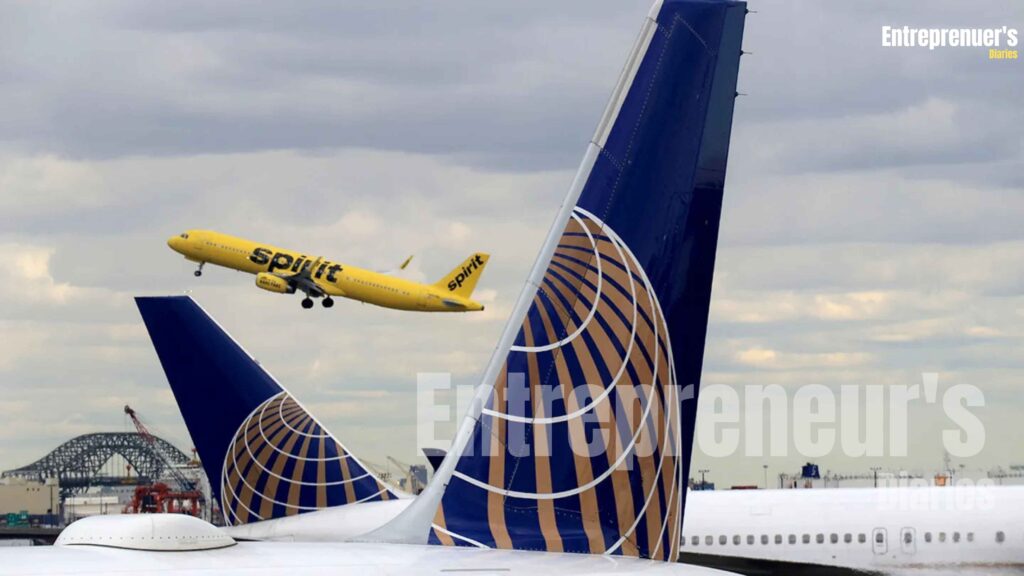
Spirit did not start out as a punchline. It started out as a genuinely disruptive idea. Strip the ticket down to its absolute core. Charge for everything else, the carry-on bag, the seat selection, the bottle of water. Keep the base fare low enough that a family in Detroit or a college student in Orlando could actually afford to fly somewhere. At its peak in the mid-2010s, Spirit was opening as many as 28 new routes in a single year. The company was valued at close to $6 billion, according to sources. Its profitability ranked among the top three of major U.S. carriers at one point.
Then the larger airlines figured out what Spirit was doing and copied it. Delta, American, United. They all rolled out basic economy tiers, stripped away amenities, and started competing on price on the exact routes where Spirit had built its business. Spirit had invented a game, and by the time it needed that game most, everyone else was playing it too.
The COVID-19 pandemic then did what it did to every carrier, only Spirit had less margin to absorb the damage. By the time it filed for Chapter 11 in November 2024, it had burned through more than $2.5 billion since 2020, according to sources. A second bankruptcy followed in August 2025. The airline reported $8.1 billion in debts against $8.6 billion in assets. Five hundred million dollars of breathing room, on paper. In practice, the situation was far more precarious than that.
The Iran War Finished What COVID Started
Here is where things moved from a slow-motion decline to a genuine crisis. Spirit’s restructuring plan, the financial model the company built its survival around, assumed jet fuel at roughly $2.24 per gallon in 2026, according to sources tracking the airline’s finances. The conflict in the Middle East, specifically the war in Iran and its disruption of oil supply routes through the Strait of Hormuz, drove prices to approximately $4.51 per gallon. Nearly double. That single development added an estimated $360 million in costs that the plan had never accounted for. In the first two months of 2026 alone, Spirit lost $60 million, according to sources. And that was before fuel hit its peak.
The airline’s own lawyer, Marshall Huebner, told a bankruptcy court in New York on April 23 that Spirit’s cash “is not going to last for very much longer.” That is a lawyer saying, in the careful language that lawyers use, that the situation is terminal. Everyone in that courtroom understood it. The question was whether Washington would move fast enough to change the outcome.
It did not.
The Bailout That Bondholders Killed
President Trump floated the rescue idea last week, which was itself a remarkable moment: a Republican administration contemplating a federal takeover of a private airline. The offer, according to sources, was a $500 million government loan that would have given the federal government up to a 90% stake in Spirit. In exchange for that lifeline, the government would have effectively owned the airline. The plan had Trump’s verbal blessing. It had Spirit’s desperation. What it did not have was the support of the creditors who mattered most.
A key group of bondholders rejected the terms outright, according to sources. The deal would have subordinated their claims, pushing them further down the repayment queue in bankruptcy proceedings. From their perspective, the math did not work. From Spirit’s 17,000 employees’ perspective, the math was their livelihood. Those two perspectives never found a middle ground.
On Friday, Trump spoke to reporters with a tone that sounded less like a negotiator closing a deal and more like a man preparing to walk away. “We’re driving a tough deal,” he said, according to sources covering the White House. “Seems like the other lenders are blocking. They think they’ll get bumped down in priority.” A few hours later, the window closed. By midnight, the flight attendants were getting the message.
The Irony the Justice Department Cannot Escape
It is worth revisiting, clearly and without euphemism, the role that federal antitrust policy played in this outcome.
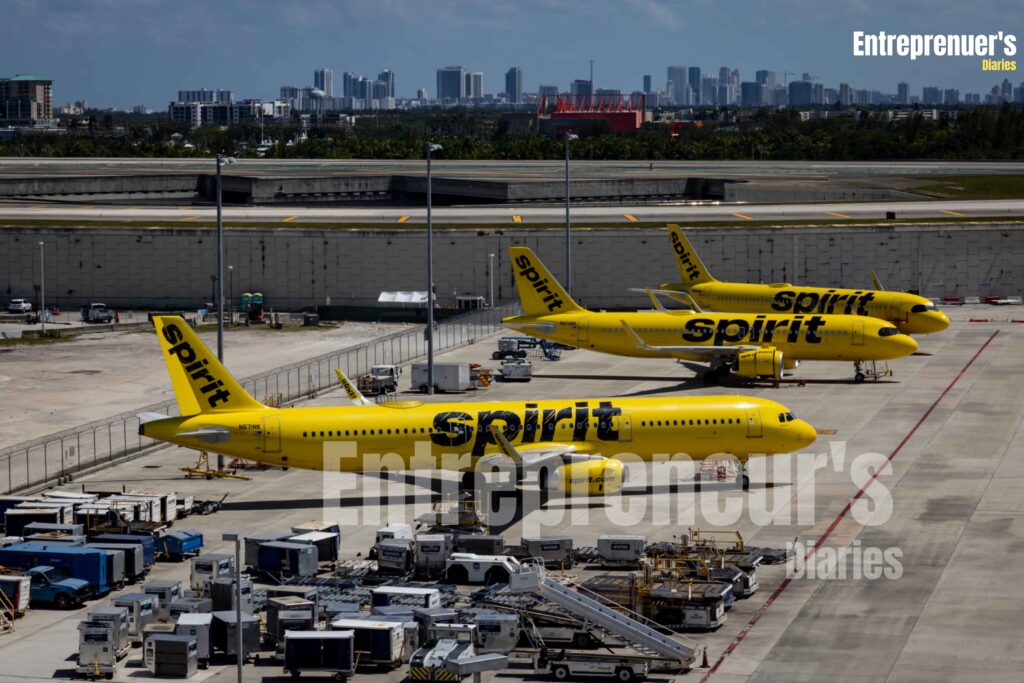
In 2023, Spirit accepted a $3.8 billion acquisition offer from JetBlue, according to sources. The Justice Department under the Biden administration sued to block it, arguing that a JetBlue-Spirit combination would reduce competition and ultimately hurt consumers who depended on budget fares. A federal judge sided with the government. The deal died.
The consumers that the government was protecting are now looking at a market where four carriers, United, American, Delta, and Southwest, control roughly 80% of available U.S. flights, according to sources. Spirit, the airline whose very existence helped keep those carriers honest on price, is gone entirely. The budget competition the Justice Department went to court to preserve has been eliminated more thoroughly than any merger could have achieved.
Senator Elizabeth Warren posted on X praising the blocked merger as “a Biden win for flyers,” according to sources. One imagines the 17,000 newly unemployed Spirit workers and the millions of passengers now repricing their summer vacations have a different view.
What This Costs the Traveler Who Never Once Flew Spirit
This point gets lost and it should not. You did not have to buy a Spirit ticket to benefit from Spirit’s existence. That is not an argument: it is how airline economics actually work.
When Spirit served a route from Orlando to New York, American and United had to keep their prices competitive on that same route or risk losing passengers to the yellow plane at the other end of the terminal. The moment Spirit leaves that route permanently, the competitive pressure disappears. Fares do not hold. They rise.
According to sources citing historical aviation data, fares increase by approximately 23%, or about $60 per round trip, on routes where Spirit has previously exited. Multiply that across every Spirit route simultaneously, heading into the busiest travel season of the year, and the picture is not subtle. Fort Lauderdale, Orlando, Las Vegas, Detroit, New York/Newark, Houston. These are the markets where Spirit flew most heavily. These are the markets where leisure travelers, the people most sensitive to price, are about to feel the absence most acutely.
“Even if you’ve never flown on Spirit, you want them in the market to help put pressure on those other larger carriers,” travel expert Katy Nastro of Going.com told sources before the shutdown was confirmed. “It actually helps keep prices cheap. So even if you’re not a big Spirit fan, you want to see them succeed.”
Budget alternatives including Frontier, Allegiant, Breeze, and Avelo will eventually fill some of the gap. Analysts put a realistic timeline at three to six months, according to sources. In the meantime, it is peak summer travel season and the seats Spirit was selling no longer exist.
For the People Who Bought Tickets
Transportation Secretary Sean Duffy announced an agreement with United, Delta, JetBlue, and Southwest to cap ticket prices for Spirit passengers who need to rebook, according to sources. That is a meaningful gesture, though not a complete solution.
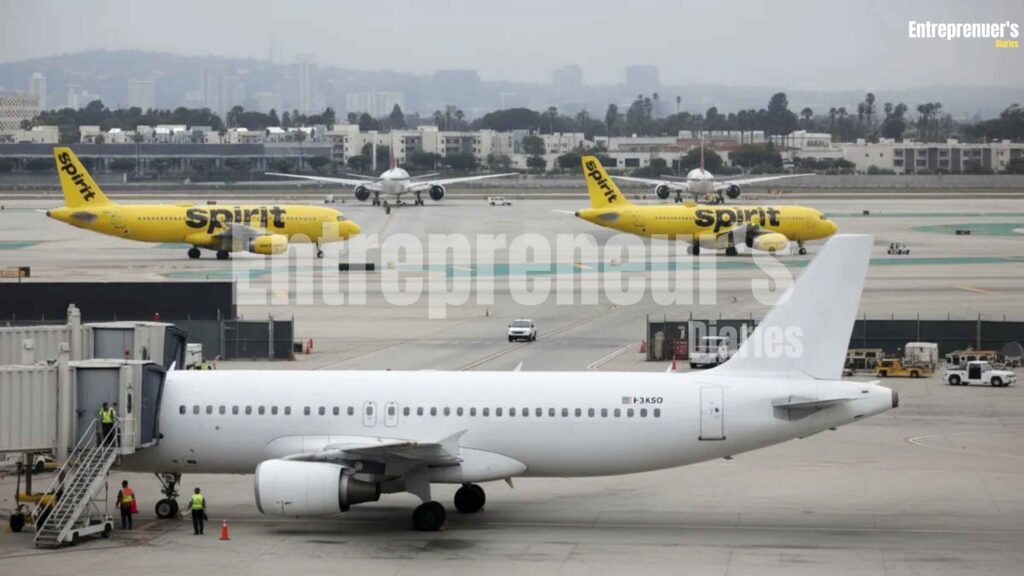
Spirit confirmed it will automatically refund credit and debit card purchases made directly through the airline. Passengers who used cash, travel vouchers, or Free Spirit loyalty points will need to file claims through the bankruptcy process and should expect delays, sources reported. The airline was explicit that it will not cover incidental costs, emergency hotels, last-minute ground transportation, meals. Travel insurance may cover some of those expenses depending on the policy.
If you are mid-trip with a Spirit return flight booked, you are buying a new ticket out of pocket. The airline is not coming back for you.
The Harder Question That Nobody in Washington Wants to Answer
Spirit’s collapse is not just an airline story. It is a question about what kind of market American consumers actually live in, and whether the institutions meant to protect competition are equipped to do so in a world of geopolitical volatility, energy shocks, and debt-laden balance sheets.
The ultra-low-cost carrier model requires everything to go right, almost all the time. Cost discipline has to be relentless. Fuel prices have to stay within a manageable range. Competition has to stay fair. When one of those pillars fails, there is no cushion. There is no reserve. There is just a 1:00 a.m. message to 5,000 flight attendants and a website that no longer sells tickets.
“When you’re a low-cost carrier, by definition, you’re relying on having a cost advantage. And they just don’t have that anymore,” said Shye Gilad, a former airline pilot and professor at Georgetown University’s McDonough School of Business, according to sources.
He is right. And the question of how that cost advantage disappeared, through competition, through regulation, through geopolitics, through a merger block that left Spirit alone to face all of it: that is a question the industry, and the government, will be sitting with for a long time.
Thirty-four years. Seventeen thousand jobs. Sixty thousand passengers a day with nowhere to fly. The yellow planes are parked. The gates are quiet. And the people who were supposed to be on those flights are on their phones right now, figuring out what comes next.
Connect With Us On Social Media [ Facebook | Instagram | Twitter | LinkedIn ] To Get Real-Time Updates On The Market. Entrepreneurs’ Diaries Is Now Available On Telegram. Join Our Telegram Channel To Get Instant Updates.

Isabella is a global business journalist and former McKinsey analyst from Brazil. She brings sharp insights on economic shifts, policies, and founder journeys from around the world.

Ethan is a Lisbon-based leadership strategist who helps remote-first startups scale through systems, team clarity, and async culture.