
New York, May 8: There is a moment in every industry cycle when the money stops chasing the idea and starts chasing the physical thing that makes the idea real. For artificial intelligence, that moment arrived this week.
IREN Limited, the Nasdaq listed data center operator, just secured a commitment of up to $2.1 billion toward its infrastructure buildout from the world’s most valuable semiconductor company.
Reuters and Bloomberg both confirmed the details on May 6. By May 8 the story had moved through every major financial desk on the planet.
The stock jumped more than 30 percent in a single session. That does not happen because of a press release. It happens because the market suddenly sees something it had been underpricing for a long time.
IREN and the Infrastructure Gap Nobody Discusses Openly
The AI industry has a power problem. Not a theoretical one.
A very real, very immediate one involving land, electricity, cooling systems, and construction crews already stretched thin across a dozen states.
Microsoft, Google, and Amazon have all quietly flagged supply constraints in recent earnings calls. OpenAI, reportedly chasing a $1 trillion valuation ahead of a potential public listing according to The Wall Street Journal, needs more raw compute than existing cloud infrastructure can comfortably absorb.
Demand is outrunning the building pipeline. The gap is widening faster than most public commentary acknowledges.
The situation is not unique to the United States either. Across Europe and the Asia Pacific region, according to Financial Times reporting from early 2026, the same story is playing out. Planned capacity is being absorbed before it is even switched on. Operators who can actually deliver power dense, thermally stable facilities at scale are commanding a premium that would have seemed implausible three years ago.
Jensen Huang has spent two years making clear that his ambitions extend well past selling chips. This week, those ambitions became equity.
Why IREN Earned This Partnership, Not Just Received It

The company started as a Bitcoin miner, which is not a credential that impresses anyone in serious infrastructure circles. What changed the conversation was execution.
By early 2026, according to its own SEC filings, the operator had built a meaningful footprint in Texas with the power density and thermal management that GPU heavy workloads actually require.
That transition was neither cheap nor simple. It required rebuilding procurement relationships, retraining technical teams, and convincing power utilities to treat the company as a long term infrastructure partner rather than a speculative mining operation. Most companies that attempt that kind of pivot quietly abandon it when the costs become clear.
A lot of companies claim to be in this business. Very few have built the physical foundation to prove it.
Bloomberg Intelligence analysts, cited in post announcement coverage, noted that the infrastructure investments made gave it credibility that newer entrants simply could not match. This was not a deal handed to a company with a pitch deck and a lease agreement. It was recognition of a track record built over several years of unglamorous operational work.
What the IREN Deal Structure Actually Reveals
The $2.1 billion is not a single check.
According to Reuters and Bloomberg, the investment releases in stages tied to agreed construction and operational milestones. That detail matters more than the headline number.
It protects the investing party from timeline slippage that has burned infrastructure backers before. It also creates a clean set of incentives where management is essentially running toward the capital rather than sitting on it.
Every milestone hit unlocks more funding. Every delay costs them.
The bigger prize here is not the money. It is the partnership itself. Having supply chain relationships, hardware roadmap visibility, and customer network access aligned with your success is worth more than any single check.
There is also a signal embedded in the structure for the broader market. Staged, milestone driven commitments of this size are increasingly the preferred format for serious infrastructure investment in the AI sector. It reflects hard lessons learned from earlier cycles where capital was deployed too quickly into projects that slipped timelines and burned through budgets. The discipline built into this agreement is itself a statement about how the industry has matured.
How the IREN Deal Is Reshaping Major Cloud Platforms
Amazon Web Services, Microsoft Azure, and Google Cloud have long controlled how enterprises access GPU capacity.
Their platforms sit between the chip and the customer, and that position has been enormously profitable. Recent deals backing dedicated operators are quietly eroding that position.
As these operators scale up with direct supply agreements, enterprise customers gain real alternatives.
Some of the largest financial services and pharmaceutical companies have already begun routing intensive workloads away from the major platforms, according to Financial Times reporting from early 2026. Pricing became volatile during peak demand periods, and those customers noticed.
The shift is not dramatic yet. It is happening at the margins, deal by deal, workload by workload. But the direction is clear enough that every major cloud platform has teams actively studying how to respond. Some are accelerating their own infrastructure buildouts. Others are exploring preferential pricing structures for the most compute intensive enterprise customers in order to retain them.
The established platforms are not going anywhere. But the most lucrative compute contracts are becoming a genuinely contested market, and the operators who move fastest to lock in capacity agreements will define the competitive landscape for the next several years.
The Broader AI Data Center Shift Driving IREN Forward
This is not an isolated transaction. It is part of a deliberate strategy to stake an equity claim in the physical layer of the AI economy before that layer is fully built.
In Saudi Arabia, HUMAIN has locked in a $10 billion Google Cloud partnership, a joint venture with AMD and Cisco targeting one gigawatt of capacity, and approval to import tens of thousands of next generation GPU systems, as reported across Reuters and Bloomberg.
In Europe, energy utilities are in active discussions with chip manufacturers about long term power agreements structured around GPU cluster load profiles, according to Financial Times coverage from early 2026.
The geography of AI capability is being drawn right now, and the decisions being made this year about where facilities are built, how much power they can draw, and who controls the underlying infrastructure will shape the competitive landscape for a generation.
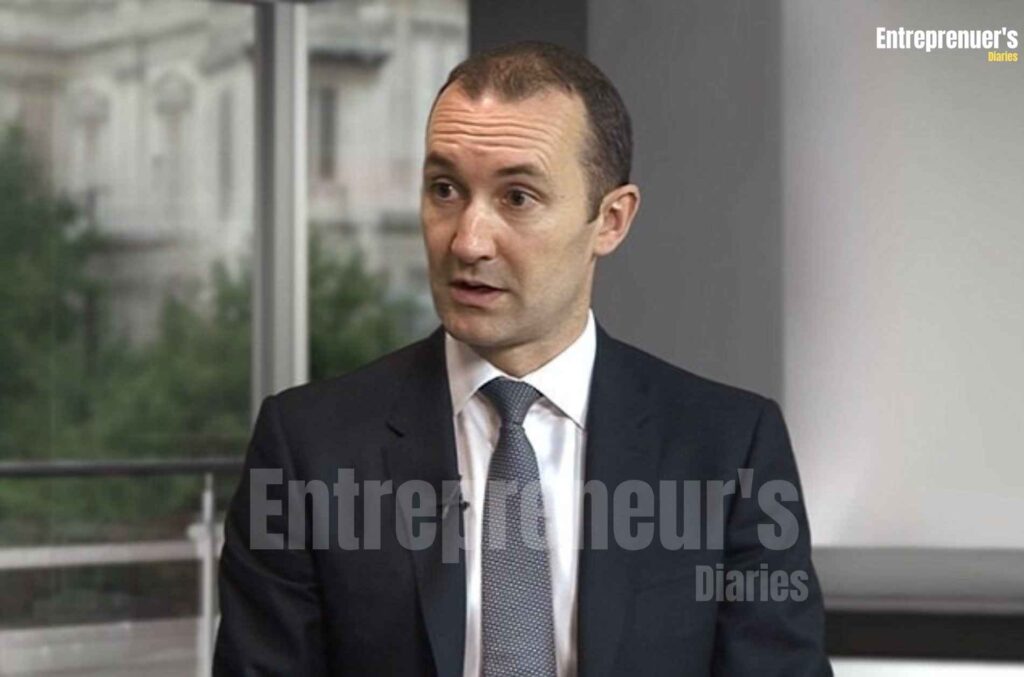
Chief executive Daniel Roberts, in a statement reported by Reuters on May 6, called this a foundational moment. The Texas power grid remains a real constraint. The ERCOT interconnection queue is long. Construction labor is tight across the country.
None of that has gone away.
But having a motivated equity partner whose commercial interests depend directly on the buildout succeeding changes the risk profile in ways that no ordinary investor relationship can replicate. The supply chain access, the hardware allocation visibility, and the customer relationships that come with this kind of partnership are advantages that no amount of capital alone can buy.
The window for becoming a chosen infrastructure partner in this cycle is narrowing. This week, one company made it through.
What is the $2.1 billion investment deal involving IREN about?
According to Reuters and Bloomberg reporting from May 6 to May 8, 2026, a commitment was made to invest up to $2.1 billion in IREN Limited, a Nasdaq listed operator building GPU optimized capacity. The investment releases in stages tied to construction milestones. In return, preferential access to next generation GPU architecture is part of the agreement.
Why was IREN selected for this partnership?
The company had already made a credible operational shift from Bitcoin mining toward purpose built infrastructure, with significant assets in Texas. Bloomberg Intelligence analysis cited post announcement pointed to investments in power infrastructure and high density GPU hosting as the qualities that set it apart. The selection reflected an operator that had already built something real rather than one still drawing plans.
How did markets react to the announcement?
Shares surged more than 30 percent in the session following the May 6 announcement, according to Bloomberg market data. The move represented a sharp repricing as investors began evaluating the business as a serious infrastructure operator rather than a legacy Bitcoin miner.
What are the latest developments in chip manufacturer and data center partnerships?
Supply agreements and equity deals between chip manufacturers and dedicated operators have accelerated sharply in early 2026. AMD and Cisco entered a joint venture to deploy up to one gigawatt of infrastructure in Saudi Arabia by 2030, as reported by Reuters and Bloomberg. CoreWeave continued scaling its GPU cluster network across the United States. The consistent pattern is that chip manufacturers are moving downstream into equity positions rather than sitting passively at the top of the value chain.
How do chip company and data center collaborations affect major cloud services?
Morgan Stanley research cited in Bloomberg’s 2026 coverage noted that enterprise customers are gaining access to GPU clusters outside the major cloud platforms, often with more predictable pricing. The Financial Times reported that large companies in financial services and pharmaceuticals have begun moving intensive workloads to dedicated operators because pricing on the established platforms became volatile during peak demand. Those platforms retain advantages in global reach and software integration, but the most compute intensive contracts are now genuinely contested.
Which companies recently signed major infrastructure deals?
Several significant agreements were confirmed around May 2026. Saudi Arabia’s HUMAIN secured a $10 billion Google Cloud partnership and a 500 megawatt agreement with xAI, according to Reuters, Bloomberg, and the Financial Times. NEOM signed a $5 billion agreement with DataVolt in February 2025. Microsoft confirmed additional expansion in its most recent earnings guidance. CoreWeave continued scaling its GPU cluster operations across the United States throughout the period.
What is the partnership between chip manufacturers and European energy utilities about?
Chip manufacturers have been in active discussions with European energy partners to build capacity outside the United States, according to the Financial Times and Reuters. Bloomberg reported in early 2026 that utilities in France and Germany entered preliminary discussions about long term power agreements designed around GPU cluster load profiles. European governments have been courting these manufacturers with planning incentives and grid connection guarantees following the EU AI Act. Power security and energy cost have become primary site selection criteria, and utilities are positioning themselves as strategic partners rather than commodity suppliers.
What does this deal signal for the broader infrastructure investment market?
It signals that the investment cycle is shifting from speculative capital to structured, milestone driven partnerships. Morgan Stanley research cited in Bloomberg’s 2026 coverage put the total addressable market for purpose built compute infrastructure at up to $600 billion by 2030. Taking a staged equity position rather than simply selling hardware reflects a deliberate move to capture infrastructure value directly. According to PitchBook data referenced in Financial Times coverage, private equity and infrastructure funds deployed record capital into digital infrastructure in 2025, and this agreement is expected to accelerate that trend considerably.
Connect With Us On Social Media [ Facebook | Instagram | Twitter | LinkedIn ] To Get Real-Time Updates On The Market. Entrepreneurs’ Diaries Is Now Available On Telegram. Join Our Telegram Channel To Get Instant Updates.

Isabella is a global business journalist and former McKinsey analyst from Brazil. She brings sharp insights on economic shifts, policies, and founder journeys from around the world.

Luca is a tech ethicist from Italy exploring disruptive innovation through a human lens—from AI to biotechnologies to decentralization.