
Mountain View, May 15: Sundar Pichai did not ease into it. He walked out at the Shoreline Amphitheatre on Tuesday and, inside ten minutes, had confirmed that over 2 billion devices now run Gemini in some form, and made it abundantly clear that the 40,000 developers gathered under that California sky were not there for a product showcase. They were there for a statement of intent.
Google I/O 2026 delivered exactly that.
If you were watching from a startup, a hedge fund seat, or a media company that lives off search traffic, you were probably not entirely comfortable by the time the keynote wrapped. That discomfort was the point. Here is what happened at Google I/O, why it matters, and what to do about it.
Gemini 2.5 Pro Just Became the Model Every Rival Fears
Let us start with the model at the center of everything, because without understanding what Gemini 2.5 Pro actually does, the rest of the week’s announcements lose their weight.
Google’s flagship large language model now sits at the top of the Chatbot Arena leaderboard, the closest thing the AI industry has to a neutral referee, maintained by the LMSYS research collective. On the Humanity’s Last Exam benchmark, a test designed to stump doctoral researchers across multiple disciplines, Gemini 2.5 Pro scored 18.8 percent, according to Google’s own technical disclosures. That sounds modest until you realize most frontier models are still scratching at single digits. On SWE-bench Verified, a coding evaluation that throws real GitHub issues at a model and asks it to fix them, the numbers came in ahead of the current generation from both OpenAI and Anthropic, per the same materials.
Then there is the context window: 1 million tokens, available now. A 2 million token version is confirmed to be in development.
For anyone outside the engineering world who tunes out at the word “tokens,” here is the plain-terms version. You can hand the model an entire company’s legal archive, the complete source code of a mid-sized software product, or five years of earnings transcripts, and it will read all of it before answering your first question. No chunking. No summaries. The whole thing, at once.
Benchmark leadership in this space is genuinely fleeting. Rivals will have responses. But the breadth of where Gemini 2.5 Pro is leading, reasoning, coding, long context, multimodal comprehension, simultaneously, is harder to dismiss than a narrow win on a single leaderboard.
How Google I/O 2026 Quietly Declared War on Organic Search
Here is the one with the sharpest edges for the business world.
The expansion of AI Overviews into a full “AI Mode” for Search, now rolling out in the United States with global expansion confirmed before year-end, represents something more disruptive than a prettier results page. AI Mode turns the search bar into an agent. It does not just answer questions. It handles multi-step tasks. It compares insurance policies. It books the restaurant. It does the travel research. All inside Google’s own interface, without ever sending you to another website.
That last part is what matters. According to Search Engine Land, which tracked the earlier rollout of AI Overviews in test markets, click-through rates to third-party sites had already dropped meaningfully in categories where the feature launched first. Publishers who built their business on organic search traffic are staring at a structural problem. SEO agencies that charged premium fees to land clients on page one are having some very difficult internal conversations right now.
That said, the advertising model is not going anywhere. Sponsored placements will run inside AI Mode, which generated $198 billion in ad revenue for Alphabet in 2024, per the company’s annual filings. The money still flows. It just flows differently, and the organic-traffic beneficiaries are the ones who absorb the hit.
Project Astra Stops Being a Promise and Starts Being a Product
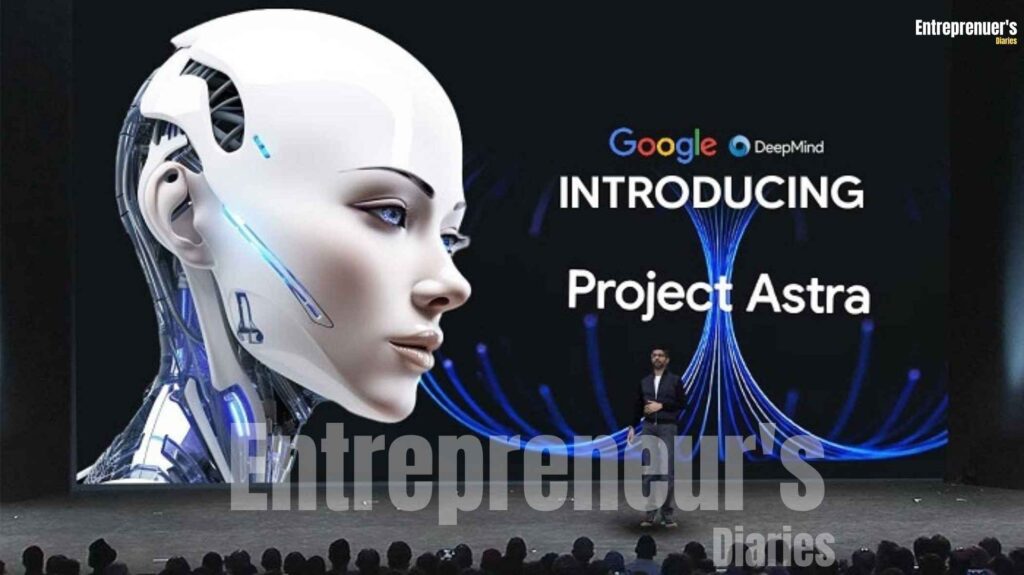
For two years, Google showed Project Astra on stage and described it as something coming soon. At this year’s conference, they stopped saying “coming soon.” Astra’s core capabilities, seeing through your phone camera, hearing what you say, responding to the physical world in real time, are now live inside the Gemini app for Advanced subscribers.
The on-stage demonstration was the most convincing version yet. A user pointed their phone at a broken piece of equipment and described the problem aloud. The system identified it, walked through a diagnosis, suggested a fix. A second clip showed it reading handwritten notes in a foreign language and translating them with genuine contextual nuance, not just word-for-word. A third showed it layering live map data over visual recognition of physical landmarks to assist navigation.
What DeepMind is building here is a different kind of interface altogether. Not a chatbot. Not a search bar. Something that runs alongside you in the world, sees what you see, and responds in the moment. Whether everyday users will actually adopt ambient assistance at that level, or whether it stays a power-user feature, is a legitimate open question. Demos often look better than the lived reality. The usage data in six months will be more honest than anything shown on a stage.
NotebookLM Is No Longer a Side Project. It Is a Business Play.
This one started life as a research curiosity, the kind of product that journalists and academics played with on weekends. Google has been iterating on it quietly, and it has grown into something that enterprise procurement teams should be evaluating seriously.
The updates add organizational accounts, shared notebooks, role-based permissions, and deep integration with Google Workspace. According to figures cited from the keynote, the tool has processed more than 2 billion uploaded documents since launch. The Audio Overview feature, which converts a stack of source materials into a podcast-style dialogue summarizing the key ideas, has reportedly found real adoption among legal teams, corporate training departments, and financial analysts who are perpetually drowning in paper.
The commercial logic is clear. Every large organization has a document overload problem. Most pay for tools that help them manage it without actually solving it. If this product can genuinely read the documents, surface what matters, and save hours of manual research, it becomes a defensible subscription layer on top of an existing Workspace base that already serves over 10 million paying business customers globally, according to Alphabet’s most recent investor disclosures.
Smart Glasses, Samsung, and the Wearable Bet Nobody Saw Coming
The Project Moohan headset, built with Samsung, got its proper showcase this week. The hardware looks competitive. But the more significant announcement, for anyone thinking about where this category goes over five years, was the confirmation that Android XR will power a coming generation of smart glasses in form factors that actually look like glasses.
Warby Parker and Gentle Monster were named as design partners. That choice is deliberate. The goal is not to ship a piece of computing equipment people strap to their faces. It is to ship something people will put on willingly because it does not make them look like a prop from a 2013 science fiction film.
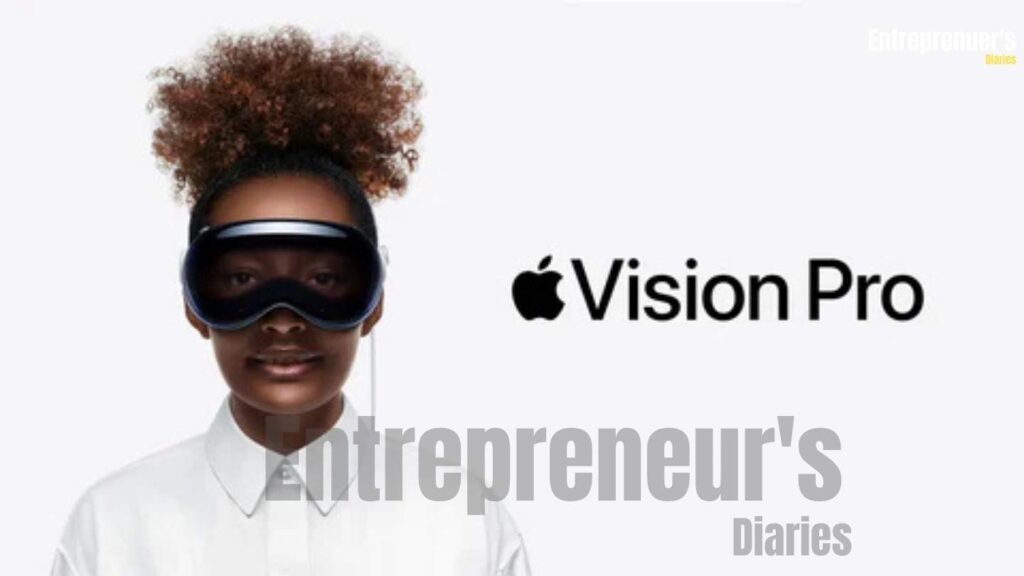
Apple’s Vision Pro taught the industry an expensive lesson. Extraordinary hardware at $3,499 with a wearability problem produces a product for enthusiasts, not a platform. Meta’s Ray-Ban collaboration went the other direction, accessible price, wearable form, modest capabilities, and moved volume. The strategy here splits the difference: the operating system layer handled by the platform, aesthetics handled by fashion-credible design partners, intelligence running underneath.
Whether spatial computing breaks into mainstream adoption this decade is still genuinely unclear. But the near-term commercial case, field technicians getting real-time repair guidance, architects walking through projected designs, surgical residents running through procedures, does not require mass consumer adoption to generate serious revenue.
Jules Is the Coding Agent That Should Worry Every Engineering Manager
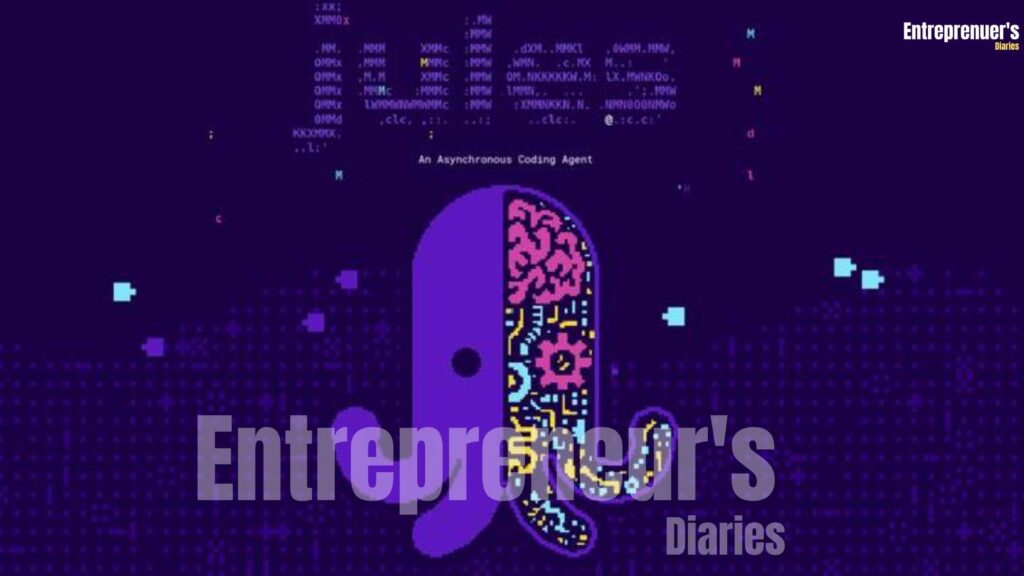
Jules, Google’s autonomous coding agent, did not get the loudest moment at the conference. It might turn out to be the most consequential one.
The concept is straightforward. Jules connects to a repository, reads through open issues in the tracker, figures out what needs to be fixed or built, writes the code, and submits a pull request. No developer in the loop until review. It works in the background while the team is doing other things.
The distinction between this and something like GitHub Copilot is not subtle. Copilot sits alongside a developer and makes suggestions. Jules operates independently and delivers outcomes. That is a different model of what software development looks like, and it carries serious implications for team sizing at every company that ships code.
The company declined to publish exact resolution rates from early testing, which is probably wise given how closely those numbers will be scrutinized. But the directional claim, that Jules can close a meaningful percentage of open issues without human authorship, is credible enough to warrant genuine attention from anyone managing an engineering team right now.
The Money Behind the Mission: What Alphabet Is Really Spending
Step back from any individual product and the picture becomes something different: a company committing to AI at a level that most rivals genuinely cannot match across every front simultaneously.
Alphabet’s infrastructure spend for 2025 crossed $75 billion, according to figures cited at the conference. Google Cloud, the commercial engine under most of this, reported $12 billion in revenue for Q1 2026 alone, per the April earnings release. Custom chip development, data center buildout, the Tensor Processing Units that power model training and inference: all of it points to a company that is not experimenting at the margins of AI. It is restructuring itself around the bet.
OpenAI is moving fast. Microsoft has its hooks deep into enterprise via Office 365. Anthropic is winning regulated-industry deals where safety posture outweighs raw benchmark performance. None of those positions are soft. But Google’s search index, Android’s device reach, DeepMind’s research depth, and a cloud platform of genuine scale form a combination that very few rivals can credibly challenge on every dimension at once. That does not guarantee the outcome. It does set a floor.
Three Things Every Founder and Investor Must Do After This Week
If your business depends on organic search traffic, the AI Mode rollout is not a future problem. It is a current one. The reconfiguration of how users move through results has already begun in the US market, and the international expansion is confirmed. For many content and commerce businesses, diversifying distribution away from Google dependency has moved from strategic preference to survival question.
If you are building on this infrastructure, whether through the Gemini API, Google Cloud, or the developer tools ecosystem, this week handed you materially better capabilities than you had before it. The million-token context window, the Astra functionality, the Jules framework: these are real upgrades with production applications, not roadmap fiction.
And if you are an investor holding positions in companies whose valuations assume stable search-driven traffic, the questions worth asking this week have a sharper edge than they did last week.
The conference did not settle who wins the era of machine intelligence. Nobody can settle that yet. What it made clear is that one very large, very well-resourced company in Mountain View has decided it will not sit back and let that question be answered by someone else.
The rest of the industry now has to figure out what to do about that.
Connect With Us On Social Media [ Facebook | Instagram | Twitter | LinkedIn ] To Get Real-Time Updates On The Market. Entrepreneurs’ Diaries Is Now Available On Telegram. Join Our Telegram Channel To Get Instant Updates.

Isabella is a global business journalist and former McKinsey analyst from Brazil. She brings sharp insights on economic shifts, policies, and founder journeys from around the world.

Luca is a tech ethicist from Italy exploring disruptive innovation through a human lens—from AI to biotechnologies to decentralization.