San Francisco, May 6: Siri was supposed to be Apple’s answer to the artificial intelligence race. On Tuesday, the gap between that promise and what actually shipped cost Cupertino $250 million.
The settlement, confirmed by Reuters and Bloomberg on May 5, 2026, closes the book on a shareholder class action that argued the company strung investors along with commitments it could not keep, watched them buy in at inflated prices, then quietly let every announced timeline slip until the distance between the keynote and the product became impossible to defend.
The company, as expected, admitted nothing. It called the outcome a practical resolution. That language means precisely what it always means in these situations: the math on going to trial did not work in their favor.
The Setup: WWDC 2024 and the Voice Assistant That Was Going to Change Everything
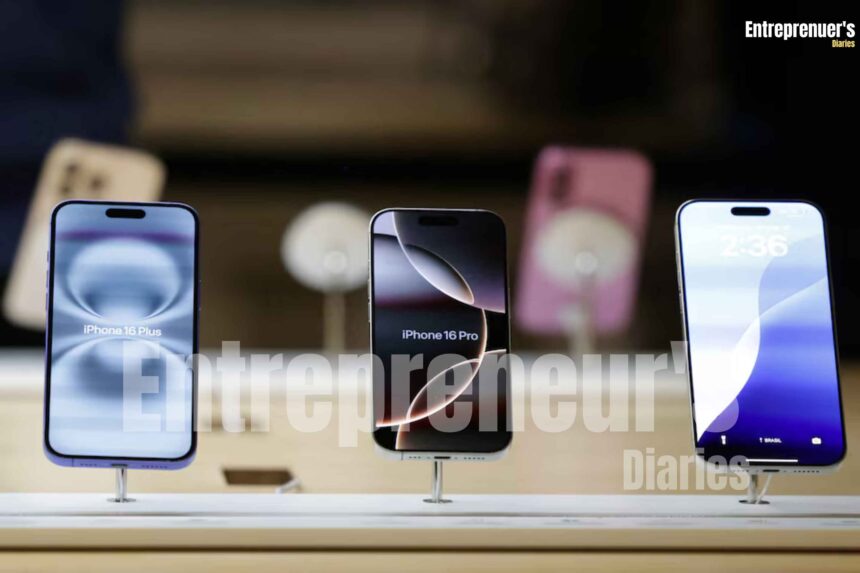
To understand why shareholders had a case at all, you have to go back to June 2024 and the Worldwide Developers Conference in Cupertino. Tim Cook walked out on that stage and, in the measured cadence that has become his trademark, told the world that Siri was about to become something genuinely different. Not just a slightly better version of the assistant that had frustrated users for over a decade. Something fundamentally new. Personal context. Deep app integration. A ChatGPT partnership. On-device intelligence that would make the iPhone 16 the first real machine-learning phone worth buying on those grounds.
The stock responded accordingly. Analysts revised price targets upward. Fund managers rebalanced toward the iPhone maker on the thesis that it was finally making a serious move in the technology race rather than watching from the sideline while Google, Microsoft, and Samsung sprinted ahead. The iPhone 16 launch cycle leaned heavily into Apple Intelligence in its advertising. People bought phones on the strength of what was coming.
Then it started to slip. Features pushed to later software updates. Geographic rollouts restricted. The ChatGPT integration arrived stripped down. The deeper improvements to the voice assistant that had been the centrepiece of the WWDC narrative were either absent or so modest in practice that reviewers struggled to locate them in daily use. Bloomberg’s Mark Gurman, who has sources inside the engineering floors that Cupertino has never been able to fully plug, was reporting by mid-2024 that internal teams were behind, that the pressure to announce had come from above the engineering layer, and that some of what had been shown publicly was closer to a roadmap slide than a shipped product.
That reporting did not go unnoticed in the legal community. It became the backbone of what shareholders would eventually argue in court.
What the Lawsuit Actually Said
The class action, filed in late 2024, named investors who bought stock during the window between the June 2024 announcements and the point at which the delays became undeniable public knowledge. The claim was not simply that the product was slow. Slow delivery alone does not constitute securities fraud. The claim was that specific, affirmative statements made by executives, including statements attributable to Cook himself, went beyond optimism and crossed into misrepresentation. Statements describing near-term delivery of features that internal documentation reportedly showed were not engineering-ready.
Securities attorneys who follow this territory will tell you that forward-looking statements are hard to litigate. Companies routinely protect themselves with safe harbor language, the disclaimers that tell shareholders results may differ from projections. What made this case different, according to people familiar with the filings, was the specificity of what was promised and how closely those promises tracked with the stock’s movement in the weeks that followed. Plaintiffs could draw a reasonably clean line from the announcement to the price spike to the eventual correction.
The legal team in Cupertino would have looked at that line and started running the numbers on what a jury might do with it.
The $250 Million Question
A quarter of a billion dollars is a large number. It is also, in the context of the company’s financial scale, roughly six hours of revenue at fiscal year 2024 run rates, based on SEC filings. The reason this settlement matters is not what it removes from the balance sheet. It is what it signals to every technology company now navigating how to discuss nascent features in public without crossing into territory that creates legal exposure.
The Securities and Exchange Commission had already been sharpening its guidance on technology-related disclosures before this case concluded. In 2024, the agency published updated interpretive guidance urging companies to ensure that statements in investor-facing communications were accurate and not misleading when it came to emerging product capabilities. Most corporate legal teams treated that as a soft warning at the time. This settlement gives it teeth. There will be uncomfortable conversations in boardrooms across Silicon Valley this week, where general counsels pull out the slides from their last product keynote and start asking hard questions.
For what it’s worth, Cupertino is not the only company that has played this game. The pressure to be perceived as a company at the frontier of intelligent technology, rather than one merely using tools built by others, has been immense across the industry. Google’s Gemini launch stumbled badly in early 2024 when a promotional video produced factual errors and the stock dropped sharply before recovering. Microsoft has had to recalibrate Copilot expectations across its enterprise suite multiple times. The difference is that the iPhone maker made its promises to consumers and to investors in the same breath, at the same event, on the same timeline.
Inside the Product Dysfunction
The frustrating part, for anyone who has followed this company closely, is that the gap between the WWDC presentation and the engineering reality was not a secret internally. Bloomberg’s reporting through 2024 and 2025 painted a picture of an organization where Siri’s foundational architecture had become a genuine liability. Teams working on the new features were building on top of a structure not designed for what they were being asked to deliver, and the decision to announce publicly had outpaced any internal confirmation that the product was ready to ship.
Several senior figures connected to the product decisions departed or shifted roles in the months following the controversy, according to Bloomberg. Whether those exits were tied to the litigation, to internal pressure, or simply to the natural churn of a large organization is not publicly known. What is known is that Cupertino has reportedly been rebuilding the assistant’s underlying architecture at a more foundational level since then.
Whether that reconstruction puts the product in a genuinely competitive position against Google Assistant, which has had Gemini integrations running at full speed for well over a year, or against Samsung’s Galaxy offering, remains an open question. The next iPhone cycle will answer it in the market rather than in a courtroom.
What Institutional Investors Are Doing Differently Now
Something quieter has been happening on the buy side since this litigation gained momentum. Several large institutional shareholders, including funds that have held significant positions in the iPhone maker for years, began pushing for clearer product disclosure in earnings call Q&A sessions as far back as mid-2025, according to the Financial Times. The questions shifted from broad inquiries about technology strategy to pointed ones about internal testing timelines, geographic rollout sequencing, and what criteria define a feature as ready for public announcement.
That shift in tone reflects a broader recalibration in how sophisticated capital allocators assess technology companies. The era of accepting visionary language as a substitute for engineering specificity is narrowing. Fund managers who watched their positions move on promises that subsequently unraveled are not inclined to let that dynamic repeat. The settlement gives them a precedent to cite in future conversations with management teams across the sector.
The Part Nobody Wants to Say Out Loud
Here is the uncomfortable truth underneath all of this. This case is a symptom of something systemic rather than a one-off failure by one company. The entire technology industry spent 2023 and 2024 in a state of competitive panic. Companies that had been working on machine learning for years suddenly found themselves repackaging every product decision as an intelligent-technology story because the market rewarded those narratives with higher multiples and the press amplified them regardless of substance.
That environment created a structural incentive to overstate timelines, to announce before engineering teams were ready to confirm delivery, and to let marketing set the pace that product teams were then expected to meet. Cupertino is paying $250 million because that incentive structure caught up with it. It will not be the last company to pay some version of that bill.
Founders raising money right now on the strength of machine-learning product roadmaps would do well to read the filings in this case. Not because most face the same scale of shareholder litigation. Most are not publicly traded. But because the underlying error, promising a product before engineering has privately confirmed it can ship on schedule, is not a Big Tech problem exclusively. It is a startup problem too. It just usually surfaces as a burned investor relationship rather than a class action.
Still, $250 million has a way of clarifying things. When Cupertino next takes the stage to announce what Siri can do, watch how carefully every word is chosen.
Connect With Us On Social Media [ Facebook | Instagram | Twitter | LinkedIn ] To Get Real-Time Updates On The Market. Entrepreneurs’ Diaries Is Now Available On Telegram. Join Our Telegram Channel To Get Instant Updates.

Isabella is a global business journalist and former McKinsey analyst from Brazil. She brings sharp insights on economic shifts, policies, and founder journeys from around the world.

Luca is a tech ethicist from Italy exploring disruptive innovation through a human lens—from AI to biotechnologies to decentralization.