
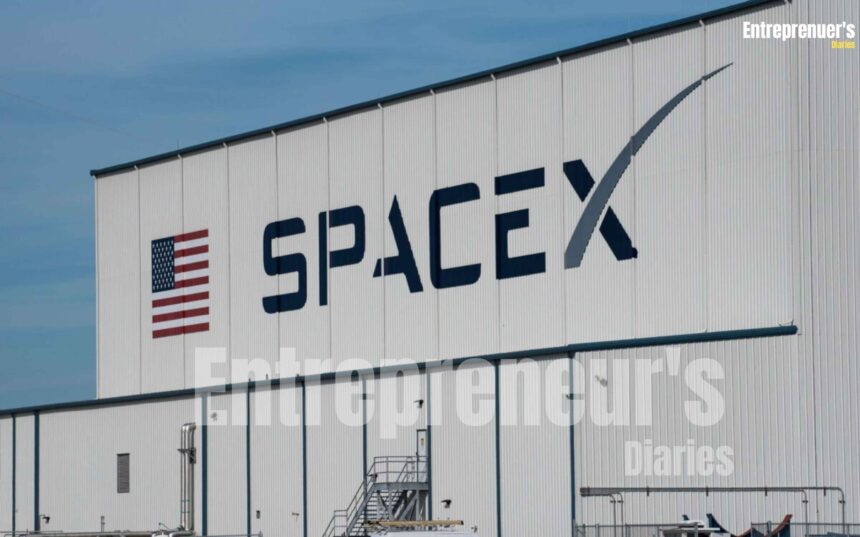
San Francisco, May 7: Anthropic has secured access to data center infrastructure operated by SpaceX, in a deal that underlines just how aggressively the Claude maker is moving to lock in the compute capacity it needs to compete at the very top of the artificial intelligence market. Confirmed by sources familiar with the matter and reported by Bloomberg, the agreement gives the company dedicated server and networking resources through SpaceX’s data infrastructure as it scales its AI coding products and enterprise offerings at a pace that few in Silicon Valley fully anticipated even a year ago.
The timing is not accidental. Anthropic’s coding-focused product suite, anchored by Claude Code, has emerged as one of the most serious enterprise bets in the developer tools market. The SpaceX data center arrangement is designed to give the company the raw capacity to support that growth without depending entirely on the hyperscale cloud agreements it already holds with Amazon Web Services and Google.
This Is About More Than Server Racks
Anthropic’s Compute Strategy Takes a New Direction
What makes this deal notable is not simply the infrastructure it unlocks. It is what the choice of partner says about where the company’s leadership believes the industry is heading. SpaceX has been investing heavily in its own data infrastructure tied to Starlink operations and broader internal computing needs, giving it a growing footprint that sits outside the traditional cloud ecosystem dominated by Amazon, Microsoft, and Google.
The arrangement reportedly provides both physical data center capacity and access to certain networking advantages tied to SpaceX’s footprint, according to Bloomberg’s reporting. The company declined to disclose financial terms of the agreement, but sources cited by the publication described it as a significant multi-year commitment that reflects the intention to diversify its infrastructure base as it scales.

CEO Dario Amodei has spoken at length in recent months about the scale of compute investment required to remain competitive in frontier AI. In a widely circulated essay published earlier this year, he argued that the industry’s dependence on a small number of cloud providers represents a structural vulnerability for companies trying to operate independently at the highest level of capability development. The SpaceX deal, read in that context, looks less like a routine vendor contract and more like a deliberate hedge.
Claude Code Is the Real Story Behind the Deal
Anthropic Bets Big on AI-Powered Software Development
Strip away the infrastructure layer, and this deal is fundamentally about AI coding. Claude Code, the company’s command-line and agentic coding product, has been gaining meaningful traction among enterprise development teams since its general availability rollout earlier in 2026. According to industry analysts at Forrester Research, the market for AI-assisted coding tools is on track to exceed 40 billion dollars by 2028, with adoption accelerating sharply among Fortune 500 engineering organizations.
Anthropic’s position in that market has strengthened considerably. Its Claude model iterations have consistently performed at or near the top of coding benchmarks, including SWE-bench, which measures an AI system’s ability to autonomously resolve real-world software engineering issues pulled from GitHub repositories. Reported SWE-bench verified scores for Claude’s frontier models have climbed above 70 percent on certain task sets, placing the technology in direct competition with OpenAI’s GPT-4o and Google’s Gemini 2.5 Pro.
But benchmark performance means little without the compute infrastructure to serve enterprise clients at scale. Coding agents are among the most resource-intensive applications in the current AI stack. Unlike a single prompt-response exchange, an agentic coding workflow can involve dozens of model calls, tool executions, file reads, and iterative revisions within a single session. That kind of workload puts pressure on latency, throughput, and cost efficiency in ways that a standard consumer chatbot does not.
The SpaceX data center agreement reads as a direct response to that demand. Getting infrastructure capacity outside the standard hyperscaler queue gives the company more control over the performance envelope it can promise to enterprise customers paying for Claude Code on dedicated terms.
The Competitive Pressure Is Real and Intensifying
OpenAI, Google, and Meta Are Not Standing Still
Frankly, Anthropic did not have the luxury of moving slowly here. The competitive landscape for AI coding tools has compressed dramatically in the past six months. OpenAI’s Codex successor and its integration into Microsoft’s GitHub Copilot ecosystem mean that millions of developers already have an AI coding assistant baked into their daily workflow. Google has been pushing Gemini Code Assist aggressively through its enterprise sales channels, and Meta’s open-source Llama models have given a growing number of companies the option to run their own coding models entirely in-house.
Against that backdrop, the company’s differentiation strategy has rested on two pillars: safety and reasoning quality. Claude has been positioned as the enterprise-grade alternative for organizations that need explainability, reliability, and interpretability at scale. That positioning requires world-class infrastructure performance. A Claude Code session that times out, produces inconsistent results, or degrades under load is not just a product complaint. It is a brand problem in a market where trust is the core selling point.
The SpaceX deal addresses that risk directly by providing infrastructure diversity and, presumably, negotiating leverage with existing cloud partners. That is a standard enterprise infrastructure move dressed up in a context that happens to involve two of the most closely watched companies in American technology.
A Company in Rapid Expansion Mode
Anthropic’s Valuation, Funding, and Hiring Trajectory Tell the Story
The company entered 2026 with a valuation reported by multiple outlets at between 300 billion and 350 billion dollars, following a funding round that included participation from Microsoft and NVIDIA, according to Reuters and The Wall Street Journal. Exploratory discussions about a potential initial public offering are ongoing, though no timeline has been confirmed. Sources close to the process told Bloomberg that leadership remains focused on product development ahead of any capital markets decision.
Headcount has grown sharply. Several hundred engineering and research positions were reportedly added in the first quarter of 2026 alone, with particular concentration in infrastructure, developer experience, and enterprise sales. Offices now extend beyond San Francisco to London and Dublin, supporting European enterprise clients per reporting from the Financial Times.
The SpaceX data center deal fits neatly into this expansion narrative. A company at this trajectory needs infrastructure agreements that match where it is going, not where it currently stands. Locking in capacity now, before the next wave of enterprise AI coding contracts land, is exactly the kind of forward-looking move that differentiates companies that scale cleanly from those that hit capability ceilings at exactly the wrong moment.
Still, questions remain. The specific data center locations covered by the SpaceX arrangement have not been disclosed, nor have the power and cooling capacity details or redundancy provisions that enterprise customers will care about most. For a company whose brand promise is reliability and safety, those details matter, and the market will expect clarity as the product scales.
What It Means for the Broader AI Infrastructure Race
Data Centers Are the New Battleground for AI Dominance
The arrangement arrives in a moment when data center capacity has become one of the most contested resources in global business. Microsoft, Google, and Amazon have collectively committed hundreds of billions of dollars to new AI data center construction over the next five years, according to the companies’ own capital expenditure disclosures. Power availability, cooling efficiency, and physical land access have become strategic constraints that no amount of software talent can fully compensate for.
Turns out, that physical constraint is reshaping who can realistically compete at the frontier of AI development. A handful of well-capitalized players are locking up the resources now. The SpaceX arrangement gives Anthropic a seat at that table through a non-traditional channel, which may prove strategically valuable as the more conventional routes get more expensive and more contested.
For enterprise customers watching from the sidelines, the practical implication is straightforward. A vendor that has diversified its infrastructure base is a more reliable long-term partner than one that depends on the goodwill of potential competitors for its server capacity. That matters when the conversation moves from a pilot program to a multi-year platform commitment.
The deal is not a guarantee of anything. Infrastructure is a necessary condition for winning in enterprise AI, not a sufficient one. But it is a signal that Anthropic is playing the long game with a level of operational seriousness that matches the ambition Dario Amodei has been articulating publicly for the past two years.
The AI coding race is still early. The infrastructure race, increasingly, is not.
What is the Anthropic SpaceX data center deal about?
Anthropic has entered into a multi-year infrastructure agreement with SpaceX to access dedicated data center capacity. The deal is designed to support the company’s rapidly growing AI coding products, particularly Claude Code, and to reduce dependence on hyperscale cloud providers such as Amazon Web Services and Google, according to Bloomberg.
Why is Anthropic partnering with SpaceX rather than using its existing cloud providers?
The company already holds significant cloud agreements with Amazon Web Services and Google. The SpaceX arrangement is a deliberate move to diversify infrastructure sources, providing more independence and negotiating leverage. CEO Dario Amodei has publicly discussed the strategic risks of over-reliance on a small number of cloud providers, making this consistent with the company’s longer-term infrastructure philosophy.
How does the SpaceX data center deal connect to Claude Code?
Claude Code requires substantially more compute per user session than standard chatbot interactions because coding agents make multiple model calls, execute tools, read files, and iterate through solutions in a single workflow. The additional data center capacity is intended to give the company the infrastructure headroom to serve enterprise coding customers at scale without performance degradation.
How does Claude Code compete with GitHub Copilot and other AI coding tools?
Claude Code is Anthropic’s command-line and agentic coding product designed for professional developers and enterprise engineering teams. It competes with OpenAI-backed GitHub Copilot, Google’s Gemini Code Assist, and open-source alternatives. It has distinguished itself through strong performance on SWE-bench, with frontier model scores above 70 percent on certain verified task sets.
What is Anthropic’s current valuation and funding status?
The company is valued at between 300 billion and 350 billion dollars following a funding round that included Microsoft and NVIDIA, per Reuters and The Wall Street Journal. Preliminary IPO discussions are underway but no timeline has been confirmed. Several hundred engineering and enterprise roles were added in the first quarter of 2026 alone
Connect With Us On Social Media [ Facebook | Instagram | Twitter | LinkedIn ] To Get Real-Time Updates On The Market. Entrepreneurs’ Diaries Is Now Available On Telegram. Join Our Telegram Channel To Get Instant Updates.

Isabella is a global business journalist and former McKinsey analyst from Brazil. She brings sharp insights on economic shifts, policies, and founder journeys from around the world.

Luca is a tech ethicist from Italy exploring disruptive innovation through a human lens—from AI to biotechnologies to decentralization.