
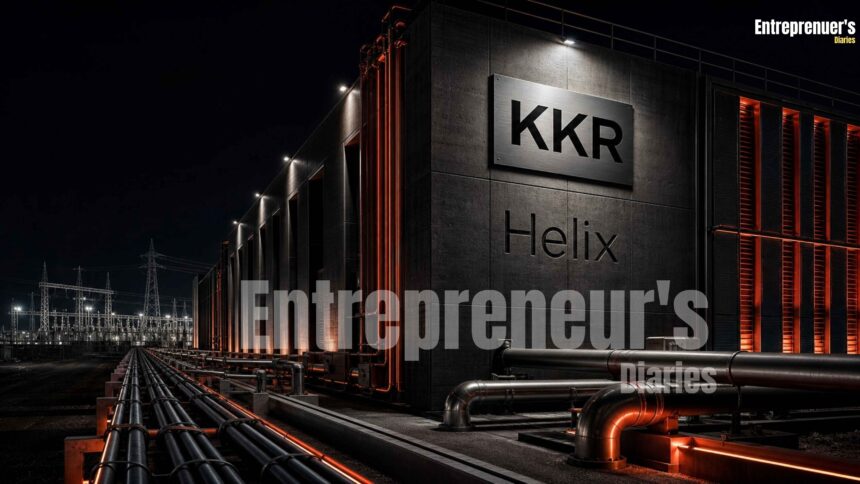
New York, May 2, 2026: KKR Helix Digital Infrastructure is now official, and the man running it built Amazon Web Services into a $100 billion business.
Adam Selipsky has not been idle since he handed the AWS keys to Matt Garman two years ago. While most people assumed he was recharging, he was apparently deep in conversations with one of Wall Street’s most formidable infrastructure investors.
On April 30, according to Bloomberg, KKR confirmed it had secured more than $10 billion to launch KKR Helix Digital Infrastructure, a purpose-built company that will design, build, own, and operate the physical infrastructure that AI actually runs on. Selipsky will serve as CEO and chair.
That is not a press release detail. That is a statement of intent about where KKR Helix Digital Infrastructure intends to sit in the AI economy.
The Man They Called Back In
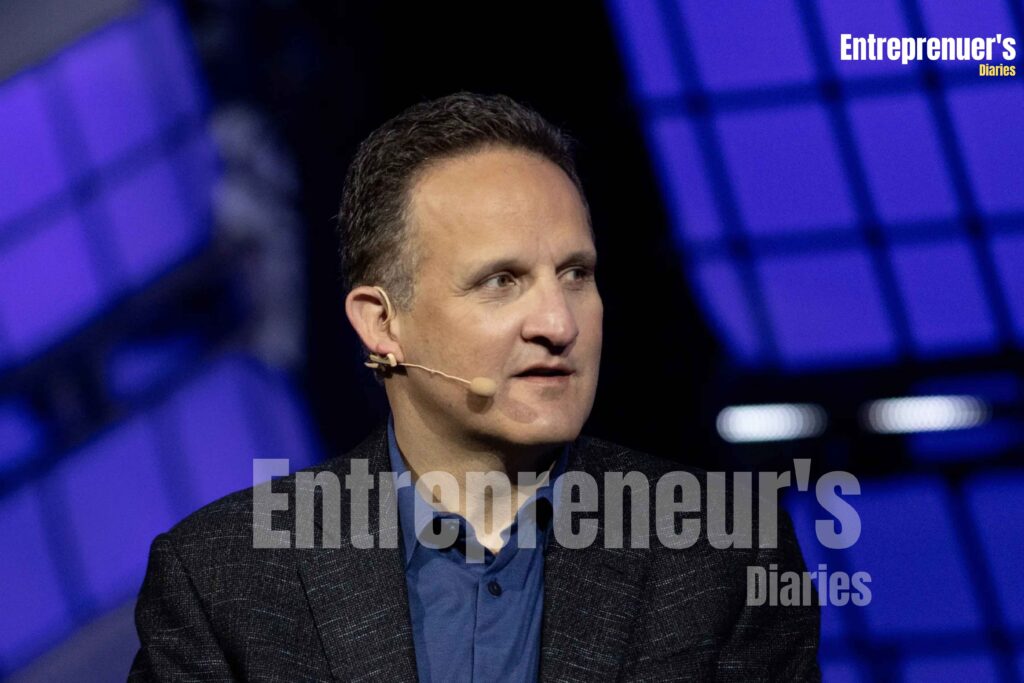
To understand why Selipsky’s name attached to this matters, you have to go back to 2005, when Amazon Web Services was still an internal experiment and he was one of the first vice presidents the company ever hired.
He spent eleven years building out AWS sales, marketing, and support before departing in 2016 to run Tableau Software, the data visualization company. At Tableau, he steered the shift from a desktop software model to a cloud-based subscription structure. He then negotiated and led the company through its $15.7 billion acquisition by Salesforce, the third-largest software deal in history at that point, according to Data Center Dynamics.
Then Andy Jassy called him back. And years later, KKR Helix Digital Infrastructure called next.
When Jassy stepped up to become Amazon’s CEO in 2021 after Jeff Bezos stepped aside, he needed someone for AWS who understood the culture deeply and had the judgment to make hard calls in a period when cloud spending was whiplashing between pandemic-era excess and post-boom correction.
As Jassy wrote in his memo to staff, reported by GeekWire, the two had agreed from the start that the tenure would last a few years. And so it went.
Selipsky left in June 2024, with AWS crossing $100 billion in annualized revenue on his way out the door, per TechCrunch’s contemporaneous reporting. He wrote on LinkedIn at the time that he was looking forward to thinking about his next adventure. That adventure, it now turns out, was KKR Helix Digital Infrastructure.
What KKR Helix Digital Infrastructure Is Actually Being Built To Solve
Read the KKR Helix Digital Infrastructure announcement carefully and you notice three words that appear together in a way most data center companies would never think to position themselves: data centers, power, and connectivity.
Not just data centers. Not a colocation business with a fresh coat of AI paint. All three, integrated, from scratch, per Bloomberg’s reporting on the company’s structure.
That framing tells you exactly what problem Helix is built to solve. The dirty secret of the AI infrastructure boom is that it keeps colliding with two constraints that have nothing to do with software or silicon. The first is power. The second is the network backbone to move the data once you have the compute.
AI training clusters and inference farms are not just bigger versions of traditional enterprise data centers. They draw hundreds of megawatts per campus. Facilities targeting frontier model workloads are being designed around gigawatt-scale power requirements.
That kind of load does not show up in a utility’s interconnection queue and get approved in ninety days. In Northern Virginia, the largest data center market on earth, power constraints have already triggered interconnection moratoriums that push new facility timelines out by years. Developers who do not have power agreements in hand before they break ground are, frankly, not in the race.
Selipsky’s fifteen-year cumulative stint inside AWS is directly relevant to what KKR Helix Digital Infrastructure is trying to build. AWS did not just construct data centers. It built the power relationships, the network infrastructure, and the private fiber backbone to connect them globally. He has lived through the fights with utilities and grid operators. That institutional knowledge is not something you can hire a consultant to deliver.
What AI-Native Actually Means
There is a term that keeps appearing in coverage of KKR Helix Digital Infrastructure and deserves a moment of honest scrutiny: AI-native. It gets used loosely in the industry. Almost every new data center announcement in 2025 and 2026 carries the label. Most do not earn it.
A genuinely AI-native facility is engineered from the foundation up around the specific demands of GPU-dense compute. That means power density per rack that runs five to ten times higher than a conventional enterprise facility.
It means liquid cooling systems capable of handling the thermal output of thousands of accelerator chips running in parallel. It also means network fabric built for the all-to-all communication patterns that distributed AI training requires, where every GPU needs to talk to every other GPU with minimal latency and zero bottleneck.
Traditional colocation operators have been retrofitting existing campuses to handle some of this. The problem is that retrofitting has limits. The floor loading, the power distribution architecture, the cooling infrastructure, and the fiber entry points were designed for a different era of compute. KKR Helix Digital Infrastructure, by building purpose-built facilities rather than adapting legacy ones, is trying to sidestep that constraint entirely.
That is the competitive edge embedded in the word AI-native. Whether it plays out that way depends entirely on execution.
KKR Is Not New to This, Either

Some context worth sitting with: KKR did not wake up in April 2026 and decide to enter infrastructure.
Before KKR Helix Digital Infrastructure, the firm was already one of the most active private capital investors in digital infrastructure for several years, managing over $600 billion in assets per its own investor disclosures.
As recently as July 2025, per a Business Wire release, it was jointly announcing a 190-megawatt hyperscale campus in Bosque County, Texas, through a $50 billion strategic partnership with Energy Capital Partners, with explicit framing around integrated power and compute under one coordination structure.
Helix is the corporate crystallization of a thesis KKR has been testing in pieces for years. Now they have built the container to hold it all, hired the person most qualified to run it, and committed $10 billion behind KKR Helix Digital Infrastructure.
According to Private Equity Wire, that capital pool already includes a sovereign wealth fund and two strategic partners, with additional fundraising anticipated. These are not passive financial backers. When a sovereign wealth fund writes a check into an AI infrastructure company at launch, it generally means they expect to be a customer as well as a co-investor.
That structure matters. Hyperscalers need off-balance-sheet infrastructure partners who can move faster than internal capital allocation processes allow. Governments and sovereign funds need exposure to AI infrastructure without building it themselves. KKR Helix Digital Infrastructure sits exactly at that intersection: carrying the development risk, bringing the operational expertise, and delivering contracted capacity to entities that need it but cannot build it from scratch. As a business model, that is rather powerful.
The Competition That No Longer Blinks
A year ago, people still talked about the AI infrastructure race as primarily a contest between Amazon, Microsoft, and Google. That framing is increasingly inadequate, and KKR Helix Digital Infrastructure is a clear case in point.
The capital flowing into this space from private equity, sovereign funds, and specialist vehicles has become so large that the hyperscalers themselves are now partly dependent on outside builders to meet their own capacity commitments.
Blackstone has been scaling through QTS Realty and its broader real assets platform. Brookfield has been structuring large-scale AI campus partnerships across multiple markets. Digital Bridge has been deploying capital across towers, fiber, and data centers with a sharp AI overlay.
CoreWeave, the GPU cloud company that went public in early 2025, has been signing multi-billion-dollar supply agreements with Microsoft and OpenAI that demonstrate how much AI compute demand is already flowing outside the hyperscalers’ own four walls.
Into this landscape, KKR Helix Digital Infrastructure arrives with one of the most credible leadership profiles the sector has seen, a purpose-built scope covering the full infrastructure stack, committed capital, and institutional partners already aboard. This is not a startup feeling its way around an unfamiliar market. It is a platform with genuine momentum from day one.
That said, execution risk is real and worth naming. AI infrastructure is a long-duration capital commitment in a market where dominant chip architecture turns over every eighteen to twenty-four months. Power agreements signed today may not reflect load requirements of AI workloads three years out.
Customer concentration is a genuine exposure when a handful of hyperscalers control the majority of addressable demand. And the gap between committing $10 billion and actually deploying it into operational facilities that generate returns is wider than most announcements suggest.
None of that is disqualifying. But it deserves honesty.
What This Means for the Broader Market
The launch of KKR Helix Digital Infrastructure carries implications that stretch well beyond a single capital raise. It signals something specific about where institutional money believes AI is heading: not toward a handful of software winners, but toward whoever controls the ground those winners run on.
For enterprise technology buyers, the expansion of dedicated AI infrastructure providers is genuinely good news. More competition in the supply of AI compute capacity puts pressure on pricing, improves availability, and reduces the kind of single-vendor lock-in that has made some hyperscaler relationships uncomfortably asymmetric in recent years.
For founders building AI-first companies, the emergence of platforms like KKR Helix Digital Infrastructure means more paths to dedicated compute that do not require signing a decade-long agreement directly with Amazon, Microsoft, or Google. That flexibility matters, particularly for companies whose workloads are specialized enough that shared public cloud is not the right tool.
For investors, the deal raises a question worth sitting with: if $10 billion is the opening commitment for one infrastructure platform, and similar vehicles are forming across Blackstone, Brookfield, and others simultaneously, is the private market pricing in a level of AI demand growth that the enterprise adoption curve can actually sustain?
The honest answer is that nobody knows yet. What is clear is that the institutional conviction behind this build is real, well-resourced, and led by people who have done this before at a scale that most of the new entrants simply cannot match.
KKR Helix Digital Infrastructure is not a speculative bet. It is the infrastructure industry making its most serious commitment yet to the AI era.
Why the Timing of KKR Helix Digital Infrastructure Is Not an Accident
There is a reason this announcement came in late April 2026, and it is not because KKR suddenly discovered artificial intelligence.
The global contest for AI infrastructure is entering its second, more serious phase. The first phase was about model launches, pilot programs, and breathless announcements about what AI would eventually do. The second phase is about who owns the physical layer all of it runs on. KKR Helix Digital Infrastructure is placing its bet squarely in that second phase.
Microsoft has pledged $80 billion in AI infrastructure spending in its current fiscal year, according to company disclosures. Google has committed $75 billion. Meta has projected up to $65 billion in capital expenditure for 2025, a substantial share flowing into AI compute.
Aggregate capital being deployed is measured in the hundreds of billions globally. Every dollar of that spend requires land, power, fiber, and facilities. KKR Helix Digital Infrastructure exists to build them.
The firm is making the calculation that owning a meaningful piece of that supply chain, with a CEO who literally ran the world’s largest cloud provider, is not speculative. It is a proven, structural position in a market that will define the next decade of technology.
Turns out Selipsky’s next adventure was absolutely worth waiting for.
Connect With Us On Social Media [ Facebook | Instagram | Twitter | LinkedIn ] To Get Real-Time Updates On The Market. Entrepreneurs’ Diaries Is Now Available On Telegram. Join Our Telegram Channel To Get Instant Updates.

Isabella is a global business journalist and former McKinsey analyst from Brazil. She brings sharp insights on economic shifts, policies, and founder journeys from around the world.

Luca is a tech ethicist from Italy exploring disruptive innovation through a human lens—from AI to biotechnologies to decentralization.