
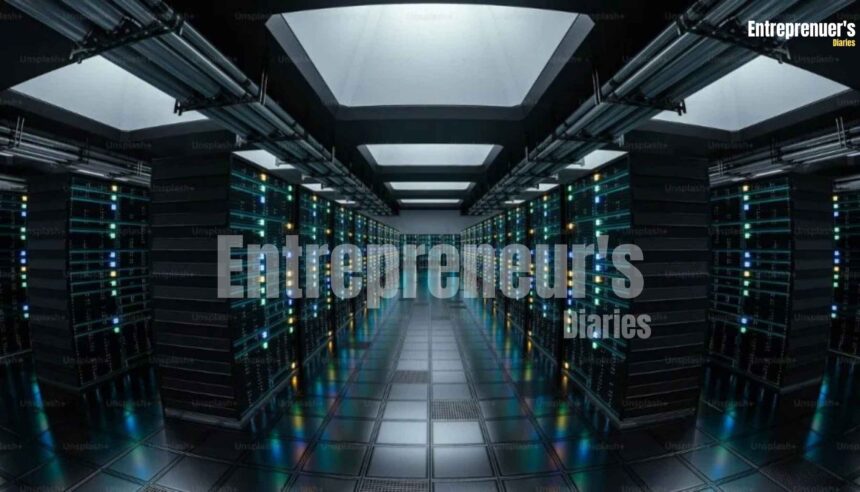
Copenhagen, May 4: Denmark built its reputation as a data center haven on three irresistible assets: a cold climate that slashes cooling costs, some of Europe’s most reliable renewable energy infrastructure, and a stable regulatory environment that gave hyperscalers the confidence to commit billions. That reputation is now in crisis.
In March 2026, Energinet, Denmark’s stateowned grid operator, introduced a temporary pause on signing all new grid connection agreements after demand for electricity capacity surged to around 60 GW, far exceeding Denmark’s maximum peak consumption of approximately 7 GW. The company described the situation not as a strain or a challenge but as an explosion. That word choice alone should tell investors everything they need to know about what is happening to one of Europe’s most coveted digital infrastructure markets.
Kim Willerslev Jakobsen, director of system responsibility at Energinet, said the pause was needed to create what he called calm and overview so that capacity could be allocated responsibly. Behind that diplomatic phrasing is a far more alarming reality. There is, according to sources with direct knowledge of the situation, virtually no spare capacity left in the Danish transmission grid. Projects representing a combined demand of roughly 60 GW are waiting in the queue. That is nearly ten times Denmark’s current maximum consumption.
The Numbers That Stopped a Government in Its Tracks
To understand the scale of what Denmark is confronting, consider a single proposed project. A hyperscale data center facility seeking approval in Holbæk Municipality has put forward a 350 megawatt proposal. That single facility would require six times the municipality’s entire current power consumption, and it represents only a fraction of the planned expansions across the country.

Data centers alone account for nearly 14 GW of the 60 GW backlog, according to sources familiar with Energinet’s figures. The remainder comes from battery storage parks, Power to X hydrogen production plants, and other industrial electrification projects all arriving at the grid simultaneously and all demanding capacity a network built for a different era simply cannot provide.
Denmark had around 398 MW of installed data center capacity as of 2026, with an additional 208 MW under construction. That installed base is set to grow by 1.2 GW by 2030, according to the DDI Association, with hyperscalers accounting for 60% of Denmark’s current capacity. The mismatch between what the country hosts today and what everyone wants to build tomorrow is, by any honest measure, extraordinary.
Søren Dupont Hansen, operations director at Energinet, confirmed publicly that the total queue from data centers alone stands at more than 15 GW, calling the figures extremely dramatic.
The Big Red Button and What It Means
Energinet’s staff reportedly have a blunter name for what happened in March. Internally, sources describe the move as pressing the big red button: a three month pause while the company analyses the situation and works toward solutions. But industry insiders are not convinced three months is nearly enough.
Concerns are mounting that the pause could run considerably longer than its stated window, as proposals are evaluated on how to fairly assess requests from large energy users including data centers. Henrik Hansen, CEO of the Data Center Industry Association known as DDI, did not soften his public assessment. We have to be realistic and look at what is actually available, he said. It is not possible to just go berserk with all kinds of connection agreements, because the power is not there. He declined to rule out an extension of the moratorium.
For operators already in the market, the stakes could not be higher. Pernille Hoffmann, managing director of the Nordics at Digital Realty, acknowledged how sharply the environment has shifted. In the past, she noted, there was always an abundance of power in Denmark and it had simply never been an issue. She admitted that she feared the temporary pause would extend into something longer.
The Political Vacuum at the Worst Possible Moment
Adding to the uncertainty is the fact that Denmark is navigating this crisis without a fully operational government. The country is in the process of forming a new administration following a general election, and the energy and climate ministry declined to comment publicly on the situation.
Before the elections, the outgoing Energy Minister Lars Aagaard had already begun framing data centers as a problem to be managed rather than an asset to be celebrated. He told business press that he would investigate the possibility of granting priority grid access to Danish domestic customers, effectively putting data centers at the back of the queue. He stated plainly that data centers and battery parks appeared to be consuming much of the available capacity in the electricity grid.
That political framing carries real commercial consequences. Energinet, however, lacks the legal authority to prioritize connections under anti discrimination rules that govern transmission system operators. Dupont Hansen has confirmed this openly, stating that resolving the situation requires broader societal debate and political decisions. In other words, the regulator cannot act unilaterally. It needs a political mandate that does not yet exist from a government that has not yet been fully formed. For an industry measured in quarterly capital commitments, that timeline is agonizing.
Energinet has already moved to scrap the first come, first served model for grid connections. Jakobsen stated that allowing less mature projects to queue ahead of construction ready ones is no longer beneficial. Projects described as nothing more than an idea on a PowerPoint slide will no longer hold a queue position ahead of shovel ready facilities. That is a meaningful operational shift, but it addresses queue management, not the fundamental shortage of physical capacity.
What Microsoft, Google, and the Hyperscalers Are Saying
The companies that have staked billions on Denmark are now speaking with unusual candor about how quickly investment decisions can pivot.
Diana Hodnett, global director of data center public affairs at Google, was direct. If you cannot get AI workloads located in Denmark, she said, they will simply move somewhere else. That is what will happen. She added a sharper warning: she was not sure governments and transmission system operators fully appreciated how quickly that relocation can occur.
That is not a threat. It is a statement of commercial reality. Global hyperscalers operate across dozens of markets simultaneously. When one jurisdiction stalls, capital flows to the next viable location. Denmark’s historical attraction was precisely that it eliminated friction. If the friction now exceeds that found in competitor markets across Sweden, Norway, or elsewhere in Northern Europe, the financial logic of staying weakens fast.
Microsoft has committed to investing 3 billion dollars in data center capacity on Danish soil between 2023 and 2027, describing the commitment as the largest in the company’s 36 year history in the country. The tech giant has pledged that all electricity consumption will be matched with 100% carbon free energy through long term power purchase agreements. Alistair Speirs, general manager of Microsoft Azure Infrastructure, told press the company hopes to continue supplying Danish customers with the compute power needed to support Danish economic competitiveness and the functioning of an increasingly digitized society.
Joana Reicherts, Microsoft’s EMEA data center government affairs director, summed up what the industry now demands from host governments while speaking at the Data Centers Denmark conference in Copenhagen. Gone are the days, she said, when you could build data centers silently. Engagement with communities, regulators, and policymakers is no longer optional. It is the baseline of the operating model.
Ireland and the Netherlands: A Warning from the West
Denmark is not the first European country to face this reckoning, and the experiences of its predecessors offer both a cautionary tale and a potential roadmap.
Only two European countries have enforced full moratoriums on data centers to date: the Netherlands and Ireland. Both have since eased restrictions under specific conditions. Ireland’s path is the more instructive of the two. After lifting its moratorium, Ireland developed what industry observers have described as one of the most comprehensive regulatory frameworks in Europe for managing large energy users. The country moved from blanket restriction to structured access criteria, requiring operators to demonstrate grid flexibility, operational efficiency, and alignment with national energy policy goals.
That framework took time, political will, and genuine collaboration between government, regulators, and industry to assemble. Denmark will need something comparable, but it is starting from a position of greater urgency and lower political stability.
Industry experts have emphasized the need for stricter qualification criteria tied to energy efficiency, grid flexibility, and waste heat utilization. Claus Ekman of energy saving group Synergi has argued publicly that data centers must be team players, not opponents, in Denmark’s transition toward 55% renewable energy by 2030.
That argument carries weight in a country with one of the world’s most developed district heating networks. Waste heat from large data center facilities can be redirected to heat residential and commercial buildings, reducing overall energy demand in the surrounding area. Getting that relationship to function at scale, however, requires regulatory architecture that the current political vacuum makes difficult to build quickly.
The Structural Reality Behind the Queue
The grid connection backlog is not merely a product of data center appetite or regulatory negligence. It reflects something more structurally consequential: the simultaneous arrival of multiple electrification waves with no coordinated sequencing framework to manage them.
Jakobsen has stated publicly that electricity demand is simply growing faster than infrastructure can follow, forcing Energinet into quicker investment decisions and sharper prioritization than the organization has historically needed to exercise. To relieve short term pressure, Energinet is assembling an emergency package that includes accelerating investment decisions on new grid infrastructure, deploying technical solutions to increase throughput in existing cables, and introducing stricter criteria for which projects gain access first.
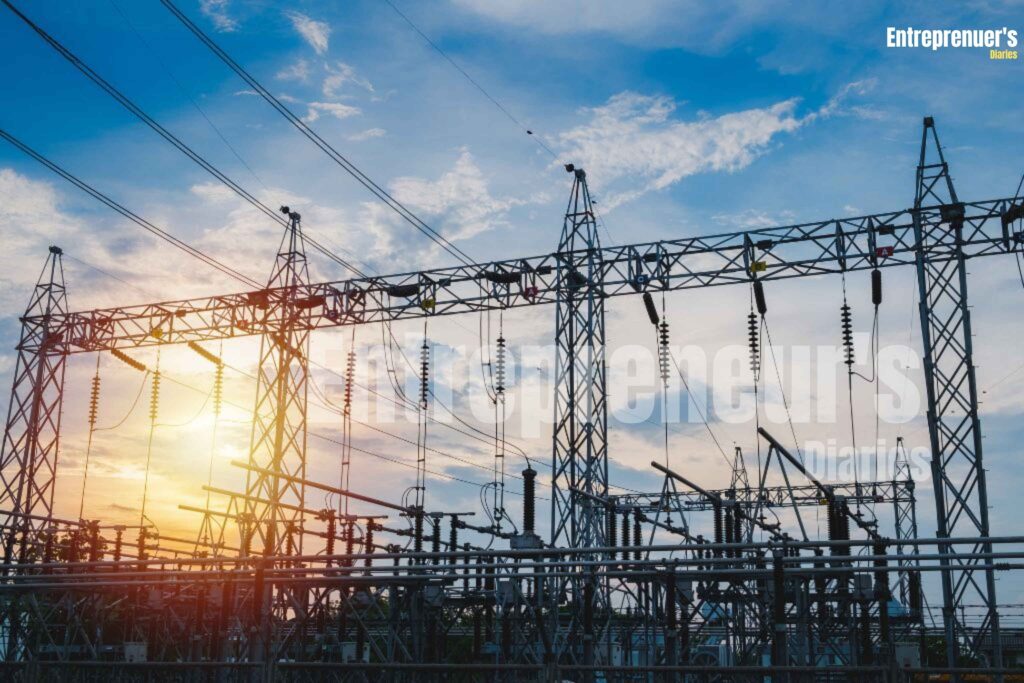
Meanwhile, the physical expansion of the grid itself is running behind schedule. Energinet’s West Coast Line, a 172 kilometer high voltage link years in the making, has been announced as nearing operation. The third and final section will not be ready until mid April, placing the project three years behind the timeline set out in its original 2017 business plan. Infrastructure moving at that pace cannot match a demand surge driven by AI infrastructure investment cycles measured in months, not years.
Independent analysis projects that European data center demand could increase by 150% between 2024 and 2035. Markets outside the traditional European hubs of Frankfurt, London, Amsterdam, Paris, and Dublin are expected to see demand grow by up to 110% by 2030. Denmark, Sweden, and Norway are among the markets projected to triple their data center electricity demand within that window.
For Denmark specifically, data center energy use is projected by multiple research bodies to reach approximately 15% of the country’s total electricity consumption by 2030, up from well under 1% not long ago. That scale of structural shift in the national energy mix requires not a three month administrative pause but a decade long infrastructure strategy. The clock on that strategy is already running.
What Comes Next
The immediate question facing Denmark’s incoming government is not whether to restrict data center growth. That debate is functionally over: the grid cannot absorb unrestricted expansion at the current pace of requests. The real and harder question is how to sequence, prioritize, and structure the growth that Denmark both economically needs and strategically wants.
Industry sources estimate that only around 10% of proposals currently in the queue will actually become operational facilities by 2030. That filtration will happen one way or another. The choice facing policymakers is whether it happens through deliberate, criteria based prioritization tied to public benefit metrics, or through the blunt and economically damaging instrument of indefinite delay.
Denmark’s 22% corporate income tax rate, its fast track permitting regime, and its proximity to North Sea offshore wind capacity continue to draw serious foreign investment interest even now, even as grid congestion forces operators to co design projects directly with Energinet. The country still holds structural advantages that few European markets can replicate. The question is whether its political and regulatory machinery can move with sufficient speed to convert those advantages into durable, workable policy before the capital that built this market concludes that certainty can be found more reliably somewhere else.
Countries investing now in innovative and flexible grid infrastructure are the ones most likely to emerge as Europe’s data infrastructure hubs in the decade ahead. Denmark built that hub once, and built it well. Keeping it requires decisions that no interim government has yet been positioned to make, and a timeline that the market will not extend indefinitely.
The data centers will not wait. Neither will the AI workloads they have been commissioned to carry.
Connect With Us On Social Media [ Facebook | Instagram | Twitter | LinkedIn ] To Get Real-Time Updates On The Market. Entrepreneurs’ Diaries Is Now Available On Telegram. Join Our Telegram Channel To Get Instant Updates.

Isabella is a global business journalist and former McKinsey analyst from Brazil. She brings sharp insights on economic shifts, policies, and founder journeys from around the world.

Tokyo-based CFA translating global markets into clear insights for modern entrepreneurs.