

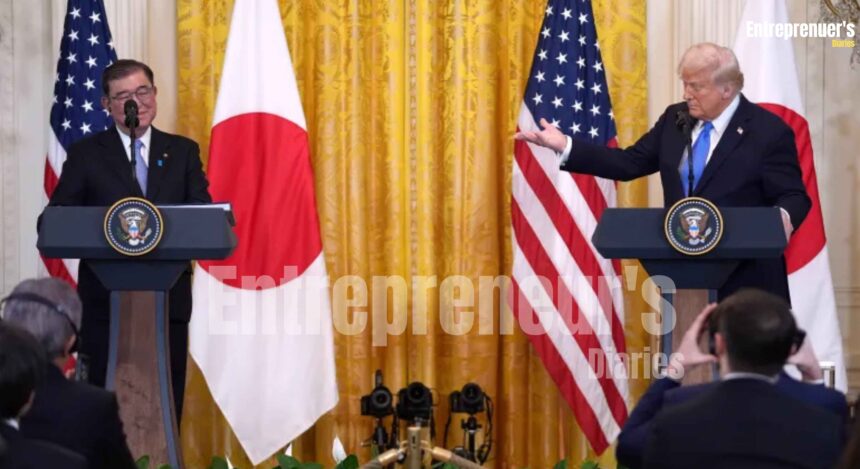
Tokyo, May 1: The $2.2 billion US project loan approved by the Japan Bank for International Cooperation and confirmed this week is not simply a number in a financing ledger. It is the first time in the institution’s history that it has committed capital of this scale directly to an American project. The details confirm that both governments knew exactly what they were doing when they signed off on it.
- $2.2 Billion US Project Loan: Why This Deal Is Different From Everything Before It
- The Geopolitics Hiding Inside the Term Sheet
- What the Borrowing Nation Is Actually Buying With This Loan
- The Risk Nobody in This Deal Wants to Discuss Out Loud
- A $3.7 Trillion Gap and Why This Country Is Not the Only One Who Noticed
- Where MUFG, Mizuho, and SMBC Go From Here
- Reception in Washington, and the Part Nobody Is Saying Publicly
Nobody in the project finance world saw this one coming. Not at this size. Not on this soil.
According to Nikkei Asia, which first reported the full details, Japan $2.2 billion US project loan carries a 20-year repayment structure at preferential rates and is tied to a critical minerals and clean energy infrastructure corridor spanning the American Midwest and Gulf South region. Two point two billion dollars. First-ever. On American ground. Those three facts, sitting together, tell a story that goes well beyond infrastructure financing.
$2.2 Billion US Project Loan: Why This Deal Is Different From Everything Before It
JBIC was built to do a specific job. Since it was formed in 1999 from the merger of the Export-Import Bank and the Overseas Economic Cooperation Fund, its mandate has been consistent: back domestic companies overseas, secure energy supply chains, and open markets that exporters need. The institution has financed LNG terminals in Mozambique, copper mines in Chile, container ports across Southeast Asia. Consequential work, largely invisible to anyone outside development finance circles.
America was never part of that remit. It never needed to be. U.S. capital markets are the deepest in the world. Wall Street was not sitting around waiting for a check from the Pacific.
What changed is the size of the gap. The Inflation Reduction Act, the CHIPS and Science Act, and several years of heavy federal infrastructure spending have generated a pipeline of American mega-projects that stretches well past what domestic commercial lenders are willing to absorb on their own. Private equity wants returns in a five-to-seven year window. Commercial banks have pulled back on long-tenor lending since the rate environment shifted. Federal grants, while generous by historical standards, cover only a fraction of total project costs.
Tokyo watched this play out and made a calculated decision. According to Reuters, which cited sources familiar with the transaction, Japan $2.2 billion US project loan represents the outcome of roughly 18 months of bilateral discussions. It is explicitly designed to support supply chains that reduce dependence on Chinese-controlled materials. That last part matters enormously. Japan $2.2 billion US project loan is not charity, and it is not yield-chasing. It is two governments deciding that their strategic interests happen to cost $2.2 billion and happen to look like a project loan.
The Geopolitics Hiding Inside the Term Sheet
There is a version of this story that writes itself as pure finance: spreads, tenors, milestone gates, disbursement schedules. That version misses the point entirely.
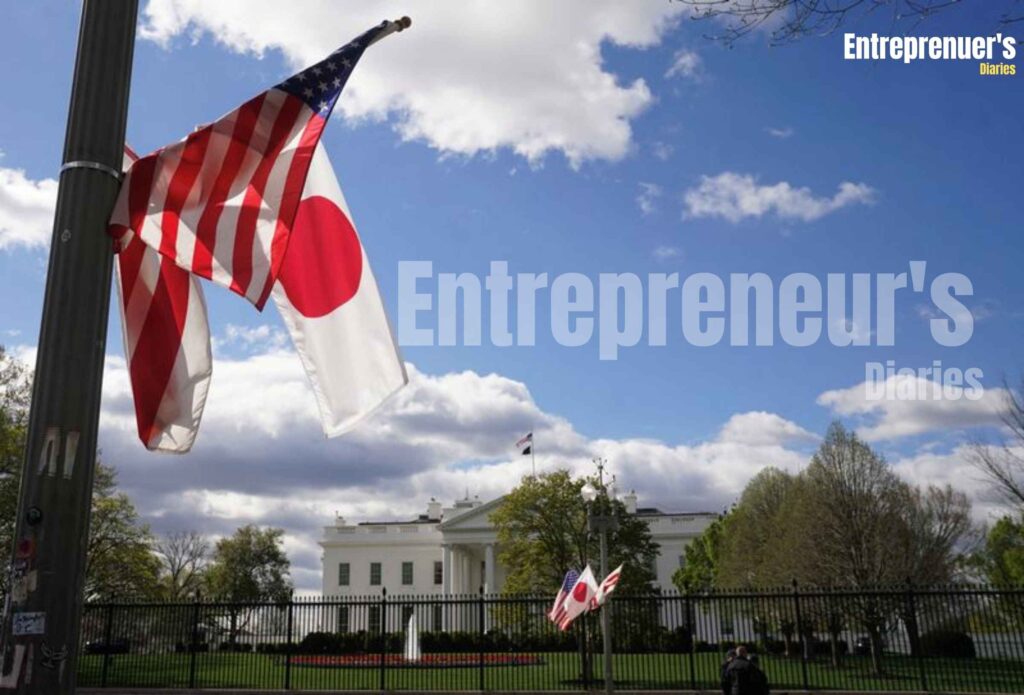
Japan $2.2 billion US project loan arrives in the middle of a trade negotiation that has moved considerably faster than most analysts expected. Bloomberg reported in late March that Washington and Tokyo had reached the framework of a bilateral trade agreement covering tariff reductions on automotive exports and semiconductor components, in exchange for deepened investment commitments stateside. The JBIC facility is, by every available signal, part of that exchange, whether or not it appears on any official treaty document.
Look at the geometry of the moment. The United States is scrutinizing every major foreign financial relationship with an intensity not seen since the Cold War. Chinese infrastructure investment has been effectively shut out of American markets. Gulf sovereign wealth is welcome but watched closely. Against that backdrop, arriving with Japan $2.2 billion US project loan for domestic American infrastructure is not just a financial event. It is a diplomatic statement delivered through a lending agreement, and both sides know it.
JBIC President Masakazu Osawa said as much, according to Nikkei Asia. Speaking at a briefing on Wednesday, Osawa described the transaction as a natural evolution of the bilateral economic security framework and suggested the institution intends to increase its U.S. project exposure considerably over the next three years. Read that carefully. He did not say they might expand. He said they intend to. That phrasing was not accidental, and Japan $2.2 billion US project loan may be the starting point rather than the ceiling.
What the Borrowing Nation Is Actually Buying With This Loan
The country has held more than a trillion dollars in U.S. Treasury bonds for years. It remains, according to U.S. Treasury data, the largest single foreign holder of American government debt. That relationship is financially enormous and strategically passive. The creditor lends money to Washington. Washington spends it as it sees fit. The lender gets a coupon payment and a seat at no particular table.

Japan $2.2 billion US project loan is structurally different from all of that. It is capital going into a specific project, tied to a specific supply chain, serving a specific industrial policy objective. Capital that comes with preferences, a stake in what gets built and who builds it and how it connects to the broader economic architecture that both countries are trying to shape.
That is a more complicated relationship than Treasury bonds. It is also, in the long run, a more durable one. Countries that share infrastructure tend to stay aligned. Countries that merely share debt tend to drift when interest rates change. Japan $2.2 billion US project loan changes that dynamic in a way that no bond purchase ever could.
The Financial Times reported that the project involves major U.S. industrial partners and will specifically support the processing of battery-grade minerals and materials adjacent to the semiconductor supply chain. These are sectors where China’s dominance is the one thing Washington and its Pacific allies most want to reduce. Putting development finance directly inside that effort is not a coincidence. It is a coordinated response to a shared vulnerability, dressed up in loan documentation.
The Risk Nobody in This Deal Wants to Discuss Out Loud
Institutional lenders in this part of the world are among the most conservative anywhere. They price risk carefully, move slowly, and have a deep cultural aversion to the headline exposure that comes with a politically contested project. The U.S. permitting environment for large infrastructure is notoriously hostile. Environmental reviews stretch for years. Legal challenges from local opponents can halt projects that have cleared every federal gate. Energy sector regulation in America shifts dramatically every four years, sometimes more.
Moody’s analysts, cited by Reuters, noted that the 20-year tenor of Japan $2.2 billion US project loan introduces political risk that cannot be fully hedged. A lot can happen to clean energy policy between now and 2046. A new administration with different priorities, a legal ruling on IRA tax credits, a commodity price swing that changes the economics of critical minerals processing: any of these can stress a project finance structure built on assumptions that may not hold.
JBIC appears to have structured around this risk. According to sources cited by the Wall Street Journal, Japan $2.2 billion US project loan facility includes disbursement gates tied to permitting milestones and regulatory approvals. The bank does not write the check all at once. It writes it in stages and retains the right to pause if the conditions that justified the loan change materially. That is sophisticated structuring. It is also the kind of discipline that distinguishes an institution that has survived multiple commodity cycles from one that has not.
Still, the exposure is real. For an institution that has built its reputation on careful overseas lending, stepping into the American political arena at this scale is a genuinely new kind of problem with no clean historical precedent to draw from.
A $3.7 Trillion Gap and Why This Country Is Not the Only One Who Noticed
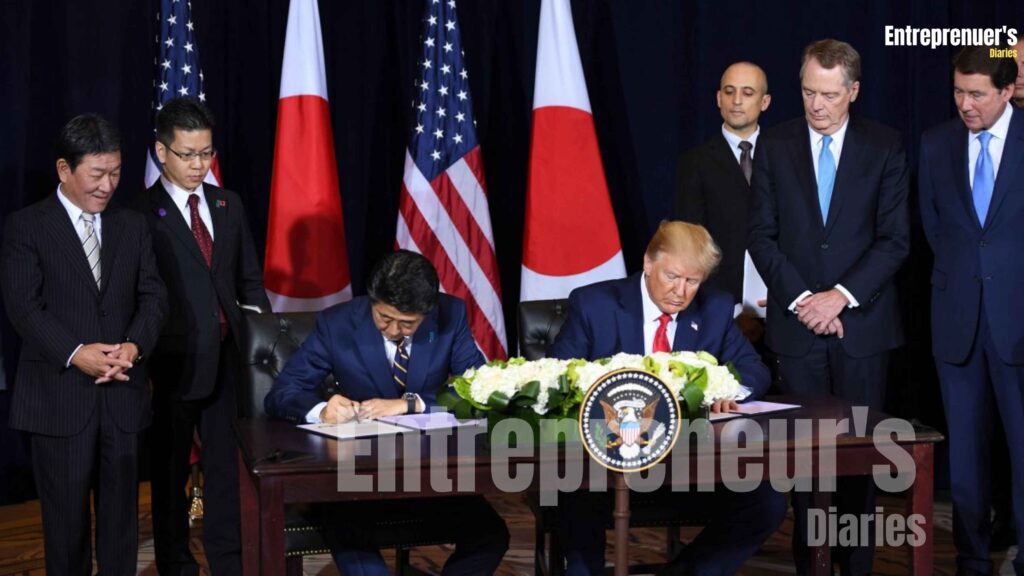
Japan $2.2 billion US project loan does not exist in isolation. Pull the lens wider and it starts to look less like a standalone transaction and more like the leading edge of something considerably larger.
South Korean development finance has been quietly expanding its U.S. infrastructure presence since 2024. The Asian Development Bank signed a co-financing arrangement with the U.S. International Development Finance Corporation last October. Gulf sovereign wealth funds have been repositioning toward dollar-denominated infrastructure assets as a hedge against sustained oil price volatility. The pattern is consistent: allied-nation capital is moving toward American projects at a pace and scale that would have been unusual five years ago.
The context for all of it is the American Society of Civil Engineers’ 2025 Infrastructure Report Card, which estimated a $3.7 trillion gap between what the United States needs to spend on physical infrastructure and what is currently committed across federal, state, and private sources. That gap does not close with Treasury bonds and it does not close with grant programs alone. It closes with patient, long-tenor project finance, and finding lenders willing to accept the complexities of American permitting has been the persistent problem.
With Japan $2.2 billion US project loan on the table and a stated intention to do considerably more, the bet being placed is that this institution can be that lender.
Where MUFG, Mizuho, and SMBC Go From Here
The three largest commercial banks in the country are watching Japan $2.2 billion US project loan with considerable attention. MUFG, Mizuho, and SMBC all maintain substantial U.S. operations. All three have spent years calibrating their appetite for large-scale American project finance without finding terms acceptable on a purely commercial basis.
JBIC operates with a different mandate. It is not chasing commercial returns in the traditional sense. Its framework includes strategic and policy objectives that no commercial bank can justify to its shareholders. But the structures it develops have a way of becoming templates for institutions that follow. If the disbursement gate approach built into Japan $2.2 billion US project loan survives the project’s early construction phase, the commercial banks will take notice. They will adapt the structure, find a way to participate at the margins of the next deal, then more directly in the one after that.
According to the Japan Times, the Ministry of Finance is already reviewing whether additional government-affiliated lenders, including the Development Bank, could join future U.S. project financings alongside JBIC. That review is not theoretical. It is the institutional machinery beginning to turn in a new direction, and Japan $2.2 billion US project loan is what set it in motion.
Reception in Washington, and the Part Nobody Is Saying Publicly
The American response to Japan $2.2 billion US project loan, at least on the record, has been uniformly warm. The U.S. International Development Finance Corporation described the JBIC commitment as consistent with the administration’s strategy of mobilizing allied-nation capital for critical domestic infrastructure. Treasury officials, speaking anonymously to Bloomberg, called it precisely the kind of transaction the bilateral investment dialogue was designed to produce.
That warmth has limits. U.S. infrastructure politics has a long history of turning hostile toward foreign capital when a project hits turbulence or when a campaign season begins. Nobody in Washington is framing JBIC as a national security concern. But the political environment moves faster than a 20-year loan can be refinanced. Project sponsors depending on Japan $2.2 billion US project loan financing need to be clear-eyed about what the next electoral cycle might introduce into the equation.
For now, the deal stands. Eighteen months of negotiation, a supply chain objective both governments share, and a structural framework built to absorb inevitable complications. Whether Japan $2.2 billion US project loan becomes a replicable model for allied-nation infrastructure finance or a cautionary story about long-tenor political risk will depend entirely on execution.
It always does. And right now, given what both sides stand to gain from getting this right, the bet appears to have been decided as worth making.
Connect With Us On Social Media [ Facebook | Instagram | Twitter | LinkedIn ] To Get Real-Time Updates On The Market. Entrepreneurs’ Diaries Is Now Available On Telegram. Join Our Telegram Channel To Get Instant Updates.

Isabella is a global business journalist and former McKinsey analyst from Brazil. She brings sharp insights on economic shifts, policies, and founder journeys from around the world.