

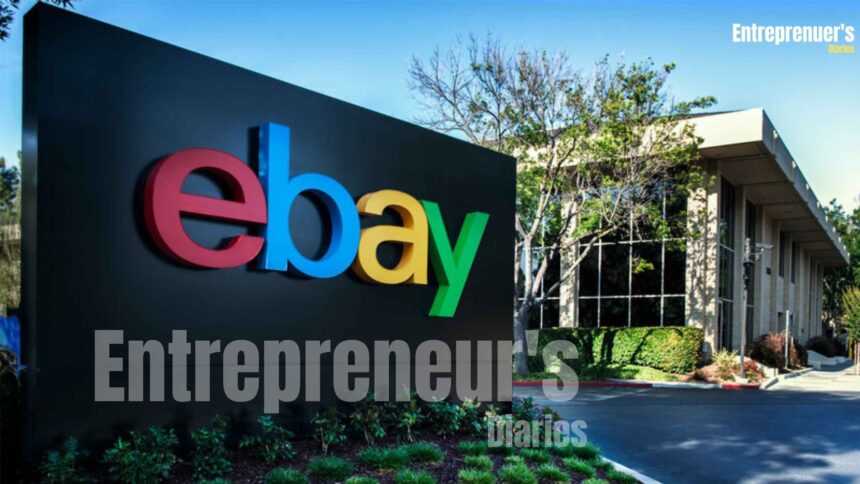
New York, May 13: Ryan Cohen Tried to Buy eBay for $56 Billion. The Board Said No.
There are bold corporate moves, and then there is whatever Ryan Cohen just attempted.
On May 3, 2026, the CEO of GameStop, a company worth roughly $10 billion, formally proposed to acquire eBay, a platform worth roughly four times that amount, for $55.5 billion. He offered $125 per share, half cash and half stock in the video game retailer. He said he had a financing commitment from TD Securities. He went on CNBC to explain the logic and answered questions about funding with the kind of clipped monosyllables that immediately became memes.
Eight days later, the board responded with a rejection letter that was unusually direct by corporate standards. “We have concluded that your proposal is neither credible nor attractive,” wrote Paul Pressler, chairman of eBay’s board. The letter was released publicly. The message was not exactly subtle.
What Ryan Cohen Actually Proposed

The video game retailer filed a Schedule 13D with the SEC confirming it had quietly accumulated a 5% economic stake in the marketplace through derivatives and common stock before making the approach.
The offer letter, addressed to Pressler and eBay CEO Jamie Iannone, laid out Cohen’s case. He argued that the platform’s $2.4 billion in annual sales and marketing spending had produced only one million net new active buyers in fiscal 2025, bringing the total to 135 million. His plan was to slash $2 billion in annualized costs within twelve months of closing, with $1.2 billion coming from sales and marketing alone. On paper, those cuts would take eBay’s diluted earnings per share from $4.26 to $7.79 in year one.
He also proposed using GameStop’s roughly 1,600 US retail stores as physical hubs for authentication, fulfillment, and what he described as live commerce. Those stores, Cohen argued, gave the platform something Amazon does not have: a national physical network.
The strategic logic had a certain coherence to it, at least in outline. The retailer has become known for authenticated collectibles. eBay has been building out similar services in trading cards, sneakers, and luxury goods. There is some genuine overlap. The problem was not the concept. The problem was the money.
The Financing Gap That Killed It
GameStop had approximately $9.4 billion in cash and liquid investments as of January 31, 2026. TD Securities provided what Cohen described as a $20 billion financing commitment. That brought the total to somewhere around $29 billion.
The deal valued eBay at $55.5 billion. That left a gap of more than $26 billion, to be covered primarily by stock in the acquiring company. The retailer’s market cap at the time was roughly $10 to $12 billion. Issuing enough shares to cover that gap would have massively diluted existing GameStop shareholders and required eBay stockholders to accept a large position in a company considerably smaller and more volatile than the one they already owned.
Moody’s did not wait for the board to respond. The ratings agency declared the proposed acquisition “credit negative” for eBay, citing the substantial leverage the deal structure would impose. TD Securities’ own financing letter included a key condition: the combined company would need to maintain an investment-grade credit rating from at least two of the three major agencies. That is a condition that, given the proposed debt load, looked difficult to meet before a single negotiation had taken place.
Gordon Haskett analysts described the offer as a “lopsided marriage proposal.” Polymarket, the prediction platform, priced the chance of the deal closing at just 13% by the time the rejection letter arrived.
Michael Burry’s Exit and What It Signals

Perhaps the sharpest commentary came not from Wall Street analysts but from one of the retailer’s own prominent backers.
Michael Burry, made famous by his prescient bets against the housing market before 2008, had built what he described as an “Instant Berkshire” thesis around GameStop. His idea was that Cohen, given time and capital discipline, could turn the company into a diversified holding operation with genuine long-term compounding potential, something in the spirit of Berkshire Hathaway in its early years.
When the eBay bid became public, Burry sold his entire position.
“Any which way I sliced it, the Instant Berkshire thesis was never compatible with greater than 5x Debt/EBITDA,” he wrote on Substack. He estimated the proposed deal structure would push leverage to roughly 7.7 times debt to EBITDA, a level he described as bordering on distressed. He pointed to Wayfair and Carvana as cautionary examples of what happens to companies that carry that kind of debt load through uncertainty.
His parting line was precise and unsparing. “Never confuse debt for creativity.”
That sentence summarized the core concern about this deal better than most multi-page analyst reports managed to.
eBay’s Case for Its Own Future
The rejection letter was not purely defensive. Pressler and the board used it to make an affirmative argument for the company’s standalone trajectory.
Under CEO Jamie Iannone, who took the role six years ago, eBay has shed non-core assets and sharpened its focus on what it calls “enthusiast categories”: trading cards, collectibles, luxury handbags, sneakers, auto parts, and refurbished electronics. The company has built out authentication services, invested in AI-powered listing tools, and restructured its seller experience.
The results have been real. The stock has returned 201% since Iannone took over, and shares are up 24% year to date in 2026. The board pointed to these numbers explicitly in the rejection, noting that the business has “delivered meaningful results” and remains “well-positioned to continue to drive sustainable growth.”
That is a claim eBay will now have to make good on without the attention a contested takeover generates.
The Sideshow That Defined the Story
Any recounting of this episode would be incomplete without noting what happened in the middle of it.
Cohen, apparently looking to demonstrate alignment with the target platform, listed old GameStop store signs for sale on it during the bid period. Within ten hours, the automated systems suspended his seller account. They apparently did not factor in that their company was in the middle of being formally acquired by the account’s owner.
The account was reinstated on May 8 after eBay determined the suspension had been triggered by automated moderation. The episode produced the singular spectacle of a takeover target temporarily banning its would-be acquirer from its own platform, then quietly letting him back in.
It also captured something real about the asymmetry of this whole situation. Cohen was trying to close a $56 billion acquisition while the target’s systems were treating him like any other seller who had tripped a policy flag. That is not a corporate culture easily merged.
What Comes Next for Both Companies
eBay’s path forward is clearer. The board has confidence in Iannone, the turnaround is producing measurable results, and the company can continue its strategic work without the distraction of a contested bid. The question for investors is whether that 24% year-to-date gain can hold as the marketplace builds on its focus-category strategy. That is a challenge the company seems genuinely prepared to meet.

GameStop’s situation is more complicated. Cohen has not yet responded publicly to the rejection. Before the board’s letter arrived, he told reporters he was willing to take the offer directly to shareholders through a special meeting. That path would mean converting this into a full hostile takeover attempt, an approach that is expensive, time-consuming, and would require Cohen to solve the very financing question that sank the initial proposal.
The retailer’s stock has fallen roughly 10% since the bid became public. eBay shares, interestingly, have held near or above the $125 offer price for portions of the past week. The market was never betting heavily that this deal would close, but it was also not discounting the platform’s standalone value below what Cohen offered.
GameStop still holds $9.4 billion in cash. That is a significant war chest for a business of its size, and it gives Cohen options beyond this play. Smaller acquisitions in adjacent categories, investments in authentication technology, or a more disciplined holding-company approach closer to what Burry originally envisioned are all still available to him.
Still, this episode has cost Cohen something real. Not primarily money, though the stock decline is meaningful. What it has cost him is the credibility argument. The “Instant Berkshire” comparison only works if the capital allocation decisions look disciplined. A $56 billion unsolicited bid for a company four times your size, structured with 7x-plus leverage and a financing commitment that the target’s own credit profile would struggle to satisfy, is harder to frame as discipline than it is to frame as ambition running ahead of arithmetic.
Cohen has been wrong before and come out right in the end. The question is whether he recalibrates or escalates. Based on his own statements, he has not yet decided.
Why did eBay reject GameStop’s $56 billion offer?
The board cited three main concerns: uncertainty around how the retailer would finance the deal, the heavy debt load a combined company would carry, and doubts about the governance and leadership structure of a merged entity. The conclusion was that the offer was “neither credible nor attractive.”
Could GameStop still pursue a hostile takeover of eBay?
Cohen stated before the rejection that he was willing to take the offer directly to shareholders. A hostile bid is legally possible but would require solving the same financing problem that prompted the board’s rejection, plus the added cost and time of a proxy fight.
Why did Michael Burry sell his GameStop shares?
Burry had built what he called an “Instant Berkshire” thesis around the company’s potential as a disciplined holding operation. He concluded that the eBay deal’s implied leverage of roughly 7.7 times debt to EBITDA was incompatible with that thesis and exited his entire position.
What is eBay’s current turnaround strategy?
Under CEO Jamie Iannone, the platform has focused on high-engagement “enthusiast categories” like trading cards, collectibles, luxury goods, and auto parts. It has also expanded its authentication services and invested in AI-powered seller tools. The stock has returned 201% since Iannone took the role.
What does GameStop do with its $9.4 billion in cash now?
That remains the key question. Options include smaller strategic acquisitions, continued share buybacks, a return of capital to shareholders, or another large bid attempt with a more credible financing structure. Cohen has not indicated his next move publicly.
The Closing Chapter
Ryan Cohen bet that size could be financed into existence, and the people he was trying to buy told him, clearly and publicly, that it cannot. eBay is getting on with its turnaround. The video game retailer is sitting on $9 billion in cash with a CEO who does not appear to take rejection as a final answer. The next move belongs to Cohen, and if history is any guide, it will not be quiet.
Connect With Us On Social Media [ Facebook | Instagram | Twitter | LinkedIn ] To Get Real-Time Updates On The Market. Entrepreneurs’ Diaries Is Now Available On Telegram. Join Our Telegram Channel To Get Instant Updates.

Isabella is a global business journalist and former McKinsey analyst from Brazil. She brings sharp insights on economic shifts, policies, and founder journeys from around the world.

Tokyo-based CFA translating global markets into clear insights for modern entrepreneurs.