
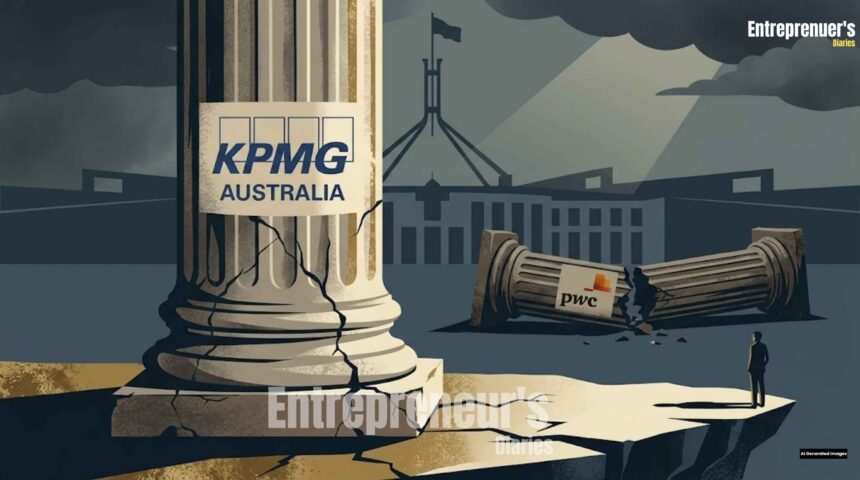
SYDNEY/CANBERRA, June 20, 2026: Four months ago, KPMG Australia was telling regulators, clients and its own staff that a whistle blower’s claims of confidential data misuse had been investigated and found unsubstantiated. On Friday, June 19, the firm’s own chairman told a federal parliamentary committee the opposite was true.
That single admission, made under questioning in Canberra, has turned what was already Australia’s biggest accountancy scandal since 2023 into something bigger. A second Big Four firm. A second whistle blower. A second client list now being quietly rewritten by boards across the country.
THE CORE FINDING: WHAT KPMG CONFIRMED TO PARLIAMENT
Here is the headline fact. KPMG Australia National Chairman Martin Sheppard told lawmakers on Friday that staff inside the firm shared sensitive information about telecom carrier Optus with a separate internal team that was bidding for an audit contract at rival carrier Telstra, according to Reuters’ coverage of the hearing.

Sheppard called it a breach of ethics. He told the committee unredacted Optus information had moved “through an ethical divider” inside KPMG when it should not have, Reuters reported.
That single sentence reverses KPMG’s own prior position. The firm’s internal and external investigations had previously told regulators, the whistleblower and the parliamentary committee that this exact allegation was unsubstantiated, per Reuters.
The Telstra audit job in question ultimately went to Deloitte, not KPMG, Reuters noted. Optus itself is owned by Singapore Telecommunications (Singtel).
Sheppard added one more detail that matters for the timeline: “The Optus, Telstra matter emerged very recently,” he told lawmakers, according to Reuters meaning even KPMG’s own leadership only confirmed this specific breach shortly before Friday’s hearing.
HOW WE GOT HERE: THE LENDLEASE WHISTLEBLOWER TIMELINE
To understand why one admission triggered this much fallout, it helps to rewind to where the scandal actually started not with Optus, but with Lendlease.
A whistle blower alleged that KPMG partners had misused confidential Lendlease board papers, accessed because Lendlease’s Sydney headquarters sit in the same office tower as KPMG with KPMG leaking confidential information internally to support audit tender bids for banking major Westpac and property group Dexus, Reuters reported from Friday’s hearing. The Statesman additionally reported the whistle blower’s claims extended to a bid involving Macquarie Group.
According to The Conversation, the whistle blower first raised these concerns internally in 2024. KPMG’s own initial review concluded the claims were unsubstantiated, and a follow up external legal review backed that conclusion, KPMG said in its official 29 May 2026 statement published on its corporate website.
Unsatisfied, the whistle blower escalated the matter to independent members of KPMG’s own board, prompting a Board Sub Committee led by the Deputy Chair and three independent directors to appoint law firm Allens for a fresh, expanded investigation, according to KPMG’s statement.
Lendlease itself was not told about the allegations concerning its own documents until May 2025 roughly a year after they were first raised inside KPMG, Reuters reported. Lendlease Chairman John Gillam told Friday’s hearing that KPMG’s conduct amounted to a “fundamental breach of trust,” and the company has confirmed it will end its audit relationship with KPMG after almost seven decades, per Reuters.
The matter went public in March 2026, when Labor Senator Deborah O’Neill raised the whistleblower’s allegations in Parliament, The Conversation reported.
INSIDE THE OPTUS TELSTRA BREACH
The Optus Telstra revelation is what widened the scandal from a single client dispute into something closer to a pattern. Former KPMG Australia CEO Andrew Yates told Friday’s hearing that learning of the Allens investigation’s Optus related findings was the moment he decided to resign, Reuters reported.
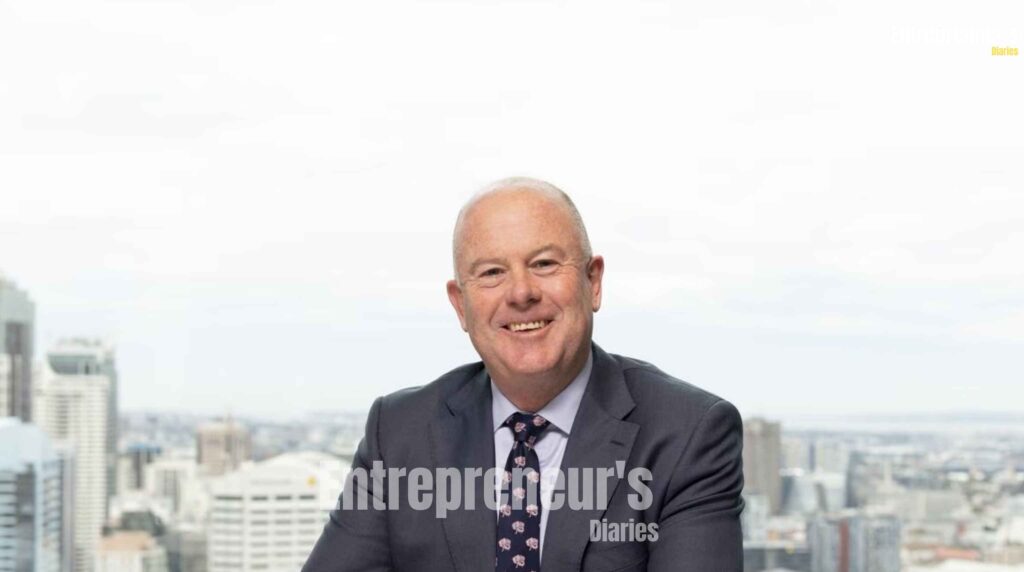
“That was the day I realised that there were things here that could have been found earlier,” Yates told the committee, per Reuters.
Separately, The Nightly reported additional detail from Yates’ testimony: KPMG’s own IT department had looked through the whistle blower’s work computer at one point, under the belief the staff member was job hunting. Yates told the hearing, “I don’t think we made the whistle blower feel comfortable through the process in terms of that whole concept of speaking up,” according to The Nightly.
KPMG’s official statement also disclosed that, separately from the Optus Telstra matter, three partners had already been sanctioned over a related instance of client documents being inappropriately shared internally, and had self reported to professional bodies. A second matter an inappropriate remark made in a team setting about sharing client information had also drawn disciplinary action, the firm said.
WHO’S BEEN HELD ACCOUNTABLE: RESIGNATIONS AND DISCIPLINARY ACTION
KPMG’s board moved quickly once the Allens findings forced its hand. On 29 May 2026, the firm announced on its website that Chairman Martin Sheppard had accepted the resignation of CEO Andrew Yates, effective immediately, as “the executive with ultimate responsibility for management of the whistleblower process.”
Sheppard also accepted the resignation of Julian McPherson, National Managing Partner for Audit and Assurance, who stood down from the role immediately and agreed to leave the firm after transitioning his client work, per the same KPMG statement.

Yates told the hearing: “I have been committed to a speak up culture in our firm, it is clear that in this case we have let ourselves down and I take accountability,” according to KPMG’s release. McPherson said: “Matters have arisen for which I am responsible, and I take accountability.”
Stan Stavros was named interim CEO while KPMG searches for a permanent successor, the firm confirmed. Separately, KPMG Australia Chief Operating Officer Eileen Hoggett who was directly named by the whistle blower stepped down from her COO role on 3 June 2026, though she remains an audit partner while investigations continue, according to an internal email reported by The Statesman.
ASIC has since named Hoggett and audit partner Paul Rogers as individuals actively under investigation, The Statesman reported.
REGULATORS CLOSE IN: ASIC’S FORMAL INVESTIGATION
Australia’s corporate regulator did not wait for Friday’s hearing to act. The Australian Securities and Investments Commission (ASIC) opened a preliminary inquiry into KPMG in April 2026, according to ASIC chair Sarah Court’s own account to a Senate Estimates hearing, reported by The Nightly.
Court told senators ASIC first met with KPMG on April 14, then launched the preliminary probe about a week later. KPMG forwarded information on April 29 “which alerted us to the fact that there were some individuals that were being investigated by KPMG including three registered company auditors that it was proposing to sanction,” Court said, per The Nightly.
After Yates and McPherson resigned on May 29, ASIC escalated. “We’ve now commenced a formal investigation this week in relation to KPMG and a number of the registered company auditors that sit within it,” Court told the Senate committee on 5 June 2026, according to Capital Brief.
Court was candid about the limits of her own powers. ASIC’s jurisdiction, she told senators, covers only individuals registered as company auditors not the KPMG partnership itself, The Nightly reported. “There are three registered company auditors that are currently within the scope of what we were looking at,” Court said, adding “this is an ever moving feast at the moment as more information comes our way,” per the same report.
THE GOVERNMENT CONTRACT FALLOUT: HUNDREDS OF MILLIONS AT RISK
For a firm that counts the Australian government among its largest clients, the fallout has moved fast from boardroom to balance sheet.
KPMG holds roughly A$650 million in active federal contracts, spanning everything from anti slavery supply chain audits to cybersecurity services, according to a Reuters review of published tender data verified by lawmakers. The federal government announced this week that KPMG will not bid for new federal work until September 30, Reuters reported.
The Reserve Bank of Australia has also signalled it will likely not reappoint KPMG to run its whistleblower hotline, a contract that cost A$10,000 a year, RBA Governor Michele Bullock said, according to Reuters.
The Statesman, citing the government’s own AusTender procurement portal, reported the federal government holds dozens of active KPMG audit contracts worth a combined A$27.4 million, including a A$6.4 million arrangement with the Australian National Audit Office. The Department of Finance has placed more than A$270 million in total KPMG contracts under review and formally declared the situation a “significant event,” per The Statesman.
Finance deputy secretary Marisa Purvis Smith told parliament her department alone holds ten KPMG contracts eight consultancy contracts worth A$27 million and two non consultancy contracts worth A$4.8 million and is weighing options including close monitoring, a mutual standstill on new Commonwealth bids, or suspension from the management advisory panel, The Statesman reported.
The Industry Department, meanwhile, had already decided before the scandal broke to end its A$1.7 million internal audit contract with KPMG, replacing it with new contracts worth a combined A$2.5 million awarded to Sententia and Cobalt, according to The Statesman.
Assistant Treasurer Daniel Mulino has said the scale of the allegations has prompted him to revisit stalled reform proposals, including capping partner numbers at 400 and bringing major accounting partnerships under the Corporations Act to give ASIC direct enforcement power over the firms themselves, per The Statesman. NSW Treasury has separately demanded written assurance that no KPMG staff linked to the scandal are working on state government contracts, The Statesman reported.
WHAT INDUSTRY ANALYSTS ARE SAYING
The financial stakes for the broader profession are now visible in the government’s own procurement data. A Reuters analysis of federal tenders found new contracts awarded to the Big Four KPMG, PwC, Deloitte and EY fell to A$348 million in 2025, down from A$637 million the year before, in the wake of the earlier PwC scandal.
That decline came across an industry Reuters values at A$1.8 billion in Australian government work. Brendan Lyon, a former KPMG partner, told Reuters government contracts are a meaningful share of Big Four revenue and that losing hundreds of millions a year “could threaten the firms’ financial health.” Lyon added: “It’s undoubtedly going to have impacts and that’s been discussed by government politicians and various government departments.”
Stephen Bartos, a former deputy secretary at the Department of Finance, told Reuters the allegations create lasting institutional caution even if no further wrongdoing is proven. “It gives rise to apprehensions by government agencies that there might be misuse of confidential materials from government,” Bartos said, adding state governments could pull back too: “Collectively, it amounts to more than federal government work.”
Conservative Senator Richard Colbeck, who previously chaired an inquiry into government use of external consultants, told Reuters the pattern across PwC and KPMG suggests “there’s probably a bit of a shake up coming in that section of the market,” adding that every government department being asked about its KPMG exposure has responded the same way: “we’re reviewing our contracts.”
THE BIG FOUR’S BROADER RECKONING: ECHOES OF PWC 2023
Greens Senator Barbara Pocock used Friday’s hearing to draw a direct line between KPMG’s conduct and the PwC tax leaks scandal of 2023, telling the committee KPMG had “leapt over any ethical consideration” in pursuit of commercial gain, Reuters reported. She separately told Reuters it was “time to force these ungoverned multi million dollar partnerships to adopt the same disciplines as large corporations.”
The PwC comparison is not just rhetorical. PwC Australia was forced to forgo new federal government contracts for more than a year after its 2023 scandal and ultimately sold its government advisory arm which had accounted for roughly a fifth of its revenue for a token A$1, Reuters reported. PwC’s overall revenue fell 26% in the 2024 financial year that followed, per the same Reuters analysis.
Parliamentary inquiries triggered by the PwC affair produced recommendations to cap partner numbers and separate audit from consulting work to reduce conflicts of interest reforms that, three years on, still have not been implemented, Reuters reported.
KPMG is not the only Big Four firm to stumble in Australia recently, either. Reuters reported that Deloitte apologised last year after academics found a government report it had prepared for the Department of Employment and Workplace Relations contained AI generated fabrications. City AM separately reported that a KPMG Australia partner was fined $10,000 in February 2026 for using artificial intelligence to cheat on an internal training assessment.
Globally, Reuters noted, all four firms have faced audit misconduct sanctions in the UK in recent years, while EY agreed in 2022 to pay $100 million to U.S. regulators to settle charges that its staff cheated on accountant ethics exams.
CORPORATE RESPONSE: HOW KPMG IS TRYING TO REBUILD TRUST
KPMG’s public posture since 29 May has been built around acknowledgment rather than defense. “We apologise unreservedly to the whistle blower,” Chairman Martin Sheppard said in the firm’s official statement. “KPMG apologises to the clients whose information was not handled with the care and respect they expect from us.”
The firm said it has engaged Principia Advisory, described in its own release as a global specialist in ethical culture, to externally review its “speak up” policies and processes, and has committed to publishing the findings. KPMG also said it is reinforcing client confidentiality controls and will individually confirm to audit clients that the conduct issues have not compromised audit quality.
“We acknowledge we have work to do to rebuild trust,” Sheppard said in the statement. “That’s why we are not asking anyone to take our word for it, and we are inviting scrutiny and challenge on our remedial actions.” The Allens investigation remains active, and KPMG has said any further findings will be reported to the parliamentary committee, regulators and affected clients.
WHY THIS MATTERS FOR INVESTORS AND BUSINESS LEADERS
Strip away the politics and three things stand out for anyone with exposure to Australia’s professional services sector, audit dependent ASX issuers, or government contracting markets more broadly.
First, client concentration risk is now repricing in real time. A near 70 year audit relationship Lendlease’s has ended over this scandal, and Reuters reports several blue chip clients and government agencies are actively re examining their KPMG ties.
Second, the regulatory floor under Big Four partnerships is shifting. ASIC chair Sarah Court has publicly conceded her jurisdiction only reaches individual registered auditors, not the partnership itself a gap Assistant Treasurer Daniel Mulino and Senator Pocock are both now using as the basis for renewed calls to bring firms the size of KPMG under direct Corporations Act oversight.
Third, the revenue mechanics are no longer theoretical. PwC’s post scandal experience a year plus government contract freeze, a A$1 fire sale of its advisory arm, and a 26% revenue decline is the explicit precedent analysts and senators are now applying to KPMG’s roughly A$650 million federal book.
THE BOTTOM LINE
Pull back from the headlines and this story is really about how quickly institutional trust can unwind once it starts. KPMG spent the better part of a year telling everyone the whistle blower, the board, the regulator, its own clients that there was nothing to find. Friday’s hearing proved there was.
That reversal carries its own momentum now. Lendlease has already walked. The federal government has already frozen new bidding through September 30. ASIC has already escalated from a preliminary look to a formal investigation naming three registered auditors. None of that required Friday’s Optus admission it simply confirmed lawmakers had been right to keep pulling the thread.
What happens next likely turns on three dates and one number. The number is A$650 million KPMG’s active federal book, the single biggest pool of revenue now sitting exposed to political and reputational risk. The dates: September 30, when KPMG’s bidding freeze is due to lift; June 30, when roughly A$330 million in separate Canberra contracts expire, according to The Statesman; and whenever Allens’ expanded investigation finally closes, since KPMG has committed to disclosing any further findings as they emerge.
If the PwC precedent holds, the test is not whether KPMG survives this it almost certainly will, as PwC did. The test is how much of its government and blue chip client base it still has on the other side of it, and whether Canberra finally acts on the partnership structure reforms that the PwC scandal recommended but never delivered. Senator Colbeck’s read on that “there’s probably a bit of a shake up coming” is, as of this week, the closest thing to a consensus view in Parliament.
FREQUENTLY ASKED QUESTIONS
What is the KPMG Australia scandal about?
KPMG Australia is facing a whistle blower scandal in which partners are alleged to have misused confidential client documents including Lendlease board papers and Optus information to help win competing audit work from companies such as Westpac, Dexus and Telstra. KPMG’s own chairman confirmed the Optus related misuse to a parliamentary committee on June 19, 2026, after earlier internal investigations had called the allegations unsubstantiated, according to Reuters.
Did KPMG actually misuse Optus customer data?
According to Reuters’ reporting on the June 19, 2026 parliamentary hearing, KPMG Chairman Martin Sheppard confirmed that unredacted information about Optus moved improperly between internal teams specifically to a team bidding for audit work at Telstra in what he described as a breach of ethics. This refers to confidential business information shared internally between KPMG teams, not a separate cyberattack on Optus customer records.
Who has resigned from KPMG Australia over the scandal?
CEO Andrew Yates and National Managing Partner for Audit and Assurance Julian McPherson both resigned effective May 29, 2026, according to KPMG’s own media release. Chief Operating Officer Eileen Hoggett also stepped down from her COO role on June 3, 2026, while remaining an audit partner, per reporting by The Statesman. Stan Stavros was appointed interim CEO, KPMG confirmed.
Is KPMG banned from Australian government contracts?
Not banned outright, but restricted. The Australian government has said KPMG will not be permitted to bid for new federal contracts until September 30, 2026, according to Reuters. Separately, the Department of Finance has placed more than A$270 million in existing KPMG contracts under review and labelled the matter a “significant event,” The Statesman reported.
What is ASIC investigating at KPMG?
The Australian Securities and Investments Commission has opened a formal investigation into three registered company auditors at KPMG connected to the whistleblower allegations, according to ASIC chair Sarah Court’s testimony to a Senate Estimates hearing, reported by The Nightly and Capital Brief. ASIC has acknowledged its jurisdiction covers individual registered auditors rather than the KPMG partnership as a whole.
How does the KPMG scandal compare to the 2023 PwC tax leaks scandal?
Both involve confidential information being misused to win business, and both triggered government contract freezes and parliamentary inquiries. PwC Australia forwent new federal contracts for more than a year and ultimately sold its government advisory unit for A$1, with its overall revenue falling 26% in the following financial year, according to Reuters. Lawmakers including Greens Senator Barbara Pocock have explicitly compared the two cases in parliamentary hearings.
What happens next in the KPMG Australia scandal?
The Allens law firm investigation into the whistleblower’s allegations remains ongoing, and KPMG has committed to disclosing further findings to its parliamentary committee, regulators and affected clients as they emerge. Key dates to watch include KPMG’s federal bidding freeze lifting on September 30, 2026, and the expiry of roughly A$330 million in separate Canberra contracts around June 30, 2026, according to The Statesman.
Connect With Us On Social Media [ Facebook | Instagram | Twitter | LinkedIn ] To Get Real-Time Updates On The Market. Entrepreneurs’ Diaries Is Now Available On Telegram. Join Our Telegram Channel To Get Instant Updates.

Isabella is a global business journalist and former McKinsey analyst from Brazil. She brings sharp insights on economic shifts, policies, and founder journeys from around the world.