
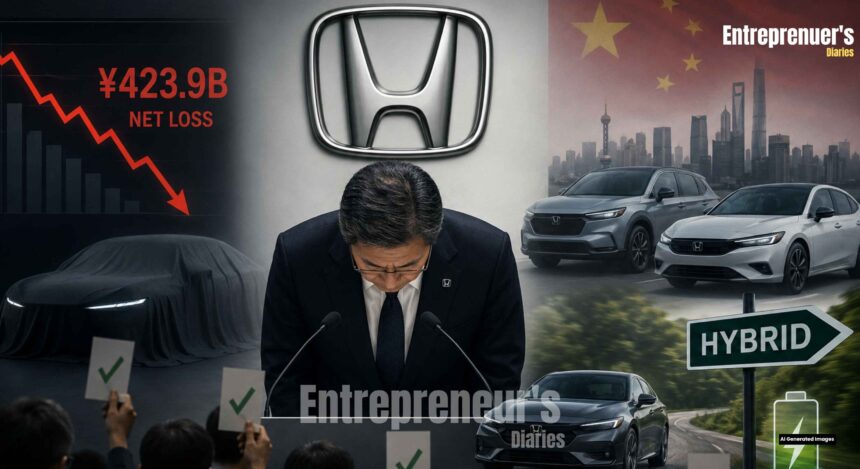
Tokyo, Japan, June 26, 2026: Honda Motor Co. held its 102nd Ordinary General Meeting of Shareholders on Friday in Tokyo, where President and CEO Toshihiro Mibe delivered a public apology to investors over the company’s first annual net loss since its 1957 stock market listing, according to Nikkei’s report from the meeting. The Honda CEO apology came as shareholders responded by approving the company’s full slate of eleven director nominees, including Mibe, keeping him in charge of the automaker’s costliest strategic reset in decades.
The Honda CEO Apology and the Vote: What Happened at the Shareholder Meeting
Mibe’s apology came on the single busiest day of Japan’s annual shareholder meeting season. More than 600 companies whose fiscal years end in March held their own gatherings the same Friday morning, Nikkei reported, including Shin Etsu Chemical, Fujikura, and Nintendo.
Honda’s session opened at 10:00 a.m. local time at the Bellesalle Shinjuku Grand in Tokyo. It was run as a hybrid meeting, letting shareholders attend in person or vote electronically in advance, according to Honda’s own notice of convocation.
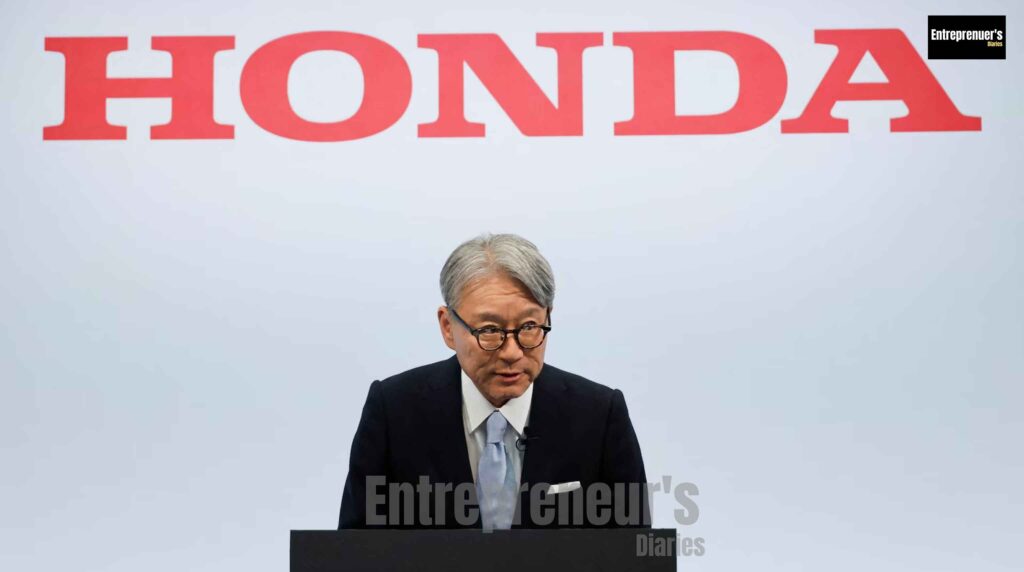
Mibe addressed the loss directly, telling shareholders that Honda’s electric vehicle losses had caused them considerable worry, Nikkei reported from the floor of the meeting. That apology set the tone for the vote that followed.
The vote was the real test of his standing. With the terms of all twelve sitting directors expiring at the close of the meeting, shareholders were asked to elect eleven nominees, six of them outside independents, to the next board.
Every nominee passed, Nikkei confirmed in its same day coverage. Mibe keeps his job, despite a months long campaign by some of Honda’s most senior alumni to push him out.
This was not Mibe’s first public apology to shareholders. At Honda’s annual meeting in June 2024, he told investors the company was sorry for “causing great anxiety” over a separate issue, engine certification testing irregularities uncovered by Japanese regulators, and shareholders backed the board on that occasion too, Just Auto reported at the time.
Honda’s governance structure has also shifted. The company’s notice of convocation names Fumiya Kokubu, an outside director, as chairperson of the nominating committee, the body that vets director candidates and oversees succession planning. Mibe is set to step down from that committee later this year, the same filing shows, even as he remains chairman of the full board.
Inside Honda’s Fiscal 2026 Results: A ¥423.9 Billion Net Loss
Honda’s notice of convocation, filed with regulators and posted to its investor relations site, lays out the numbers behind Friday’s reckoning.
For the twelve months ended March 31, 2026, Honda reported sales revenue of ¥21,796.6 billion, an operating loss of ¥414.3 billion, and a net loss attributable to owners of ¥423.9 billion, the filing shows.
The damage was concentrated almost entirely in cars. Honda’s automobile segment posted an operating loss of ¥1,411.1 billion for the year, large enough to drag the entire group into the red even as other divisions stayed profitable, according to the same filing.
Capital spending did not slow down. Honda disclosed ¥751.4 billion in capital expenditure for the year, money that kept flowing into factories, batteries, and next generation platforms despite the loss.
The pain is not over. Honda’s filing flags up to ¥2.5 trillion in additional electric vehicle related losses across the fiscal year just ended and the year now underway, a forward looking figure that suggests more write downs are coming before any recovery shows up in the accounts.
Per share results tell the same story. Honda’s fiscal 2026 earnings per share came in at a loss of ¥106.06, reversing a profit of ¥178.93 the year before, per TipRanks’ compilation of the company’s disclosures. For fiscal 2027, Honda is guiding toward earnings per share of ¥66.79, the same compilation shows, a tentative signal that management expects a return to profit.
The Electric Vehicle Bet That Broke Honda’s Balance Sheet
The losses trace back to a strategy Mibe himself set in motion. He had pledged Honda would sell only electric or fuel cell vehicles by 2040, a target the company has since abandoned, Reuters reported in its investigation of the crisis.
That retreat had consequences on the showroom floor. Honda canceled its 0 Series Saloon and 0 Series SUV, the Acura RSX EV, and the Afeela electric sedan it had been co-developing with Sony, all months before they were due to reach production, CarExpert reported.
In their place, Honda is keeping a narrower electric lineup. It includes the Super One city hatchback, electric kei cars built for Japan’s small car segment, an affordable 0 Series Alpha, and EVs developed jointly with Chinese manufacturing partners, according to CarExpert’s reporting on the company’s revised plan.
Honda also turned down a path to outside help. A Japanese bank had proposed spinning off the EV business to outside investors earlier this year, easing the financial strain, but Mibe rejected the idea, a person familiar with the discussions told Reuters. Mibe later confirmed to Reuters that the option had been on the table before his team decided to stop pursuing it for now.
Koji Endo, chief executive analyst at SBI Securities, summed up the underlying problem to Reuters in a single line: “Honda’s ability to develop cars has declined, yet costs have not.”
The Boardroom Revolt: How Honda’s Old Guard Tried to Oust Mibe
Friday’s vote was never seriously in doubt by the time it happened, but the months leading up to it were tense inside Honda’s executive ranks.
Starting in late 2025, a group of retired Honda executives began meeting privately to build a case against Mibe, Reuters reported, citing a written summary of those discussions and interviews with two participants.
Their complaints centered on three things: Mibe’s distance from China, the world’s largest car market; his costly EV bet; and what they characterized as excessive attention to Honda’s golf sponsorships, the Reuters account shows.
Matters reached a head in April. Nobuhiko Kawamoto, who led Honda as chief executive from 1990 to 1998, traveled to the company’s Tokyo headquarters and told Mibe in person to resign, three people familiar with the meeting told Reuters. Mibe declined.
By the time that conversation took place, Honda’s nominating committee, which includes Mibe alongside four outside directors, had already decided internally that he would stay, one of Reuters’ sources said. The shift reflects a broader move at Japanese companies toward governance structures with more independent oversight, which has reduced the informal influence once held by retired chief executives such as Kawamoto.
Honda, responding to questions from Reuters, said it had no knowledge of the former executives’ discussions, that it was working with suppliers on cost control, and that its sports sponsorships were handled appropriately to support its brand and corporate responsibility commitments.
Mibe made one concession. He agreed to a 30 percent pay cut for three months to take personal responsibility for the loss, Reuters reported, a gesture that preceded Friday’s public apology by several weeks.
Jeffrey Rothfeder, author of the book “Driving Honda,” was skeptical the gesture solves the deeper problem. He told Reuters: “Definitely in short order, it’s going to be too late to turn it around.”
China and the “Genba” Problem Behind Honda’s Market Share Collapse
Much of the internal criticism of Mibe centers on China, where Honda’s position has eroded sharply during his tenure.
The company’s market share there fell from roughly 8 percent in 2020 to under 3 percent in 2025, Reuters reported, citing figures gathered during its investigation into Honda’s leadership crisis.
Former executives tied part of that decline to Mibe’s limited presence on the ground. They accused him of neglecting what Honda traditionally calls the “genba,” the actual place where work happens, including showrooms, factory floors, and the roads where customers drive.
The group’s written summary, reviewed by Reuters, put the criticism directly: “The CEO does not see conditions on the ground or listen to customers.” The same document cited China as the clearest example of that gap.
Rival Japanese automakers moved faster. Toyota and Nissan had already begun working more closely with local partners to tailor EVs to Chinese buyers, while Honda only announced a similar pivot this year, Reuters reported.
The complaint carries extra weight at a company built on its founder’s personality. Soichiro Honda, a blacksmith’s son, was fiercely independent and hands on with engines, and the company he built went on to produce the Civic, the Accord, and the Super Cub, the best selling motorcycle of all time, Reuters noted in its profile of the crisis.
Honda’s old guard argues that closeness to the factory floor is exactly what got lost under Mibe. That criticism stands out given the company still describes itself as the world’s largest engine maker, building everything from snowblowers to jet engines, the same Reuters profile noted.
American Headwinds: Tariffs and a Vanishing EV Tax Credit
Honda’s troubles were not confined to China. Its heavy reliance on the U.S. market became a liability of its own as Washington’s policy environment shifted, with new tariffs under President Donald Trump and the rollback of EV subsidies squeezing profitability, Reuters reported.
The math on EV demand turned negative quickly once the $7,500 federal EV tax credit lapsed. U.S. electric vehicle sales fell 46.7 percent month over month in October 2025, when the credit first expired, according to National Automobile Dealers Association data cited by CBT News.
The pressure did not let up from there. EV sales were still down 27 percent year over year in the first quarter of 2026, Kelley Blue Book data reported by CBT News shows, confirming the initial shock had become a sustained slump rather than a temporary dip.
The Hybrid Pivot: Honda’s Path Back to Profitability
Honda’s answer is a tilt back toward hybrids, the technology that built much of its modern reputation before the industry’s broader electric detour.
The company is targeting roughly 15 new hybrid models by 2029 and aims to cut hybrid powertrain costs by about 30 percent, Reuters reported in its account of the restructuring plan Mibe has outlined. Two early previews, a Honda hybrid sedan and an Acura hybrid SUV, were shown publicly in May, Automotive News reported.
Execution will not be simple. Two executives at Honda’s Japanese suppliers told Reuters they had not been consulted about the planned cost cuts, raising questions about how smoothly the powertrain savings will materialize.
Honda has also reorganized how cars get engineered. In February, the company shifted auto development engineers from its main corporate structure back into its R&D subsidiary, reversing a pre Mibe era change that had blurred the line between engineering and marketing, Reuters reported. Rothfeder told Reuters the earlier reorganization had driven away a large number of research and development staff unwilling to work alongside marketing teams.
Honda is also hedging its longer term battery bet rather than abandoning electrification outright. The company struck a development agreement with U.S. battery maker QuantumScape on solid state battery technology, a deal that lifted QuantumScape’s stock on the news, TipRanks reported in mid-June.
One part of Honda’s business never stopped working through any of this. Motorcycle revenue rose 10.8 percent year over year to ¥4,018.8 billion, and motorcycle operating profit climbed 10.3 percent to ¥731.9 billion, Honda’s own filing shows, cushioning a year that would otherwise have been even more punishing.
Market Reaction: How Analysts Are Reading the Turnaround
Wall Street’s read on Honda has been mixed rather than alarmed since the loss became public.
Nomura issued a Buy rating in mid-May, and Honda separately won an upgraded Buy call tied to stronger core profits and shrinking EV losses, carrying a ¥1,600 price target, TipRanks reported. SMBC Nikko issued its own Buy rating in mid-June.
Other firms are more cautious. Mizuho Securities, SBI Securities, Tokai Tokyo Securities, and Macquarie have each maintained Hold ratings on Honda since early June, the same TipRanks coverage shows, a split verdict that mirrors the uncertainty still hanging over the automobile segment.
The Analytical Closing: The Bookmarkable Takeaway
Here is the strategic insight that investors, founders, and operators should carry away from Friday’s vote. A shareholder apology and a unanimous board re-election are not the same thing as a fixed company; they are a board buying its CEO time against a clock that is still running.
Honda’s own filing already discloses up to ¥2.5 trillion in further EV-related losses still to come, which means the company is asking the market for patience before the worst of the bill has even been paid. That is a very different position than telling investors the damage is behind them.
The clearest evidence of where Honda’s real strength sits is not in its car business at all. Motorcycles grew profit by double digits in the same year cars lost over a trillion yen, a contrast that should reframe how investors think about Honda’s identity: it is, for now, a profitable two wheel and engine company subsidizing an automobile division in the middle of a costly reset.
Mibe’s hybrid led turnaround plan gives the board a concrete yardstick, 15 new models and a 30 percent cut in powertrain costs, against which to measure progress at next year’s annual meeting. But with suppliers reportedly left out of the cost cutting conversation and additional write downs already flagged for the year ahead, Friday’s vote bought Mibe a runway, not a guarantee.
Investors tracking this story should watch two things closely over the next twelve months: whether Honda’s automobile segment narrows its losses without further supplier friction, and whether China’s market share, now under 3 percent, shows any sign of stabilizing before the next shareholder meeting forces Mibe to explain himself again.
Frequently Asked Questions (FAQs)
Why did Honda’s CEO apologize to shareholders in June 2026?
Toshihiro Mibe apologized at Honda’s 102nd Ordinary General Meeting of Shareholders on June 26, 2026, telling investors the company’s electric vehicle losses had caused them considerable worry, after Honda posted its first annual net loss since its 1957 stock listing, according to Nikkei and the company’s own financial filing.
How much money did Honda lose in fiscal year 2026?
Honda reported an operating loss of ¥414.3 billion and a net loss attributable to owners of ¥423.9 billion for the fiscal year ended March 31, 2026, with the automobile segment alone posting a ¥1,411.1 billion operating loss, according to the company’s official notice of convocation filed with regulators.
Did Honda shareholders remove CEO Toshihiro Mibe?
No. Shareholders approved all eleven director nominees, including Mibe, at the June 26, 2026 meeting, Nikkei reported, despite an earlier internal campaign by some retired Honda executives, led by former CEO Nobuhiko Kawamoto, to push him out in April.
Why is Honda cancelling its electric vehicles?
Honda canceled several planned EVs, including its 0 Series Saloon, 0 Series SUV, the Acura RSX EV, and the Afeela sedan developed with Sony, after weak demand and the expiration of the U.S. federal EV tax credit made the company’s original 2040 all electric target unworkable, according to Reuters and CarExpert.
What is Honda’s new strategy after its EV losses?
Honda is pivoting back toward hybrid vehicles, targeting roughly 15 new hybrid models by 2029 and aiming to cut hybrid powertrain costs by about 30 percent, while keeping a narrower electric lineup and pursuing a solid state battery development partnership with QuantumScape, according to Reuters and TipRanks.
Connect With Us On Social Media [ Facebook | Instagram | Twitter | LinkedIn ] To Get Real-Time Updates On The Market. Entrepreneurs’ Diaries Is Now Available On Telegram. Join Our Telegram Channel To Get Instant Updates.

Isabella is a global business journalist and former McKinsey analyst from Brazil. She brings sharp insights on economic shifts, policies, and founder journeys from around the world.

Tokyo-based CFA translating global markets into clear insights for modern entrepreneurs.