
New York, May 6: AMD stocks were already moving before most traders had refreshed their screens Tuesday evening. The after-hours tape does not wait for commentary, and on a night when Advanced Micro Devices, Super Micro Computer, and Arista Networks all dropped earnings back to back, the market made its views known fast.
All three are stocks with direct, undeniable exposure to the AI buildout. All three had something to prove heading into this week. The short version: they delivered. The longer version is worth sitting with, because what happened Tuesday tells you something real about where this spending cycle actually stands right now, and what it might mean for the stocks still waiting to report.
AMD Stocks: The Quarter That Corrected the Narrative
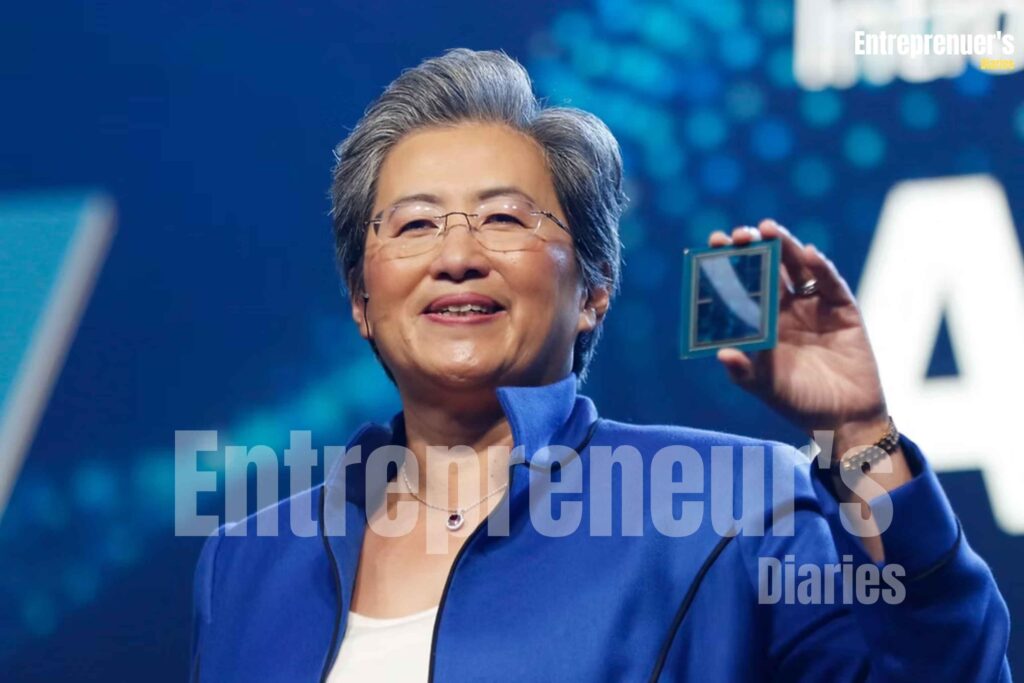
Lisa Su has never been the type of CEO who needs the spotlight. She builds the quarter, puts it on the table, and lets it speak. Which is exactly why Tuesday night landed the way it did for anyone who has been holding AMD stocks through a rough few weeks.
April was not kind to AMD. The stock shed ground as macro jitters piled up, tariff uncertainty around semiconductor supply chains rattled the sector, and the persistent dominance of NVIDIA kept analysts cautious. A few quietly trimmed their price targets. The narrative drifting through trading desks was that AMD, despite its genuine progress in AI accelerators, might be losing the pace battle in AI infrastructure against a competitor that has essentially owned the market.
Then the quarter came out.
According to Bloomberg, AMD posted first-quarter 2026 revenue well ahead of consensus. Data center sales carried the weight, driven by deployments of the MI300X and MI325X accelerator chips at major cloud providers. These are the chips AMD has spent years positioning as credible alternatives to NVIDIA’s H100 and H200 series, particularly for AI inferencing workloads where the math on cost per token starts to favor alternatives. The hyperscalers appear to be running the calculation and landing on AMD more often now.
CEO Lisa Su told analysts on the call that the AI pipeline is “stronger than at any point in our history,” per Reuters. That is not a rehearsed line designed to satisfy sentiment. That is a CEO signaling order visibility that has not yet shown up in public announcements. When Su says something like that, the institutional money listens.
AMD stocks jumped roughly 8 percent in extended trading. Given the setup going in, that move carries more weight than a standard beat-and-raise pop. This was a correction, not just a celebration. A narrative that had drifted sideways for weeks got snapped back in a single session.
The one honest soft spot: Q2 gross margin guidance came in a touch below the most optimistic models on the street. Gaming and PC continue to drag. Neither changed the evening’s tone. When your data center revenue is growing at the clip AMD just reported, markets tend to extend patience to the rest of the business.
Several analysts noted after the call that the margin softness is a deliberate trade-off. AMD is pricing aggressively in certain cloud segments to gain a foothold at accounts previously controlled by NVIDIA. The cost of buying market share in accelerators today could look very different two years from now, when customers have qualified AMD hardware into production pipelines and the switching costs climb. The street understands the playbook. Tuesday’s print confirmed the company is executing it.
Super Micro: Earned Every Point of That 10 Percent Move
There was a stretch, not so long ago, when Super Micro Computer was a name people lowered their voices to say. The accounting concerns, the SEC inquiry, the delayed annual filings, the stock price collapsing from well over a thousand dollars to levels that wiped out years of gains for long-term holders. It was the kind of corporate episode that leaves permanent skepticism in the market, regardless of what comes next.
What came next on Tuesday was a quarter driven by demand for Super Micro’s direct liquid cooling server platforms, according to Barron’s. The technology itself sounds like an engineering footnote until you understand what it means in practice. As AI infrastructure clusters get denser and the compute packed into each rack increases, heat management becomes a real constraint on performance. Super Micro has built genuine expertise in cooling architecture that lets hyperscalers and enterprise AI buyers push their clusters harder without the thermal limits that standard air-cooled designs impose. That capability is not easy to copy, and buyers who have qualified Super Micro’s systems are not rushing to re-qualify a competitor’s.
Revenue and earnings per share reportedly beat reduced street estimates. The stocks move: close to 10 percent higher in the after-hours session. Meaningful, and earned.
That said, this is still a company with scar tissue. Institutional investors who exited during the governance storm have not come flooding back on the strength of one quarter. The buyers in this stock right now are a mix of momentum players, risk-tolerant growth funds, and the original believers who sat through the worst of it. A true re-rating, back toward the premium multiples Super Micro carried at its peak, needs more than a single clean print. It needs several. Tuesday was the right step. It was not the final one.
What it did confirm is that Super Micro’s role inside the broader ecosystem is intact. The company is not a peripheral player. It sits at the intersection of the chip manufacturers and the hyperscalers, translating GPU density into deployable compute. As long as the AI buildout continues, that is a valuable seat at the table.
Arista Networks: Discipline in a Sector That Loves Drama
Arista Networks is the kind of company that makes financial journalism harder to write, because nothing flashy ever happens and somehow the stock keeps working. No scandals. No CEO making headlines for the wrong reasons. No guidance games where the company sandbags estimates to engineer a beat. Just a networking business that executes quarter after quarter in one of the most demanding markets in technology.
The setup heading into Tuesday was actually more interesting than it appeared. Arista had rallied meaningfully in the weeks before the print, which left less room for error than usual. A miss, or even an in-line result with cautious language, could have wiped out those gains quickly. That it did not tells you something about how deeply embedded the company has become in the spending plans of its largest customers.
The first-quarter numbers, as reported by The Wall Street Journal, showed revenue growth toward the top end of guidance. The driver is exactly what it has been: sustained spending by hyperscalers on high-speed Ethernet switching for AI infrastructure clusters. CEO Jayshree Ullal spoke to the continued rollout of 400G and 800G networking deployments and the ongoing industry shift toward Ethernet-based GPU interconnects. That shift matters because it opens a broader addressable market for Arista as an alternative to InfiniBand-based architectures that have historically dominated high-performance compute environments.
The stocks reaction was roughly 5 percent higher in after-hours trading. Modest by the evening’s standards. That is not a disappointment. It is a reflection of how the market prices a company that consistently does what it says it will do. Arista does not trade on surprises. It trades on confidence, and Tuesday added another layer of that.
The Rest of Tuesday’s After-Hours Session
Beyond the three names that dominated the conversation, several other stocks made meaningful after-hours moves worth understanding in context, based on reports from MarketWatch and Benzinga. Earnings season is never just about the headliners.
Fortinet dropped after hours. The cybersecurity company posted results that missed elevated expectations, and management cited softness in smaller enterprise accounts as the pressure point. Cybersecurity spending has not disappeared, but the market below the Fortune 500 is clearly watching its budget more carefully. That tends to show up in guidance before it shows up in revenue, and it did here.
Coupang moved higher on better-than-expected results in its core South Korean e-commerce business, with some improvement in international margin trajectory as well. It is not an AI infrastructure name, but solid execution in consumer internet still gets rewarded.
Hims and Hers Health fell sharply. Regulatory uncertainty around compounded GLP-1 medications is working its way into the company’s forward guidance in ways the market did not like. When a meaningful portion of your near-term revenue depends on a product category that regulators are actively scrutinizing, that risk stays priced into the stock until there is resolution. There was no resolution on Tuesday. Management’s attempt to frame the issue as temporary was met with skepticism, and the tape showed it.
The divergence between the AI infrastructure names and consumer health on Tuesday evening is worth noting. Capital is not flowing evenly across sectors right now. Companies with clean lines of sight into enterprise and hyperscaler spending are getting rewarded. Companies navigating regulatory ambiguity are getting punished. That is not a new dynamic in this market, but Tuesday made it unusually visible within the same two-hour window.
What the AI Infrastructure Spending Cycle Is Actually Saying
Step back from the individual stock moves and Tuesday’s after-hours session carries a broader message. The capital expenditure commitments that Microsoft, Meta, Alphabet, and Amazon have laid out for 2026, collectively representing hundreds of billions of dollars in AI infrastructure investment, are landing in real company revenue lines. AMD stocks are benefiting from it. Super Micro is benefiting from it. Arista is benefiting from it. This is not speculative anymore. It is showing up in quarterly numbers reported under penalty of SEC scrutiny.
The question worth asking is what that means for valuation. AMD trading near 35 times forward earnings. Arista above 40. These are stocks priced for sustained growth in an environment where the Federal Reserve held rates steady last week and signaled caution on cuts, according to the Associated Press. Elevated rates compress the present value of future earnings, and the companies carrying the highest multiples in AI infrastructure carry the most exposure to that dynamic.
The pattern across recent earnings cycles has been consistent: strong beats from AI infrastructure names, a sharp pop in after-hours, a partial fade over the following week as traders take profits, then a slow grind higher as long-term capital accumulates on the dip. Whether May 2026 follows that pattern depends on how Wednesday’s regular session opens, how the broader macro data develops before the next Fed meeting, and whether any of the hyperscalers walking back capex guidance between now and June.
None of those variables were on Tuesday’s earnings calls. What was on the calls, consistently across AMD, Super Micro, and Arista, was the same message: the customers are buying, the orders are coming, and the buildout has not paused. In a market that has spent months looking for a reason to doubt the AI infrastructure trade, three management teams with real visibility into the biggest spending cycle in technology chose Tuesday evening to say it is still very much on.
The after-hours tape agreed.
Connect With Us On Social Media [ Facebook | Instagram | Twitter | LinkedIn ] To Get Real-Time Updates On The Market. Entrepreneurs’ Diaries Is Now Available On Telegram. Join Our Telegram Channel To Get Instant Updates.

Isabella is a global business journalist and former McKinsey analyst from Brazil. She brings sharp insights on economic shifts, policies, and founder journeys from around the world.

Tokyo-based CFA translating global markets into clear insights for modern entrepreneurs.