
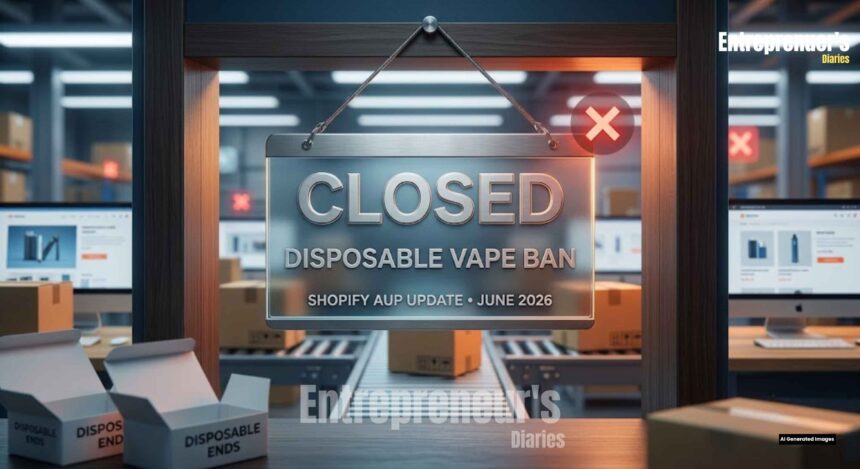
Washington D.C., June 23, 2026: The Shopify vape ban marks a definitive tipping point in the intersection of e commerce infrastructure and federal regulatory enforcement. In a move that sends immediate shockwaves through the digital retail sector, Shopify has officially amended its platform policies to bar the sale of disposable, single use vapes.
This is not an isolated corporate governance decision. It is a direct, calculated response to an unprecedented crackdown by U.S. federal authorities on the illicit electronic nicotine delivery system (ENDS) industry.
For entrepreneurs, investors, and merchants operating in the digital consumer goods space, this development is a masterclass in regulatory risk management. When a platform as foundational as Shopify alters its Acceptable Use Policy to exclude a highly trafficked product category overnight, the financial ripples are felt across the entire global supply chain.
This deep dive analysis breaks down exactly what Shopify has officially changed, what federal authorities are explicitly enforcing, and how this convergence of corporate policy and federal law could reshape the future of e commerce.
The Official Policy Shift: Dissecting Shopify’s AUP
To understand the gravity of this situation, we must look exclusively at the official documentation provided by the company. According to the official Shopify Acceptable Use Policy (AUP), the platform maintains a highly specific, tiered approach to restricted substances. Shopify does not outright ban all tobacco or nicotine products across the board.
Instead, the official Shopify AUP explicitly states that merchants can sell certain tobacco and nicotine products. This is permitted provided they adhere to strict, built in age verification gateways and comply with all local jurisdiction laws.

However, the company recently updated its official guidelines to draw a hard, impermeable line against a specific subset of these products. The official Shopify AUP now explicitly prohibits the sale of “disposable, single use electronic nicotine delivery systems (ENDS).”
This specific distinction is highly critical for business operators to understand. By specifically targeting “disposable” and “single use” devices, Shopify has surgically removed the most controversial and legally targeted segment of the vape market from its ecosystem.
Refillable pod systems, vape mods, and traditional combustible tobacco products remain technically permissible under the Shopify AUP. However, they remain subject to stringent age gating requirements.
The disposable vape which requires no refill and is discarded after the battery or e-liquid depletes has been completely walled off. From a business and financial perspective, this update affects both the front end storefront visibility and the back end payment processing capabilities. Merchants cannot use Shopify Payments to facilitate transactions for these newly prohibited items.
If a merchant attempts to bypass this restriction by integrating a third party payment gateway, they are still in direct violation of the terms of service governing their store’s hosting on Shopify’s servers.
Shopify’s official stance, as written in the AUP, reserves the unequivocal right to terminate stores that violate these guidelines immediately. For high volume digital merchants, this represents an existential threat to their revenue streams and operational viability.
The Federal Catalyst: The Legal Framework of the PMTA
Shopify’s internal policy update did not occur in a vacuum. To understand why the platform took such a drastic and sudden action, we must examine the official regulatory framework established by the U.S. Food and Drug Administration (FDA). The legal foundation for the current federal crackdown rests entirely on a statutory requirement known as the Premarket Tobacco Product Authorization (PMTA).
According to official documentation published by the FDA’s Center for Tobacco Products (CTP), any tobacco product introduced to the U.S. market after February 15, 2007, must receive a PMTA from the FDA. This authorization must be granted before the product can be legally marketed, distributed, or sold in the United States.
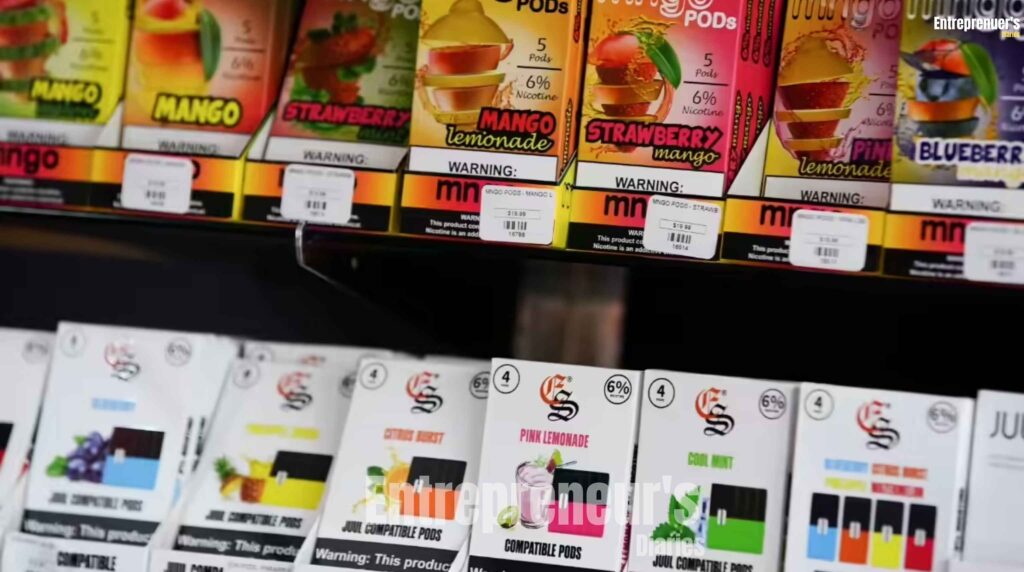
This includes electronic nicotine delivery systems (ENDS), which the FDA legally classifies as tobacco products. The FDA classifies them this way because they contain nicotine that is derived from tobacco.
The official FDA guidelines state that to receive a PMTA, a manufacturer must provide rigorous scientific evidence. This evidence must demonstrate that permitting the marketing of the new tobacco product is appropriate for the protection of public health.
This is an incredibly high legal and scientific bar to clear. The manufacturer must prove to the federal government that the product’s potential benefit to adult smokers outweighs the known risks. Most importantly, they must prove it does not lead to increased youth initiation of nicotine use.
According to official FDA enforcement records, the vast majority of disposable vape products currently on the U.S. market have never been subjected to this scientific review. Therefore, under official federal law, these products are officially classified as illegally marketed tobacco products.
Shopify’s decision to ban disposable vapes is a direct, legally sound alignment with this federal reality. By continuing to host these products, e-commerce platforms would expose themselves to allegations of facilitating the sale of illegal goods.
The Statutory Foundation: The Deeming Rule
To fully appreciate the FDA’s authority in this matter, business professionals must understand the official legal mechanism that brought e-cigarettes under federal control. On May 10, 2016, the FDA published a final rule in the Federal Register officially extending its regulatory authority to all tobacco products.
According to the official FDA summary of this final rule commonly referred to as the “Deeming Rule” the agency finalized its authority over e-cigarettes, cigars, pipe tobacco, and hookah tobacco. This official rule legally established that manufacturers of these newly deemed tobacco products must comply with the requirements of the Federal Food, Drug, and Cosmetic Act (FD&C Act).
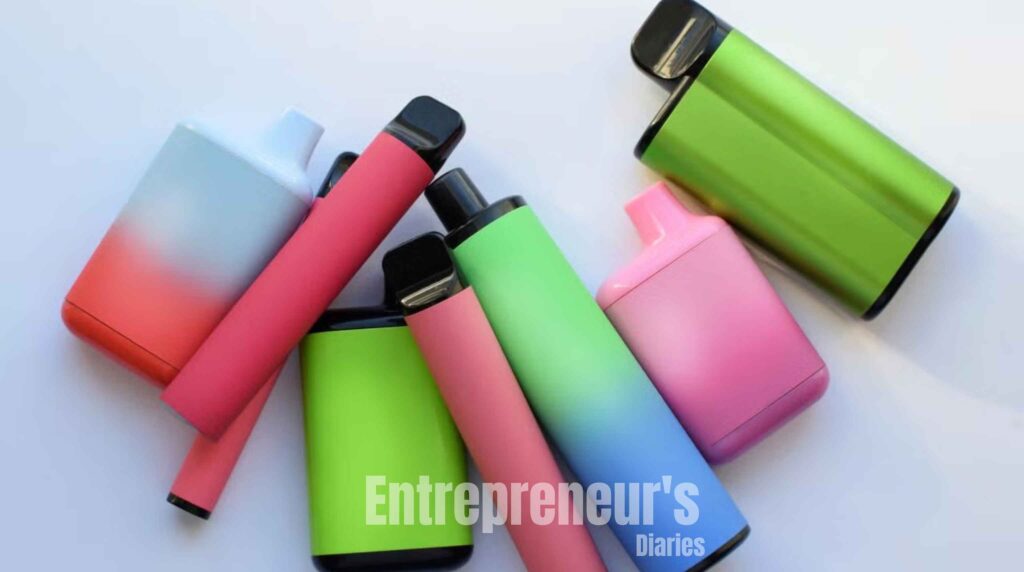
This includes the requirement to submit a PMTA. The official FDA documentation makes it clear that the failure to obtain a PMTA means the product is adulterated or misbranded under federal law. When Shopify updated its AUP to ban disposable vapes, it was effectively acknowledging the legal weight of the FDA’s Deeming Rule. The platform is refusing to act as a digital storefront for products that the FDA has legally deemed unauthorized and adulterated.
The Regulatory Escalation: Official Statements from the FDA
The tone and tenor of federal enforcement have shifted dramatically in recent months. U.S. authorities are no longer relying solely on behind the scenes warning letters. They are utilizing the full weight of the federal government.
To accurately capture the regulatory environment, we must look at the exact language used by federal officials in their official capacities. Brian King, Ph.D., M.P.H., who currently serves as the Director of the FDA’s Center for Tobacco Products, has been exceptionally vocal about the agency’s intent.
In an official FDA press release detailing the agency’s enforcement strategy against unauthorized e-cigarettes, King stated: “The FDA is committed to using all available tools to hold accountable those who continue to flout the law and sell unauthorized tobacco products, particularly those that are driving the youth vaping epidemic.”
This quote, published directly on the official FDA website, outlines the precise regulatory philosophy driving the current crackdown. Federal officials are not merely targeting the foreign manufacturers. They are explicitly targeting the domestic supply chain.
This includes domestic distributors, wholesalers, and crucially, the retailers. In the modern digital economy, these retailers are primarily e-commerce operators. The official FDA website houses a dedicated page for “Tobacco Enforcement Actions.” A thorough review of this official portal reveals thousands of warning letters issued to online retailers.
These official FDA warning letters explicitly cite the sale of unauthorized, disposable ENDS products. The letters warn recipients that failure to remove these products from their digital inventory may result in additional regulatory action. For an e-commerce platform like Shopify, the sheer volume of these official FDA warning letters directed at online retailers serves as a massive operational red flag.
The Market Shift: Official Federal Data on Disposable Proliferation
To fully grasp why federal authorities are so aggressively targeting disposable vapes, we must analyze the official public health data published by the FDA. The aggressive regulatory posture is directly proportional to the documented explosion of disposable vape usage in the United States.
According to official data published by the FDA and the Centers for Disease Control and Prevention (CDC) in the National Youth Tobacco Survey (NYTS), disposable vapes became the most commonly used tobacco product among U.S. youth. The official FDA summaries of this federal survey data highlight a massive, structural shift in the market.
When the FDA implemented its 2020 enforcement policy prioritizing the removal of certain flavored cartridge based e-cigarettes, the market did not contract. Instead, according to official FDA public health advisories, the market simply pivoted. Manufacturers bypassed the regulatory action by flooding the U.S. market with disposable devices.
These disposable devices came pre filled with high concentrations of nicotine. They were also made available in a wide array of sweet, fruity, and dessert like flavors. Federal officials have noted in official reports that these disposable products are specifically designed to appeal to youth. They utilize bright packaging and flavors like cotton candy and watermelon to entice underage users.
This official federal data is the absolute linchpin of the entire crackdown. Because the FDA has officially documented that disposable vapes are the primary driver of youth nicotine addiction, the agency has justified deploying maximum enforcement resources against this specific product category.
Shopify’s decision to ban disposable vapes, while leaving certain other tobacco products technically permissible under strict guidelines, perfectly mirrors the FDA’s own enforcement prioritization.
DOJ Involvement: The Criminalization of the Supply Chain
While the FDA handles the regulatory and civil aspects of the enforcement, the U.S. Department of Justice (DOJ) has stepped in to handle the litigation components. The formal collaboration between the FDA and the DOJ represents a significant escalation in how the U.S. government approaches the illegal vape industry.
According to official press releases published by the Department of Justice, federal prosecutors have initiated strategic legal actions against major distributors of unauthorized disposable vapes. In these official DOJ statements, federal officials emphasize that the distribution of unauthorized tobacco products is not just a minor regulatory violation. They classify it as a pattern of illegal conduct that puts the American public at risk.
The DOJ has officially announced the filing of civil injunctions against entities distributing these products. These injunctions, sought under federal law, demand the immediate cessation of all sales and distribution of unauthorized ENDS. When the DOJ officially announces it is seeking court ordered injunctions against vape distributors, it sends a chilling effect through the entire digital retail ecosystem.
E-commerce platforms rely on stable, predictable legal frameworks to operate. When the federal government declares a specific product category illegal and begins securing federal court injunctions against domestic distributors, platforms cannot afford to maintain neutrality.
They must act decisively, or risk being named as a facilitating conduit in future federal civil proceedings. Shopify’s ban on disposable vapes is the exact corporate manifestation of this legal reality.
The Mechanics of Federal Enforcement: Import Alerts
The federal crackdown on illegal vapes is not limited to letters and court injunctions. U.S. authorities are physically intercepting these products before they can even enter the digital supply chain. A review of the official FDA import alert system reveals exactly how the government is dismantling this industry at the border.
The FDA maintains a system of “Import Alerts.” These are official directives issued to FDA field staff. According to official FDA import alert records, the agency has enacted strict measures against ENDS products that lack the required PMTA.
When a shipment of disposable vapes arrives at a U.S. port of entry, FDA officials check the official PMTA database. If the specific brand and product line do not have an authorized PMTA on file with the federal government, the shipment is officially detained. It is then refused admission into the United States.
The official FDA website details that the agency works in tandem with U.S. Customs and Border Protection (CBP) to execute these physical seizures. This border enforcement is a critical piece of the puzzle for e-commerce investors to understand.
Because the federal government is actively seizing unauthorized disposable vapes at the border, the domestic supply chain for these products has become inherently unstable. It has also become legally toxic. Merchants selling these products on platforms like Shopify are attempting to monetize a supply chain that the FDA and CBP are actively trying to keep out of the country.
Shopify’s AUP update is a proactive measure to ensure the platform is not facilitating the sale of goods that the federal government is actively intercepting.
E-Commerce Compliance: The Secondary Liability Equation
For business professionals reading this analysis, the core question is always about liability and financial risk. Why does a hosting platform care what a third party merchant sells? The answer lies in the legal concept of secondary liability and the strict regulations governing the financial rails of e-commerce.
Shopify is not just a passive website builder. It is a payment facilitator through its proprietary Shopify Payments system. To operate Shopify Payments, the company must comply with the rules of major credit card networks. It must also comply with federal financial regulations regarding prohibited transactions.
If an e-commerce platform knowingly allows its infrastructure to be used for the mass sale of products that the FDA has officially classified as illegally marketed, the platform opens itself up to severe legal scrutiny.
By officially updating its Acceptable Use Policy to ban disposable vapes, Shopify creates a crucial legal firewall. If a merchant violates this policy and secretly sells disposable vapes, Shopify can demonstrate that it has an explicit, documented prohibition against the activity.
This is not a passive stance. It is an aggressive, forward looking compliance strategy. It protects Shopify’s parent company from being dragged into DOJ or FDA enforcement actions targeting individual merchants.
For investors, this level of corporate governance is highly favorable. It shows that Shopify’s leadership is actively monitoring federal regulatory trends. It proves they are adjusting platform policies to mitigate systemic legal risk before the government knocks on their door.
The Impact on Digital Merchants and Supply Chain Migration
The immediate fallout from Shopify’s official policy change will be felt by the digital merchants who built their businesses around the sale of disposable vapes. These merchants are now faced with a stark operational reality. Their primary sales channel has been legally severed.
According to Shopify’s official AUP, merchants found in violation of the policy are subject to immediate store termination. This means the instantaneous loss of the checkout portal. It also means the loss of the entire digital storefront, accumulated customer data, and integrated email marketing lists.
For these businesses, the Shopify ban forces an immediate, high stress migration strategy. However, this migration comes with severe financial friction. Merchants will be forced to move to high risk payment gateways and offshore hosting providers.
These alternative platforms do not offer the same user experience, app ecosystem, or integration capabilities as Shopify. Furthermore, high risk payment gateways typically charge significantly higher transaction fees. These exorbitant fees instantly erode the profit margins of the merchants.
Additionally, by moving to the fringes of the internet, these merchants will find it increasingly difficult to execute digital marketing strategies. Major advertising platforms strictly prohibit the advertising of tobacco and nicotine products. Without access to mainstream e-commerce infrastructure and digital advertising channels, the long term viability of these disposable vape businesses is highly questionable.
The Future of Digital Retail and Regulatory Compliance
The Shopify disposable vape ban is not an isolated event. It is a definitive blueprint for the future of e-commerce in heavily regulated industries. We are witnessing the era of “Regulatory Tech Compliance” within e-commerce platforms.
In the past, platforms took a largely hands off approach. They relied on merchants to self certify their compliance with local laws. That era of digital retail is officially over. Federal agencies like the FDA and DOJ have made it crystal clear. They view the digital point of sale as a critical enforcement node.
For business owners operating in Gray market industries whether it is dietary supplements, CBD, or certain electronic devices the Shopify vape ban serves as a vital warning. E commerce platforms will no longer shield you from federal regulatory risk. In fact, to protect their own operational integrity, platforms will pre-emptively ban products that attract federal scrutiny.
The convergence of FDA import alerts, DOJ civil injunctions, and Shopify AUP updates represents a unified front against unregulated digital supply chains.
The Analytical Closing: The Bookmarkable Takeaway
Here is the strategic insight that investors, founders, and operators must internalize from this development:
In the modern digital economy, regulatory compliance is no longer a backend legal function it is a primary competitive moat. Shopify’s decision to ban disposable vapes was not a moral judgment. It was a ruthlessly pragmatic business decision.
The company looked at the official FDA import alerts. They read the exact quotes from Director Brian King regarding enforcement. They analysed the DOJ’s civil injunction strategies. They calculated the financial risk of facilitating a federally targeted, illegal supply chain. Then, they decisively cut ties.
For entrepreneurs, the lesson is profound. If your business model relies on exploiting regulatory Gray areas especially in health, wellness, or consumables your business is built on a ticking timer. Federal authorities have mastered the art of following the digital money trail. When they decide a product category is a public health threat, they do not just shut down the foreign factory.
They choke off the digital infrastructure that allows the product to reach the American consumer. The platforms you build on will always protect their own liability over your revenue. The future of profitable e commerce belongs to brands that build their supply chains on the solid ground of federal authorization and proactive platform compliance. It does not belong to those who rely on the shifting sands of illicit market arbitrage.
The disposable vape gold rush is officially over. The federal regulators have arrived, and the gatekeepers of digital commerce have locked the doors.
Frequently Asked Questions (FAQs)
Why did Shopify officially ban disposable vapes?
According to the official Shopify Acceptable Use Policy (AUP), Shopify banned the sale of “disposable, single use electronic nicotine delivery systems (ENDS)” to align its platform with federal U.S. regulations. This action prevents the platform from facilitating the sale of products that the FDA has officially deemed illegally marketed tobacco products under the Premarket Tobacco Product Authorization (PMTA) process.
What is the FDA PMTA and why does it legally matter for vapes?
PMTA stands for Premarket Tobacco Product Authorization. According to official FDA.gov guidelines, any tobacco product introduced to the U.S. market after February 15, 2007, must receive FDA authorization before being legally sold. The FDA has officially stated that the vast majority of disposable vapes on the market do not have this required authorization, making their marketing and sale a violation of federal law.
Can merchants still sell any type of vape or tobacco on Shopify?
Yes, but with strict, non negotiable limitations. The official Shopify AUP specifically prohibits disposable, single use vapes. However, the policy states that other tobacco and nicotine products may be sold, provided the merchant implements strict age verification gates and complies fully with all applicable local, state, and federal laws.
What specific actions are U.S. authorities taking against illegal vapes?
According to official press releases from the FDA and the Department of Justice (DOJ), U.S. authorities are utilizing a multi pronged approach. This includes issuing thousands of FDA warning letters to online retailers, enacting FDA import alerts to physically seize unauthorized products at U.S. borders via Customs and Border Protection, and the DOJ filing federal civil injunctions to shut down major domestic distributors.
What happens if a merchant tries to secretly sell disposable vapes on Shopify?
If a merchant violates the official Shopify Acceptable Use Policy by selling prohibited disposable vapes, they are subject to immediate termination. According to Shopify’s official terms of service, the company reserves the right to shut down the merchant’s store without warning, cutting off access to the storefront, customer data, and Shopify Payments processing services.
Connect With Us On Social Media [ Facebook | Instagram | Twitter | LinkedIn ] To Get Real-Time Updates On The Market. Entrepreneurs’ Diaries Is Now Available On Telegram. Join Our Telegram Channel To Get Instant Updates.

Isabella is a global business journalist and former McKinsey analyst from Brazil. She brings sharp insights on economic shifts, policies, and founder journeys from around the world.

Tokyo-based CFA translating global markets into clear insights for modern entrepreneurs.