

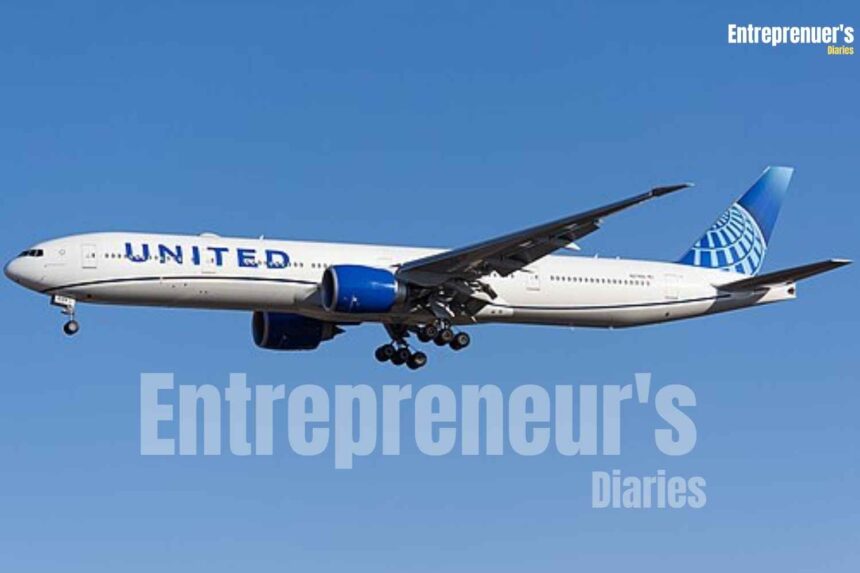
New York, May 11: Scott Kirby walked into the CEO role at United Airlines in May 2020 with the industry on fire around him.
Not metaphorically. Actual crisis. Planes grounded. Terminals empty. A workforce terrified about its future.
Passenger volumes had cratered by more than 90 percent. Revenue was essentially gone. Nobody in aviation knew when, or honestly whether, things would return to normal.
And Scott Kirby, the man taking the top job at America’s third-largest airline by revenue, had a philosophy that most boards would have quietly talked him out of.
He was going to stop making most of the decisions.
Not because he was checked out. Not because he lacked confidence. But because Scott Kirby had already worked out something that takes most executives a full career to understand, if they ever do: the higher you sit, the less you actually know about what is really happening on the ground.
So he got out of the way.
What followed was one of the more remarkable organizational turnarounds in recent American business history. According to United’s January 2026 earnings release, the airline closed 2025 with $59.1 billion in total revenue, the highest annual figure in the company’s existence.
Pre-tax earnings hit $4.3 billion. United flew a record 181 million passengers. It grew faster than any other U.S. carrier that year and posted its highest-ever monthly customer satisfaction score in November.
None of that came from Scott Kirby sitting at the center of every call.
What the 5 Decisions Framework Actually Means for CEOs
Here is the version of this story that tends to get oversimplified in the retelling.

People hear “Scott Kirby only makes five decisions a year” and picture a detached executive coasting through his calendar on reputation alone.
That is not what is happening.
What Scott Kirby actually described, in a candid interview with Fortune, is something more demanding than the usual approach. He limits himself to the decisions that genuinely require him. The calls where reasonable, informed people inside the company disagree. The situations where there is no clean data pointing clearly in one direction. The moments where risk exists on every available path.
Those situations, in his view, are the CEO’s job. Everything else is not.
The vendor negotiations. The day-to-day operational pivots. The marketing positioning. The mid-level strategic choices. These go to the people who are actually closest to the work and best equipped to make the call.
That distinction sounds clean in theory. In practice, it requires a leader to fight off the instinct that grips almost every executive at a certain level: the belief that being in the room for a decision is the same as adding value to it.
Scott Kirby has decided those are two completely different things.
How Scott Kirby Made Delegation a Cultural Shift at United Airlines
The pandemic gave Scott Kirby something he did not expect.
As he told Fortune, taking over during that kind of crisis created what he described as free license to change everything. When the stakes are existential, people stop defending the old way of doing things. They become genuinely open to something different.
Kirby used that window.
One of the structural changes he made was in how decisions get processed when they do land on his desk. Rather than pulling his senior leadership team into a room and working top-down, Scott Kirby built a different kind of process.
He gathers between 15 and 20 people. He starts with the most junior person in the room.
That person speaks first. Then the next most junior. The executive team weighs in last.
The logic behind this is less complicated than it sounds. Junior employees, the people actually working the gate, managing the ramp, handling the calls, often carry insight that never survives the journey up the management chain. By the time that information reaches a CEO through normal channels, it has been filtered, softened, or lost entirely.
Asking those people to speak before the senior leaders have established the room’s direction changes what gets said and who feels safe saying it.
According to Fortune’s reporting, Scott Kirby found three things consistently happened when he ran decisions this way. The quality of the eventual decision improved. The team became more comfortable disagreeing openly. And people felt heard, even when the final call did not go their way.
That last one is worth sitting with for a moment.
A team that feels heard will execute even when they disagree. A team that does not feel heard will execute slowly, reluctantly, or not at all.
The Numbers That Confirm What Scott Kirby Built
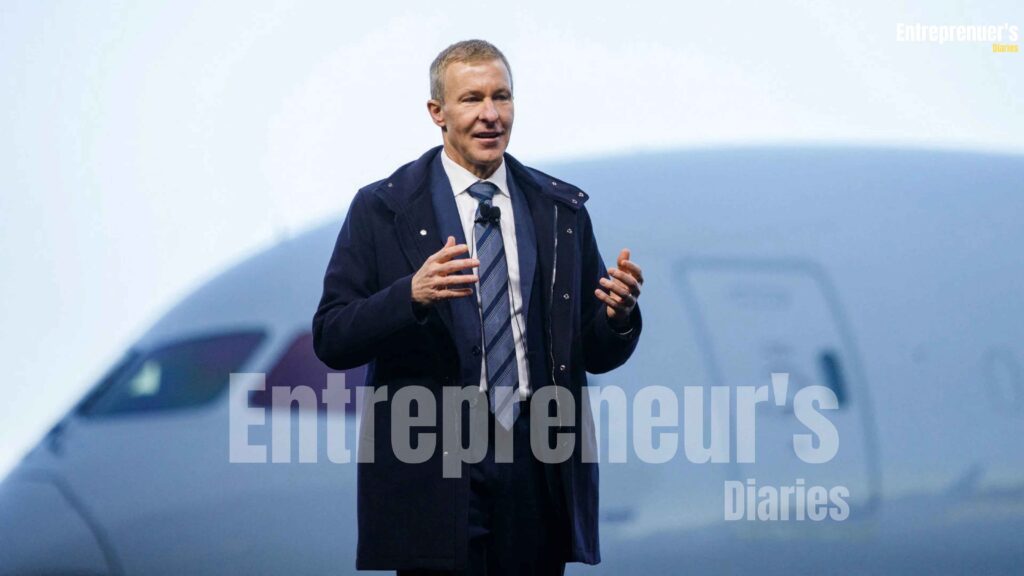
Scott Kirby inherited a carrier that had spent years cutting its way through competitive pressure.
Previous leadership had made the kinds of choices that look defensible on a quarterly earnings call and quietly corrode an airline’s reputation over time. Charging for things customers expected for free. Trimming product investments. Running an operation that was functional but not one anyone felt genuinely loyal to.
By the time Scott Kirby settled in as CEO, the company had real work to do on trust, with its employees and its customers.
Five years later, the numbers tell a different story.
According to United’s full-year 2025 results reported in January 2026, premium revenue grew 11 percent year-over-year. Loyalty revenue, connected to the MileagePlus program and co-branded credit card activity, rose 9 percent.
United Express, the regional operation, went 134 days without a single cancellation.
The Connection Saver tool prevented more than one million missed connections during the year. Not a statistic that lands on a glossy slide deck, but the kind of thing that turns a frustrated traveler into someone who books United again next time.
November 2025 posted the highest monthly customer satisfaction score in company history.
Scott Kirby’s own compensation, reported by Aviation A2Z at approximately $33.9 million for 2024 and 2025, is structured explicitly around shareholder return, profitability, and long-term growth. His financial incentives are pointed at the same horizon his leadership model is built for.
Why the Leadership Model Scott Kirby Built Is Hard to Copy
Most executives who read about Scott Kirby’s approach nod along. Very few actually change how they operate.
The reason is not intellectual. The logic of delegation is not complicated. The research supporting it, on employee engagement, on execution speed, on decision quality, is not hidden or obscure.
The reason most leaders do not operate this way is that it is genuinely uncomfortable.
Watching someone make a call you would have made differently, and staying silent, requires a kind of confidence that most organizational cultures never develop and most leadership styles never reward.
Scott Kirby’s background gives him a specific advantage here.
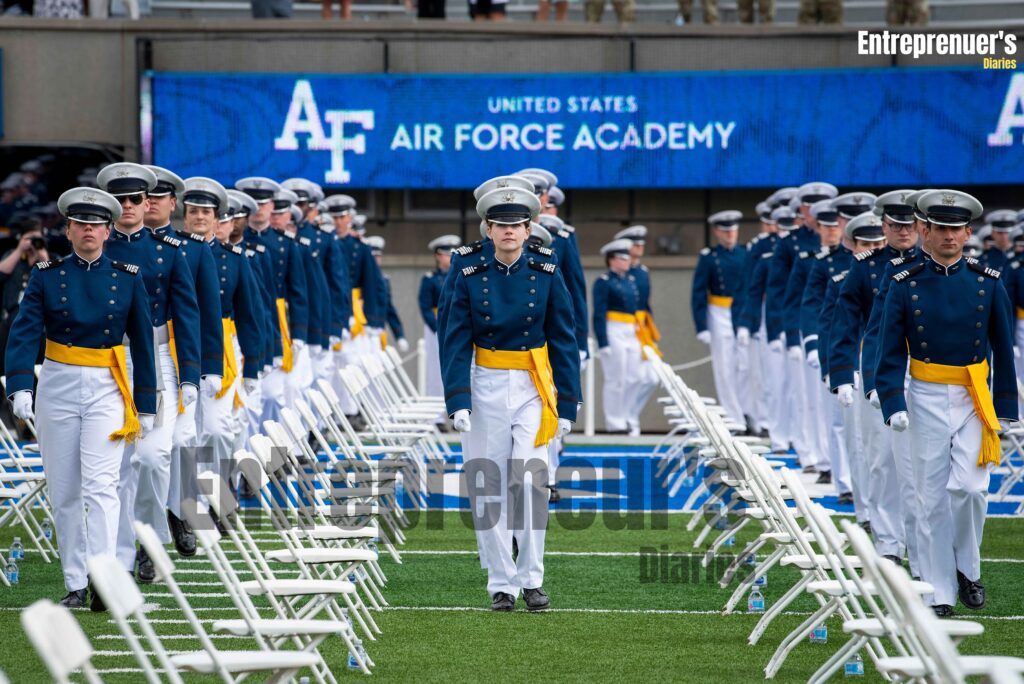
He trained at the United States Air Force Academy in computer science and operations research, then earned a master’s in operations research from George Washington University. He spent decades as an analytically driven operator at America West, US Airways, and American Airlines before becoming United’s president in 2016 and CEO in 2020.
He is not a touchy-feely delegator. Scott Kirby is a probabilistic thinker who has simply run the numbers on where his judgment adds the most value.
That same probabilistic instinct, by the way, is what got him banned from blackjack tables across Las Vegas. The Wall Street Journal reported that Scott Kirby became skilled enough at card counting that casinos flagged him permanently. He walked into the Bellagio during Super Bowl week and was told he could play anything except blackjack.
He applies the same expected-value logic to running an airline. When the calculation says someone else is better positioned to make a call, he lets them make it.
That is not weakness. That is a very precise form of self-awareness.
The Broader Lesson Scott Kirby Is Teaching Without Trying To
Every founder knows the feeling. You built something from nothing. You made every call, survived every close call, and developed genuine instincts about what works. Then the company grows, the job changes, the calls keep coming, and you keep making them because that is what you have always done.
Turns out, that is also exactly how scaling problems start.
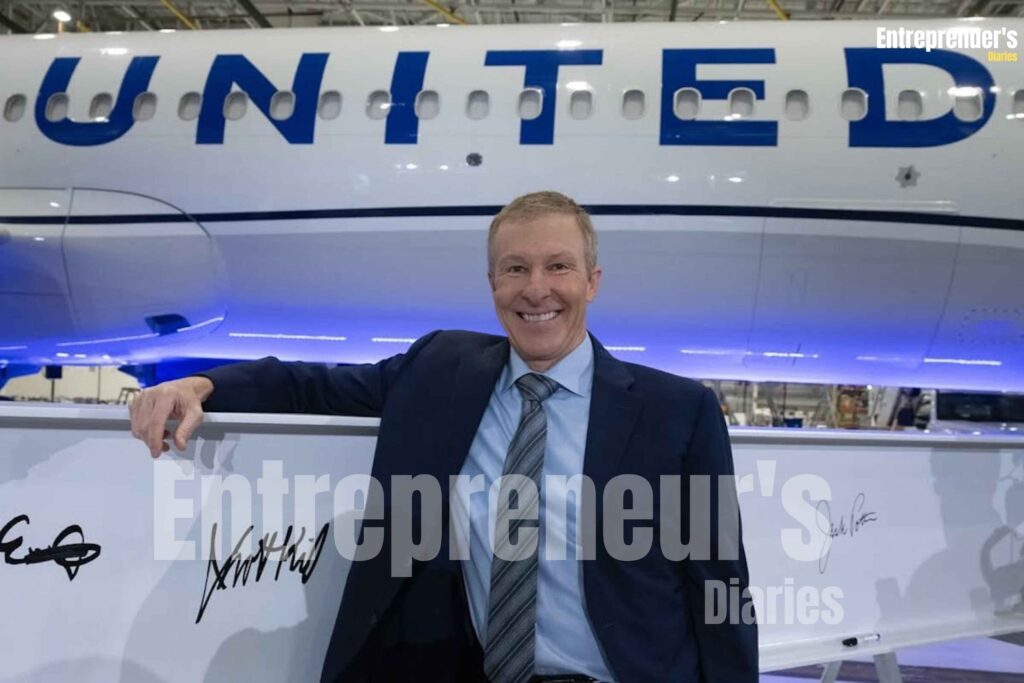
Scott Kirby’s model puts a name to the trap. When a CEO makes decisions that others could make, two things happen simultaneously. The CEO’s attention moves away from the five decisions that actually need them. And the team stops developing the muscle to own outcomes, because they have learned to wait for direction from the top. Both of those are expensive problems. Neither shows up cleanly on a balance sheet.
For founders running younger, smaller organizations, the number five is not the point. The discipline is. Every decision you make that someone on your team could make is a decision that did not build that person’s judgment, ownership, or confidence. Over time, that compounds. In the wrong direction.
Scott Kirby took the controls of United at its lowest point and chose to build an organization that did not depend on him for every answer. Five years later, the airline is flying more people than it ever has, making more money than it ever has, and satisfying those customers at a rate it has never managed before. The man at the top made roughly five calls to get there. That is the point.
What is Scott Kirby’s decision-making philosophy at United Airlines?
Scott Kirby believes a CEO should only personally make decisions that no one else in the organization is positioned to make. He limits himself to roughly five major decisions per year, delegating everything else to the people closest to the actual work.
How does Scott Kirby involve his team when he does make major decisions?
He gathers 15 to 20 people and asks the most junior employees to speak first, before senior leaders weigh in. The goal is to surface honest, ground-level insight before the room’s direction gets established by rank.
What financial results has United Airlines produced under Scott Kirby?
According to United’s January 2026 earnings release, the airline posted $59.1 billion in revenue for 2025, its highest ever, along with $4.3 billion in pre-tax earnings and a record 181 million passengers carried.
Is the five decisions model realistic for smaller or earlier-stage companies?
The number is not the lesson. The discipline is. For founders, the relevant question is whether you are making decisions that your team could own. Every time you step in unnecessarily, you slow the team’s development and create a dependency that limits the company later.
Why did Scott Kirby develop this approach during the pandemic specifically?
He has said the crisis created rare permission to change things that would otherwise have been defended out of habit. The scale of the emergency made people open to doing things differently, and the approach he built in 2020 became permanent.
Summary
Scott Kirby stepped into the worst moment in United Airlines’ history and chose not to make it about himself. He built systems, trusted people, and reserved his judgment for the five moments per year when only his judgment would do. The airline that came out the other side posted $59.1 billion in record revenue, flew more passengers than ever, and ended 2025 with its happiest customers on record. There is a lesson in there for every founder who still thinks the job is to have all the answers.
Connect With Us On Social Media [ Facebook | Instagram | Twitter | LinkedIn ] To Get Real-Time Updates On The Market. Entrepreneurs’ Diaries Is Now Available On Telegram. Join Our Telegram Channel To Get Instant Updates.

Isabella is a global business journalist and former McKinsey analyst from Brazil. She brings sharp insights on economic shifts, policies, and founder journeys from around the world.

Freya is a digital nomad and writer from Sweden, curating business travel hacks and remote-work inspiration from her global adventures.