
New York, May 9: The semiconductor industry’s most closely watched comeback story just got its first real confirmation. Apple and Intel have reached a preliminary agreement for Intel to manufacture some of the chips that power Apple devices, with the Intel 18A process sitting at the center of the entire arrangement. The Wall Street Journal broke the news Friday, citing people familiar with the matter.
Intel shares jumped more than 13 percent on the day. Apple added roughly 1.7 percent. Wall Street was not just reacting to one contract. It was repricing what Intel’s turnaround might actually be worth, and the Intel 18A process is the technology that makes that repricing possible.
This is not a routine procurement decision. Depending on how it plays out, it could reshape how the United States approaches technology sovereignty at the silicon level.
A Year in the Making, a Decade in the Waiting
Intel 18A Process Anchors the Apple Chip Manufacturing Deal
Talks between the two companies had been running for over a year before a formal preliminary deal came together in recent months, according to people familiar with the situation. Bloomberg had flagged the discussions earlier in the week. The Wall Street Journal nailed down the confirmation Friday. Neither Apple nor Intel offered any comment.
The history between these two companies makes the timing worth pausing on. From 2006 to 2020, Intel processors sat inside every Mac Apple sold. That was a 14-year partnership that defined the PC era for millions of consumers. Then Apple walked away.
The M1 chip, launched in late 2020, made the break official. Apple’s own ARM-based silicon delivered better battery life, lower heat, and stronger efficiency than anything Intel had been supplying. The Mac business transformed almost overnight. Intel lost one of its most prominent customers and, more painfully, lost the narrative that it was building the world’s best chips.
Apple never looked back. Intel spent the years that followed fighting on multiple fronts and losing ground on most of them.
That chapter, it appears, is closing. And the Intel 18A process is the reason a reunion is even on the table.
What Intel Stands to Gain
Why the Intel 18A Process Is the Centerpiece of This Foundry Bet
Landing Apple as a foundry customer would be the clearest proof yet that Intel’s manufacturing business has turned a corner. For years, the foundry division was more of a liability than an asset. Delays piled up, yields disappointed, and customers stayed away. Intel was essentially the sole customer of its own fabs, producing chips only for its internal product lines.
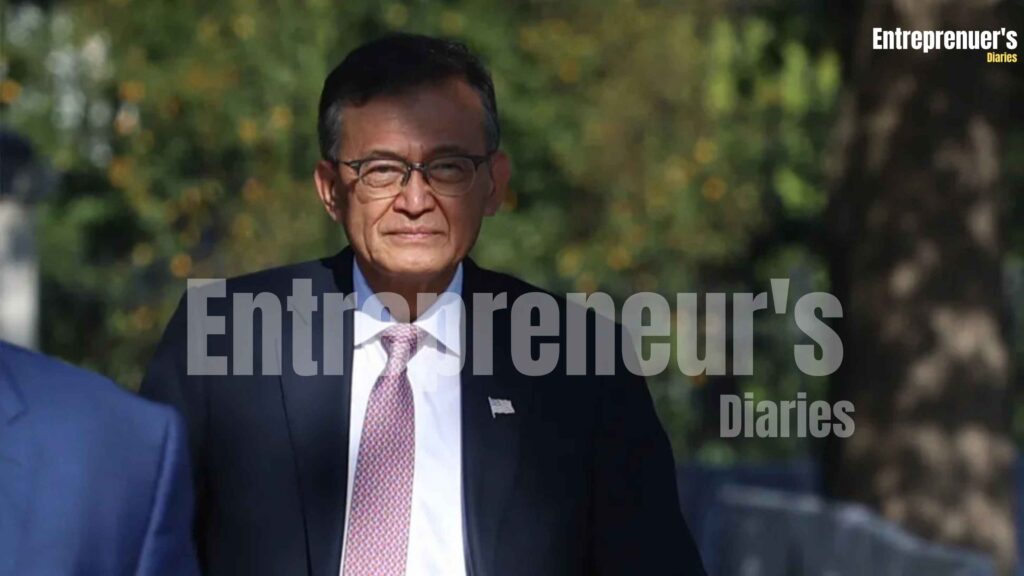
New CEO Lip-Bu Tan, who took the job in 2025, has been working to change that story with visible urgency. He restructured leadership, accelerated manufacturing investment, and made external customer acquisition the centerpiece of the company’s recovery. Intel has signed deals with the U.S. government, taken investment from Nvidia and SoftBank, and pushed hard to position Intel Foundry as a credible third option alongside TSMC and Samsung.
The Apple deal, if it closes, validates that entire thesis in one move.
The physical infrastructure is coming together. Intel now has a chip fabrication plant in high-volume production in Chandler, Arizona, running on the Intel 18A process, a node designed to compete with TSMC’s 2nm technology currently manufactured only in Taiwan. The facility is operational, the process is moving through qualification, and the roadmap beyond it is already in motion.
Analysts, though, are not ready to declare victory just yet. Stacy Rasgon at Bernstein has been clear that the Intel 18A process is still working through qualification and has not yet demonstrated the sustained yields TSMC routinely achieves at comparable nodes.
Ben Bajarin of Creative Strategies, speaking to CNBC, said Apple is most likely waiting for the next iteration, called 18A-P, before committing to volume production. He called the current Intel 18A process “a little bit rough” and said 18A-P “cleans a lot of stuff up.” His overall read: “They’ve got through the rough patch and can now be considered validated as a credible second source.”
That is not a ringing endorsement. But in the foundry business, credible second source is a meaningful thing to be.
Why Apple Needed This Deal
Supply Constraints, Geopolitical Risk, and the Intel 18A Process Solution
Apple has a design team that is, by most accounts, running circles around the competition when it comes to custom silicon. What it does not have is any real control over who builds those chips at scale. That has been fine, until recently.
TSMC is the world’s dominant contract chipmaker. It also has more demand than it can handle. Nvidia alone is consuming an enormous share of its most advanced capacity. Apple, for all its purchasing power, sits second in line. The practical consequence showed up in Apple’s own earnings call, when CEO Tim Cook acknowledged that iPhone sales were constrained by chip supply limitations at the company’s manufacturer.
When you are the world’s most profitable consumer electronics company and your CEO is telling investors that production bottlenecks are capping your revenue, the message to the supply chain is not subtle. A second foundry partner, one built around the Intel 18A process and operating on American soil, starts to look less like a nice-to-have and more like a business necessity.
The Taiwan dimension adds another layer. TSMC’s most advanced manufacturing is concentrated in Taiwan, which remains a geopolitical flashpoint. For Apple’s board, the question is not whether to reduce that exposure but when and how. Intel’s Arizona fabs, backed by U.S. government investment and running the Intel 18A process, offer a domestic alternative that no amount of financial engineering can replicate.
Reports from late 2025 pointed to Apple targeting entry-level M-series chips for Mac and iPad through Intel, using the 18A-P variant of the Intel 18A process. Production volumes are estimated at 15 to 20 million units, with a potential start date of mid-2027.
Apple ships more than 200 million iPhones annually, so the numbers are modest relative to total output. This is not Apple abandoning TSMC. It is Apple quietly making sure it never has to depend on any single manufacturer the way it currently does.
Washington’s Fingerprints Are All Over This
US Industrial Policy, the Intel 18A Process, and the Apple Agreement
Reading this deal purely as a business transaction misses part of the picture. The U.S. government has been pushing Intel’s recovery along with real money and real equity stakes.
In 2025, Washington acquired roughly a 10 percent stake in Intel through an $8.9 billion commitment combining CHIPS Act disbursements and the Secure Enclave semiconductor program, taking approximately 433 million shares in the process. That is not the posture of a government passively watching from the sidelines. The Trump administration, per the Wall Street Journal’s reporting, played an active role in facilitating the Apple agreement specifically.
The policy logic holds together whether you agree with the approach or not. The United States has one domestic company capable of competing with TSMC at advanced nodes, and that company’s most competitive technology is the Intel 18A process. That process needs customers to fund its continued development. An Apple contract provides revenue visibility, reputational weight, and production pressure that government grants alone cannot replicate.
Getting Apple to place orders with Intel serves the industrial policy objective more efficiently than almost any other lever Washington could pull. None of that makes the deal impure. It just makes the context clearer.
The TSMC Question Nobody Wants to Answer Directly
Intel 18A Process Versus TSMC 2nm: What the Competition Actually Looks Like
TSMC is not losing this deal in any meaningful near-term sense. Bajarin said an Apple-Intel arrangement would have essentially no capacity impact on TSMC because the Taiwanese company is already running its fabs at full tilt. TSMC reported approximately $35.9 billion in Q1 2026 revenue, carried by relentless AI chip demand. Fifteen to twenty million units of entry-level Apple silicon, built on the Intel 18A process, is not a number that registers as a threat at that scale.
What is worth noticing is how TSMC is talking. Last month, TSMC President and CEO C.C. Wei called Intel a “formidable competitor” in a public forum. That kind of language from TSMC’s leadership is uncommon. Bajarin’s interpretation, shared with CNBC, was blunt: “If you’re about to have one of your largest customers probably sign a deal with a competing foundry, that would be the kind of thing you say to perhaps soften the blow.”
The Intel 18A process is widely positioned as a direct technical competitor to TSMC’s N2 node. Whether it can match TSMC’s yields and reliability at scale remains the open question, but the gap has clearly closed enough that Apple is willing to run a serious evaluation.
Apple is also in discussions with Samsung, which has a newly constructed semiconductor plant in Texas backed by a $17 billion investment. Taken together, these conversations suggest Apple is building toward a genuine multi-foundry model, something the company has never operated at the advanced node level before.
Intel’s external roster is expanding on other fronts too. Nvidia invested $5 billion and is collaborating with Intel on an x86 RTX SoC for PCs. Elon Musk’s TeraFab project, a $119 billion planned facility in Austin, is slated to use Intel’s future 14A process for Tesla, SpaceX, and xAI chip production. Tan confirmed in February that 14A would reach volume production by 2029. Apple would sit alongside Microsoft and Amazon Web Services as Intel Foundry’s highest-profile external customers, assuming the deal closes.
The Numbers That Tell the Real Story
Intel 18A Process Bets Pay Off as Stock Surges Over 200 Percent
Intel shares rising more than 13 percent in a single session is a notable move for a company of its size. The stock is up over 200 percent year-to-date. That run reflects something broader than short-term deal speculation. It reflects the market reassessing whether Intel’s turnaround, built around the Intel 18A process and its successors, is structural rather than cosmetic.
Not long ago, Intel was debating whether to spin off its foundry division entirely. That idea was shelved. In hindsight, keeping the foundry business intact and continuing to invest in the Intel 18A process was the decision that made the current moment possible.
Microsoft committed to Intel’s 18A process for chip design in early 2024. Amazon Web Services followed with a custom chip agreement later that year. Apple would be the biggest name yet, and the one that carries the most weight with the broader technology industry.
Foundry businesses earn legitimacy slowly, and they lose it fast. A customer like Apple changes the conversation at every level, from yield expectations to process discipline to the caliber of engineers who want to work on the problem. The Intel 18A process becomes, in that context, not just a technical specification but a commercial credential.
What Comes Next
Preliminary is the operative word here. The specific chips, the exact timeline, and the final commercial terms are not public. Everything is conditional on the Intel 18A process, specifically the 18A-P variant, performing at production yields that Apple’s standards demand, which are among the most rigorous in the industry.
Computex, the annual technology conference scheduled for next month, will serve as an informal audition. Intel is set to show Nova Lake desktop processors, Panther Lake mobile chips, and Clearwater Forest server chips, all built on the Intel 18A process. How those chips perform under public and industry scrutiny will tell Apple’s engineering teams more than any internal roadmap presentation could.
For Intel, this is about proving the comeback is real. For Apple, it is about supply chain risk management with a domestic political upside. For the U.S. government, it is the return on years of expensive industrial policy bets placed on the Intel 18A process and the Arizona fabs built to run it.
All three parties need this to work. Whether execution can match the ambition is the only question left that matters.
Q1. Why has Apple decided to partner with Intel for chip manufacturing now?
Apple’s decision comes down to supply pressure and strategic risk reduction. TSMC has been running near capacity, with Nvidia consuming an outsized share of its most advanced production. Apple CEO Tim Cook acknowledged at the company’s most recent earnings that iPhone sales were constrained by supply limitations at its chip manufacturer.
Beyond the capacity issue, Apple’s concentration of production in Taiwan represents a geopolitical exposure the company has been looking to reduce. Intel’s Arizona fabs, running the Intel 18A process under U.S. government backing, offer a credible domestic alternative that addresses both problems at once.
Q2. Which Apple chips will Intel actually manufacture under this deal?
Neither company has confirmed specifics. Based on supply chain reporting, Apple and Intel are understood to be targeting entry-level M-series chips for Mac and iPad products, using the 18A-P variant of the Intel 18A process. Estimated initial production volumes fall between 15 and 20 million units, with manufacturing potentially beginning as early as mid-2027. Flagship iPhone chips, which require TSMC’s most advanced and highest-yielding nodes, are expected to remain exclusively with TSMC for the foreseeable future.
Q3. What exactly is the Intel 18A process and how does it compare to TSMC’s technology?
The Intel 18A process, equivalent to 1.8 nanometers in effective transistor density, is Intel’s most advanced manufacturing node and its direct answer to TSMC’s 2nm process. It introduces two architectural advances not seen in previous Intel generations: RibbonFET gate-all-around transistors and PowerVia backside power delivery, both of which improve energy efficiency and chip density significantly.
The current Intel 18A process is still working through production qualification. The follow-on 18A-P variant is expected to deliver meaningfully better performance per watt and higher manufacturing consistency. That is the reason Apple is reportedly holding out for 18A-P before committing to its first production run with Intel.
Q4. What role did the U.S. government play in bringing this deal together?
A direct one, according to the Wall Street Journal. In 2025, Washington took approximately a 10 percent equity stake in Intel through an $8.9 billion commitment combining CHIPS Act funds and the Secure Enclave semiconductor program. The Trump administration has been actively working to help Intel secure commercial contracts, with the Intel 18A process and its Arizona manufacturing base central to that domestic semiconductor strategy. The Apple deal, per the Journal’s reporting, was one where the government played a facilitative role.
Q5. Does this deal threaten TSMC’s relationship with Apple?
Not immediately. TSMC is already manufacturing at maximum capacity and 15 to 20 million chips built on the Intel 18A process represent a fraction of Apple’s total silicon requirements. TSMC’s Q1 2026 revenue of approximately $35.9 billion reflects demand that shows no signs of slowing.
The longer-term question is directional. Apple entering a multi-foundry model for the first time, while simultaneously exploring Samsung’s Texas facility as another option, signals an intent to structurally reduce TSMC dependence over time. That does not hurt TSMC today. Over a five to ten year horizon, as the Intel 18A process scales and its successor nodes mature, it could represent a meaningful shift in how Apple allocates chip volume across its manufacturing partners.
Connect With Us On Social Media [ Facebook | Instagram | Twitter | LinkedIn ] To Get Real-Time Updates On The Market. Entrepreneurs’ Diaries Is Now Available On Telegram. Join Our Telegram Channel To Get Instant Updates.

Isabella is a global business journalist and former McKinsey analyst from Brazil. She brings sharp insights on economic shifts, policies, and founder journeys from around the world.

Luca is a tech ethicist from Italy exploring disruptive innovation through a human lens—from AI to biotechnologies to decentralization.