
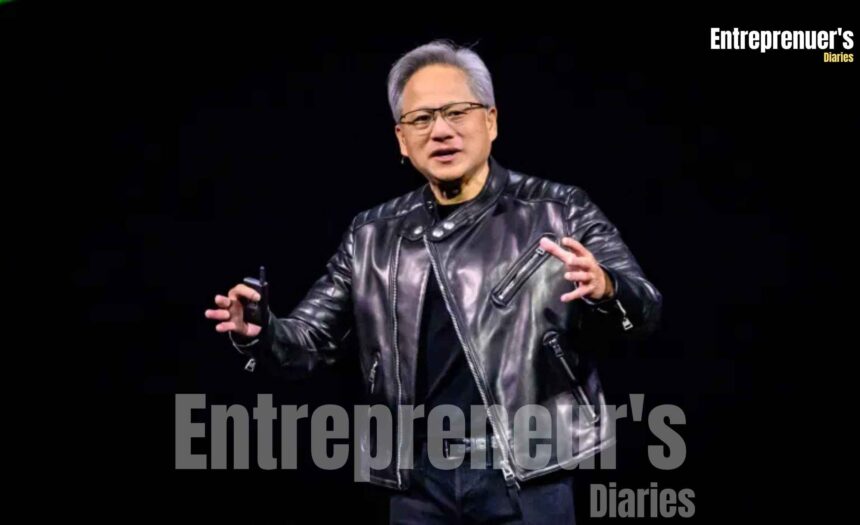
Beijing, May 16: Here is what nobody in Washington wants to say out loud: Jensen Huang just flew to Beijing, sat down with Chinese officials and global business leaders, and the world kept spinning. No scandal. No subpoena. No emergency hearing. Just one of the most powerful technology executives alive, choosing to show up in a city that American politicians have spent three years warning the private sector to treat as enemy territory.
Tim Cook was there too. Of course he was.
Their joint presence at the Beijing summit this week, covered by Reuters and Bloomberg across May 15 and 16, 2026, is being read in different ways depending on who you ask. Beijing sees it as validation. Silicon Valley sees it as pragmatism. Washington sees it as complicated. And the rest of the world, frankly, sees it as the only honest answer to a question that no export control or tariff threat has managed to settle: are American tech companies actually leaving China? The answer, watching Jensen Huang and Tim Cook work a room in the Chinese capital, is a fairly emphatic no.
The Geopolitical Backdrop That Made This Beijing Summit Impossible to Ignore
To get why Jensen Huang walking into the Beijing summit moved markets and raised eyebrows in equal measure, you need to understand the corner Nvidia has been backed into over the last few years.
Washington started tightening the screws on semiconductor exports to China in 2022, and it has not let up since. The H100, Nvidia’s flagship AI chip, is off the table entirely for Chinese buyers under Commerce Department restrictions, as The Wall Street Journal has reported.
So Nvidia did what Nvidia does. Its engineers redesigned around the rules and produced the H20, a China-compliant derivative built to stay within export thresholds. Then Washington tightened those thresholds too, according to Bloomberg’s reporting from earlier this year.
At every turn, the rules moved. Huang kept adapting.
That is the tightrope he has been walking, and it is a genuinely uncomfortable one. China is not just a market for Nvidia; it is, or was, one of the most voracious buyers of AI infrastructure on the planet. Chinese tech companies, locked out of the chips they actually want, have been racing to build domestic alternatives, as the Financial Times has documented at length. The longer that effort runs, the less Nvidia needs to be in the conversation at all. That is the real clock ticking in the background every time Jensen Huang boards a flight to Beijing.
Tim Cook’s situation is different, though not simpler. Apple pulls roughly 18 to 20 percent of its annual revenue from Greater China, per the company’s own fiscal filings reviewed by Reuters, and that number does not include the vast manufacturing infrastructure the region provides.
Foxconn assembly lines. Component supply chains that took decades to build.
Cook has been loudly diversifying into India and Vietnam, and Apple’s footprint in those markets is real and growing. Still, analysts at Bernstein and Wedbush have been consistent on this point: you cannot replicate what China’s manufacturing base does, at the scale Apple requires, in any reasonable timeframe.
The diversification story is true. The China dependency story is also true. Both can coexist, and Cook knows it.
What the Beijing Summit Was Actually About
The summit itself, convened around May 15 in the Chinese capital, was a gathering of senior technology and finance leaders, structured around direct engagement with Chinese government counterparts and peer institutions, according to coverage from multiple international news outlets.
Beijing has been working hard to reassemble these kinds of relationships. After years of pandemic isolation, a brutal domestic crackdown on its own tech sector, and friction with essentially every major Western government, China has been signaling that it is open for business again.
Cautiously. Selectively. But open.
These events serve a dual function that everyone in the room understands, even if nobody says it plainly at the podium. Part business development, part diplomatic theater. The formal sessions matter less than the sidebar conversations, the bilateral meetings, the handshakes that do not get photographed but that both sides remember. Jensen Huang showing up in Beijing sends a message to every Chinese official and technology executive in that building: Nvidia has not written you off, and we would rather be at this table than absent from it.
For Tim Cook, this kind of visit is almost second nature by now. He has made the trip more often than virtually any other American CEO at his level, and that consistency has bought him something rare: credibility in Beijing that does not need to be rebuilt from scratch every time the political weather changes.
Apple’s supply chain relationships, involving partners like Foxconn and component suppliers tied into TSMC-assembled parts, require exactly this kind of sustained, senior-level attention, according to analysis from Morgan Stanley.
Relationships at that scale do not maintain themselves.
Jensen Huang: What Beijing Actually Got From Having Him in the Room
Jensen Huang did not fly to Beijing to announce anything. There was no product reveal, no supply deal, no press conference with a Chinese government minister. That is not how executives at his level operate in this environment, and the regulatory reality around Nvidia makes public deal-making in China essentially impossible anyway.
What Beijing got was something arguably more valuable: the optics of legitimacy. When the CEO of the world’s most valuable semiconductor company sits in your summit, that image travels. It signals to every other global technology executive watching from a distance that engagement with China is not career-ending, reputation-destroying, or legally radioactive. It opens a door that decoupling rhetoric tries to close.
And Huang got something back too. Every time he engages Beijing within the bounds of what US law permits, he is signaling to his own investors that Nvidia’s China strategy is not passive resignation. It is active management.
That distinction matters. Bloomberg’s data on Nvidia’s stock is instructive here: the company’s shares have dropped sharply on multiple occasions when Washington announced new rounds of export restrictions. The market is watching how Huang navigates these moments closely, and his willingness to keep showing up, without crossing lines, reads as competence rather than recklessness.
The harder question, and it is one that did not get answered at the Beijing summit this week, is whether Nvidia’s China-compliant product line has a future at all. If Washington keeps compressing the export thresholds, even the H20’s successors may eventually become unsellable in China. Huang knows this. His teams know this. And yet here he is in Beijing, because the alternative, which is conceding the market entirely while domestic Chinese chip development catches up, seems worse. It is not an easy call. But it is a call.
Tim Cook and the China Problem That Apple Cannot Outrun
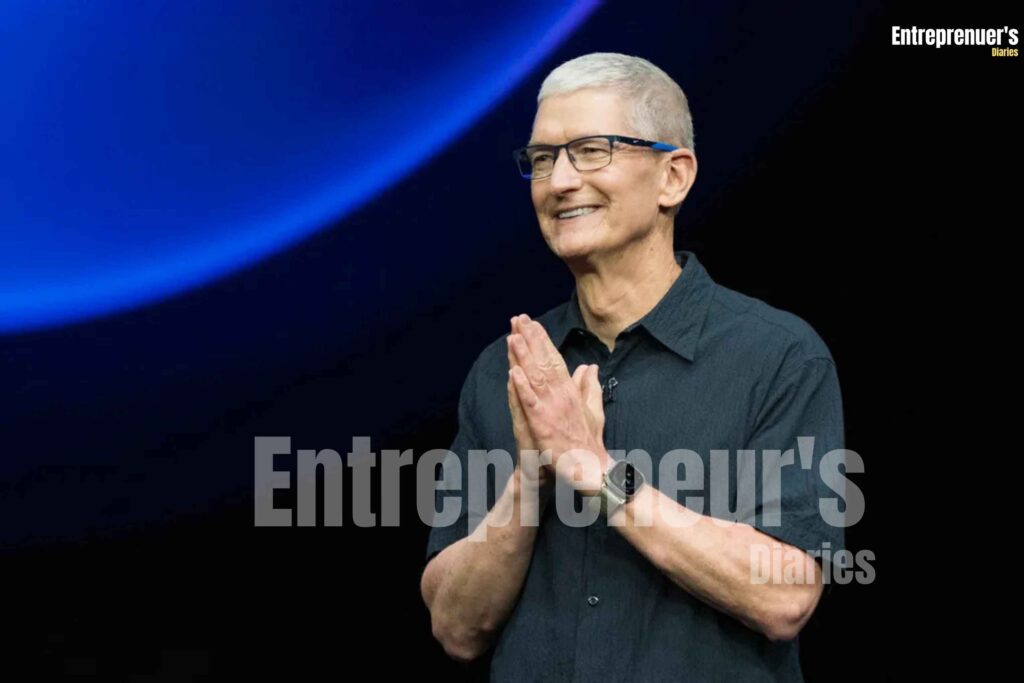
Cook’s attendance at the Beijing summit was less surprising to people who have followed his career, but no less significant for that. The Apple CEO has been making this particular journey for over a decade, and at this point his presence in Beijing reads as institutional rather than personal. He is there because Apple cannot afford not to be represented at that level.
The numbers explain why. That 18 to 20 percent revenue figure from Greater China is not trivial, and the manufacturing dependency runs even deeper than revenue suggests.
Tim Cook built the modern Apple supply chain. He knows better than anyone alive what it would actually cost to unwind it.
The India pivot is real and smart and necessary. It is also, by Cook’s own timelines, a multi-year project. In the meantime, Foxconn is still assembling iPhones in Zhengzhou, and that reality does not change because a few politicians in Washington find it inconvenient.
What has changed is the competitive landscape. Huawei’s comeback, powered by the domestically designed Kirin chipset, has been striking. Its Mate series clawed back meaningful premium market share from Apple in China during 2023 and 2024, according to IDC data. The iPhone 16 performed well globally, but in China specifically, HSBC analysts flagged a more competitive reception than in prior launch cycles. Tim Cook is aware that his brand in China is not bulletproof. The summit gave him a chance to reinforce relationships at a moment when Apple needs them to hold.
His attendance at the Beijing summit is, in that sense, a competitive act as much as a diplomatic one. This is not just about managing a supply chain or maintaining political goodwill. It is about making sure that Apple, in a market where Huawei is ascendant and domestic sentiment increasingly matters, is seen as a committed partner rather than a reluctant outsider counting down until it can leave.
Why the Critics in Washington Are Missing the Point
There is a version of this story that plays well in certain Congressional offices: American CEOs hobnobbing with Beijing while the national security apparatus scrambles to contain Chinese chip development. It is a clean narrative, and it is also, in most material respects, wrong.
Jensen Huang did not hand over any technology in that summit room. Tim Cook did not negotiate around export controls or agree to anything that a Commerce Department lawyer would flag.
What both men did was show up, which is exactly what sophisticated executives do in contested markets. The alternative, boycotting Beijing to demonstrate solidarity with the decoupling crowd, would cost both companies market access, manufacturing relationships, and competitive intelligence that no amount of Washington goodwill would compensate for.
That said, the political pressure is not going anywhere. Congressional scrutiny of US technology companies with China exposure has intensified steadily, and the framing has shifted from scrutiny to outright hostility in some quarters.
Jensen Huang has testified before Congress. Tim Cook has navigated regulatory hearings on multiple continents. Both men know how to manage that pressure, and neither has shown any inclination to let it dictate operational strategy.
What the Beijing summit this week revealed, for anyone paying attention, is that the real negotiation is not between Washington and Beijing. It is between geopolitical ideology and commercial physics.
Markets that large, supply chains that entrenched, and relationships that deep do not respond to political pressure the way a sanctions regime against a smaller economy might. They bend, they adapt, they find workarounds.
And the executives who understand that dynamic, Jensen Huang and Tim Cook among them, tend to run the companies that are still in the room ten years later when everyone else has retreated.
The Larger Signal: Jensen Huang, Tim Cook, and the Decoupling That Never Quite Happened
Washington has been pushing a decoupling narrative for years now. Export controls, investment restrictions, CFIUS reviews, proposed legislation: the architecture of separation has been built brick by brick. And yet Jensen Huang is in Beijing. And Tim Cook is in Beijing. And the world’s most valuable technology companies remain, as they have been for two decades, deeply and structurally embedded in China.
That is not an accident. It is not naivety. It is a considered bet by executives who have looked at the actual costs of disengagement, weighed them against the political costs of engagement, and decided that presence, constrained and legally careful, is still the better hand to play.
For global investors trying to read where US-China technology relations settle over the next five years, that Beijing summit in May 2026 is worth more than a hundred policy papers. Jensen Huang and Tim Cook are not ideologues. They are operators. And when operators of their caliber keep showing up in Beijing despite everything, the market should probably take note.
The chip wars are real. The tariffs are real. The decoupling pressure is real. And still, none of it has emptied the room.
Connect With Us On Social Media [ Facebook | Instagram | Twitter | LinkedIn ] To Get Real-Time Updates On The Market. Entrepreneurs’ Diaries Is Now Available On Telegram. Join Our Telegram Channel To Get Instant Updates.

Isabella is a global business journalist and former McKinsey analyst from Brazil. She brings sharp insights on economic shifts, policies, and founder journeys from around the world.

Tokyo-based CFA translating global markets into clear insights for modern entrepreneurs.