
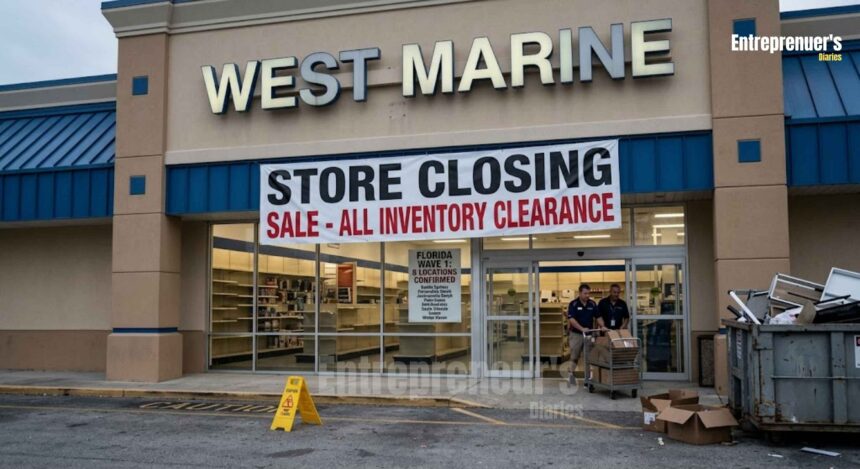
New York, June 15, 2026: The ship has not sunk. But it is being deliberately stripped down, compartment by compartment, under the supervision of a federal bankruptcy court in Delaware. West Marine store closures are now official 59 locations across 23 states confirmed in court filings as the largest boating and marine supplies retailer in the United States works through a Chapter 11 restructuring. West Marine, a company that began as a nylon rope operation out of a garage in Sunnyvale, California, in 1968 and grew into a 240 plus location national chain, is being reshaped by the weight of debt it could no longer carry.
Court documents filed in the U.S. Bankruptcy Court for the District of Delaware reveal that the true number of planned closures may reach 95. The confirmed list is the first wave. The second appears to be a matter of when, not if.
For the retail sector, this is not just another Chapter 11 story. West Marine is the category leader in a niche consumer market that had every reason to thrive after the pandemic era boating boom. The fact that it couldn’t convert that tailwind into a sustainable balance sheet tells a story that investors, operators, and supply chain partners across specialty retail should read very carefully.
THE ORIGIN STORY: FROM GARAGE TO 240 STORES
Randy Repass founded West Coast Ropes in 1968 in Sunnyvale, California, selling nylon rope out of his garage as an extension of his father’s New England Ropes business. He opened the first retail store under that name in 1975 in Palo Alto in the heart of the California sailing community.
In 1977, the company acquired certain assets of Boston based West Products and rebranded as West Marine Products, Inc. The Port Supply wholesale division, now operating as West Marine Pro, launched in 1978. On November 19, 1993, West Marine went public on the Nasdaq under the ticker WMAR.
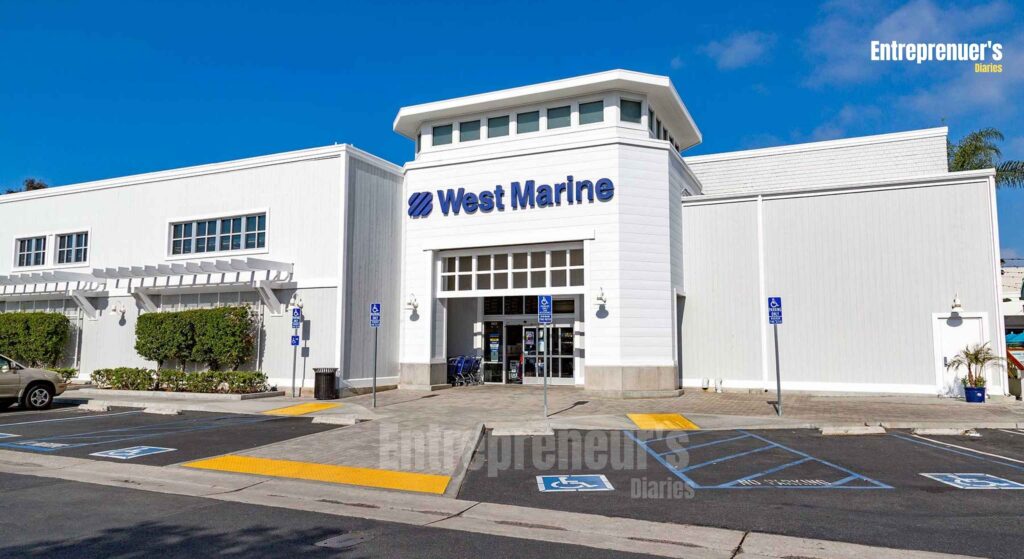
Over the following two decades, the company did what category leaders do. It built network density, absorbed smaller competitors, and became the default destination for anyone outfitting a boat in the United States.
By the time the 2017 leveraged buyout closed Monomoy Capital Partners taking the company private in a $338 million transaction West Marine had established the kind of entrenched market position that usually insulates a retailer from existential risk. The LBO changed the risk calculus entirely.
THE LEVERAGED BUYOUT THAT CHANGED EVERYTHING
In April 2021, L Catterton a consumer focused private equity firm backed by LVMH acquired a controlling interest in West Marine from Monomoy Capital Partners. That transaction layered additional debt onto a balance sheet that was already carrying approximately $800 million from the 2017 LBO.
The debt was not the product of years of operating losses. It was loaded onto West Marine’s books through the mechanics of leveraged finance: the acquiring firm borrows against the target company’s assets, and that debt is serviced from the company’s own operating cash flow.
When the Federal Reserve began raising interest rates sharply from 2022 onward, the cost of servicing that $800 million escalated at precisely the moment consumer spending on discretionary categories began softening. The timing was structural, not incidental.

In 2023, the company underwent not one but two consensual out of court recapitalizations. The March 2023 transaction, supported by 100% of first and second lien lenders and equity sponsor L Catterton, injected approximately $150 million in new capital. The September 2023 transaction, supported by 100% of funded debt holders and L Catterton, injected an additional $125 million.
Across both transactions, roughly $660 million in debt was equitized converted to equity and approximately $275 million in total new capital was injected. Oaktree Capital Management gained joint control of West Marine as part of the 2023 arrangement.
Neither recapitalization was enough. As confirmed in court filings reviewed by Bondoro and reported by Powerboat News, the company continued to face internal and external headwinds that produced underperformance against its business plan, and the macroeconomic factors that triggered the 2023 restructurings persisted through 2025 and into 2026.
THE PANDEMIC MIRAGE: BOOM, OVERBUY, COLLAPSE
To understand West Marine’s current position, you have to understand what 2020 looked like for the marine retail sector. Frank Hugelmeyer, President of the National Marine Manufacturers Association (NMMA), stated publicly that 2020 was an extraordinary year for new powerboat sales, as more Americans took to the water to escape pandemic stress.
For the first time in more than a decade, new first time boat buyers entered the market. That was confirmed data, not projection. The recreational boating market reached sales levels not seen since before the 2008 financial crisis.
West Marine was the primary aftermarket beneficiary of that boom. First time buyers needed equipment, safety gear, navigation tools, maintenance supplies, and accessories. The company stocked accordingly.
It ordered inventory at volumes calibrated to a spending environment that by the time the goods arrived had already shifted. The consumer who bought a boat in 2020 under pandemic conditions was by 2022 dealing with inflation, rising mortgage rates, elevated insurance premiums, and compressed discretionary budgets.
Boat Pass Club, in a February 2026 industry report, summarized the market reality plainly: the story heading into 2026 is not that everyone is buying a boat. It is that everyone is thinking harder. Industry wide retail sales of new powerboat units in 2025 were down roughly 8 to 10 percent on average, as reported by Stretto Research.
Deloitte’s 2026 Retail Industry Global Outlook confirmed the structural nature of the consumer shift, noting that nearly seven in ten retail executives surveyed agree that behaviors such as trading down, shopping value channels, or swapping convenience for savings represent a structural change, not a temporary response to inflation.
West Marine was caught in the intersection of all of it: a post boom inventory overhang, elevated fixed lease costs across a 240 plus store network, a rising rate environment on an $800 million debt load, and a consumer who was no longer in the market for a new marine electronics system.
CEO Paulee Day’s court declaration submitted to the U.S. Bankruptcy Court for the District of Delaware identified the contributing factors in direct language: elevated diesel prices, inflationary conditions, global supply chain disruptions, erratic and increasingly severe weather patterns that undermined a business inherently tied to the number of days customers can use their vessels, and the impact of volatile tariff policy on the cost of imported goods.

On tariffs specifically, Day wrote in her declaration: the imposition of reciprocal tariffs, despite some recent easing, has further increased the cost of imported goods across a broad range of countries. Like many retail businesses, the volatile tariff environment has compressed margins and created a challenging and uncertain operating environment.
MAY 17, 2026: THE FILING
On the morning of May 17, 2026, West Marine, Inc. and seven affiliated entities filed for voluntary Chapter 11 bankruptcy protection in the U.S. Bankruptcy Court for the District of Delaware. The case number is 26 10794. The affiliated entities entering Chapter 11 alongside the parent company include Marine One Parent, Inc., Rising Tide Holdings Inc., Rising Tide Parent Inc., Seascapes, Inc., W Marine Management Company, Inc., and West Marine Products, Inc. CEO Paulee Day signed the petition.
The filing carried approximately $549.2 million in combined secured and unsecured obligations, as reported by Stretto Research. The company entered Chapter 11 without a debtor in possession financing facility an unusual structural choice.
Instead, it is operating on consensual use of cash collateral backed by approximately $21.5 million of petition date cash, with a 13 week operating budget averaging approximately $12.5 million in weekly disbursements, according to court documents reviewed by ElevenFlo. Any consolidated cash balance above $20 million is swept weekly to the Prepetition ABL Agent.
The filing is a pre arranged restructuring, not a free fall bankruptcy. The RSA Restructuring Support Agreement entered into before the filing was backed by 96.2% of term loan lenders, 100% of FILO lenders, and 93.9% of existing equity holders. Portage Point Partners is serving as investment banker.
Legal representation is provided by attorney Michael R. Nestor of Young Conaway Stargatt & Taylor, LLP, alongside Kirkland & Ellis, which was brought in as restructuring counsel in March 2026. FTI Consulting was engaged for operational evaluation beginning in January 2026.
The company’s official statement, confirmed in publications including Boating Industry, Trade Only Today, National Fisherman, and OutdoorHub, carried a direct message from CEO Day: “West Marine has been a trusted partner to the boating community for decades, and we remain deeply committed to that mission.
The actions we are taking today will allow us to optimize our operations and rationalize our footprint, so that we can focus on continuing to serve our customers and community well into the future. I thank our dedicated Crew Members, our loyal customers and partners, and our financial partners for their continued support.”
In separate vendor and customer communications, Day was explicit about the nature of the filing: “Chapter 11 is a legal process that will allow us to restructure by reducing our debt and putting us on a more sustainable financial footing.” The company confirmed that all approximately 200 retail locations across 34 states and Puerto Rico would remain open and operating during the restructuring process.
WEST MARINE STORE CLOSURES: THE 59 LOCATIONS, WHERE THEY ARE AND WHAT THEY MEAN
On June 1, 2026, West Marine filed the first confirmed store closure list with the U.S. Bankruptcy Court for the District of Delaware. The filing identifies 59 locations across 23 states scheduled for closure. Court documents reviewed and first reported by Trade Only Today on June 9, 2026, and independently confirmed by Powerboat News, cover every location name, city, and street address.
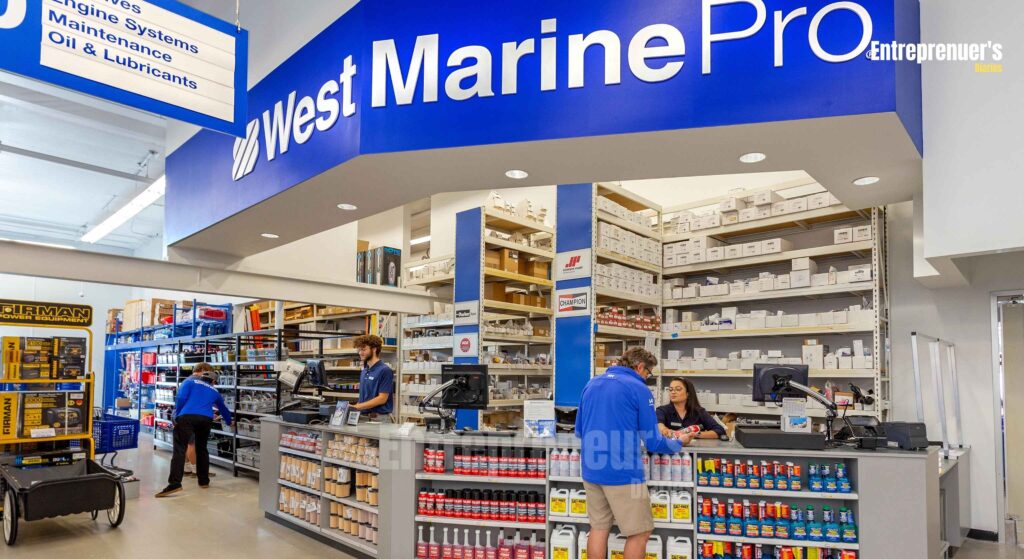
Florida accounts for the largest number of planned closures with eight stores. Michigan follows with six. California and Washington will each lose five locations. South Carolina and Maryland face four closures each. New York will lose three locations.
The full 59 stores, as confirmed in the court filing, are as follows:
ALABAMA (1): Mobile (Dog River) – 5004 Dauphin Island Pkwy
CALIFORNIA (5): Pittsburg (Antioch) – 4645 Century Blvd, Chula Vista – 630 Bay Blvd, Monterey – 2024 Del Monte Ave, Oceanside – 1719 Oceanside Blvd, Redding – 2607 Bechelli Lane
FLORIDA (8): Bonita Springs – 28520 Bonita Crossings Blvd, Fernandina Beach – 474347 E State Road 200, Jacksonville Beach – 14180 Beach Blvd, Palm Coast – 250 Palm Coast Pkwy NE, Port Charlotte – 4265 Tamiami Trail, South Orlando – 7478 S Orange Blossom Trl, Venice – 1860 Tamiami Trail S, Winter Haven – 1107 3rd Street SW
GEORGIA (1): Savannah – 7700 Abercorn St
ILLINOIS (2): Fox Lake – 2 W Grand Ave, Winthrop Harbor – 1707 7th St
LOUISIANA (1): Lafayette – 2668 Johnston St
MAINE (2): Portland – 127 Marginal Way, Southwest Harbor – 11 Apple Lane
MARYLAND (4): Baltimore Harbor – 2700 Lighthouse Point E, Edgewater – 3257 Solomon’s Island Rd, Ocean City – 12638 Ocean Gateway, Rock Hall – 21386 Rock Hall Avenue
MASSACHUSETTS (2): Marblehead – 32 Atlantic Ave, Vineyard Haven – 52 Beach Rd
MICHIGAN (6): Bay City – 4128 Wilder Rd, Grand Haven – 810 Jackson St, Muskegon – 2492 Henry St, Petoskey – 105 W Mitchell St, St. Clair Shores – 25050 Jefferson Ave, Troy – 789 E Big Beaver Rd
MISSOURI (1): Osage Beach – 3872 Osage Beach Pkwy
NEVADA (1): Reno – 2505 Mill St
NEW JERSEY (3): Cape May – 791 Route 109, Eatontown – 178 State Route 35 S, Toms River – 213 Route 37 E
NEW YORK (3): Port Washington – 16 Soundview Marketplace, Irondequoit (Rochester North) – 1850 Ridge Rd E, Watertown – 21214 Pioneer Plaza Dr
NORTH CAROLINA (2): Oriental – 1104 Broad St Ext, Raleigh – 3027 Capital Blvd
OHIO (3): Cleveland – 1577 Saint Clair Ave NE, North Olmsted – 24781 Lorain Rd, Sandusky – 207 E Water St
OREGON (1): Tigard – 15230 SW Sequoia Pkwy
PENNSYLVANIA (1): Bensalem – 2126 Street Rd
SOUTH CAROLINA (4): Anderson – 3501-2 Clemson Blvd, Murrells Inlet – 12078 Highway 17 Bypass, North Myrtle Beach – 1288 Highway 17 N, Port Royal – 1347 Ribaut Road
TENNESSEE (1): Knoxville – 7812 Kingston Pike
VIRGINIA (1): Glen Allen – 10819 W Broad St
WASHINGTON (5): Bellingham – 3560 Meridian St, Bremerton – 5971 State Hwy 303 NE, Everett – 1716 West Marine View Dr, Port Townsend – 2428 Washington St, Spokane – 5306 E Sprague Ave
WISCONSIN (1): Greenfield (Milwaukee) – 4141 S 76th St
The geographic pattern is not incidental. The 23 states affected span almost every major recreational boating market in the country from the Great Lakes region through the Atlantic Seaboard to the Pacific Northwest and the Gulf Coast.
Maine represents the starkest single case. Both West Marine locations in the state Portland and Southwest Harbor are on the closure list, as reported by The Maine Wire. The state will be left without a single West Marine outlet. For coastal communities that rely on a large format marine supply retailer within practical driving distance, that is a tangible infrastructure gap with no obvious commercial replacement.
The decision to close stores in Florida, Michigan, California, and Washington the country’s highest density recreational boating markets is not the footprint rationalization of a company pruning its weakest branches. These were functioning stores serving active boating populations. Their inclusion on the closure list signals something more structural: lease economics at current revenue levels had become untenable across a wide swath of the network, not just at the margins.
Interested parties had until June 8, 2026 to file objections to the proposed closures. A hearing on the first day motions was scheduled for June 11, 2026. The court approved the store closing motion on June 9, as reported by Powerboat News.
Critically, the June 1 court notice states that West Marine continues to analyze its store portfolio and may file additional closing lists. The 59 stores are the first confirmed wave, not the full extent of the reduction. The consulting agreement with Hilco Merchant Resources the liquidation firm engaged to run closing sales was written assuming 95 stores closing in total, with merchandise at cost of approximately $70 million and a sale term running through September 27, 2026, as confirmed by Powerboat News from the court filing.
The gap between 59 confirmed closures and 95 assumed in the Hilco contract is 36 stores and that gap strongly suggests a second closure list is forthcoming before the restructuring concludes. The combined plan confirmation and sale hearing is scheduled for July 30, 2026. West Marine’s target restructuring effective date is August 20, 2026.
THE HILCO SIGNAL: WHY 95 IS THE NUMBER TO WATCH
The confirmed number is 59. The number embedded in the liquidation infrastructure is 95. That gap matters The consulting agreement between West Marine and Hilco the liquidation and retail asset firm engaged to manage the store closing sales was written on the assumption of 95 total store closures, with merchandise at cost of approximately $70 million and a sale term running through September 27, 2026, as confirmed in court documents reviewed by Powerboat News.
On June 1, West Marine’s court notice stated explicitly that the company continues to analyze its store portfolio and may file additional closing lists. The 59 stores represent the first confirmed wave, not the ceiling of the reduction. The Hilco agreement, drafted before the closure list was finalized, was designed for a 95 store program. Closing the gap between those two numbers requires a second list.
The combined confirmation and sale hearing is scheduled for July 30, 2026. The company’s target restructuring effective date is August 20, 2026. The 95 day clock that began on May 17 is the structural forcing mechanism behind every decision between now and that date.
THE CREDITOR LANDSCAPE: WHO IS OWED WHAT
The financial exposure revealed in court filings tells the story of the marine supply ecosystem’s dependence on a single dominant retailer. Garmin International is the largest unsecured trade creditor in the case, owed approximately $8.57 million, as confirmed in court filings reviewed by Boating Industry, Trade Only Today, and Powersports Business.
Virtual Supply Inc., a distribution logistics company, follows with $5.8 million owed. Sierra International Inc., a components and accessories manufacturer, has a $4.7 million balance outstanding. East Penn Manufacturing Co., a tackle producer, is owed $4.43 million.
The broader creditor list, comprising 30 named unsecured trade creditors, includes Lippert Components Manufacturing, Lumitec LLC, 3M, AkzoNobel, Raymarine, Xylem, and Navico. West Marine confirmed that all vendors and suppliers will be paid in full for goods and services provided after the May 17, 2026 filing date. Pre petition amounts everything owed before the filing are subject to the standard bankruptcy claims process.
The treatment of general unsecured creditors is the harshest element of the plan structure. As reported by ElevenFlo and Powerboat News, general unsecured creditors are subject to a death trap provision: if Class 6 creditors vote to accept the plan, they share a distribution pool of $250,000 pro rata. If they vote to reject, they receive nothing under either the recapitalization or sale path. West Marine reportedly listed more than 100,000 creditors in its filing.
THE BONUS CONTROVERSY: A COURTROOM IN FOCUS
On June 10, 2026, a mandatory Chapter 11 restructuring hearing produced the sharpest public moment of the entire case. Bankruptcy trustee Linda J. Casey pressed West Marine over a $1.2 million bonus paid to former CEO Chuck Rubin. Her question, on the official court record, was direct: “The former chief executive officer received a $1.2 million bonus. Can you explain what that bonus was?”
The hearing also surfaced the timeline of CEO Day’s retention payment. A retention bonus was paid to Day on May 1, 2026 16 days before the bankruptcy filing. Interim Vice President Amir Agam testified that the payment was made “in order to make sure that they retain Ms. Day through the critical part of this restructuring.”
That 16 day gap between the bonus payment and the Chapter 11 filing is the precise kind of timing that creditors scrutinize in bankruptcy proceedings. It places the payment inside the preference lookback window and raises the question of whether pre petition cash allocations to senior leadership should be examined in the context of hundreds of thousands of creditors who have not yet recovered their outstanding balances.
The tension was given a human face by David Kelton, owner of American Blue Claw LLC, who testified that West Marine had placed a $100,000 order with his small company on April 7, 2025, and still owed him $12,000. Kelton told the court directly: “I am a small company that deals with West Marine,” and challenged the court over whether executives willing to accept million dollar bonuses should be challenged to return some portion of those funds.
THE INDUSTRY VERDICT: VENDORS RESPOND
The vendor community’s response to the Chapter 11 filing has been pointed and, in at least one high profile case, notably public. Casey Shedd, President of AFTCO the American Fishing Tackle Company published a statement on LinkedIn that circulated widely in marine and outdoor industry circles, as reported by Shop Eat Surf Outdoor. Shedd noted that West Marine sent a vendor wide communication informing suppliers that unpaid pre petition invoices would enter the bankruptcy process while simultaneously asking vendors to continue shipping new product.
Shedd wrote: “It’s both legal and a normal part of Chapter 11. It’s also exactly why I don’t trust the PE playbook.” He described what he characterized as a consistent pattern in private equity owned retail: “PE buys the company, piles on debt and then files Chapter 11. The group eventually leaves in one form or another, often richer off their management fees. Employees lose jobs, vendors eat unpaid invoices, and the industry loses another piece of the ecosystem.”
Shedd closed with what may prove to be the most commercially significant observation of the entire post filing period: “The shift back to small retail has already started.” That is not a sentimental claim. It is a market observation from the president of a major industry supplier, made in the context of watching the dominant national distributor of his products go through its second restructuring attempt in three years.
For small and mid size vendors across the marine supply chain, the lesson is structural. When a single retailer accounts for a disproportionate share of your distribution, the concentration risk is not theoretical. It is the claim number you file in the U.S. Bankruptcy Court for the District of Delaware.
THE BOTTOM LINE: WHAT WEST MARINE’S COLLAPSE ACTUALLY MEANS AND WHAT MOST COVERAGE WILL MISS
Here is the reading of this story that most retail business coverage will not deliver, and the one that has staying power. West Marine did not fail because it was a bad retailer. It failed because it was a good retailer bought by leveraged capital, loaded with $800 million in debt at a structurally aggressive cost of capital, and then forced to service that debt through a pandemic boom and subsequent bust in one of the most weather dependent, discretionary, and interest rate sensitive consumer categories in American retail.
When the Federal Reserve raised rates 11 times between March 2022 and July 2023, every dollar of West Marine’s variable rate debt got more expensive at the exact moment that boating customers started thinking harder about their next big purchase.
The two 2023 recapitalizations two of them, in the same calendar year equitized $660 million and injected $275 million in fresh capital. That is not a company that failed to try. That is a company that tried twice with significant resources and still could not generate the operating margin needed to service a leveraged balance sheet in a high rate environment.
That is a structural indictment of the LBO thesis applied to seasonal, weather dependent, discretionary specialty retail. Not all categories can absorb the risk model. West Marine is now the clearest example of where that model breaks.
For investors, the data points that matter most going forward are these. The Hilco agreement structures a 95 store closure program. Sixty six of those have not yet been publicly confirmed. That second list, when it comes, will tell you the true shape of the reorganized company.
The combined confirmation and sale hearing on July 30 will determine whether West Marine exits as a recapitalized going concern with its term loan debt equitized and a new capital structure or whether a sale to a third party delivers better value for creditors. A bid deadline of approximately June 26 means that answer may arrive sooner than the hearing date suggests.
For suppliers and vendors across the marine and outdoor recreation sector, the commercial lesson is the one Casey Shedd articulated publicly on June 12: the shift back to small retail has already started. When a single national chain represents the dominant distribution channel for your category and then files for bankruptcy twice in three years, the concentration risk your business has been carrying becomes impossible to ignore.
The companies that have already been building diversified distribution direct to consumer, regional retailers, specialty dealers, marina based sales are in a structurally stronger position than those that relied on West Marine as their primary national partner.
For the approximately 5,000 employees across stores, distribution, and corporate functions this is the real human consequence of a financial architecture that was never calibrated to protect labor when the model stressed. The retail sector, per data cited by Metaintro, accounted for nearly 93,000 layoffs in 2025, a 123% surge over the prior year. West Marine’s 5,000 person workforce did not create the LBO. They are bearing a significant share of its consequence.
And for anyone watching the broader retail landscape, the macro signal is important. U.S. retailers are on pace to close approximately 7,900 stores in 2026. Macy’s is on track to close roughly 150 namesake stores by 2028. Saks Fifth Avenue is in its own Chapter 11 restructuring. Walgreens has been cutting jobs and closing locations for two consecutive years.
The common thread is not that consumers stopped buying. It is that the fixed cost model of large format specialty retail, financed by leveraged capital and built for a pre 2022 rate environment, is being repriced by reality.
West Marine’s 59 confirmed store closures and potentially 95 before this is finished are not a marine industry story. They are a business model story. The company that began by selling rope from a garage in California survived for 58 years, built the dominant national brand in its category, and was ultimately sunk not by the ocean but by the balance sheet.
FREQUENTLY ASKED QUESTIONS
Which marine retail stores are closing locations in the US?
West Marine, the largest boating and marine supplies retailer in the United States, is closing 59 stores across 23 states as part of its Chapter 11 bankruptcy restructuring filed on May 17, 2026, in the U.S. Bankruptcy Court for the District of Delaware. The affected states include Alabama, California, Florida, Georgia, Illinois, Louisiana, Maine, Maryland, Massachusetts, Michigan, Missouri, Nevada, New Jersey, New York, North Carolina, Ohio, Oregon, Pennsylvania, South Carolina, Tennessee, Virginia, Washington, and Wisconsin.
The court confirmed closure list was filed on June 1, 2026, and first reported by Trade Only Today. West Marine continues to operate approximately 200 remaining locations across 34 states and Puerto Rico during the restructuring process.
What are the implications of major marine retailer shutdowns?
The closure of 59 West Marine locations carries consequences that extend well beyond the company’s balance sheet. For recreational boaters, it removes convenient access to safety equipment, navigation gear, engine parts, and marine electronics in dozens of coastal and lakeside communities. For the broader marine industry, it disrupts a distribution network that independent manufacturers and vendors depended on for shelf presence and volume sales. States like Maine, which will lose both of its West Marine outlets, face a complete absence of large format marine retail within their borders.
Industry observers, including Casey Shedd, president of AFTCO, have noted publicly that the pattern of private equity acquisition, debt loading, and bankruptcy restructuring leaves employees without jobs, vendors with unpaid invoices, and local boating communities without critical retail infrastructure. The Hilco consulting agreement written for 95 total closures suggests a second wave of shutdowns is likely before West Marine completes its restructuring in August 2026.
Are there alternatives to marine stores that are shutting down?
Yes. Boaters in markets losing West Marine access have several practical alternatives. Independent marine chandleries and local boat supply shops often carry comparable inventory for hardware, safety gear, and maintenance supplies, and many operate with deeper product expertise than large format chains. Bass Pro Shops and Cabela’s carry a broad range of marine electronics, trolling motors, and fishing related boating equipment.
For engine parts and mechanical components, authorized dealer networks for brands such as Mercury Marine, Yamaha, and Evinrude maintain service and parts availability independent of West Marine’s retail footprint. Marina based ship stores, often attached directly to boatyards and marinas, stock essential safety and maintenance items and are frequently the closest option for coastal and waterway communities.
Where can I find discounted boating supplies after store closures?
West Marine’s 59 closing locations are conducting liquidation sales managed by Hilco Merchant Resources under a court approved consulting agreement. Those sales are expected to run through late September 2026, offering discounted inventory across closing store locations while supplies last. Boaters can also find competitive pricing through established online marine retailers year round.
Additionally, end of season clearance events at marina adjacent retailers, manufacturer direct promotions, and certified pre owned marine equipment dealers provide ongoing opportunities for discounted gear outside of liquidation windows.
How to find nearby marine stores after recent closures?
The most reliable method is to use West Marine’s own store locator on its official website, westmarine.com, which reflects current open locations during the restructuring. Approximately 200 West Marine stores remain operational across 34 states and Puerto Rico as of the bankruptcy filing date. Beyond West Marine, the National Marine Manufacturers Association maintains industry resources that can help boaters identify regional dealers and suppliers.
Searching for marina based ship stores, local marine chandleries, and authorized brand dealer networks in your area will surface alternatives that may not appear in broad retail directories but serve local boating communities reliably.
Are there online retailers for marine electronics?
Yes. Several well established online retailers serve the marine electronics market with broad inventory and technical support. West Marine itself operates an e-commerce platform at westmarine.com, which continues to function during the Chapter 11 restructuring independently of the physical store closures. Defender, based in Connecticut, is one of the longest running online marine outfitters in the United States, carrying navigation electronics, communications equipment, and safety gear.
Wholesale Marine and Go2Marine are additional online options with competitive pricing on electronics from major brands including Garmin, Humminbird, Lowrance, Standard Horizon, and Simrad. For specialized or professional grade marine electronics, authorized dealer networks for individual brands often provide direct purchasing options alongside installation and warranty support.
Connect With Us On Social Media [ Facebook | Instagram | Twitter | LinkedIn ] To Get Real-Time Updates On The Market. Entrepreneurs’ Diaries Is Now Available On Telegram. Join Our Telegram Channel To Get Instant Updates.

Isabella is a global business journalist and former McKinsey analyst from Brazil. She brings sharp insights on economic shifts, policies, and founder journeys from around the world.

Tokyo-based CFA translating global markets into clear insights for modern entrepreneurs.