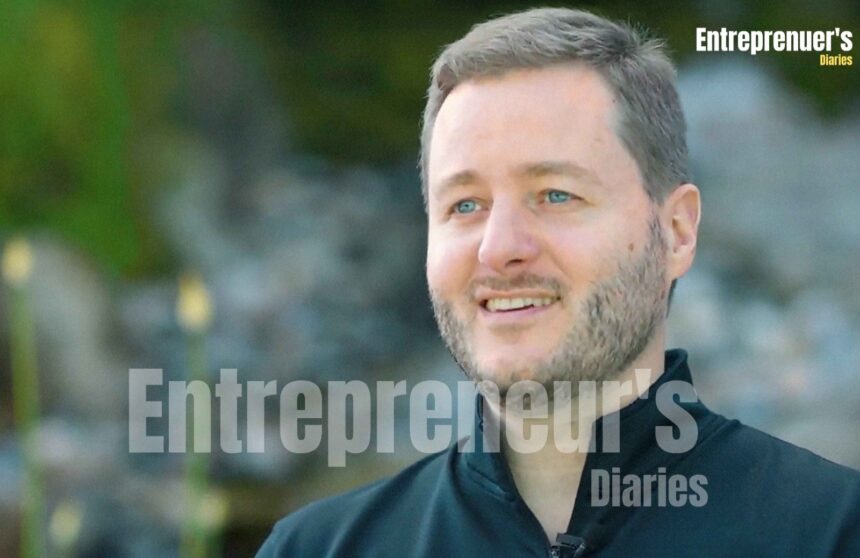
San Jose, May 4: Nicolas Sauvage has eight words engraved on his iPad. “Sheila first. Scaling Impact Scalers. Patience and Impatience.” The first three are for his wife. The rest are the operating philosophy behind one of the most quietly consequential AI investment strategies running in venture capital today.
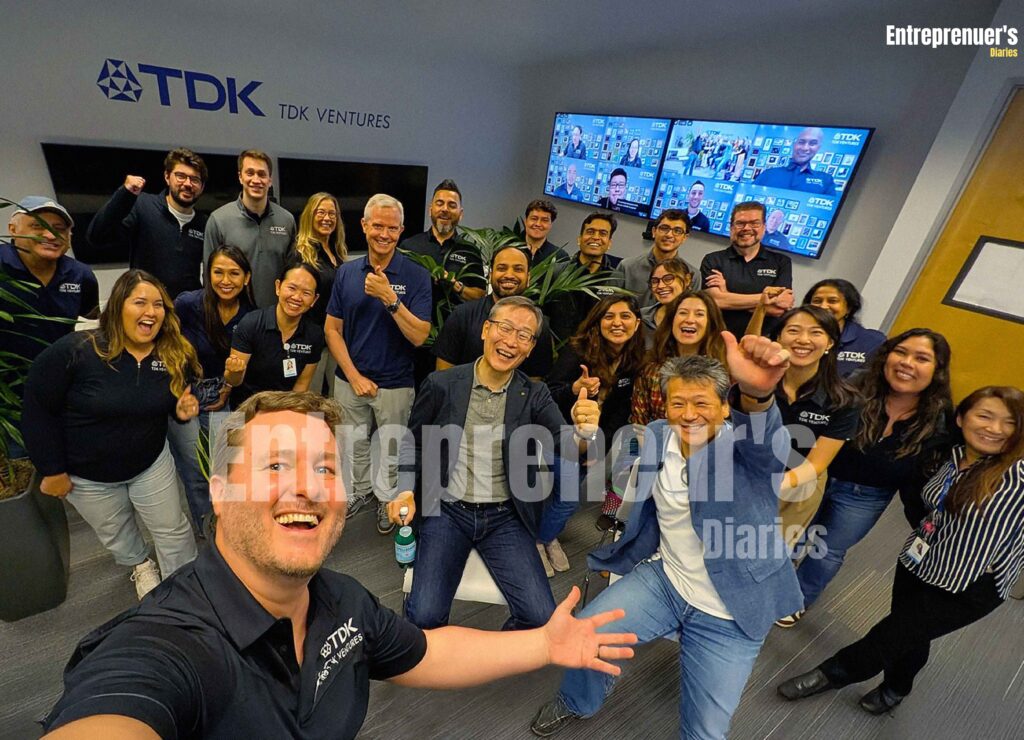
Sauvage is the founder and president of TDK Ventures, the corporate venture arm of Japan’s TDK Corporation. Since 2019, while the broader market cycled through blockchain, metaverse hype, and the generative AI gold rush, the Nicolas Sauvage AI investment approach stayed fixed on sensors, semiconductors, energy storage, and the physical hardware that makes artificial intelligence function in the real world rather than on a demo screen.
Fifty companies funded. Three unicorns: Groq, Ascend Elements, and Silicon Box. $500 million under management across four funds, the latest of which, Fund 3, closed in April 2025 at $150 million.
By most measures, this should be a well known story. It is not, partly because Sauvage does not chase media coverage the way consumer AI founders do, and partly because the things he bets on are genuinely hard to explain at a dinner party. Optical interconnects. In memory compute architecture. Edge AI co processors. Closed loop battery recycling.
That obscurity, of course, is entirely the point.
Why Nobody Wants to Fund the Boring Parts of AI
Ask any serious engineer where the real constraints in AI live, and they will not say the model. They will say the interconnect. The power draw. The thermal ceiling. The latency gap between sensors and inference. These are not software problems. They are physics problems, and physics problems require capital patience and technical fluency that most venture funds, measured quarterly and answerable to financial LPs, are structurally ill equipped to provide.
According to the NVCA, TDK Ventures explicitly targets areas “typically underrepresented in venture capital portfolios,” including materials science, energy, and hardware infrastructure. Those are the companies that kept getting passed over because the exit timeline was too long, the technology too hard, and the story too complicated for a pitch deck slide.
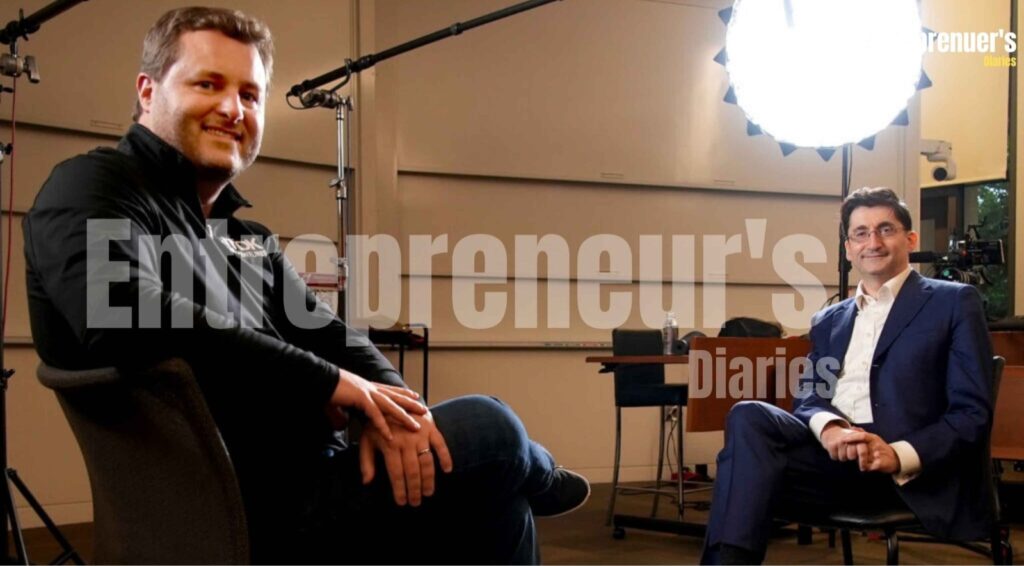
The Nicolas Sauvage AI investment edge over generalist funds is structural. TDK Corporation manufactures the actual components that go inside these systems: passive components, sensors, power supplies, solid state batteries. The company posted $14.4 billion in total sales in fiscal 2025 and employs roughly 105,000 people. When Sauvage sizes an AI investment like Groq, he is not estimating hardware requirements from the outside. He has engineers who build the parts. Groq alone integrates more than 51 TDK components, per TDK Ventures’ own disclosures.
That is not a coincidence. It is a selection filter no generalist VC can replicate.
The 3 Bets That Proved the Thesis
Groq redesigned computing architecture from the ground up, building a Language Processing Unit purpose made for low latency AI inference rather than repurposing a graphics chip. In 2020, most investors could not underwrite a company competing adjacent to NVIDIA. This particular AI investment said the inference bottleneck would define commercial AI. It did. The edge AI market now grows at 35 percent CAGR, per TDK Ventures’ published rationale.
Ascend Elements built a closed loop battery recycling process that recovers high value materials without reprocessing raw inputs. Unglamorous by any definition. But as AI hardware multiplies across data centers, electric vehicles, and edge devices, the battery supply chain becomes load bearing infrastructure. Ascend Elements is a unicorn now. The thesis held.
Silicon Box works in chiplet based semiconductor packaging, a field that sounds niche until you realize that every major chip company on earth, Intel, AMD, NVIDIA, is moving toward modular chiplet architectures. The physical limits of monolithic chip design are forcing that shift. Silicon Box builds the packaging layer that makes those architectures manufacturable at scale.
Three bets on overlooked physical infrastructure. Three unicorns.
The 2025 Deals Nobody Covered
In November 2025, TDK Ventures announced an AI investment in EdgeCortix, a fabless semiconductor company building energy efficient AI co processors for edge deployments. Its SAKURA II chip has secured design wins across multiple industries, and the next generation SAKURA X chiplet platform is in development. Total capital raised exceeded $110 million, including $49 million in non dilutive funding from Japan’s METI.
“Their unique hardware software co design technology offers an unparalleled combination of performance and power efficiency, essential for the next generation of AI,” Sauvage said at announcement, as reported by TDK Ventures. The investment was not covered by most major tech outlets. The strategic logic is not complicated: for AI to move beyond the data center and into factories, hospitals, and vehicles, it needs hardware that does not require a chilled server room and a six figure electricity bill. EdgeCortix builds that hardware.
A month later came Mixx Technologies, a $33 million Series A for a company building optical interconnects designed to eliminate data bottlenecks inside AI compute clusters. As models grow larger and require more parallel compute, the speed at which processors communicate becomes the binding constraint. Mixx is building the solution to that bandwidth ceiling. “Its systems first design bridges the physical and digital worlds, substantially flattening scale up networking to enable the next generation of highly parallelized, low latency AI cluster,” Sauvage said, per TDK Ventures’ announcement.
Neither deal made the front page. Both are exactly what a disciplined Nicolas Sauvage AI investment looks like on paper.
The Man Behind the Thesis
Sauvage trained as an engineer at ISEN microelectronics school in France before passing through Stanford GSB, INSEAD, and London Business School. Before TDK Ventures he worked at NXP Semiconductors and InvenSense, managing ecosystem relationships with Google and Qualcomm. He did not come from venture. He came from the supply chain, from the component world, from the unglamorous middle of the hardware stack where nobody writes profile pieces but everyone’s products depend on what you build.
That background shapes every AI investment decision made at TDK Ventures. It is why Sauvage has appeared on the Global Corporate Venturing Powerlist for six consecutive years, ranked seventeenth among the top 150 corporate venture heads globally. He is the only corporate VC to receive the Jeff Timmons Award from the Kauffman Fellows program, and one of only two corporate investors ever admitted to that network. He contributes to Harvard Business Review, INSEAD, and London Business School, and hosts the Corporate Venturing Insider podcast, a practitioner to practitioner series on what it actually takes to do corporate venture capital well.
The portfolio’s exit record reinforces the thesis. TDK Ventures has logged three acquisitions, SLD Laser acquired for its laser light source technology, Wheels absorbed into the micromobility market, and Origin acquired by Stratasys for $100 million in the 3D printing space. GenCell took the IPO route, listing on the Tel Aviv Stock Exchange. None of these were software companies. All of them were built on physical technology with durable moats.
His philosophy toward founders is equally stripped of pretension. He calls the entrepreneurs he backs “Impact Scalers,” people solving real problems through technology that compounds. The ideal AI investment, in his framing, does not chase what is fashionable. It backs what is foundational.
Those eight words on the iPad include “Patience and Impatience” as a deliberate pairing. In a conversation with Linknovate, he explained it directly: “Sometimes you need to be patient, with a sense of purpose, and other times you need to be impatient, with a sense of urgency.” Hardware investing requires both. A solid state battery company cannot be rushed through materials science. But a market window for edge AI chips does not wait.
What Comes Next
In 2025, AI companies captured 48 percent of all global venture funding, roughly $226 billion of the $469 billion deployed worldwide, per Crunchbase. Almost none of that flowed to hardware and physical infrastructure. That imbalance is the market condition the Nicolas Sauvage AI investment portfolio has been positioned against since day one.
There is also a structural reason corporate venture capital is better suited than independent VC for this kind of work. Independent funds answer to financial LPs on a ten year cycle and rarely have the domain expertise or supply chain access to add value beyond capital. TDK Ventures can open manufacturing relationships, validate components in TDK’s own production lines, and provide what Sauvage calls “TDK Goodness,” a shorthand for the industrial network that turns a promising startup into a bankable supplier. That advantage compounds over time in a way pure financial returns do not.
Fund 3, launched in April 2025 at $150 million, focuses on energy transition, electrification, AI infrastructure, and advanced manufacturing, while expanding into photonics and bio manufacturing as new frontiers. The common thread is matter, energy, and the hardware required to make intelligence work in the physical world.
The energy constraint Sauvage flagged years ago is now an operational crisis for hyperscalers. Microsoft, Amazon, and Google collectively poured over $200 billion into data center infrastructure in 2024, per Reuters. Power efficient AI compute, the exact category Groq, EdgeCortix, and Sagence AI inhabit, is moving from niche to necessary at speed.
Six years of patient, unglamorous AI investment work is starting to look less like contrarianism and more like reading the physics correctly while everyone else read the hype.
The eight words on the iPad are holding up just fine.
Connect With Us On Social Media [ Facebook | Instagram | Twitter | LinkedIn ] To Get Real-Time Updates On The Market. Entrepreneurs’ Diaries Is Now Available On Telegram. Join Our Telegram Channel To Get Instant Updates.

Isabella is a global business journalist and former McKinsey analyst from Brazil. She brings sharp insights on economic shifts, policies, and founder journeys from around the world.

Luca is a tech ethicist from Italy exploring disruptive innovation through a human lens—from AI to biotechnologies to decentralization.