

May 14, 2026: Microsoft Spent $100 Billion on OpenAI. Now It Is Shopping for a Way Out.
Microsoft has spent more than $100 billion on its OpenAI relationship. That number came out in court testimony just this week, and it should make anyone pause for a second. One hundred billion dollars. Not just the funding rounds. The infrastructure, the hosting, the whole stack of commitments made over seven years of what was, at least publicly, one of the most celebrated partnerships in tech history.
And now, per five sources who spoke to Reuters, Microsoft is quietly shopping for AI startups. The stated goal, according to three of those sources, is to build a cutting-edge AI model of its own by next year. The less stated but fairly obvious goal is to have somewhere to go if the OpenAI relationship deteriorates further.
Whether you call that prudent planning or a quiet breakup depends on how much you believe the press releases both companies keep issuing about their continued friendship.
The Cursor Episode Nobody Talked About Until Now
The most revealing detail in this entire story is not who Microsoft is currently talking to. It is who they tried to acquire and walked away from.
This spring, Microsoft seriously explored buying Cursor, the AI coding assistant that went from nothing to roughly $2 billion in annualized revenue in about three years. That is a remarkable number for any software product, let alone one that has only existed for a handful of years. Microsoft clearly noticed.
But the deal fell apart before it got anywhere near an announcement. The internal concern, according to sources, was regulatory. Microsoft already owns GitHub Copilot. Acquiring Cursor on top of that would have essentially handed regulators a gift-wrapped case for monopolistic behavior in AI-assisted code generation.
So Microsoft walked away. And within a short window of that retreat, SpaceX swept in and announced a $60 billion deal with Cursor. Sixty billion dollars for a coding tool. Whatever your reaction to that number, the fact that Elon Musk moved that fast on an asset Microsoft just dropped suggests that everyone in this space is watching the same board and moving quickly.
There is something almost comedic about Microsoft losing a deal to SpaceX, of all companies. A rocket company is now a significant player in enterprise software. This is the AI market in 2026.
Who Is Inception, and Why Does It Matter
The deal currently on the table involves a startup called Inception, founded in mid-2024 by a team out of Stanford. Microsoft’s venture fund M12 already participated in Inception’s $50 million seed round late last year, so this is not a cold introduction. They know each other.
What makes Inception interesting, and genuinely different from most of the startups clamoring for attention right now, is the technical approach. Standard large language models generate text one token at a time, like typing one letter after another. Inception’s models use a technique called diffusion to generate and refine multiple tokens simultaneously. Diffusion is better known as the method behind image and video generation tools, but Inception has adapted it for text.
The practical result is that their models can be significantly faster than traditional LLMs. Whether faster automatically means better is a separate question, and one worth sitting with. Speed matters enormously at scale. But accuracy and reasoning depth are harder to shortcut.
Still, Inception is reportedly asking for over $1 billion. They hired a bank to negotiate the deal, which tells you they are not desperate. SpaceX has apparently also made inquiries. When multiple serious buyers are circling, asking price goes up. That is just how these things work.
Microsoft has not confirmed anything. Inception is not commenting.
What the Contract History Actually Reveals
The OpenAI-Microsoft partnership has been quietly renegotiated multiple times, and the pattern of those renegotiations tells you quite a bit about how the power dynamic has shifted.
When the original deal was struck in 2019, Microsoft invested $1 billion into what was then a relatively obscure research lab. The arrangement gave Microsoft exclusive access to OpenAI’s technology and gave OpenAI guaranteed computing resources. Both sides got what they needed at the time.
Then ChatGPT launched in late 2022 and rewrote what OpenAI was worth. Suddenly the research lab was one of the most commercially significant companies on earth, running on Microsoft’s servers, with Microsoft taking a meaningful share of revenue. For a period, that looked like a masterstroke for Satya Nadella.
But OpenAI’s needs kept growing and, according to sources, eventually outstripped what Microsoft could supply. Meanwhile, Microsoft was contractually prohibited from building a foundation model that could compete with OpenAI’s own offerings. That is a strange restriction to operate under when you are pouring billions into data centers and have your own AI research staff.
The contract got amended. In late 2025, Microsoft was finally permitted to pursue artificial general intelligence, the still-theoretical endpoint of the whole AI research project. And then in late April this year, OpenAI was granted the freedom to build products with Amazon and other Microsoft rivals.
That last point deserves a moment. OpenAI can now work with Amazon. Microsoft spent over $100 billion making OpenAI what it is. OpenAI can now take what it learned from that partnership and build for Microsoft’s biggest cloud competitor.
Call it what you want. Most people in the industry would call it the formal beginning of a separation.
The Market Microsoft Is Trying to Navigate
Here is the thing that does not get said enough in coverage of these deals: Microsoft is competing in a market where the talent it needs costs incomprehensible amounts of money.
Top AI researchers command packages that could rival professional athletes. Startups with interesting architectures get billion-dollar valuations before they have shipped a meaningful product to real users. SpaceX, of all things, is bidding on coding tools. The normal logic of corporate development, where a big company identifies an acquisition target, runs a process, and closes at a sensible price, does not quite apply anymore.
This is why the Cursor story matters so much. Microsoft identified the right asset, apparently ran the process, then got blocked by its own regulatory exposure from a previous strategic investment. By the time the lawyers finished deliberating, SpaceX had moved. That kind of situation will keep happening as long as the market stays this frenzied.
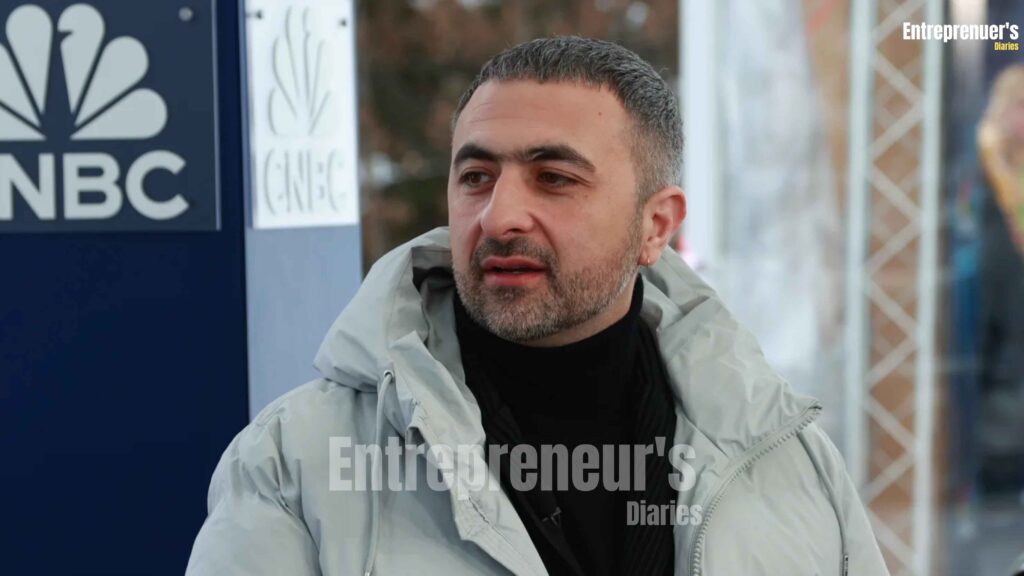
Mustafa Suleyman, who came over from Google DeepMind to lead Microsoft’s AI division, is the architect of the current strategy. He has not said publicly which startups are in the pipeline, or how Microsoft is thinking about the build versus buy question at the model layer. But the direction is clear enough. Suleyman has consistently pushed toward Microsoft having its own frontier model capability, not just access to someone else’s.
That goal, building a genuinely competitive foundation model, is a tall order. The most advanced labs are currently working with models of around 10 trillion parameters. Three years ago, the frontier was roughly 1 trillion. Catching up to that requires talent, compute, and time that cannot simply be purchased overnight, even with Microsoft’s resources.
What This Means for the AI Startup Ecosystem
There is a version of this story where Microsoft’s shopping spree is actually good news for founders in the AI infrastructure space. More buyers create competition. Competition drives up prices. Valuations that might have seemed ambitious a year ago are now getting validated in real negotiations.
The more complicated version is that acquisitions of this kind tend to consolidate capability into a handful of companies that already have enormous distribution advantages. If Microsoft acquires the next interesting model architecture, that technology does not stay independent. It becomes part of Azure, part of Copilot, part of the Microsoft enterprise stack that hundreds of millions of users touch without necessarily knowing what is underneath.
That is not a criticism. That is just how large-scale technology absorption works. The question for founders is whether they want the resources and distribution that come with being inside Microsoft, or whether they would rather stay independent and bet on the open market.
Given that Inception is asking over $1 billion for a startup founded less than two years ago, at least some founders have a clear answer to that question.
The $100 Billion Question
There is a line from the court testimony this week that keeps coming back. Microsoft has spent more than $100 billion on its OpenAI investment and the related infrastructure. That is an extraordinary number to attach to a partnership that both companies are now quietly distancing themselves from.
None of that money is being written off. The Azure infrastructure built to run OpenAI’s models serves thousands of other customers. The Copilot products embedded in Microsoft 365 are running and generating real revenue. The commercial returns from the partnership are real, even if the relationship is cooling.
But there is something quietly unsettling about a $100 billion bet whose primary beneficiary is now negotiating partnerships with your biggest competitors. That is not a collapse. It is not even a crisis. It is just the normal, expensive, slightly ungainly reality of making enormous strategic bets in a field that moves faster than any legal agreement can anticipate.
Microsoft is adapting. The startup deals being explored right now are the clearest signal of what that adaptation looks like in practice. Whether Inception closes, whether something else surfaces, whether a deal that has not yet been reported is already further along than any of this, none of that is knowable from the outside.
What is knowable is that the company that once defined its AI future through OpenAI is now, very deliberately, building a future that does not require it.
Why did Microsoft walk away from acquiring Cursor?
Microsoft pulled back from acquiring Cursor because of concerns that regulators would block the deal. Owning both GitHub Copilot and Cursor would have concentrated too much of the AI coding market under one roof, and Microsoft decided that was a fight not worth having.
What is Inception and what makes its technology different?
Inception is a Stanford-founded startup launched in 2024 that builds large language models using a diffusion-based approach, the same technique used in image generation. Rather than producing one word at a time, the model generates and refines multiple outputs simultaneously, which can significantly improve speed.
How much has Microsoft actually spent on OpenAI in total?
According to court testimony from Microsoft’s own corporate development head, the company has spent over $100 billion when accounting for both the funding commitments and the cost of building and hosting the underlying infrastructure. Of the promised $13 billion in direct investment, $11.8 billion has already been paid.
Is the Microsoft-OpenAI partnership officially over?
Not officially, and both companies continue to maintain they are partners. But the contract has been amended to let OpenAI work with Amazon and other Microsoft rivals, and Microsoft is now actively building an independent AI capability. The relationship is shifting, even if neither side is calling it a breakup.
Why is SpaceX competing for AI startups like Cursor and Inception?
SpaceX, like several other non-traditional players, is building significant AI capability to support its own operations and is investing in the infrastructure layer of the AI economy. Elon Musk’s companies collectively represent a serious buyer with deep pockets and strategic interest in owning developer-facing AI tools.
The strangest part of watching all of this unfold in real time is how ordinary it feels once you sit with it long enough. A partnership formed when one side was an unknown lab and the other was a cloud giant looking for an edge has slowly, contractually, commercially grown apart. The money got bigger, the ambitions diverged, and both sides are now, somewhat politely, going their separate ways. Seven years in the AI industry is apparently long enough for a relationship to run its full course.
Connect With Us On Social Media [ Facebook | Instagram | Twitter | LinkedIn ] To Get Real-Time Updates On The Market. Entrepreneurs’ Diaries Is Now Available On Telegram. Join Our Telegram Channel To Get Instant Updates.

Isabella is a global business journalist and former McKinsey analyst from Brazil. She brings sharp insights on economic shifts, policies, and founder journeys from around the world.

Luca is a tech ethicist from Italy exploring disruptive innovation through a human lens—from AI to biotechnologies to decentralization.