


The last couple of years has been difficult for most industries due to the COVID-19 pandemic. While the pandemic created unbelievably golden opportunities for some sectors to thrive, it highlighted structural flaws in the current healthcare system and the importance of digital health for others.
Although the Indian government increased its healthcare budget by 137% in FY2021-22, the increases were made to address immediate needs rather than a long-term investment to ensure healthcare’s future viability.
Also Read: Entrepreneurial AI Apps That Will Change Your Business

A resilient and inclusive medical infrastructure is required for India to deal with potentially catastrophic situations in the future, such as the COVID-19 pandemic. Here are some budget projections from our healthcare experts, who are primarily concerned with making healthcare accessible to everyone, including tier-III towns and rural areas.
Increase your focus on digital health.

Despite not being prepared, the healthcare industry embraced technology innovations on a large scale during the COVID pandemic to contain the spread of the virus. During the pandemic, for example, the use of telehealth increased dramatically. According to data from a Statista survey conducted between March and May 2020, nearly 85 per cent of clinicians used digital platforms and teleconsultation during the pandemic, with 80 per cent of teleconsultation services provided by first-time users. For many years, “distance” has been a significant impediment to millions of people worldwide receiving timely healthcare. However, keeping a distance was the only way to keep the disease at bay during the pandemic. The healthcare industry can use technology to shrink and increase distance while also improving system preparedness and responsiveness for any situation, be it an epidemic or a pandemic.
Arogya Setu, a mobile application developed by the National Informatics Centre under the Ministry of Electronics and Information Technology to aid the government in the fight against COVID-19, is a real-time example of the impact created by digital health.
Also Read: 7 Traits To Emotional Intelligence
Several such digital health platforms are being developed in India, and they can significantly improve both the reach and quality of healthcare for the Indian population. Any government incentives for startups developing digital solutions would help bring more patient data online, allowing for more efficient healthcare services.
Furthermore, investing in digital health will assist India in meeting the WHO (World Health Organization) recommended doctor-to-population ratio in every state, particularly in public healthcare sectors.
The WHO recommends a doctor-to-population ratio of one doctor for every thousand people. Only 11 of India’s 28 states meet the WHO-recommended doctor-to-population balance. As a result, the public healthcare system in India operates at a dismal ratio of 0.08:1000.
Western countries have already begun to invest in digital health initiatives. Australia, for example, has spent $870.5 million to modernise the health system and ensure interoperability within the digital health infrastructure. With digital health, India has the potential to significantly improve healthcare access, delivery, efficiency, and productivity of healthcare professionals.
GST on healthcare products has been reduced.

Aside from accessibility, healthcare services and products must be affordable, especially in a country like India, where approximately 84 million people (roughly 6% of the total population) live in extreme poverty. According to estimates, an additional 150–199 million people will be pushed into poverty as a result of the sudden outbreak of COVID-19 in 2021–2022.
Reduced GST on healthcare infrastructure products, rather than just services, is one way to make healthcare products and services more affordable for the general public. Import duty reductions and the simplification of FDI (foreign direct investment) norms will also help to make healthcare services and products more affordable.
Budgets for trauma centres in PHCs and CHCs should be allocated.
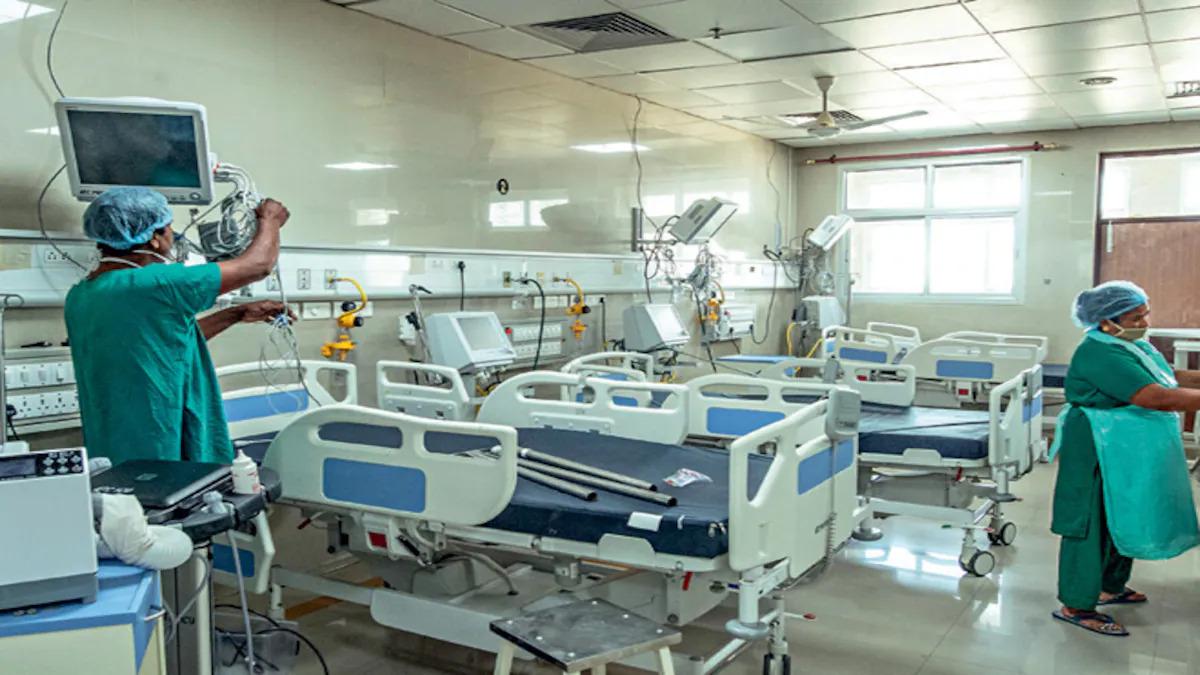
Integrating trauma systems into PHCs (primary health care centres) and CHCs (community health care centres) is a costly but necessary process for India, which has the world’s youngest workforce but an increasing incidence of chronic illnesses. Indeed, healthcare experts anticipate a significant increase in healthcare costs over the next decade. In addition, emerging technologies such as artificial intelligence (AI) can significantly reduce the cost and time of identifying traumatic cases that require immediate attention.
Thus, the government should consider allocating funds to include trauma centres equipped with advanced technologies such as artificial intelligence (AI-enabled PACS, for example) in PHCs and CHCs.
Extend the National Health Insurance Program

Additionally, healthcare experts have urged the government to consider increasing healthcare spending above 2.5% of GDP. Additionally, experts anticipate the government expanding its National Health Protection Scheme to migrant workers and the below-the-poverty line population.
According to a recent NSS (National Sample Survey) survey on health insurance coverage through the government and private insurers, 85.9 per cent of rural Indians lack health insurance coverage.
connect with us on social media [ Facebook | Instagram | Twitter | LinkedIn ] to get real-time updates on the market. Entrepreneurs Diaries is now available on Telegram. Join our telegram channel to get instant updates from ED.