
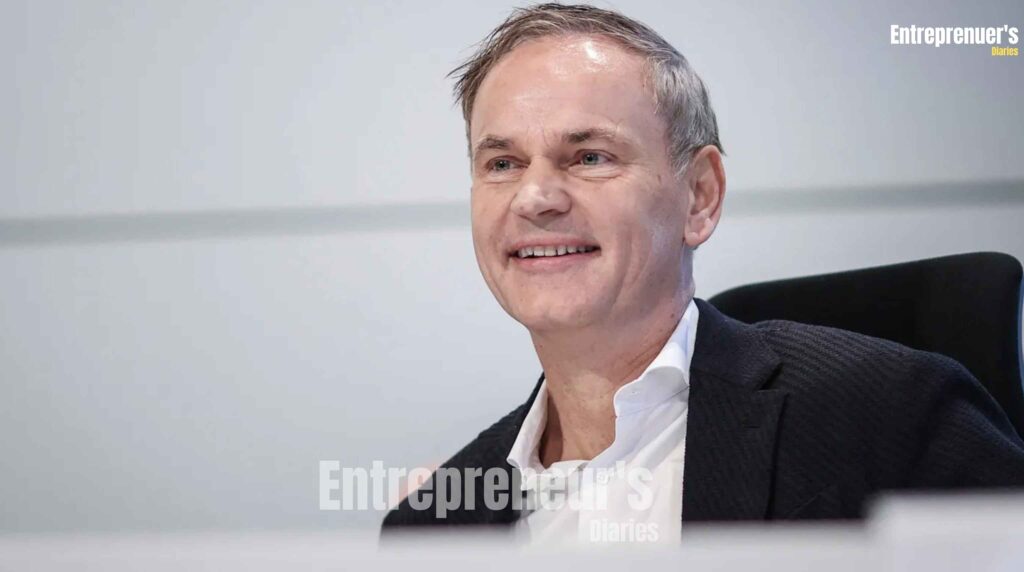
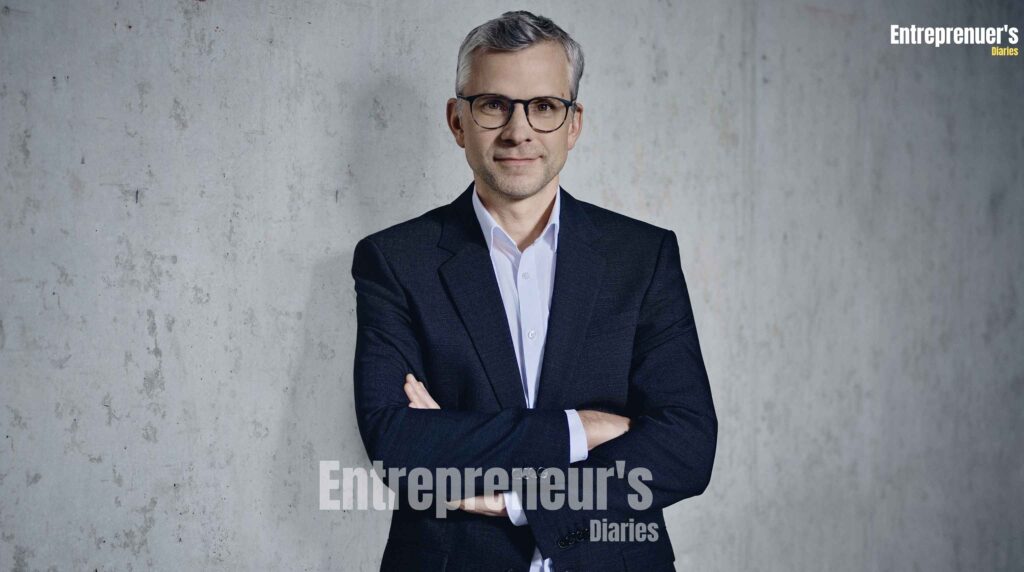
STUTTGART, June 20, 2026: Four months into the job, Porsche AG’s new chief executive is racing the calendar on a fresh round of Porsche cost-cutting. Dr. Michael Leiters wants a deal with his own workforce sealed before the factory gates close for summer break and he wants it now, not after another quarter of bleeding margins.
- PORSCHE COST-CUTTING: THE CORE FINDING FROM LEITERS’ FAS INTERVIEW
- HOW WE GOT HERE: TWO ROUNDS OF CUTS SINCE FEBRUARY 2025
- THE NUMBERS: PORSCHE’S PROFIT COLLAPSE IN DETAIL
- SALES SLUMP: CHINA, US TARIFFS AND THE EV RETREAT
- THE 911 LINE IN THE SAND: PORSCHE’S BROADER EV RECALIBRATION
- WHAT’S ON THE TABLE WITH IG METALL
- WHAT ANALYSTS AND INVESTORS ARE SAYING
- WHY THIS MATTERS FOR INVESTORS AND BUSINESS LEADERS
- THE BOTTOM LINE
- FREQUENTLY ASKED QUESTIONS
That urgency is the headline out of an interview Leiters gave to Frankfurter Allgemeine Sonntagszeitung (FAS), published Saturday, June 20, 2026, and reported by Reuters. It lands at a delicate moment. Porsche’s operating profit has fallen by more than 90% in a single year. Its shares were booted from Germany’s blue chip DAX index last September. And the brand that once defined automotive profitability is now negotiating, plant by plant, line by line, how to survive selling fewer cars.
PORSCHE COST-CUTTING: THE CORE FINDING FROM LEITERS’ FAS INTERVIEW
Here’s the core finding on Porsche cost cutting: Leiters told FAS he wants an agreement with employees finalized before Porsche’s summer factory holidays in July, according to Reuters’ report on the interview. He framed it as a matter of basic fairness to the workforce, not just financial discipline.
The substance of his comments was just as direct. Leiters said Porsche is planning for lower production volumes than the roughly 280,000 vehicles it delivered last year, Reuters reported.
“Porsche has to make money with fewer cars,” he told the newspaper.
That single line captures the entire strategic pivot. For two decades, Porsche’s playbook was volume plus price. Leiters is now betting the company can be smaller and still be profitable or it won’t survive in its current form.
Leiters also told FAS that Porsche intends to deepen cooperation with sister brand Audi, both Volkswagen Group companies, Reuters reported. Neither company has detailed exactly which functions would be shared.
This second cost cutting package builds directly on a first one. Porsche has already committed to eliminating 1,900 jobs in the coming years, after laying off around 2,000 temporary workers in 2025, according to Reuters.
HOW WE GOT HERE: TWO ROUNDS OF CUTS SINCE FEBRUARY 2025
To understand why a German sports car maker is negotiating headcount like a struggling steel mill, you have to go back to February 2025. That month, Porsche announced its first major savings package: roughly 1,900 job cuts by 2029, structured to avoid compulsory layoffs through an existing employment guarantee, according to a report by news agency dpa AFX carried by MarketScreener.
By July 2025, outgoing CEO Oliver Blume who has led Porsche for a decade while simultaneously running parent company Volkswagen Group internally announced a second round of savings was coming, per the same Market Screener report. Around the same time, Porsche publicly confirmed it would “start negotiations with employee representatives on a second package of measures,” according to a Sharecast report carried by Hargreaves Lansdown.
The financial backdrop kept worsening through the second half of 2025. Porsche disclosed in mid September 2025 that the total cost of restructuring the company would run to roughly €3.1 billion ($3.6 billion), according to multiple reports including Daily Sabah and the Qatar Tribune, both citing German regional newspapers Stuttgarter Nachrichten and Stuttgarter Zeitung.
That same week, Porsche AG was removed from Germany’s benchmark DAX index entirely. Deutsche Börse subsidiary STOXX announced the change would take effect September 22, 2025, with Porsche replaced by real estate platform Scout24, according to Bloomberg and CNBC.
The reasons were straightforward. Porsche shares had fallen roughly 33% over the preceding twelve months, Bloomberg reported, while the company’s free float the proportion of shares actually traded publicly sat at just around 12%, Blume told German newspaper Frankfurter Allgemeine Zeitung, as reported by CNBC and RTE.
Blume called it a blow to the index. “The DAX is losing one of Germany’s most valuable companies,” he said, per CNBC’s translation of his FAZ remarks. He added that returning to the DAX “as soon as possible” remained the goal.
Context matters here. Porsche shares had IPO’d in September 2022 at €82.50, briefly touching nearly €120 in the following months, according to Euronews. By early September 2025, shares were trading below €45.
By December 2025, the second package moved from internal planning into formal talks. Porsche signaled it wanted to discuss reducing personnel costs with employee representatives at its main Zuffen hausen plant and its Weissach development center, according to dpa AFX reporting carried by Market Screener and Daily Sabah.
General works council chairman Ibrahim Aslan confirmed talks were underway but stressed formal negotiations had not yet begun, telling Stuttgarter Nachrichten and Stuttgarter Zeitung that the works council and IG Metall union were discussing a future package “to prepare Porsche and the workforce well for the future.”
Measures reportedly under consideration at that stage included outsourcing entire business units and vehicle production lines, eliminating one time payments and anniversary bonuses, and reducing pension benefits, per the same dpa AFX report.
The works council drew a clear line of its own. Aslan said the union expects job security “at least until 2035” and a clear commitment to Porsche’s German sites from management, per Daily Sabah’s report. Around 23,000 employees at Zuffen hausen and Weissach currently hold job security guarantees only through mid 2030.
Leiters formally took over as CEO on January 1, 2026, succeeding Blume, who continues to lead Volkswagen Group, according to Porsche’s own newsroom announcement. Leiters previously ran McLaren Automotive, Reuters reported.
THE NUMBERS: PORSCHE’S PROFIT COLLAPSE IN DETAIL
The scale of the financial damage is best understood through Porsche’s own disclosures. For full year 2025, Porsche reported group sales revenue of €36.27 billion and group operating profit of just €413 million, according to the company’s official annual press conference materials. That put the group operating return on sales at 1.1%.
To put that in perspective, Porsche’s operating profit came in at €5.6 billion the year before, according to a Reuters report carried by Yahoo Finance meaning 2025’s profit represented a roughly 93% year over year decline.
Net income for 2025 came in at just over €1 billion, with total group assets of €52.7 billion, according to company financial data.
Around €3.9 billion in extraordinary one off charges weighed on 2025 results, the Reuters report noted. That included roughly €2.4 billion tied to product strategy and corporate restructuring adjustments, €700 million in additional battery related costs, and €700 million linked to US import tariffs.
US tariffs alone cost Porsche approximately €700 million in 2025, Reuters reported a meaningful burden for a company that imports every single vehicle it sells in the United States, its largest market.
Earlier in 2025, Porsche had already flagged the scale of the EV strategy reversal. The company disclosed it expected to take a roughly $3.1 billion hit tied to a mistimed shift toward electric vehicles, according to a Reuters analysis published ahead of Leiters’ first earnings call in March 2026.
The damage was visible quarter by quarter, too. In the first half of 2025 alone, Porsche booked €1.1 billion in special charges tied to battery division restructuring, US tariffs, and the broader strategic realignment, Sharecast reported via Hargreaves Lansdown.
Porsche also cut its full year guidance repeatedly through 2025. The return on sales target was lowered from an original forecast of “at least 10%” to a range of 6.5–8.5% in April 2025, then cut again to 5–7% in July 2025, according to the Sharecast report. The July revision came after Porsche absorbed an additional €400 million burden from offering US customers “price protection” against import duties, and it factored in a 15% tariff rate newly agreed between EU and US officials.
The picture brightened only slightly heading into 2026. Porsche’s official Q1 2026 results showed group operating profit of €595 million, down from €762 million in the same quarter of 2025, on group revenue of roughly €8.4 billion, down 5.2% year over year, according to the company’s quarterly statement.
That quarter alone absorbed about €200 million in higher US tariff costs and €100 million in extraordinary restructuring expenses, per the official Q1 2026 release.
Despite the rocky 2025, Porsche confirmed its full year 2026 guidance: revenue of €35–36 billion, group operating return on sales of 5.5–7.5%, an automotive net cash flow margin of 3–5%, and a battery electric vehicle share of 24–26% of deliveries, according to the company’s own forecast.
CFO Dr. Jochen Breckner summed up the year bluntly in the company’s own annual press materials: “The global challenges and the company’s realignment impacted earnings in 2025.”
SALES SLUMP: CHINA, US TARIFFS AND THE EV RETREAT
Behind the profit numbers sits a steeper sales story. Porsche delivered 279,449 vehicles globally in 2025, down 10% from 310,718 in 2024 its steepest annual sales drop since the 2009 financial crisis, according to Bloomberg’s report on the company’s official delivery figures.
China led the decline. Porsche deliveries there fell 26% in 2025, while Germany dropped 16% and the rest of Europe fell 13%, the company said in a statement reported by Reuters. North America held comparatively steady.
Fully electric models made up 22.2% of 2025 global deliveries, with plug in hybrids at 12.1%, Porsche said putting its BEV share at the upper end of its own 20–22% target range for the year, per the company’s statement.
The slide continued into 2026. Porsche delivered 60,991 vehicles globally in the first quarter, down 15% from 71,470 a year earlier, according to the company’s official Q1 2026 delivery report.
China deliveries fell 21% to 7,519 units in the quarter, the steepest regional decline, as local rivals undercut Porsche on price and technology, according to Reuters’ coverage of the results. Porsche’s Taycan electric sedan has nearly disappeared from the Chinese market fewer than 50 units were registered there across January and February 2026 combined, according to Motor1’s review of delivery data.
North America deliveries fell to 18,344 units in the quarter, down roughly 10% from a year earlier, per Reuters. Porsche’s own US sales arm, Porsche Cars North America, separately reported 16,517 US retail deliveries for the quarter, down 12.5% year over year, largely tied to the end of 718 production and lower battery electric volumes, according to the company’s official US newsroom statement. The bright spot: 911 retail sales in the US jumped 83% to 3,826 units, the same release said.
By model line, Porsche’s own Q1 2026 figures tell a granular story. The 911 sports car gained 22% to 13,889 units, the strongest performer. The Cayenne SUV slipped 4% to 19,183 units. The Macan fell 23% to 18,209 units combined across combustion and electric versions. The Panamera dropped 42% to 4,498 units, which Porsche attributed to a temporary product gap ahead of new “Pure Editions” for the Chinese market. The discontinued 718 Boxster and Cayman line fell 60% to 1,792 units, according to Porsche’s official delivery statement.
Tariffs compounded the sales pain in the US specifically. The removal of federal tax incentives for electric and plug in hybrid vehicles under the current administration has cooled demand for Porsche’s higher priced electrified models, including the Taycan and hybrid Cayenne variants, according to reporting on the Q1 2026 figures.
THE 911 LINE IN THE SAND: PORSCHE’S BROADER EV RECALIBRATION
Just ten days before the FAS interview, Leiters drew a permanent line under one of Porsche’s most closely watched product questions. Porsche will not build a fully electric version of its 911 sports car, Leiters said at an event hosted by German publication Auto, Motor und Sport on June 10, 2026, with the comments confirmed by German news agency dpa and reported by Reuters.
Porsche has “overestimated demand for electric models” and has shifted back toward combustion engine vehicles, Leiters indicated, according to Reuters’ reporting on the dpa account. He said Porsche would continue investing in electric mobility selectively, guided by customer demand, rather than pursuing electrification across the full lineup on a fixed timeline.
The 911 will remain available only in combustion and hybrid forms. Porsche currently sells the fully electric Taycan sedan and two fully electric SUV variants, according to Reuters’ coverage.
That announcement followed earlier reporting that Porsche was weighing whether to scrap planned all electric versions of the 718 Boxster and Cayman entirely, due to development delays and rising costs, according to Bloomberg. Production of the combustion engine 718 line ended in 2025.
The Taycan itself has struggled. Global Taycan deliveries fell 22% in 2025 to 16,339 units, according to Bloomberg’s reporting on Porsche’s delivery data, even as the electric Macan reportedly accounted for more than half of all Macan deliveries during the year.
WHAT’S ON THE TABLE WITH IG METALL
The labor talks Leiters wants closed by July cover more than headcount. Neither Porsche nor its works council has disclosed the targeted euro value of the new savings package, according to dpa AFX’s reporting via MarketScreener. But the menu of options reported by German regional papers Stuttgarter Nachrichten and Stuttgarter Zeitung is broad: outsourcing entire operating units and vehicle projects, eliminating one time payments and anniversary bonuses, and cutting pension benefits.
The geographic focus is narrow: Porsche’s main Zuffen hausen plant near Stuttgart and its Weissach development center, the same reports indicate. For the roughly 23,000 employees at those two sites, the stakes are concrete. Current job security guarantees run only through mid 2030. After that point, compulsory redundancies could become possible, according to the works council’s own position as relayed by Daily Sabah.
Leiters’ comments to FAS suggest the company wants this settled fast precisely because of that uncertainty. Reuters reported his message was that “Porsche employees need clarity” and that clarity, in his framing, depends on closing the deal before the summer shutdown.
WHAT ANALYSTS AND INVESTORS ARE SAYING
Wall Street and Frankfurt analysts have been blunt about what they want from Leiters: speed and specificity.
Ingo Speich of Deka Investment, one of Porsche’s top 20 shareholders, told Reuters ahead of Leiters’ first earnings presentation in March 2026: “We would like clarity on his strategy as soon as possible.” Speich added that Leiters “has control over costs and can manage them,” signaling cautious confidence in the new CEO’s operational background.
That background is itself a talking point. A source familiar with the matter told Reuters that Leiters is expected to lean on one bright spot from 2025 strong demand for the combustion engine 911 to rebuild what the source called Porsche’s “emotional connection” with its fan base.
Sentiment on trading desks has shifted in recent weeks. Porsche AG preferred shares were trading around €47–49 as of mid-June 2026, according to data from Yahoo Finance and Investing.com, against a 52 week range of roughly €35.62 to €50.66. Investing.com reported that Barclays upgraded Porsche to “equal weight” from “underweight” with a price target increase to €50, while Goldman Sachs separately raised its rating to “buy” with a 12 month target near €59, and UBS also moved its rating higher.
The stock’s market capitalization stood at roughly €44–45 billion in mid June 2026, per Yahoo Finance data, with Volkswagen AG holding a 75.4% ownership stake and the Porsche Piëch family’s holding company, Porsche SE, controlling 12.5%.
WHY THIS MATTERS FOR INVESTORS AND BUSINESS LEADERS
Three threads matter beyond Stuttgart.
First, the speed of the labor negotiation is itself a leadership signal. A new CEO closing a politically sensitive workforce deal within his first six months, ahead of a hard summer deadline, suggests Leiters is prioritizing internal certainty before external strategy announcements a sequencing choice other turnaround executives will be watching closely.
Second, Porsche’s “fewer cars, more profit” thesis is a live test case for the entire premium auto sector. Mercedes Benz and BMW have faced similar China and EV demand headwinds; how Porsche’s margin recovers or doesn’t against a smaller production base will inform pricing and capacity decisions across the segment.
Third, the analyst upgrades arriving even as fundamentals remain weak Barclays, Goldman Sachs and UBS all moving more constructive in June 2026 suggest the market may be pricing in a successful restructuring before it’s actually delivered. That gap between sentiment and confirmed results is exactly the kind of setup professional investors flag as a risk in both directions.
THE BOTTOM LINE
Strip away the headlines and Porsche’s situation reduces to one uncomfortable equation: a company built for 18% margins is now operating at roughly a tenth of that, and its own CEO says the fix isn’t more cars it’s fewer of them, sold smarter.
That’s a genuinely unusual position for a luxury automaker to be in. Most turnarounds chase volume. Leiters is explicitly walking away from it, betting that brand scarcity and pricing discipline can rebuild margin faster than chasing Chinese rivals down market or flooding the US with discounted EVs nobody currently wants without a tax credit attached.
The July deadline is the first real test of whether that bet has internal buy in. If Leiters secures a labor agreement before the factory holidays as planned, it removes one major variable workforce unrest right before Porsche’s half year report lands on July 29, 2026, and gives him a clean narrative heading into that release.
If talks slip past July, watch for two things: pressure on the stock’s recent upgrade driven momentum, and louder questions from shareholders like Deka Investment about whether “clarity” is actually arriving on schedule.
Either way, the next six weeks bookended by Porsche’s June 23 annual general meeting, the July labor deadline, and the July 29 half year report will likely tell investors more about Leiters’ Porsche than anything said in a newspaper interview. Save this one and check back against those dates.
FREQUENTLY ASKED QUESTIONS
What cost cutting measures is Porsche planning to finalize by July 2026?
According to Reuters’ report on CEO Michael Leiters’ interview with Frankfurter Allgemeine Sonntagszeitung, Porsche is negotiating a second cost cutting package with employee representatives that it wants finalized before its July 2026 factory holidays. Earlier reporting from dpa AFX, via MarketScreener and Daily Sabah, indicates the measures under discussion include outsourcing certain operating units and vehicle projects, eliminating one time payments and anniversary bonuses, and reducing pension benefits, focused on Porsche’s Zuffenhausen and Weissach sites.
Why did Porsche’s profit collapse so sharply in 2025?
Porsche’s own annual press conference materials show group operating profit fell to €413 million in 2025 from €5.6 billion the year before, a decline of roughly 93%, according to Reuters’ reporting on the figures. The drop stemmed from around €3.9 billion in extraordinary charges tied to reversing its electric vehicle strategy, additional battery costs, and approximately €700 million in US import tariff costs, alongside a 10% drop in global vehicle deliveries.
Will Porsche ever make a fully electric 911?
No. Porsche CEO Michael Leiters confirmed on June 10, 2026, at an event hosted by Auto, Motor und Sport, that the company will not produce a fully electric version of the 911, according to German news agency dpa’s report, as relayed by Reuters. Porsche currently sells the fully electric Taycan and two electric SUV models, but the 911 will remain available only in combustion and hybrid form.
How many jobs is Porsche cutting, and how many are affected?
Porsche has committed to eliminating 1,900 jobs in the coming years as part of its first cost cutting package announced in February 2025, after laying off roughly 2,000 temporary workers in 2025, according to Reuters. Around 23,000 employees at Porsche’s Zuffen hausen and Weissach sites currently hold job security guarantees through mid 2030, per the company’s works council, as reported by Daily Sabah.
Why was Porsche removed from Germany’s DAX index?
Porsche AG exited the DAX on September 22, 2025, after a sustained share price decline of roughly 33% over the prior twelve months and a free float of only about 12% of its shares, according to Bloomberg and CNBC. Deutsche Börse subsidiary STOXX replaced Porsche in the index with real estate platform Scout24; CEO Oliver Blume told Frankfurter Allgemeine Zeitung at the time that Porsche aimed to return to the DAX “as soon as possible.”
Connect With Us On Social Media [ Facebook | Instagram | Twitter | LinkedIn ] To Get Real-Time Updates On The Market. Entrepreneurs’ Diaries Is Now Available On Telegram. Join Our Telegram Channel To Get Instant Updates.

Isabella is a global business journalist and former McKinsey analyst from Brazil. She brings sharp insights on economic shifts, policies, and founder journeys from around the world.

Tokyo-based CFA translating global markets into clear insights for modern entrepreneurs.