

New York, June 19, 2026:A $375 million jury verdict in New Mexico. A $6 million jury verdict in California. A $27 million settlement in Kentucky. Now Meta is pursuing a different kind of fix: a Meta lawsuit immunity push quietly lobbied in Washington that could make all of it, and thousands of cases still pending, legally irrelevant.
That is the picture that emerged this week after Reuters reported that Meta Platforms has lobbied the U.S. Congress for legal immunity from child harm claims tied to its social media products. The company is doing this while it faces one of the largest waves of product liability litigation any technology company has ever encountered.
THE CORE FINDING: WHAT THE META LAWSUIT IMMUNITY PUSH REVEALS
The Meta lawsuit immunity push traces back to one story: Reuters’ exclusive report, published June 18, 2026. Every figure in this section comes from that reporting. According to Reuters, Meta lobbies Congress for legal immunity from child-harm claims tied to social media products such as Instagram. The company is doing so as it faces thousands of lawsuits from young users and their families.
The report is based on a source familiar with the matter and on proposed legislative language that Reuters reviewed directly. That language, Reuters reported, would be attached to the Kids Online Safety Act, the bipartisan child safety bill currently under consideration in the U.S. Senate.
If lawmakers adopted the provision and it became law, Reuters reported it could undermine thousands of active lawsuits against Meta and other online platforms over harms to children. One detail anchors the urgency of the timing. Meta and Google’s YouTube already face a combined $6 million in damages after losing the first such case to go to trial earlier this year, per Reuters.
It’s worth noting that lawmakers have given no indication they intend to adopt the language. At this stage, the Meta lawsuit immunity request remains a lobbying ask, not settled legislative text. Still, the effort offers a window into the scale of legal protection Meta is seeking described as part of “the biggest attempt to regulate online platforms in the U.S.,” per Reuters.
INSIDE THE PROPOSED LEGISLATIVE LANGUAGE
Per Reuters’ reporting, the immunity provision does not stand alone in the draft text reviewed by the news organization. It appears alongside separate language that would preempt state laws governing children’s online safety and privacy. In practice, that would replace the current patchwork of state rules with a single federal standard.
That pairing, immunity plus preemption, is the combination raising the most concern among plaintiffs’ attorneys and child safety advocates, because it would touch both pending litigation and future state level regulation in one stroke.
Reuters reported that the provision is part of active negotiations between Senator Marsha Blackburn and the White House. Those talks aim to package child online safety bills together with a separate provision preempting some state artificial intelligence laws.
That detail matters for how the bill is read going forward. It suggests the immunity language did not originate inside KOSA’s core text, but is being floated as a rider during a broader legislative negotiation that now stretches beyond child safety and into AI policy.
META’S OWN WORDS ON THE PROVISION
Asked directly by Reuters about the lobbying effort and the proposed language, Meta spokesperson Stephanie Otway pushed back on the immunity framing. “It does not extinguish existing lawsuits, nor does it represent blanket immunity,” Otway said, per Reuters.
She continued: “Instead, it establishes uniform national standards for online youth safety, ensuring these critical issues are governed by comprehensive federal legislation, not plaintiffs’ lawyers or patchwork state legislation.” That is Meta’s central argument. A single federal youth safety standard, in the company’s framing, is preferable to fifty different state regimes and a fragmented body of case law built one jury verdict at a time.
THE TRIAL LAWYERS’ COUNTERPUNCH
Julia Duncan of the American Association for Justice, the group that represents trial lawyers, offered Reuters a sharply different reading of the same text. Duncan said that if passed, the provision would knock out any lawsuits pending when the law took effect.
“The language is pretty clear cut immunity against every parent, every school district, that is seeking to hold any AI or social media company accountable for harm” to children, Duncan told Reuters. Notably, the pushback did not come only from outside the bill’s sponsors. A spokesperson for Senator Blackburn, one of KOSA’s two lead authors, told Reuters the senator’s office had not seen the specific liability language Reuters reviewed.
“We have not seen that proposed language and would never consider it,” the spokesperson said. That distancing is significant. It suggests that, as of this week, the immunity provision has not been embraced even by the legislators whose own bill it is being attached to.
WHY THIS MATTERS NOW: TWO VERDICTS THAT CHANGED THE MATH
Meta’s lobbying push did not emerge in a vacuum. It follows back to back courtroom losses that reshaped how lawmakers, plaintiffs and Wall Street think about platform liability.
On March 24, 2026, a Santa Fe jury found that Meta willfully violated New Mexico’s Unfair Practices Act, according to CNBC and CNN. The state’s attorney general, Raúl Torrez, had sued Meta in 2023 after an undercover operation in which a fake profile of a 13 year old girl was, in Torrez’s words, quickly inundated with sexual content and targeted solicitations.
The jury ordered Meta to pay $375 million in civil penalties, the maximum allowed under the statute, per CNBC’s report on the verdict. A Meta spokesperson told CNN the company “respectfully” disagreed with the verdict and plans to appeal.
The very next day, March 25, 2026, a Los Angeles jury reached a separate verdict. Law firm Crowell & Moring, in a client alert on the case, reported that the jury found Meta and YouTube liable for platform features that caused a young user to become addicted, resulting in mental health harm. That California verdict produced the $6 million combined damages figure that Reuters cited in its lobbying report this week.
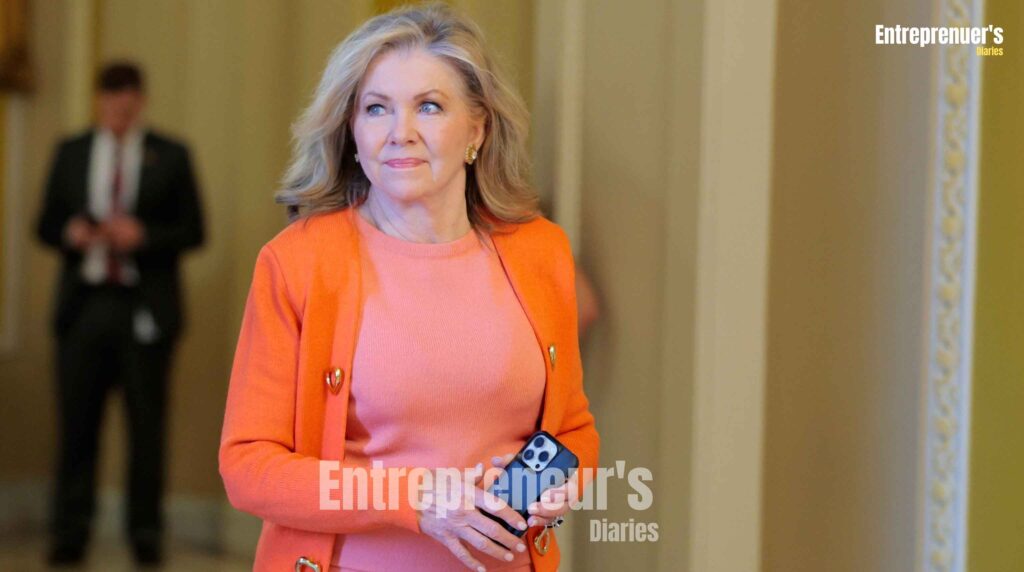
Senators Blackburn and Blumenthal referenced both verdicts directly in a joint statement issued by their offices in May. “A few weeks ago, juries in New Mexico and California legally recognized that American families have known: social media companies are hurting children,” Blumenthal said in that release.
The New Mexico case is not finished. According to Source New Mexico, a nonprofit newsroom, the state’s attorney general is now seeking nearly $1 billion from Meta in a second phase of the trial focused on platform safety remedies, as reported on June 17, 2026.
THE FULL SCALE OF LITIGATION META IS FACING
The two verdicts are a small fraction of Meta’s total legal exposure. Reuters reported, in coverage of a separate settlement, that more than 3,300 lawsuits involving addiction claims against social media companies are pending in California state court alone. Another 2,400 cases, brought by individuals, municipalities, states and school districts, are pending in California federal court, per the same Reuters report.
That federal court is where Meta agreed, on May 21, 2026, to settle a bellwether case brought by the Breathitt County School District in Kentucky. Reuters reported the combined settlement across all defendants totaled roughly $27 million, with Meta paying the largest share at $9 million.
Snap and TikTok parent ByteDance each paid $8 million in that settlement, while YouTube parent Alphabet paid $2.01 million, according to settlement documents Reuters obtained through a public records request.
Attorneys for the plaintiffs told Reuters their focus has now shifted to similar claims brought by 1,200 other school districts nationwide. Some of those remaining cases are far larger than Breathitt’s. Reuters reported that Tucson Unified School District in Arizona, which serves roughly 40,000 students, is seeking more than $1.1 billion to fund a 15 year mental health program. The Los Angeles Unified School District and the New York City public school system, together serving more than 1.2 million students, have also filed suit, per Reuters.
Meta itself has acknowledged the financial stakes in its own disclosures. Reuters reported that the company has warned investors that legal and regulatory blowback in the European Union and the United States over youth social media issues “could significantly impact our business and financial results.”
WHAT KOSA ACTUALLY REQUIRES OF PLATFORMS
Stepping back from the immunity dispute, KOSA’s underlying purpose is to set design and disclosure standards for platforms used by minors. Per Reuters’ reporting on the bill, KOSA would require social media companies to take reasonable steps to prevent certain harms to minors, including compulsive use of their platforms.
The legislation would require companies to exercise care in deploying specific features, including infinite scrolling, activity notifications and appearance altering photo filters, according to Reuters.
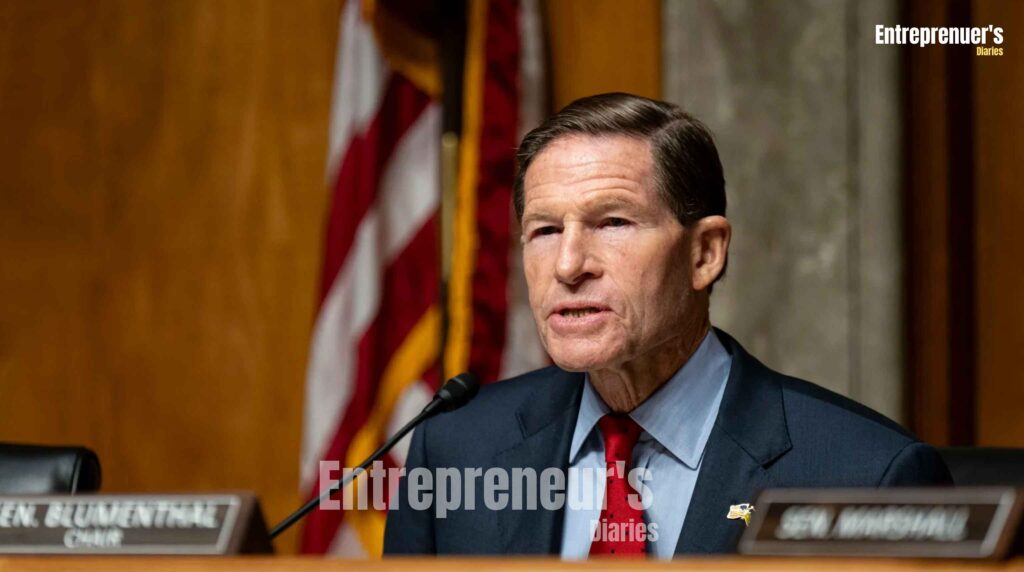
Senator Blumenthal’s official Senate website describes the bill’s broader scope in more detail. It states that KOSA requires platforms to provide minors with options to disable addictive product features and opt out of personalized algorithmic recommendations, and that it requires the strongest privacy settings to be enabled for kids by default.
The same official Senate page states that KOSA also gives parents new tools to spot harmful behavior and gives parents and educators a dedicated channel to report it.
KOSA’S FOUR YEAR ROAD THROUGH CONGRESS
KOSA is not new. Senator Blumenthal’s official Senate website states that he and Senator Blackburn first introduced the bill in February 2022, following Wall Street Journal reporting and a series of five subcommittee hearings with social media companies and child safety advocates.
The bill has moved through Congress in fits and starts since then. It previously cleared the Senate Commerce Committee and passed the full Senate with broad bipartisan support, according to reporting by The Hill on the bill’s 2025 reintroduction.
It then stalled in the House, where Republican leadership raised concerns about censorship and free speech implications, The Hill reported. Blackburn and Blumenthal addressed that stall directly in a joint statement from their Senate offices, saying the House’s refusal to act meant continued harm to children “fostered and fueled by Big Tech.”
The bill picked up new momentum this spring. In a joint statement issued by their offices on May 13, 2026, Blackburn and Blumenthal announced that OpenAI had endorsed KOSA. “Increasingly the only people opposed to this bill are Mark Zuckerberg and his lobbyists,” Blumenthal said in that release.
Blackburn used the same statement to look ahead to a hearing she would chair on the California and New Mexico verdicts. “Lip service won’t save lives Congress must take action to establish guardrails in the virtual space,” she said.
The same press release noted that Senate Commerce Committee Chairman Ted Cruz had pledged, at a Capitol rally with parents the day before, to advance KOSA out of committee and help get it signed into law by the end of the year. It also cited polling showing 86% of Americans want Big Tech companies held accountable for the social media addiction crisis.
THE WHITE HOUSE NEGOTIATION AND STATE PREEMPTION
The immunity language Meta is lobbying for surfaced inside a wider, and more complicated, negotiation. Reuters reported that KOSA is now part of talks between Senator Blackburn and the White House to bundle child online safety bills together with a provision that would preempt some state laws on artificial intelligence.
That bundling strategy is consequential for how the immunity clause might travel through Congress. Rather than being voted on as a standalone child safety measure, it is being negotiated alongside an unrelated AI policy priority, raising the odds that any final deal will involve trade offs few outside the negotiating room can fully see in advance.
For now, Reuters’ reporting indicates the immunity and state preemption language sit inside the same proposed legislative text Meta is pushing, but neither has secured public sponsor support.
A REGULATORY SQUEEZE FROM THE OTHER DIRECTION: THE OHIO RULING
Meta’s federal lobbying push landed in the same week as a courtroom defeat at the state level, illustrating how the company is fighting child safety battles on multiple fronts at once. On June 18, 2026, the same day Reuters published its lobbying report, a divided panel of the Sixth Circuit Court of Appeals ruled that Ohio’s law requiring parental consent for social media users under 16 must be restored, according to the Washington Post.
The 2-1 decision overturned a lower court ruling that had blocked the law at the request of NetChoice, a trade group whose members include Meta, TikTok, Snapchat and YouTube, per Reuters’ coverage of the ruling carried by U.S. News.
Writing the lead opinion, Circuit Judge Eric Clay rejected the argument that the law was unconstitutionally vague or violated free speech protections. “At bottom, the Act imposes a parental consent requirement,” he wrote, according to Reuters. Net Choice said the ruling went against “clear national consensus” and confirmed it intends to keep fighting, the Washington Post reported.
Taken together, the Ohio ruling and the federal lobbying disclosure show Meta pursuing two opposite legal strategies in parallel: resisting new state level guardrails in court, while trying to secure a single, friendlier federal standard in Congress that would override those same state rules.
MARKET SNAPSHOT: WHAT INVESTORS ARE WATCHING
For investors tracking Meta amid this latest regulatory headline, the underlying market numbers remain steady even as the litigation overhang grows.
- Share price: $574.89 as of June 19, 2026, according to Robinhood market data.
- Market capitalization: approximately $1.47 trillion, per Robinhood.
- Price to earnings ratio: 20.63, per Robinhood.
- 52 week range: $520.26 to $796.25, per Robinhood.
None of these figures point to a sharp market reaction tied specifically to the lobbying disclosure as of this writing. That said, the company’s own regulatory filings, as cited by Reuters, already flag youth safety litigation as a factor that “could significantly impact” its business and financial results, giving the issue a direct line to future earnings risk even without an immediate share price move.
WHY THIS MATTERS FOR BUSINESSES AND INVESTORS
For professionals tracking business news in the U.S. technology and policy space, this story carries three signals worth watching closely. The first signal is about litigation exposure as a line item, not a footnote. With more than 3,300 cases in California state court and 2,400 more in federal court, per Reuters, plus a $375 million New Mexico judgment and a second phase seeking close to $1 billion more, the dollar figures at stake have moved well beyond nuisance suit territory and into material balance sheet risk.
The second signal is about how Big Tech is now trying to resolve that risk. Rather than litigating thousands of cases one jury at a time, Meta appears to be betting that a single federal statute, even one that requires new safety obligations, is cheaper and more predictable than the current state by state, courtroom by courtroom gauntlet.
The third signal is about legislative risk for the sector broadly. Any company operating consumer platforms used by minors, not just Meta, will be affected by how Congress ultimately resolves the tension between federal pre emption, state authority and existing tort claims. Investors in social media, gaming and ed tech names should treat KOSA’s final language as a sector wide variable, not a single company event.
THE BOTTOM LINE
Meta is not hiding from its legal exposure. It is trying to renegotiate the terms of it, in Washington, while still fighting state level safety laws in the courts. The company’s own spokesperson insists the proposed language is about uniform standards, not blanket immunity. The trial bar’s leading voice insists the opposite: that the text would wipe out pending claims for thousands of families and school districts.
What is not in dispute, per Reuters’ reporting, is that lawmakers have not yet agreed to either version of that story. The provision remains a request on the table, not law.
Whether Congress ultimately accepts Meta’s trade off, uniform federal rules in exchange for litigation protection, will not just decide the company’s liability profile. It will set the template every other platform serving young users in America is negotiated against next.
FREQUENTLY ASKED QUESTIONS
Is the Kids Online Safety Act (KOSA) law yet in 2026?
No. As of this report, KOSA remains under consideration in the U.S. Senate and has not been enacted into federal law. The bill previously passed the full Senate with bipartisan support but stalled in the House over free speech concerns, according to reporting by The Hill. It is currently part of negotiations between Senator Marsha Blackburn and the White House, per Reuters, and Senate Commerce Committee Chairman Ted Cruz has pledged to advance it out of committee, according to a joint statement from Senators Blackburn and Blumenthal.
Why is Meta lobbying Congress for legal immunity from child harm lawsuits?
Reuters reported that Meta is seeking legal immunity from child harm claims tied to products such as Instagram because it currently faces thousands of lawsuits from young users and families. Meta spokesperson Stephanie Otway told Reuters the goal is “uniform national standards for online youth safety,” not blanket immunity, while trial lawyers’ group representative Julia Duncan told Reuters the provision would effectively shut down pending lawsuits if it became law.
How much money has Meta already lost or paid out in social media child safety lawsuits?
Meta and Google’s YouTube face a combined $6 million in damages from a California jury verdict reached in March 2026, according to Reuters. Separately, a New Mexico jury ordered Meta to pay $375 million in March 2026, per CNBC and CNN, and the state’s attorney general is now seeking nearly $1 billion more in a second phase of that trial, according to Source New Mexico. Meta also paid $9 million as part of a roughly $27 million combined settlement with a Kentucky school district in May 2026, per Reuters.
How many lawsuits does Meta currently face over child and teen safety?
According to Reuters, more than 3,300 lawsuits involving social media addiction claims are pending in California state court, with another 2,400 cases pending in California federal court, brought by individuals, municipalities, states and school districts. Reuters also reported that plaintiffs’ attorneys are pursuing similar claims on behalf of 1,200 other school districts nationwide following a Kentucky bellwether settlement.
What would KOSA actually require social media platforms to do for kids?
Per Reuters’ reporting and Senator Blumenthal’s official Senate website, KOSA would require platforms to take reasonable steps to prevent harms such as compulsive use, exercise care in deploying features like infinite scrolling and appearance altering filters, let minors disable addictive features and opt out of algorithmic recommendations, and enable the strongest privacy settings for kids by default. It would also give parents new tools and a dedicated channel to report harmful behavior, according to the same official Senate page.
Connect With Us On Social Media [ Facebook | Instagram | Twitter | LinkedIn ] To Get Real-Time Updates On The Market. Entrepreneurs’ Diaries Is Now Available On Telegram. Join Our Telegram Channel To Get Instant Updates.

Isabella is a global business journalist and former McKinsey analyst from Brazil. She brings sharp insights on economic shifts, policies, and founder journeys from around the world.

Tokyo-based CFA translating global markets into clear insights for modern entrepreneurs.