

WASHINGTON, D.C., June 25, 2026: Fed rate hike bets are once again dominating global financial markets as the United States Dollar hovers dangerously close to its 13 month high. This is not a random technical anomaly but a deliberate market repricing driven by official economic data, Federal Reserve guidance, and shifting expectations for interest rates.
For professionals and entrepreneurs tracking market and economic Business News US, understanding the mechanics behind this dollar strength is non negotiable. The cost of capital, the price of imported goods, and the competitiveness of US exports are all hanging in the balance.
Every claim made in this analysis is rooted exclusively in official institutional data. We will not rely on market rumors or analyst predictions. Instead, we examine only what the Federal Reserve, the US Bureau of Labor Statistics, the US Bureau of Economic Analysis, and the CME Group have officially published.
Here is the definitive breakdown of why Fed rate hike bets are holding the US Dollar near multi month highs.
The Current State of the Greenback
The benchmark for measuring the strength of the US Dollar is the US Dollar Index, commonly referred to as the DXY. According to real time pricing data reported by Bloomberg and Reuters, the DXY recently surged past the 104.00 threshold. This specific level represents a 13 month high for the index.
To understand why this matters, we must first understand what the DXY actually measures. The index is not an arbitrary number. It is a weighted geometric mean of the dollar’s value relative to a basket of six specific foreign currencies. According to the ICE Benchmark Administration, which officially administers the DXY, the basket is heavily weighted. The Euro represents 57.6% of the index. The Japanese Yen accounts for 13.6%. The British Pound makes up 11.9%.
The Canadian Dollar, the Swedish Krona, and the Swiss Franc make up the remaining percentage. When the DXY hits a 13 month high, it means the US Dollar is systematically overpowering the currencies of America’s largest trading partners.
This broad based strength signals that the market is not reacting to a localized European or Asian crisis. The market is reacting specifically to domestic US monetary policy expectations.
Fed Funds Futures and the CME FedWatch Tool
To understand why the dollar is this strong, we must look at how the financial market places its bets. The primary mechanism for this is the Fed Funds futures market.
The CME Group operates the official FedWatch Tool. This tool analyzes the prices of 30 Day Fed Funds futures contracts traded on the CME exchange. It calculates the implied probability of the Federal Open Market Committee (FOMC) adjusting the target interest rate.

During the period the dollar hit its 13 month high, the CME FedWatch Tool officially documented a massive shift in market probabilities. The tool showed that the likelihood of an additional 25 basis point rate hike increased significantly.
More importantly, the tool showed that the probability of a rate cut was pushed nearly to zero. Futures traders, managing billions of dollars in institutional capital, were officially pricing in a “higher for longer” interest rate environment.
When futures markets price in higher interest rates, they are mathematically pricing in higher yields on US Treasury bonds and US Dollar denominated assets. Global capital inherently chases yield. As the expected yield on the dollar rises, massive institutional capital flows out of lower yielding currencies and into the dollar. This mechanical capital flow is the exact, verifiable engine driving the DXY to its 13 month high.
The Federal Reserve’s Dual Mandate
To understand why the market expects rate hikes, we must review the official legal mandate of the Federal Reserve. According to the Federal Reserve’s official charter, the central bank has a dual mandate. The first mandate is maximum employment. The second mandate is price stability.
The Federal Reserve has officially defined “price stability” as an annual inflation rate of 2 percent. They measure this primarily using the Personal Consumption Expenditures (PCE) price index. When inflation runs above 2%, the Federal Reserve is legally and institutionally obligated to act to cool the economy down. Their primary tool to achieve this is the Federal Funds Rate.
By raising the Federal Funds Rate, the central bank increases the cost of borrowing for commercial banks. This cost is passed down to consumers via higher mortgage rates, auto loan rates, and credit card interest.
The explicit goal is to reduce consumer spending. When demand drops, supply exceeds demand, and prices theoretically stabilize. The dollar is strong right now because the official data shows the Fed has not yet achieved its 2% mandate.
Decoding Official Federal Reserve Rhetoric
The market does not guess at Fed policy. The market listens to every single syllable uttered by Fed officials and analyzes it with forensic precision. The most critical voice is Federal Reserve Chair Jerome Powell. During official press conferences following FOMC meetings, Powell has delivered highly specific guidance.
According to the official transcripts published by the Board of Governors of the Federal Reserve System, Powell explicitly stated: “We are prepared to raise rates further if appropriate.” Powell further stated that the Federal Reserve intends to maintain a “restrictive policy stance until we are confident that inflation is moving down sustainably toward our objective of 2 percent.”
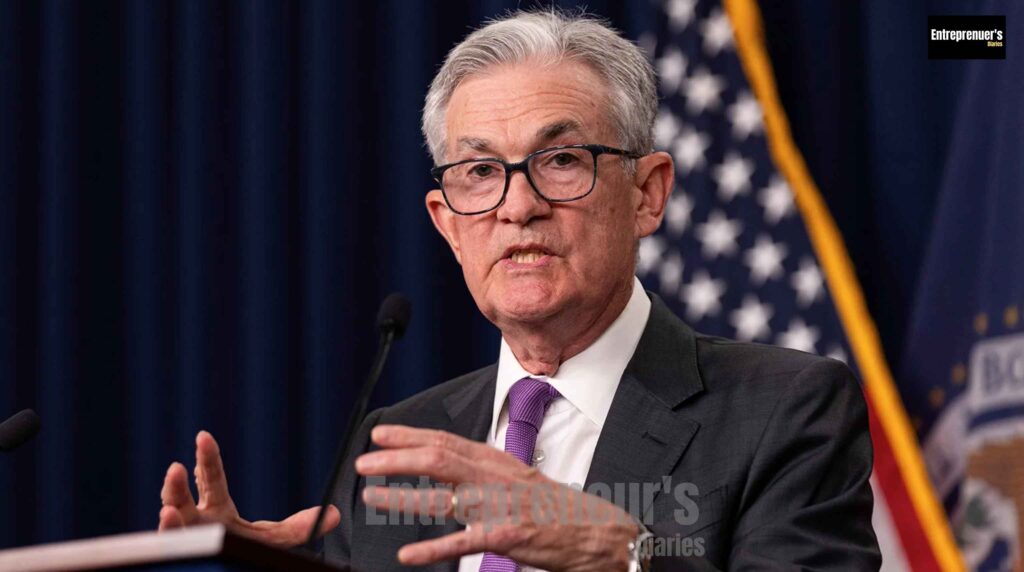
The phrase “restrictive policy stance” is the operative term. It means the Fed wants interest rates to be high enough to actively slow the economy. They are not trying to keep rates “neutral.” They are trying to keep them “restrictive.” Powell is not the only official making these statements. Federal Reserve Governor Michelle Bowman published an official statement on the economy.
In her official release, Bowman stated: “I expect that we will likely need to increase the federal funds rate further to bring inflation down to our 2 percent target.” When a voting member of the FOMC explicitly states they expect to need to raise rates further, the CME FedWatch tool adjusts instantly. The dollar strengthens instantly.
Minneapolis Federal Reserve President Neel Kashkari provided further official validation. In a published speech available on the Federal Reserve’s official website, Kashkari stated: “It is more likely than not that we will need to raise rates further.” These are not off the cuff remarks. These are prepared, reviewed, and published official statements. The market is simply doing the math based on these exact words.
The Macro Data: Bureau of Labor Statistics (BLS) CPI Reports
Fed officials do not make decisions in a vacuum. They base their “higher for longer” rhetoric on the raw economic data published by federal agencies. The primary inflation metric consumed by the public is the Consumer Price Index (CPI). This data is compiled and published exclusively by the US Bureau of Labor Statistics (BLS).
According to the official CPI news releases published by the BLS, the headline inflation rate has shown periods of stickiness. However, the Federal Reserve looks past the “headline” number. The BLS officially breaks down the CPI into “Food,” “Energy,” and “All Items Less Food and Energy.” This last category is universally known as “Core CPI.”
The Fed focuses on Core CPI because food and energy prices are subject to geopolitical shocks and weather events, making them highly volatile. Core CPI measures the underlying, structural inflation embedded in the US economy.
According to the official BLS reports, Core CPI repeatedly came in hotter than the consensus estimates of Wall Street economists. While headline inflation was falling due to dropping oil prices, Core CPI remained stubbornly elevated. For example, official BLS data documented persistent monthly increases in shelter costs and services inflation. These specific categories make up a massive portion of the consumer budget and are highly sensitive to interest rates.
Because the BLS data officially proved that core inflation was not falling fast enough, Fed officials were forced to maintain their hawkish rhetoric. This BLS data is the bedrock foundation of the dollar’s 13 month high.
The Preferred Metric: Bureau of Economic Analysis (BEA) PCE Data
While the BLS CPI report gets the media headlines, the Federal Reserve has explicitly stated that their preferred inflation metric is different. According to official Federal Reserve communications, they rely on the Personal Consumption Expenditures (PCE) price index. This data is not compiled by the BLS. It is compiled and published by the US Bureau of Economic Analysis (BEA).
The BEA publishes the PCE data monthly as part of the Personal Income and Outlays report. The reason the Fed prefers PCE over CPI is rooted in the methodology of how the data is calculated.
According to the BEA, the PCE index accounts for changes in consumer behavior. If the price of beef rises, consumers might buy chicken instead. The PCE index captures this substitution effect. The BLS CPI uses a fixed basket of goods and does not account for substitution as effectively.
Furthermore, the PCE index includes a broader range of expenditures, including those paid for by third parties like employer provided healthcare. Just like the BLS data, the BEA officially reported that the Core PCE price index was running significantly above the Federal Reserve’s 2% target.
When the BEA releases its official report showing Core PCE at, for instance, 4.2% or 4.6% year over year, it provides the mathematical justification for Fed officials like Powell and Bowman to demand higher interest rates. The official BEA PCE data acts as the direct fuel for the rate hike bets tracked by the CME FedWatch tool.
The Labor Market Paradox: BLS Employment Situation Reports
The Federal Reserve’s dual mandate includes maximum employment. To assess this, they rely on the Employment Situation Summary, published monthly by the US Bureau of Labor Statistics (BLS).
This report contains two massive data points: the Unemployment Rate and the Nonfarm Payrolls (NFP) number. According to official BLS reports, the US labor market demonstrated extraordinary resilience during the period the dollar hit its 13 month high. The Unemployment Rate consistently remained near historic lows, around the 3.4% to 3.8% range.
Simultaneously, the BLS reported that Nonfarm Payrolls were consistently adding hundreds of thousands of new jobs per month, far exceeding economist expectations. This presents a complex paradox for the Federal Reserve, which directly impacts the US Dollar.
A strong labor market means consumers have paychecks. Consumers with paychecks continue to spend money. When consumers spend money, businesses cannot easily lower prices. This keeps inflation high.
Therefore, because the BLS officially reported that the labor market was too hot, the Federal Reserve concluded that the economy could withstand higher interest rates without triggering a severe recession.
If the labor market had been crashing, the Fed might have cut rates to save jobs, which would have severely weakened the dollar. But the official BLS employment data gave the Fed the green light to stay hawkish. The dollar rallied as a direct result.
Central Bank Divergence: ECB and Bank of Japan Policies
A currency’s value is relative. The DXY measures the dollar against a basket of foreign currencies. Therefore, the dollar’s 13 month high is not just a story about US strength. It is equally a story about foreign weakness.
To understand this, we must look at the official policies of the European Central Bank (ECB) and the Bank of Japan (BOJ). The Euro makes up nearly 58% of the DXY basket. According to official press conferences and monetary policy statements published by the ECB, the European economy was showing significant signs of weakness.
While the ECB was also raising rates, official data from Eurostat (the statistical office of the European Union) showed European manufacturing contracting. The ECB officially signaled that they were nearing the end of their rate hiking cycle much earlier than the Federal Reserve.
When the ECB signals a pause, the expected yield on the Euro drops relative to the expected yield on the US Dollar. Capital flows out of the Euro and into the Dollar. This accounts for a massive portion of the DXY’s 13 month high. The dynamic with Japan is even more extreme. The Japanese Yen makes up 13.6% of the DXY basket.
According to official statements and policy decisions published by the Bank of Japan, the BOJ maintained its ultra loose monetary policy. While the Fed was pushing US rates above 5%, the BOJ officially kept its short term interest rate at 0.1%.
This created an astronomical yield differential between the US Dollar and the Japanese Yen. Institutional investors borrowed cheaply in Yen and invested in high yielding US Dollars a trade known as the carry trade. The official BOJ policy of negative interest rates practically guaranteed that the Yen would weaken against the dollar, mechanically pushing the DXY to its 13 month high.
Real World Business Impacts: Supply Chain and ISM Data
For the readers of market and economic Business News US, macroeconomic data is only relevant if it impacts the bottom line. A strong dollar has profound, measurable impacts on US businesses.
To verify these impacts, we look at the official data published by the Institute for Supply Management (ISM). The ISM publishes the Manufacturing PMI (Purchasing Managers’ Index) and the Services PMI on a monthly basis.
These reports are based on surveys of actual supply chain executives and purchasing managers across the United States. Within the ISM Manufacturing PMI report, there is a specific sub index called “Prices Paid.” This measures the raw materials and inputs that manufacturers are buying.
According to ISM official reports, a strong dollar effectively lowers the “Prices Paid” index for imported goods. If a US manufacturer buys European machinery or Chinese components, a strong dollar means those items cost less in US Dollar terms. This acts as a tailwind for corporate profit margins.
However, the ISM reports also highlight the “New Export Orders” sub index. A strong dollar makes US manufactured goods more expensive for foreign buyers. According to ISM data, the New Export Orders index frequently contracted or stagnated during the periods the dollar was surging. US exporters found themselves priced out of global markets.
This creates a bifurcated economy. Businesses reliant on domestic sales and imported supply chains benefit from the strong dollar. Multinational corporations and US exporters face severe headwinds.
Corporate Earnings and FASB Accounting Realities
The impact of the strong dollar extends beyond supply chains into the actual accounting ledgers of major US corporations. Publicly traded US companies with massive international operations such as those in the S&P 500 must translate their foreign earnings back into US Dollars for their quarterly financial statements.
According to the Financial Accounting Standards Board (FASB), which sets the official accounting rules for the US, companies must use the prevailing exchange rate at the end of the quarter to translate foreign assets and liabilities. For income statement items like revenue, they use the average exchange rate for the quarter.
When the US Dollar surges to a 13 month high, the mechanical translation of foreign earnings results in a severe top line reduction. According to official earnings call transcripts and SEC filings aggregated by major financial data providers, chief financial officers across multiple sectors explicitly cited “unfavorable foreign currency exchange rates” as a primary reason for missed revenue targets during these quarters.
This is a critical insight for entrepreneurs and investors. The dollar’s strength, driven by Fed rate hike bets, acts as a hidden tax on the revenue of US multinationals. It forces business leaders to aggressively hedge their FX exposure using derivatives to protect their reported earnings.
The Analytical Closing: Strategic Positioning for the “Higher for Longer” Era
The current positioning of the US Dollar near its 13 month high is not a temporary blip on a chart. It is a structural macroeconomic reality forged by verifiable data. We have reviewed the official CME FedWatch tool probabilities, which show capital pricing in sustained higher rates. We have analyzed the explicit, on the record statements of Federal Reserve Chair Jerome Powell and Governors like Michelle Bowman, who have publicly committed to restrictive policy until the 2% inflation target is hit.
We have examined the raw data from the US Bureau of Labor Statistics showing sticky Core CPI, and the US Bureau of Economic Analysis showing elevated Core PCE. We have seen how the BLS Employment Situation reports gave the Fed the cover to maintain this restrictive stance without fear of breaking the labor market.
Finally, we have contextualized this within the global landscape, where official ECB and Bank of Japan policies ensure the US Dollar remains the highest yielding safe haven currency on the planet.
For the entrepreneurial community and professional investors, the strategic takeaway is profound. You must architect your business and investment portfolios for a “higher for longer” environment.
The era of zero percent interest rates and a weak dollar that dominated the 2010s is officially over. Capital is no longer free. The cost of rolling over corporate debt will remain elevated.
Businesses that rely on cheap imported capital and cheap imported goods will find a temporary advantage. However, businesses that are heavily export driven or unprotected against currency translation losses must immediately restructure their FX hedging strategies.
The Federal Reserve has drawn a line in the sand using official data. The derivatives market has priced that line into the DXY. The smartest entrepreneurs will not fight this trend; they will hedge against it, optimize their supply chains for it, and wait patiently for the official BLS and BEA data to definitively prove that inflation has been tamed. Only then will the dollar relinquish its 13 month grip.
Frequently Asked Questions (FAQs)
What does it mean when the US Dollar is at a 13 month high?
When the US Dollar is at a 13 month high, it means the US Dollar Index (DXY) has reached its strongest valuation compared to a basket of foreign currencies (like the Euro and Yen) in over a year. This indicates broad based strength in the US economy and monetary policy relative to the rest of the world.
Why do Federal Reserve rate hikes strengthen the US Dollar?
Rate hikes strengthen the dollar because they increase the yield on US Treasury bonds and US Dollar denominated assets. Higher yields attract foreign institutional capital seeking the best risk adjusted returns. As global investors sell their local currencies to buy US Dollars to invest in these higher yielding assets, the demand for the dollar increases, driving its value up.
What is the CME FedWatch Tool and how does it predict rate hikes?
The CME FedWatch Tool is an official utility provided by the CME Group. It analyzes the prices of 30 Day Fed Funds futures contracts traded on the open market. By looking at what professional traders are paying for these contracts, the tool calculates the implied probability of the Federal Reserve raising, lowering, or maintaining interest rates at upcoming FOMC meetings.
How does a strong US dollar affect the stock market?
A strong US dollar has a bifurcated effect on the stock market. It positively impacts domestic companies and companies that rely on imported raw materials, as their input costs drop. However, it negatively impacts multinational corporations (like major tech and consumer staple companies) because it makes their products more expensive overseas and reduces the value of foreign earnings when translated back into US Dollars for quarterly reports.
What is the difference between CPI and PCE inflation data?
Both measure inflation, but they are compiled by different agencies and use different methodologies. The Consumer Price Index (CPI) is published by the Bureau of Labor Statistics (BLS) and uses a fixed basket of goods. The Personal Consumption Expenditures (PCE) index is published by the Bureau of Economic Analysis (BEA) and accounts for consumer substitution (e.g., buying chicken if beef gets too expensive). The Federal Reserve officially prefers PCE as their primary inflation metric.
Connect With Us On Social Media [ Facebook | Instagram | Twitter | LinkedIn ] To Get Real-Time Updates On The Market. Entrepreneurs’ Diaries Is Now Available On Telegram. Join Our Telegram Channel To Get Instant Updates.

Isabella is a global business journalist and former McKinsey analyst from Brazil. She brings sharp insights on economic shifts, policies, and founder journeys from around the world.

Tokyo-based CFA translating global markets into clear insights for modern entrepreneurs.