
New Delhi, May 7: Apple Siri is about to change in ways that would have seemed unlikely just two years ago, and the company’s latest financial disclosures explain exactly why. For the first time in at least three decades, Apple is spending more than ten cents of every dollar it brings in on research and development. That is not a rounding error or a seasonal blip. It is, according to people who watch this company for a living, one of the clearest signals yet that the world’s most valuable consumer hardware company finally feels the heat of the artificial intelligence race bearing down on it.
Apple Siri and the R&D Milestone That Changes the Narrative
Apple’s R&D spending hit 10.3 percent of revenue in the March quarter, as the company ramps up investments in artificial intelligence with Apple Siri at the centre of that push. The increase puts the Cupertino giant closer to the rest of megacap tech on research and development, though the iPhone maker is still taking a very different approach when it comes to capital expenditures.
In the fiscal second quarter ended March 28, 2026, the company reported $11.42 billion in R&D expense, up 33.5 percent from the year-ago quarter, according to sources. The figure represents the highest quarterly R&D total on record, with company filings attributing the increase to higher infrastructure-related costs and headcount-related expenses. Much of that headcount is believed to be tied directly to Apple Siri engineering, model training, and on-device intelligence work.
To put that in context: spending was up from 7.6 percent in the prior period and 9 percent in the same quarter a year earlier. While sales jumped 17 percent, the fastest rate of growth for any quarter since 2021, R&D climbed twice as quickly, increasing almost 34 percent year over year, as per sources. Apple Siri’s overhaul is widely considered the primary catalyst behind that acceleration.
That kind of deliberate acceleration does not happen by accident. It happens when a boardroom full of extraordinarily disciplined people decides that the margin for further delay has run out.
Gene Munster on Apple Siri Urgency and AI Product Development
“That’s a sign that Apple is seeing a sense of urgency around new AI products,” said Gene Munster, managing partner at Deepwater Asset Management. Munster has followed the company through multiple product cycles, from the iPod era straight through the smartphone revolution. When he uses the word urgency in relation to a company famously allergic to public panic, it tends to land hard.
Frankly, the numbers back him up. Apple Siri has been the most visible symbol of the company’s perceived lag in artificial intelligence, and the R&D line spent decades hovering in the low-to-mid single digits as a percentage of revenue. The fact that it is now printing above 10 percent is less a declaration of intent and more a confession that the broader technology race has forced a recalibration at the highest levels of the organisation.
Nancy Tengler, CEO of Laffer Tengler Investments, picked up on the same undercurrent. The combination of stronger guidance, rising R&D, and the company’s decision to alter its approach to cash, she said, makes it feel like something is brewing. “Analysts tried every which way to ask what they were working on,” Tengler noted. “In typical fashion, they did not answer. There will be a new Siri this year, but it sounds like they have more up their sleeves.”
What Is Apple Actually Building Beyond Apple Siri?
That is the question Wall Street has been trying to crack open since the earnings call. Tim Cook was characteristically opaque on specifics. When asked by a Bank of America analyst how the company is thinking about investing across the technology stack, including what it builds internally versus what it relies on partners for, Cook responded plainly: “We are clearly investing more. You can see that in the OPEX numbers, and if you click down on those, a step deeper, and look at the R&D areas separate from SG&A, you’ll find that R&D is even accelerating much higher than the company is.”
That is Cook speaking in full Cook mode. Specific enough to confirm the direction, vague enough to reveal nothing operational.
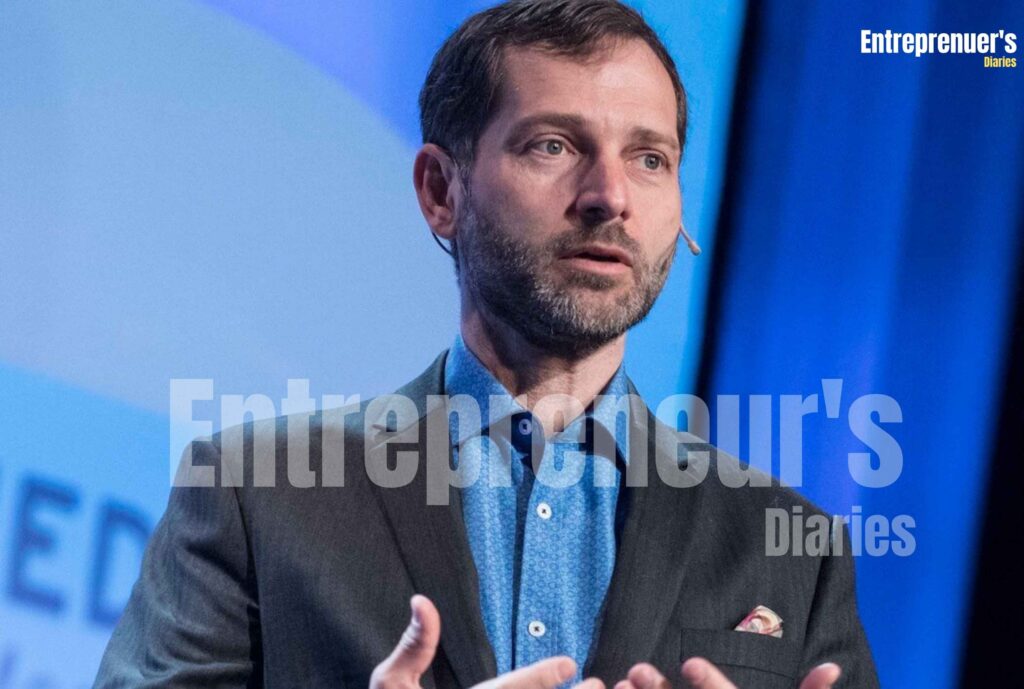
Horace Dediu, founder of Asymco, agreed that a major question is where all that spending is going beyond Apple Siri. Much of the increase, he said, is likely tied to talent, teams, and experiments in training and modeling, rather than the kind of large-scale data center deployment underway at the hyperscalers. Dediu also noted that the company is pushing across hardware, investing in silicon, optics, batteries, materials, sensors, and smaller form factors. “R&D is not capex,” he said plainly.
That last point deserves unpacking. R&D and capex are genuinely different things, and conflating them is one of the more persistent analytical mistakes when comparing the Cupertino company against its peers. Capital expenditure at Amazon, Google, and Meta is largely about building physical server infrastructure to sell compute capacity. Oppenheimer analysts, focusing on where the R&D money appears to be going, pointed to work around on-device processing, private cloud compute, agentic capabilities running on custom chips, and privacy architecture. All of those require sustained engineering investment and years of patient, invisible groundwork, much of it feeding directly into a better Apple Siri experience.
That is the bet. Not a race to own the biggest data center. A race to own the most intelligent personal device in the world, running features that users trust because the processing stays on their hardware.
Investment AI Strategy vs the Hyperscaler Arms Race
The contrast with the rest of Big Tech is stark and worth dwelling on. Google, Amazon, Microsoft, and Meta collectively plan to spend $725 billion on capital expenditure in 2026, up 77 percent from last year’s record $410 billion, according to sources citing first-quarter earnings. The Cupertino company is not in that fight on the same terms, and its investment AI philosophy reflects a fundamentally different set of priorities.
Over the past two quarters, the company spent only $4.3 billion on capex, actually a drop from about $6 billion over the same stretch a year earlier. Rather than building its own massive infrastructure, the company is leaning on Google, announcing in January that Gemini technology would power upcoming features, including the forthcoming Apple Siri upgrade that analysts expect to define the product’s relevance for the next several years.
That number sits awkwardly next to the $725 billion figure across its peers. Still, the comparison is somewhat misleading. The most valuable investment AI opportunity here is inside devices themselves. If the company can make intelligent features genuinely useful on iPhone, iPad, Mac, Apple Watch, and Vision Pro, it can strengthen hardware sales, services usage, developer engagement, and platform loyalty. That does not require the same public capex profile as a company renting cloud capacity to others.
Turns out, the market has largely agreed with that logic, at least for now. When Amazon and Google disclosed eye-watering capex commitments last quarter and investors punished their stocks for it, shares in Cupertino moved in the other direction. The asset-light investment AI model, at least in the short term, played well on Wall Street.
Apple Siri and the Credibility Problem That Cannot Be Ignored
The goodwill is conditional. Investors and analysts are not giving the company unlimited runway on the strength of a spending increase alone. There is still what some observers have bluntly called a credibility gap around Apple Siri and the broader conversational AI experience the company has promised its users.
According to sources, the company agreed to a $250 million settlement over claims tied to delayed voice assistant features. It denied wrongdoing and said it remains focused on innovation. The settlement adds another reminder that customers and investors are no longer satisfied with broad promises and patient timelines, particularly where Apple Siri is concerned.
Bernstein analysts flagged the R&D jump in a note, pointing to the increase from the December quarter to the March period as evidence of renewed pursuit, with Apple Siri and broader platform updates confirmed for later this year.
The Google partnership is the most consequential near-term move in the investment AI story. According to sources, a multi-year deal worth around $1 billion annually brings Gemini 2.5 Pro into the Apple Siri experience. After evaluating rivals including OpenAI and Anthropic, the company opted for Google citing infrastructure scale and cost efficiency. User data, the company says, will be protected via its Private Cloud Compute framework, designed to process sensitive requests on its own servers with strict security guarantees.
Whether that privacy architecture holds up under genuine consumer scale will be one of the defining questions of the next product cycle.
WWDC June 2026: Apple Siri Gets Its Biggest Stage
The Worldwide Developers Conference, running from June 8 to 12, 2026, is where the company’s investment AI story either becomes credible or gets picked apart. This year, the event is expected to be centred almost entirely on intelligence features, a new Gemini-powered Apple Siri experience, iOS 27, a potential developer AI framework, and possible hardware announcements.
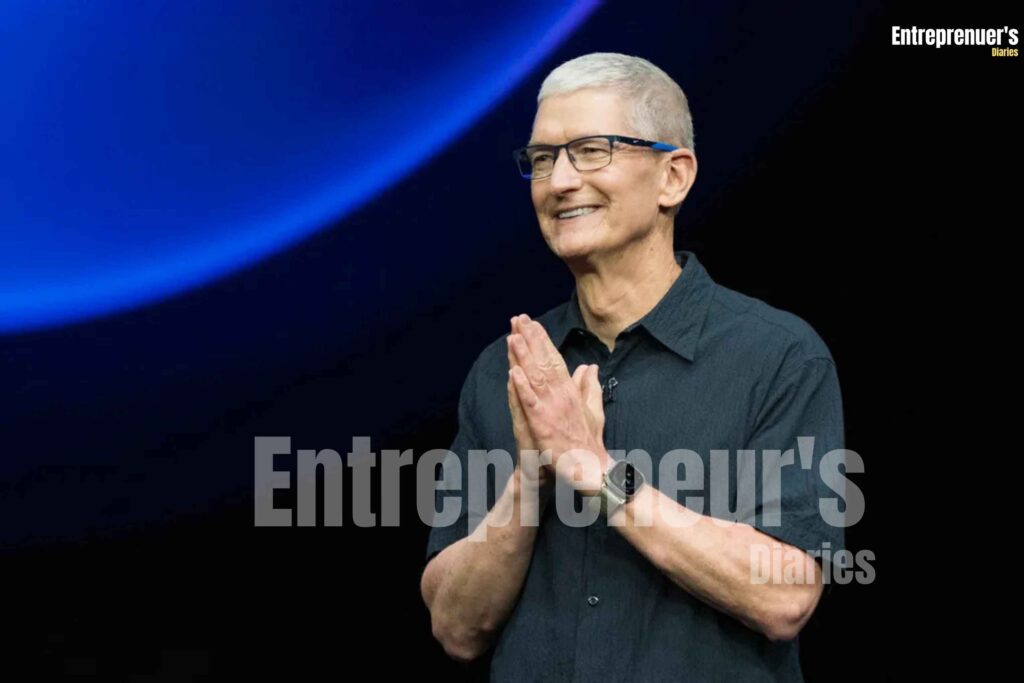
Cook confirmed on the earnings call that the company expects to announce significant advancements at WWDC. He also flagged supply constraints in the June quarter due to stronger demand for the Mac Mini and Mac Studio, two machines that have become quiet favourites inside the developer and builder community for running local workloads.
That detail is quietly significant. Supply constraints on Mac hardware driven by AI workload demand suggest that the company’s silicon is already being adopted by builders who want on-device compute they can actually trust. Cook acknowledged on the call that both machines are “amazing platforms for agentic tools” and that customer recognition of that fact has outpaced supply planning.
That is real, organic demand from the developer community. Not manufactured hype. And it gives the Apple Siri investment AI narrative something concrete to stand on ahead of June.
Leadership Transition Adds Weight to Every Decision
There is a layer to this story that goes beyond quarterly spending figures. Tim Cook will step down as CEO in September, with hardware engineering lead John Ternus taking over. WWDC in June will be Cook’s last as the company’s chief executive. The symbolic weight of that inside Cupertino is considerable.
The company needs to deliver on its Apple Siri and investment AI story visibly and credibly before that handover happens. A mere software update at WWDC, observers have noted, would be met with scepticism given the current competitive climate. iOS 27, if it has one dominant theme, is Apple Siri. The voice assistant is facing the biggest overhaul in its history, and early design hints have already surfaced ahead of the keynote.
Ternus, for his part, briefly outlined his approach on the earnings call. He drew on lessons from Cook, noting that thoughtful and disciplined financial decision-making would continue. Then he added something that sounded less like corporate language and more like genuine conviction: “This is the most exciting time in my 25-year career to be building products and services.”
Whether that excitement translates into products consumers actually feel in their hands is the question that will define the next chapter.
The Real Test Is Still Ahead
There is a temptation to read the R&D surge as evidence of panic. A company scrambling after falling behind. That reading is too simple.
The company generated $111.2 billion in revenue in the March quarter. Services reached a new all-time high. iPhone demand remained strong. The board authorised another $100 billion in share repurchases. This is not a company under financial stress. It is a company making a calculated choice to redirect a larger share of enormous cash flows toward a technology transition it cannot afford to miss, and Apple Siri sits at the very centre of that transition.
Bank of America analysts expect R&D as a share of revenue to stay above 10 percent in the June quarter before easing slightly in the back half of the fiscal year. Morgan Stanley’s model also shows R&D rising sharply across the full fiscal year. This is not a one-quarter anomaly. It is a sustained investment AI posture that reflects a company that has made up its mind.
Still, numbers alone will not close the gap. The company now has to show that higher research costs are producing a better Apple Siri experience, broader platform availability, stronger developer tools, improved on-device features, and hardware that feels genuinely designed around intelligence rather than updated to accommodate it.
The money is moving. The talent is being hired. The roadmap is accelerating. June will be the first real test of whether Apple Siri and everything built around it is ready to face a paying customer.
Q1. Why is Apple Siri considered the centrepiece of the company’s R&D acceleration in 2026?
Apple Siri has been the most visible symbol of the company’s perceived lag in artificial intelligence. With R&D now crossing 10 percent of revenue for the first time in 30 years, analysts and company filings point to the voice assistant overhaul, on-device processing improvements, and the Google Gemini integration as the primary drivers of the investment surge heading into WWDC 2026.
Q2. How does the company’s investment AI strategy differ from Google, Microsoft, and Meta?
Rather than matching the capital expenditure surge of Microsoft, Alphabet, Meta, or Amazon, the investment AI strategy here focuses on making intelligent features useful inside devices, including iPhone, iPad, Mac, and Apple Watch, rather than building enormous server capacity for cloud-based services sold to outside customers.
Q3. What is planned for WWDC 2026 related to Apple Siri and AI?
At WWDC 2026, running from June 8 to 12, the company is expected to introduce the biggest Apple Siri overhaul in its history powered by Gemini, debut iOS 27 with significant new features, and potentially unveil a new developer AI framework. The event will also be Tim Cook’s final WWDC as CEO before John Ternus takes over on September 1, 2026.
Q4. Why did the company choose Google over OpenAI for the Apple Siri partnership?
According to sources, after evaluating rivals including OpenAI and Anthropic, the company opted for Google citing infrastructure scale and cost efficiency. The deal is reportedly worth around $1 billion annually and integrates Gemini 2.5 Pro directly into the Apple Siri experience.
Q5. Can the company genuinely close the AI credibility gap around Apple Siri?
The financial position gives it considerable room to accelerate. With record revenue, all-time high Services figures, and a $100 billion share buyback authorisation, elevated R&D spending is sustainable. The real test, however, will come when products reach consumers and Apple Siri is judged directly against the competition.
Connect With Us On Social Media [ Facebook | Instagram | Twitter | LinkedIn ] To Get Real-Time Updates On The Market. Entrepreneurs’ Diaries Is Now Available On Telegram. Join Our Telegram Channel To Get Instant Updates.

Isabella is a global business journalist and former McKinsey analyst from Brazil. She brings sharp insights on economic shifts, policies, and founder journeys from around the world.

Luca is a tech ethicist from Italy exploring disruptive innovation through a human lens—from AI to biotechnologies to decentralization.