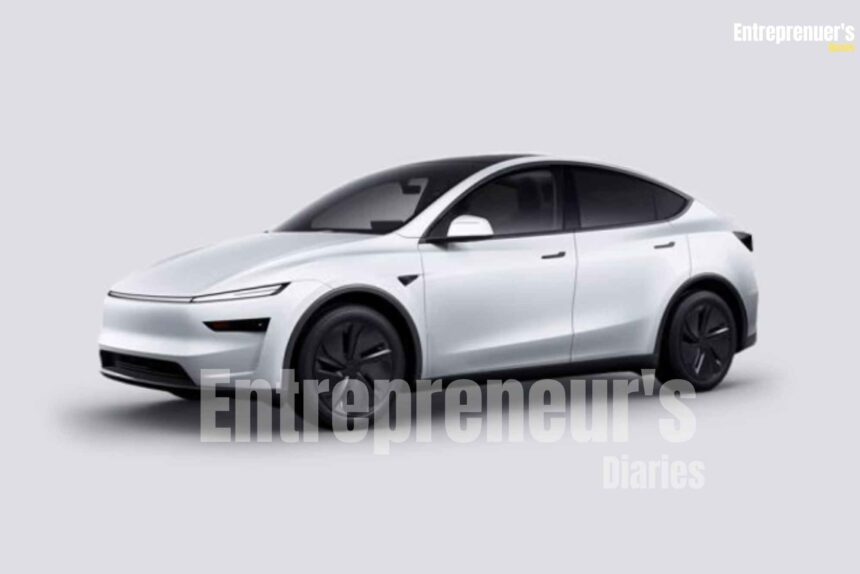
Washington D.C., May 7: Pull up the NHTSA recall database and search campaign number 26V283000. What you find there tells a story the mainstream tech press mostly glossed over: a single flawed software build quietly reached 218,868 Tesla vehicles over the course of eight days in April, and every one of those cars drove around with a rearview camera that could go completely dark for up to 11 seconds the moment the driver shifted into reverse.
Eleven seconds of black screen. Not a flicker. Not a brief lag. A completely blank display while the car was already rolling backward.
Tesla filed the formal recall with the National Highway Traffic Safety Administration on May 5. The vehicles involved span four models: the Model 3, Model Y, Model S, and Model X. The thread connecting all of them is Hardware 3, Tesla’s onboard computing platform, and a software update called version 2026.8.6 that went out between April 2 and April 9.
The Update That Slipped Through
Over the air software updates are part of life for Tesla owners. You park the car, go to sleep, and wake up to a vehicle that has theoretically been improved overnight. It is one of the genuinely compelling things about the product and Tesla deserves credit for pioneering it. But the same infrastructure that makes seamless improvement possible also makes seamless failure possible, and version 2026.8.6 is a clean illustration of both sides of that reality.
The update contained a configuration error that prevented the rearview camera from loading onto the center display after the vehicle woke from sleep mode. The camera needed up to 11 seconds to come online. In a typical reversing situation, most drivers shift into reverse within the first few seconds of getting into the car, before the screen has had any real chance to load. The result was a completely blank display during the entire maneuver, with no image, no warning indicator, and no audio alert of any kind, according to Tesla’s recall filing with NHTSA.
Count to 11 right now. That is not a brief inconvenience. It is enough time to back a two ton vehicle into a child, a cyclist, or a pedestrian who was simply walking behind the car.
Tesla’s engineering team found out about the problem on April 10, one day after the last vehicles in the rollout had already received the defective build. A corrected version, 2026.8.6.1, was ready and pushed to the fleet by April 11. That turnaround is genuinely fast by any standard in any industry, and it deserves to be acknowledged plainly.
The problem, of course, is that the damage in terms of exposure was already done. Every vehicle that had downloaded the update between April 2 and April 9 was now in the field with a broken backup camera, and the fix required another over the air push to correct it.
Twenty Nine People Caught What Tesla’s Testing Missed
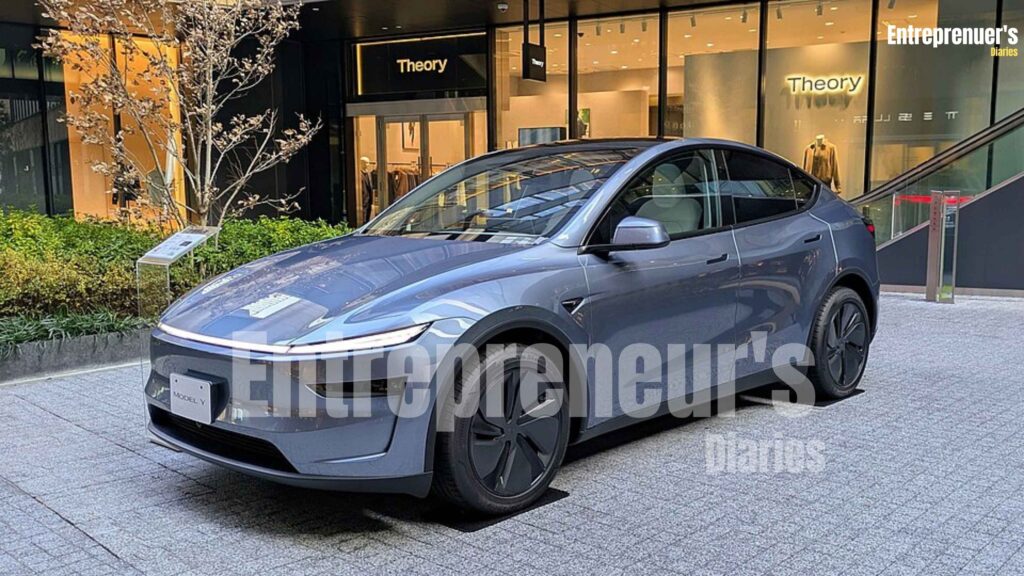
Here is the detail that deserves the most attention, and the one that has received the least: Tesla did not discover this problem through internal monitoring or pre deployment quality checks. Real owners reversing out of real driveways filed the reports that set everything in motion.
By May 1, Tesla had logged 27 warranty claims and two field reports connected to the camera delay, according to sources. Twenty nine people noticed something felt wrong and said something about it. Those 29 complaints generated the signal that triggered the engineering response on April 10, which led to the fix on April 11, which eventually produced the formal recall filing on May 5.
Tesla has reported no accidents, no injuries, and no fatalities linked to the defect, per sources. That is good news, and it is worth stating clearly. But no crash on record is not the same as no close call ever happened. There is simply no mechanism to capture the moments that ended with the driver braking at the last second, or a pedestrian stepping aside in time, that never made it into a warranty form.
In a fleet of 218,868 vehicles, 29 complaints is a remarkably small signal to generate a response of this scale. The fact that it generated one at all reflects well on Tesla’s internal follow up process. The fact that it took those 29 complaints to surface the problem in the first place is where the harder questions begin.
A Federal Safety Rule With No Asterisks
Federal Motor Vehicle Safety Standard 111 has required functioning backup cameras on every new passenger vehicle sold in the United States since May 2018. The rule did not emerge from abstract regulatory habit. It came after years of testimony from families who lost children in driveway backover incidents, who sat in front of Congressional committees and described in plain terms what it looks like when a driver cannot see what is behind them, according to sources. That testimony is the reason the regulation exists.
The standard is not complicated in its demands. The rearview camera must work, within a defined response window, every time the driver engages reverse. There is no exception written into the rule for software companies. There is no grace period built in for automakers who fix problems quickly. Tesla’s update put 218,868 vehicles out of compliance with that requirement, and out of compliance means recall. That is true regardless of how fast the fix arrived.
What makes this particular recall genuinely unusual is the timing of everything. By the time Tesla filed the formal recall paperwork, more than 99.92 percent of affected vehicles had already downloaded and installed the corrected software, according to sources. The recall was essentially resolved before it was officially announced. The physical notification letters that federal law requires Tesla to mail to affected owners are not scheduled to go out until July 3. Most people who receive one will open it in the middle of summer, months after their car was quietly corrected while they slept.
That is a strange loop for everyone involved. The regulator is formally processing a safety action for a defect that barely exists on any vehicle anymore. The owner gets a letter about a problem their car no longer has. The company has technically recalled nearly a quarter million vehicles while most of its customer base never knew anything had happened at all.
Hardware 3 and the Question Nobody Is Asking Loudly
Every vehicle caught in this recall runs on Hardware 3, the computing platform Tesla built its Full Self Driving ambitions on for several years. Tesla stopped installing it in new vehicles in January 2024, transitioning production over to a newer platform called AI4. That is the reason the Cyber truck does not appear anywhere on the recall list. It never ran Hardware 3 to begin with.
During Tesla’s first quarter 2026 earnings call, Elon Musk stated directly that Hardware 3 does not have the memory bandwidth required for unsupervised autonomy, according to sources. That is a significant statement about a platform that was sold to buyers, often at considerable additional cost, as the technical foundation for full self driving capability. Those same buyers are now the owners of vehicles that just went through a rear view camera recall.
None of that changes what happened with this specific defect. The camera issue was a configuration error in a software build. It had nothing to do with the underlying hardware’s capabilities. But it does locate these vehicles precisely within Tesla’s own internal roadmap. A 2023 Model Y is not old hardware by any reasonable definition. Inside Tesla’s planning, though, Hardware 3 is already a closed chapter.
What To Do If You Own One of These Vehicles
The steps here are not complicated. Open your vehicle settings, navigate to Software, and confirm your version number. If you are running 2026.8.6.1 or anything higher, the fix is already on your car and there is nothing further you need to do.
If you are somehow still running 2026.8.6, connect the vehicle to a WiFi network and let it update overnight. No service appointment is required. No cost is involved. The corrected build arrives exactly the same way the defective one did: quietly, over the air, while the car sits in your driveway.
To verify the official recall status for your specific vehicle, NHTSA campaign number 26V283000 is the reference. Enter your VIN on the NHTSA website and it will return a direct answer on your vehicle’s status.
Until you have confirmed the updated software is installed, reverse the way drivers did before backup cameras were ever invented. Use your mirrors. Check over your shoulder. Move slowly. It was always sound practice regardless of what the center display was showing.
A Capability That Cuts Both Ways
Tesla is not alone in where the broader industry is heading. Every major automaker right now is building toward the software defined vehicle model: the idea that a car is less a fixed mechanical object you purchase and more a connected platform that evolves continuously through updates. Ford does it. General Motors does it. BMW does it. But no company operates at the scale Tesla does or has been doing it for as long, and that matters when the subject is what can fail.
The capability itself is legitimately impressive. Tesla can push safety improvements across hundreds of thousands of vehicles simultaneously without a single owner making a service appointment. When something breaks, it can push a repair to the entire affected fleet in a day. This recall demonstrates that working about as well as it plausibly can.
But the same pipeline that enables Tesla to fix things this quickly is the exact same pipeline that created the problem. When a single build reaches 218,000 vehicles, a single configuration error reaches 218,000 vehicles too. Those are not two separate capabilities living in separate systems. They are the same capability applied on different days in different directions.
What this recall quietly surfaces, and what the industry has not answered cleanly, is what the validation process genuinely looks like before a build goes to the full fleet. Not the response after complaints come in. The process before any car outside a test environment ever receives the update. How many vehicles should receive a new build in a controlled, monitored phase before it rolls out everywhere at once? What automated monitoring would have flagged a camera response time regression before April 2, not on April 10?
Tesla found the bug and shipped the fix within 24 hours of engineers being alerted. That is fast by any measure. But engineers were only alerted because 29 real owners noticed something felt wrong while reversing out of real parking lots and real driveways and bothered to file a warranty claim. In a fleet of nearly a quarter million vehicles, that is a very thin thread to catch something this consequential on.
The fix came in time. The next one might not
Q1. Which Tesla models are actually covered by this recall?
Four models: the Model 3, Model Y, Model S, and Model X. Not every year, though. The 2017 Model 3 is on the list, as are the 2021 through 2023 versions of all four models. What they share is Hardware 3, the computing platform that received the broken update. The Cybertruck is not included. It runs newer hardware and never saw version 2026.8.6.
Q2. How long was the screen actually blank?
Up to 11 seconds from the moment the driver selected reverse. That number comes directly from Tesla’s own filing with NHTSA. Count it out loud right now. Most people have already completed a full driveway reversal in that time. The screen was not slow or delayed. It was completely dark, with no image and no warning of any kind.
Q3. Did anyone actually get hurt?
Tesla says no. No crashes, no injuries, no fatalities were reported in connection with the defect, according to the company’s recall documentation. What did get filed were 27 warranty claims and two field reports from owners who noticed something was wrong. Those 29 total complaints are what alerted Tesla’s engineers on April 10. Whether there were near misses that nobody reported, there is simply no way to know.
Q4. Is the car already fixed?
For the overwhelming majority of affected owners, yes. Tesla had a corrected build, version 2026.8.6.1, pushed out by April 11 and more than 99.92 percent of the fleet had installed it before the recall was even officially filed. Go to Software in your vehicle settings and look at the version number. If it reads 2026.8.6.1 or anything higher, the fix is already sitting on your car.
Q5. Does this require a trip to a service center?
Not even close. The fix came the same way the problem did: over WiFi, overnight, while the car sat in the driveway. No appointment, no cost, no dealer involved. Official recall letters are going out to affected owners by July 3, but by the time most people read that letter, their car will have been running the corrected software for months already.
Connect With Us On Social Media [ Facebook | Instagram | Twitter | LinkedIn ] To Get Real-Time Updates On The Market. Entrepreneurs’ Diaries Is Now Available On Telegram. Join Our Telegram Channel To Get Instant Updates.

Isabella is a global business journalist and former McKinsey analyst from Brazil. She brings sharp insights on economic shifts, policies, and founder journeys from around the world.