
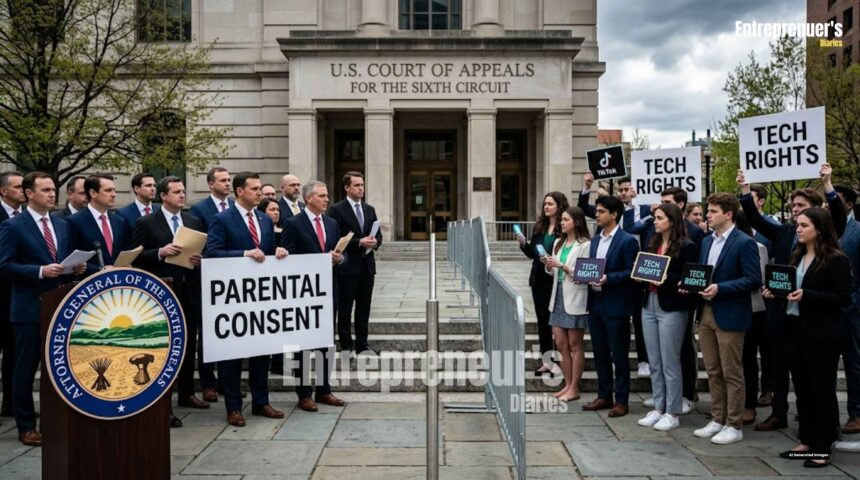
Columbus, Ohio, June 19, 2026: The Ohio social media law fight just took its biggest turn yet. On Thursday, a divided federal appeals panel ruled that Ohio’s law requiring children under 16 to get parental consent before joining social media apps must be put back into force.
This is not a small procedural update. It is the first time a federal appeals court has sided with a state in this exact fight, after more than two years of litigation that had kept the law frozen since before it ever took effect.
For founders, investors, and compliance teams tracking the tech trend US story in 2026, this ruling is a signal that the legal ground under youth social media regulation is shifting, state by state, court by court.
What the Sixth Circuit Actually Ruled
The U.S. Sixth Circuit Court of Appeals, based in Cincinnati, ruled 2-1 on Thursday, June 18, 2026, that Ohio’s Social Media Parental Notification Act is not unconstitutional, according to the Associated Press. The panel sent the case back down to the district court with instructions to lift the block that had kept the law frozen, the Associated Press reported.
That lower court block had been in place since a federal judge first froze the law in January 2024, just before it was due to take effect, according to the Associated Press. The ruling is a direct loss for Net Choice, the trade association representing TikTok, Snapchat, Meta, and other major technology companies, which had sued to stop the law from ever being enforced, the Associated Press reported.
It is also the first appellate level win for any state defending one of these parental consent laws against a NetChoice challenge, based on reporting from the Associated Press and Biometric Update.
The Law’s Two and a Half Year Path Through the Courts
This fight has been running since before the law was even scheduled to start. Here is the timeline, based on court filings tracked by NetChoice itself and reporting from Hunton Andrews Kurth’s privacy law blog:
The Ohio legislature passed the measure on June 12, 2023, folding it into the state’s two year operating budget, according to the National Law Review. Governor Mike DeWine signed it into law in July 2023, as part of an $86.1 billion state budget package, the Associated Press reported.

The law was scheduled to take effect on January 15, 2024, according to Hunton Andrews Kurth’s privacy law blog. NetChoice sued days before that deadline. On January 8, 2024, U.S. District Judge Algenon Marbley granted a temporary restraining order, freezing the law before it ever applied to a single Ohio teenager, according to NetChoice’s own case tracker.
Marbley followed that with a preliminary injunction in February 2024, based on reporting from Hunton Andrews Kurth. More than a year later, on April 16, 2025, Marbley went further and granted NetChoice full summary judgment, permanently blocking the Ohio Attorney General from enforcing the law, according to Hunton Andrews Kurth’s privacy law blog.
Ohio’s Attorney General appealed that decision to the Sixth Circuit on May 12, 2025, according to NetChoice’s case tracker. Oral arguments were held in Cincinnati on February 4, 2026, according to the ACLU of Ohio’s own case tracking page. Thursday’s 2-1 ruling, more than four months later, reverses Marbley’s decision and revives the law, the Associated Press reported.
What the Ohio Social Media Law Actually Requires, and What It Penalizes
New social media law in Ohio: The law itself, codified as Ohio Revised Code Section 1349.09, is narrower than some headlines suggest. It applies to online platforms that target children or are reasonably likely to be accessed by children, according to a legal analysis published by Lexology.
Under the law, a child under 16 cannot agree to a platform’s terms of service without a parent or legal guardian’s affirmative consent, according to the National Law Review. If a parent does not consent, the operator is required to deny the child access to that platform entirely, the National Law Review reported.
Companies must also send written confirmation of that parental consent back to the parent or guardian, according to the National Law Review. The law carves out specific exceptions, including product review websites and what the statute calls “established and widely recognized” news sites that allow user comments, according to Lexology’s legal analysis.
Social media laws in Ohio: Enforcement sits exclusively with the Ohio Attorney General’s office, not private citizens or class-action plaintiffs, the National Law Review reported. Penalties escalate the longer a company stays out of compliance. Under the statute, fines start at up to $1,000 per day for the first 60 days, rise to an additional $5,000 per day for days 61 through 90, and climb to an additional $10,000 per day after that, according to Lexology’s breakdown of the statute.
Why Ohio Passed This Law in the First Place
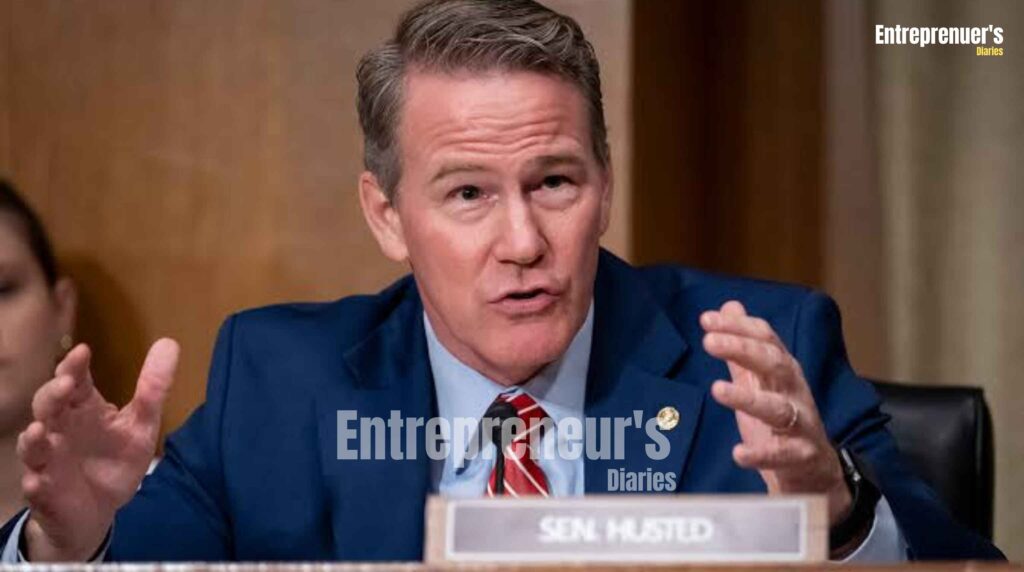
The political case for the law was built around teen mental health, not platform competition or antitrust concerns. Then Lieutenant Governor Jon Husted, who has since become a sitting U.S. Senator, was the administration’s lead voice on the issue. He argued at the time that social media was “intentionally addictive” and harmful to children, according to the Associated Press.
The law was not introduced as a standalone bill. It was written into Ohio’s broader two year budget package, the same $86.1 billion document that funded the rest of state government, the Associated Press reported.
That legislative structure matters for how durable the law is likely to be. Because it sits inside budget law rather than a freestanding statute, repealing or substantially amending it would require the same level of legislative coordination it took to pass it in the first place.
What the Judges Said, in Their Own Words
Circuit Judge Eric Clay wrote the panel’s lead opinion. His central finding was direct: “At bottom, the Act imposes a parental consent requirement,” Clay wrote, according to the Associated Press and the Washington Times.
Circuit Judge Alice Batchelder concurred separately, addressing NetChoice’s argument that the law was too broadly written to be enforceable. “A statute is not vague just because it has a wide berth,” Batchelder wrote, according to the Washington Times and the Statehouse News Bureau.
The panel’s third judge dissented. According to Fox Business’s reporting on the ruling, the dissenting judge argued that the law likely imposes unconstitutional restrictions on minors’ access to protected speech, the same concern that had originally persuaded the district court to block the law.
The case now returns to Judge Marbley’s courtroom, where he has been directed to formally vacate his own prior order blocking enforcement, according to the Statehouse News Bureau.
How Ohio Officials and NetChoice Reacted
Ohio Attorney General Andy Wilson, a Republican, framed the ruling as a victory for families rather than for state power. “This ruling is a win for Ohio families,” Wilson said in a statement reported by the Associated Press and the Statehouse News Bureau.
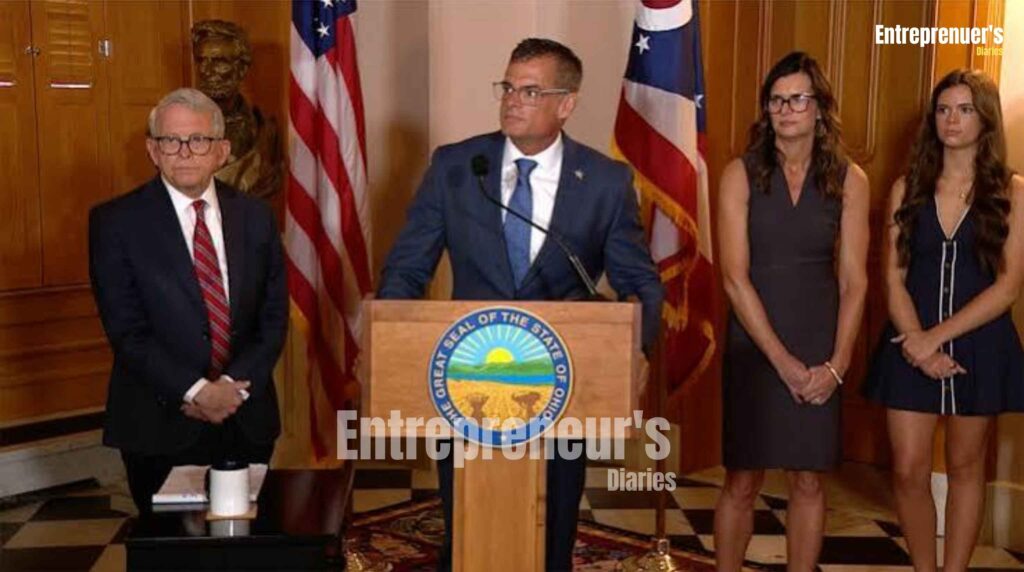
Wilson went further in the same statement, arguing that the ruling gives parents real tools, not just a legal win on paper, according to the Statehouse News Bureau’s reporting on his comments. NetChoice signaled it has no intention of standing down. Paul Taske, director of the NetChoice Litigation Center, said “an unconstitutional law protects no one,” according to the Associated Press.
NetChoice separately argued that the Ohio outcome runs against what it described as a broader pattern of courts ruling in its favor across the country, the Associated Press reported. Neither Apple nor any consumer facing platform issued its own separate statement distinct from NetChoice’s, since the litigation is conducted by the trade association on behalf of its member companies, based on available wire reporting.
The Wider US Tech Trend: A Fragmented, Fifty State Battlefield
Ohio is not an isolated case. It is one front in a sprawling legal war that has been playing out across nearly a dozen states simultaneously, and the outcomes have been far from consistent. In Arkansas, a federal judge struck down a similar law entirely, a result the Associated Press cited directly when describing Thursday’s Ohio ruling as a reversal of that broader trend.
In Louisiana, NetChoice secured a permanent injunction in December 2025 against a law that combined age verification with parental consent requirements, according to Biometric Update’s coverage of the ruling.
In Mississippi, the path has been rockier for NetChoice. The U.S. Supreme Court declined in 2025 to block the state’s age verification law while litigation continues, with Justice Brett Kavanaugh writing separately that NetChoice has a reasonable chance of eventually winning on the merits but had not shown grounds for emergency relief, according to Associated Press reporting carried by Yahoo News.
In Georgia, NetChoice became the eighth trade group plaintiff to sue a state over this type of law, challenging a measure scheduled to take effect on July 1, 2025, the Associated Press reported. In Utah, a similar law remains temporarily blocked while litigation proceeds, according to Associated Press reporting.
At the Eleventh Circuit, which covers Florida and Georgia, judges pressed NetChoice on its legal standing during oral arguments held March 10, 2026, and questioned whether lower courts had moved too quickly to strike down those states’ laws in full, according to Biometric Update’s reporting on the hearing.
In Arizona, NetChoice formally objected to a new age verification bill, SB 1747, after it passed the state Senate in February 2026, Biometric Update reported. In Virginia, NetChoice sued in January 2026 to block a proposed law that would also impose time use limits on minors’ accounts, according to Biometric Update.
In South Carolina, NetChoice sued immediately after the state’s Age Appropriate Design Code Act took effect, arguing it amounts to government control over how platforms present content, according to a legal update from Baird Holm LLP.
Across all of these cases, NetChoice represents the same core group of companies: Meta, Google, Snap, Reddit, Pinterest, TikTok, and X, according to Biometric Update’s reporting on the group’s broader litigation campaign.
The Analytical Close: Why This Ruling Changes the Calculus for Every Platform
Here is the part of this story that matters most for anyone building or investing in a consumer platform business, and it is the part that a quick headline scan will miss entirely.
Until Thursday, NetChoice’s legal strategy had a fairly clean track record. Arkansas struck down. Louisiana permanently enjoined. Mississippi tangled up in procedural back and forth, but not yet a loss on the merits. The pattern, court after court, leaned toward treating these laws as unconstitutional restrictions on speech.
Ohio breaks that pattern, and it breaks it at the appellate level, not just at a single district court. That distinction matters more than it might first appear. District court rulings are persuasive within a single case. Circuit court rulings carry weight across every federal court within that circuit, and they shape how other circuits think about the same legal questions when those cases reach them.
The Sixth Circuit covers Ohio, Michigan, Kentucky, and Tennessee. Any state inside that footprint now has a binding appellate precedent suggesting that a parental consent requirement, written narrowly enough, can survive a First Amendment challenge. That is a meaningfully different legal environment than existed a week ago.
For platform operators, the practical question stops being “will these laws get struck down” and starts being “which circuit is my user base concentrated in, and what does that circuit’s case law currently say.” That is a fundamentally different, and more expensive, compliance question to answer.
For investors evaluating exposure to companies named in NetChoice’s litigation, the read through is not that Ohio alone changes anything material to quarterly revenue. It is that the probability of a patchwork compliance environment, where age verification and parental consent infrastructure becomes a standing cost in some states and not others, just went up. Engineering and trust and safety teams that build flexible, jurisdiction aware consent systems now have a clearer business case than they did a week ago.
There is also a political dimension worth sitting with. Republican officials in Ohio, Georgia, and Mississippi have all pushed these laws, and the Associated Press has separately reported that members of the U.S. Congress have floated similar federal parental consent requirements. A win at the circuit court level, even a narrow 2-1 decision, gives that broader political movement a concrete legal citation to point to, regardless of how the next state’s case turns out.
The structural lesson is this: youth social media regulation in the United States is no longer a single legal question with one likely answer. It is now a circuit by circuit, state by state landscape where the same legal theory can win in Cincinnati and lose in New Orleans within the same calendar year. That fragmentation, not any single ruling, is the real story for anyone running a platform business at national scale.
What to Watch Next
Three things will determine how much Thursday’s ruling actually changes in practice over the coming months. The first is what happens back in Judge Marbley’s courtroom. He has been instructed to vacate his own injunction, but the exact timeline for the law to take legal effect again has not yet been reported.
The second is whether NetChoice seeks further review, either through a request for the full Sixth Circuit to rehear the case en banc, or through an appeal to the U.S. Supreme Court. NetChoice’s public statements signal continued litigation is likely, according to the Associated Press, but the group has not specified its next procedural step.
The third is how the pending Eleventh Circuit decision on Florida and Georgia’s laws lands. Given that oral arguments already raised questions about NetChoice’s standing and the scope of earlier injunctions, according to Biometric Update, a ruling that further favors the states would reinforce the shift Ohio’s case represents. A ruling that favors NetChoice would instead deepen the circuit split this story is already describing.
Watch all three. Together, they will determine whether June 18, 2026, marks the start of a genuine legal turning point for youth social media regulation, or simply one data point in a fight that is still far from settled.
Frequently Asked Questions
1. Is Ohio’s social media parental consent law in effect right now?
Not immediately. The Sixth Circuit’s ruling sends the case back to the district court with instructions to lift the block on enforcement, according to the Statehouse News Bureau, but the exact date enforcement formally resumes has not yet been reported.
2. What age does Ohio’s social media law apply to?
The law applies to children under 16. Platforms covered by the statute must obtain affirmative parental or guardian consent before a child under that age can agree to the platform’s terms of service, according to the National Law Review.
3. What happens if a company doesn’t comply with Ohio’s law?
Penalties escalate over time. Under Ohio Revised Code Section 1349.09, fines start at up to $1,000 per day for the first 60 days of noncompliance, rise to an additional $5,000 per day for days 61 through 90, and reach an additional $10,000 per day after day 91, according to Lexology’s analysis of the statute.
4. Why did NetChoice sue Ohio over this law?
NetChoice argued the law was unconstitutionally vague and placed an unlawful burden on minors’ First Amendment rights to access protected speech online, according to the Associated Press. The Sixth Circuit’s majority rejected that argument on June 18, 2026, though one judge on the panel dissented on First Amendment grounds, according to Fox Business.
5. Is Ohio the only state with a law like this?
No. Similar laws have been passed, blocked, or litigated in at least ten other states, including Arkansas, Louisiana, Mississippi, Georgia, Utah, Florida, Arizona, Virginia, South Carolina, and Tennessee, according to combined reporting from the Associated Press and Biometric Update. Outcomes have varied significantly by state and by court.
Connect With Us On Social Media [ Facebook | Instagram | Twitter | LinkedIn ] To Get Real-Time Updates On The Market. Entrepreneurs’ Diaries Is Now Available On Telegram. Join Our Telegram Channel To Get Instant Updates.

Isabella is a global business journalist and former McKinsey analyst from Brazil. She brings sharp insights on economic shifts, policies, and founder journeys from around the world.

Luca is a tech ethicist from Italy exploring disruptive innovation through a human lens—from AI to biotechnologies to decentralization.