

Cupertino, California, June 26, 2026: If a business owner or investor spends mornings scrolling through tech headlines, they likely missed it. The Apple MacBook Pro price increase was not announced through a flashy event or keynote presentation. Tim Cook did not stand on a stage in Cupertino to declare it to the world.
But if a professional logs onto the Apple Store to price out a new work laptop, the reality is immediate. Something changed. The floor moved. Apple has effectively raised the price of its most critical professional hardware, the MacBooks and the iPads, without actually changing the sticker price on its most visible models.
It is a brilliant, slightly frustrating piece of corporate maneuvering. The company executed this entirely by rewriting the fine print on its own website. An analysis of the exact changes tells a story that the marketing completely hides.
The Case of the Missing $1,299 Laptop
A close examination of the official Apple MacBook Pro technical specifications page reveals a significant shift in the company’s baseline strategy.
Currently, if a customer wants to buy a 14 inch MacBook Pro with the new M4 chip, the starting price listed on the Apple Store is $1,599. For that $1,599, the machine includes the M4 chip, a 512GB solid state drive, and here is the linchpin of the strategy 16GB of unified memory. That 16GB number is the focal point of this entire pricing architecture.
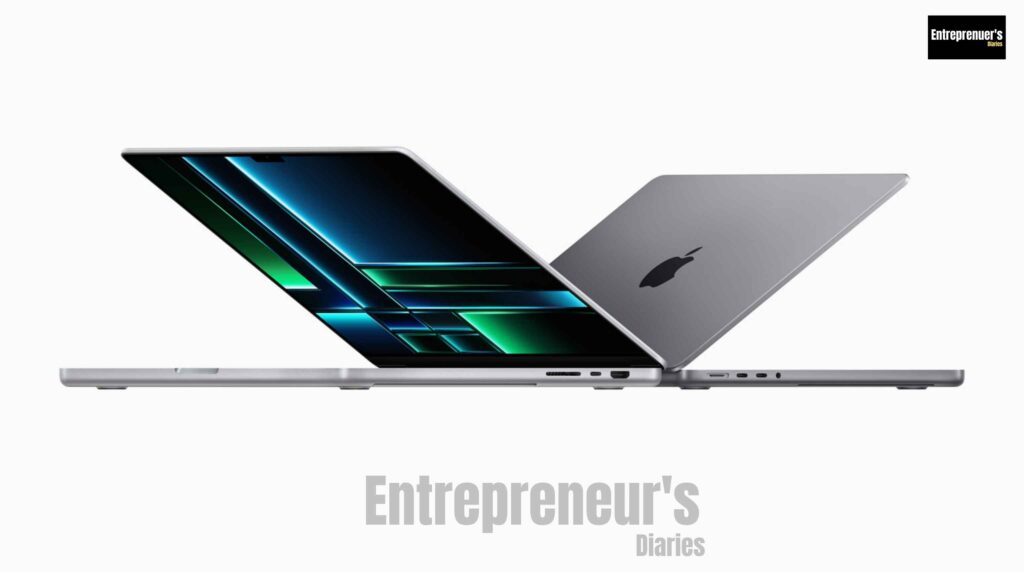
A review of the previous generation’s archived technical specifications for the M3 MacBook Pro on Apple’s site shows that the baseline 14 inch model also cost $1,599. However, that model came with 8GB of unified memory. Exactly half of what the company now provides.
The historical data reveals another crucial detail. During the M3 cycle, Apple offered a cheaper entry point. A 14 inch MacBook Pro was listed at $1,299. It featured a slightly weaker chip, a smaller 256GB hard drive, and that same 8GB of RAM. An attempt to find that $1,299 tier on the Apple Store today yields no results. It is gone.
By eliminating that lower priced option and doubling the baseline RAM on the remaining $1,599 model, Apple has pulled off a calculated structural shift. The company has raised the absolute minimum cost of entry into the MacBook Pro ecosystem by $300.
A consumer cannot spend $1,299 on a new MacBook Pro anymore. The floor is now $1,599. That is not merely a spec bump; it is a unilateral price increase disguised as a product upgrade.
Apple MacBook Pro Price Increase: The Same Pricing Strategy Reached the iPad Pro
The Apple MacBook Pro price increase was not the only pricing change in Apple’s latest professional hardware lineup. The company followed a similar strategy with the new iPad Pro, increasing the minimum purchase price while upgrading the base specifications.
According to Apple’s official specifications, the new 11 inch M4 iPad Pro starts at $999, offering the M4 chip, 8GB of unified memory, and 256GB of storage.
The previous 11 inch M2 iPad Pro launched at $799 with 128GB of storage. Unlike the MacBook Pro, where Apple removed the lower priced configuration, the company directly increased the iPad Pro’s starting price by $200 while doubling the base storage.
Apple also introduced major hardware upgrades alongside the higher price. The M4 iPad Pro features the new Ultra Retina XDR OLED display, replacing the LED display used in the previous generation. The tablet is also thinner, measuring 5.1mm compared with 5.9mm for the M2 model.
The result is similar to the Apple MacBook Pro price increase strategy. Rather than offering buyers a lower priced professional device, Apple raised the baseline specifications and increased the minimum amount customers must spend to enter its premium hardware lineup.
The “Free Upgrade” Illusion
A prevailing narrative suggests Apple suddenly realized 8GB of RAM was no longer sufficient, prompting the company to magnanimously provide everyone with 16GB to improve the user experience. Corporate realities dictate otherwise.
Memory costs money. Doubling the RAM on a manufacturing line of millions of units drastically increases the Bill of Materials the actual cost Apple pays to build the device. Corporate executives do not absorb billions of dollars in increased component costs out of goodwill. They pass them on.
In this case, the company passed the cost on by deleting the cheaper laptop tier and forcing the consumer into a higher priced bracket. By providing 16GB of RAM at $1,599, Apple accomplishes two objectives simultaneously.
First, the company justifies keeping the $1,599 sticker price, avoiding the negative press associated with literally raising the price of an identical machine. Second, the move completely neutralizes competitors. If a Windows laptop maker attempts to argue they offer more memory for less money, Apple’s newly elevated baseline makes the comparison difficult for the average consumer to parse. It is a defensive moat constructed entirely out of RAM chips.
What the CFO Officially Stated
The reasoning behind this strategy requires no guesswork. The answers lie directly within the official transcript from the Apple Q4 FY2024 Earnings Call. For those analyzing corporate performance, the most telling data comes not from marketing videos, but from the CFO speaking to Wall Street analysts. Luca Maestri manages the numbers at Apple, and his language is highly precise.
On that call, Maestri stated officially: “Our gross margin for the quarter was 46.2 percent.” He then provided guidance for the upcoming holiday quarter the exact quarter where these new, RAM heavy MacBooks and the $999 iPads would go on sale. He stated: “We expect gross margin to be between 46.5 and 47.5 percent for the December quarter.”

Those figures are paramount. Apple is explicitly telling Wall Street that its profit margins are going to expand in the middle of a massive hardware transition. If doubling the RAM and storage on all these base models was severely eating into profits, Maestri would be guiding margins down. He is not. He is guiding them up.
During the Q&A segment of that same earnings call, an analyst asked how Apple balances component costs with consumer pricing. Maestri provided a calculated response. He said: “We manage the business from a long term point of view… we’re going to make decisions that are great for the customer and great for the business.”
That phrasing is standard corporate code. “Great for the customer” translates to receiving more RAM. “Great for the business” translates to manipulating the product line sufficiently to ensure margins hit 47.5%.
Forcing the Hand with the MacBook Air
The ripple effects of this pricing strategy become fascinating when reviewing the rest of Apple’s lineup. A review of the official Apple MacBook Air technical specifications page shows the base M3 MacBook Air still sitting at $1,099. It also still comes with just 8GB of unified memory and a 256GB hard drive.
This is not an oversight. It is a deliberate architectural wall. When the M3 MacBook Pro featured 8GB of RAM, the Air and the Pro felt uncomfortably close. A buyer might look at the $1,099 Air and the $1,299 Pro and question the necessity of the upgrade.
Apple actively discourages that kind of internal competition. It cannibalizes high margin sales. By forcing the Pro line to start at 16GB of RAM and raising the entry price to $1,599 the company has created a massive canyon between the consumer Air and the professional Pro. The gap is now $500.
If a graphic designer, video editor, or heavy multitasker evaluates these machines, 8GB of RAM is no longer a viable option. Apple has ensured this by removing 8GB from the Pro configurator entirely. The professional is forced to bypass the Air completely and step up to the $1,599 Pro. Apple effectively turns a hesitant maybe into a definite yes, extracting an extra $500 from the transaction.
Tim Cook’s Subtle Signal
Tim Cook rarely dives into the granular details of component pricing on these calls. He operates as the big picture visionary. However, even his language during that Q4 FY2024 earnings call supports this aggressive new pricing posture.
Cook told analysts: “We’ve got an incredibly strong lineup that we just announced, and we feel very, very good about it.” He also reminded the audience that the “installed base of active devices reached a new all time high.”

Why does that installed base matter? Because when an ecosystem is deeply integrated, the switching costs for a user are brutal. If a professional needs a new laptop for work, they are highly unlikely to learn a new operating system or buy a Windows machine simply because Apple raised the effective price of the MacBook Pro by a few hundred dollars. They will grumble, open their wallets, and buy the Mac.
Cook understands this dynamic. When he expresses that the company feels “very, very good” about a lineup that is objectively much more expensive at the baseline than the previous year’s lineup, he is expressing total confidence in the consumer’s willingness to pay the premium.
The Elimination of the Configure Down
There is one subtle, highly strategic detail on the Apple Store that often goes unnoticed. Historically, if a base model included more RAM or storage than a user needed, they could sometimes configure a different, cheaper model to suit their requirements. That flexibility is gone.
If a customer attempts to buy a 14 inch MacBook Pro on the official Apple Store today, an examination of the dropdown menu for memory reveals it starts at 16GB. The option to select 8GB does not exist in the code.
The same applies to the iPad Pro. A search for a 128GB option on the M4 store page yields nothing. Apple has entirely removed the ability to configure down. The company has decided what the minimum acceptable professional standard is, and it is forcing the market to pay for it.
Consider the implications for a company purchasing 50 laptops for its staff. An IT director previously had the ability to spec 8GB MacBook Pros to stay under a strict budget. That flexibility is dead. The absolute minimum IT expenditure per MacBook Pro has jumped significantly. Multiply that by hundreds of employees, and Apple’s silent price hike suddenly becomes a major line item on a corporate spreadsheet.
The Real World Impact on Your Business
For founders, operations leads, or anyone managing a small business budget, adjusting financial forecasts is now necessary. Using last year’s Apple pricing as a baseline for this year’s hardware refresh is a mistake. The rules have changed.
If your business issues MacBooks to its team, your cost per employee has just increased. If your team uses iPad Pros for point of sale or field work, your hardware Capital Expenditure (CapEx) just took a $200 hit per device.
The most frustrating element for a budget holder is the inability to fight the increase by opting for cheaper specs. Apple has walled off the cheaper specs entirely A business is paying for 16GB of RAM whether a bookkeeper actually requires it or not. A business is paying for 256GB of iPad storage whether a warehouse worker needs it or not. Apple has essentially determined what is best for a company’s workflow, and it costs more money.
Reading the Margin Tea Leaves
A return to Luca Maestri’s numbers provides the ultimate proof of Apple’s strategy. A gross margin of 47.5% is astronomical for a hardware company. Most consumer electronics manufacturers operate in the teens or low twenties.
Apple is able to command nearly 48 cents of pure profit on every dollar of hardware revenue because of structural moves exactly like this. The company took a macroeconomic headwind the rising cost of memory chips and instead of absorbing the cost, baked it into the base spec. Then, it used that base spec increase to justify erasing its cheapest Pro models.
The result? Higher Average Selling Prices (ASPs). Protected, even expanding, profit margins. And a consumer base that is largely grateful for the added RAM, entirely missing the fact that they were forced into a higher spending bracket. It is a ruthless execution. It is incredibly well orchestrated. And it is entirely documented on the official Apple website and in their SEC filed earnings transcripts.
The Entrepreneur’s Verdict
What Apple just executed with the M4 MacBook Pro and M4 iPad Pro is not merely a seasonal product update. It is a masterclass in pricing architecture.
The company proved that true pricing power is not about slapping a higher number on an identical box. True pricing power is the ability to redefine the absolute floor of a category, take away the cheaper options, and make the market accept it by throwing more memory at the perceived problem.
For founders looking at their own pricing strategies, this serves as a stark reminder. Are you leaving money on the table by offering a tier that cannibalizes your premium product? Are you hesitant to raise your base price out of fear of customer backlash?
Apple raised its effective prices by hundreds of dollars, entirely eliminated the ability for customers to choose cheaper options, and its CFO literally told Wall Street to expect record profit margins as a result.
In the current landscape of American business, where efficiency is prized above all else, Apple’s silent price restructuring is the smartest hardware move of the year. The company did not just sell a new computer. It rewrote the math.
FAQs
Did Apple officially raise the price of the base MacBook Pro?
If a consumer looks strictly at the $1,599 model, the sticker price did not change. However, according to the official Apple Store, the company completely deleted the previous $1,299 entry level tier. Because the new $1,599 model forces the buyer to accept 16GB of RAM instead of the old 8GB baseline, the actual minimum cost to purchase a MacBook Pro has increased significantly.
Why is the new iPad Pro $200 more expensive than the old one?
According to the official Apple iPad Pro specs page, the base M4 11 inch model is $999, up from $799 for the M2 model. Apple justified this $200 increase by doubling the base storage from 128GB to 256GB, and introducing a completely new OLED screen (Ultra Retina XDR) that carries a higher manufacturing cost than the previous LED display.
What is Apple’s official profit margin on these new devices?
Apple does not break down margins by specific product lines like the MacBook or iPad. However, in the official Apple Q4 FY2024 Earnings Call Transcript, CFO Luca Maestri stated that total company gross margins were 46.2%, and he officially guided for margins to expand to between 46.5% and 47.5% for the holiday quarter when these new devices go on sale.
Can a customer still buy a new MacBook Pro with 8GB of RAM?
No. An examination of the official Apple Store configurator for the M4 MacBook Pro shows that 8GB is no longer an option. The baseline memory across the entire professional laptop line has been officially raised to 16GB. The 8GB option now exists only on the consumer level MacBook Air.
Where can these spec and price changes be verified?
This data does not rely on third party rumors. Every single specification, storage tier, and pricing change mentioned here is published directly by Apple on its official Apple.com website under the MacBook Pro and iPad Pro product pages. The financial context is quoted verbatim from the official Apple Inc. Q4 FY2024 Earnings Call Transcript.
Connect With Us On Social Media [ Facebook | Instagram | Twitter | LinkedIn ] To Get Real-Time Updates On The Market. Entrepreneurs’ Diaries Is Now Available On Telegram. Join Our Telegram Channel To Get Instant Updates.

Isabella is a global business journalist and former McKinsey analyst from Brazil. She brings sharp insights on economic shifts, policies, and founder journeys from around the world.

Tokyo-based CFA translating global markets into clear insights for modern entrepreneurs.